Enthusiasts from The Data Drop project have launched an interactive website called Inside Every iPhone, which clearly shows how iPhone components have changed from 2007 to 2025. This is not an advertisement or a new service, but an educational project for those curious about what parts and whose chips were used to build iPhones over the years.
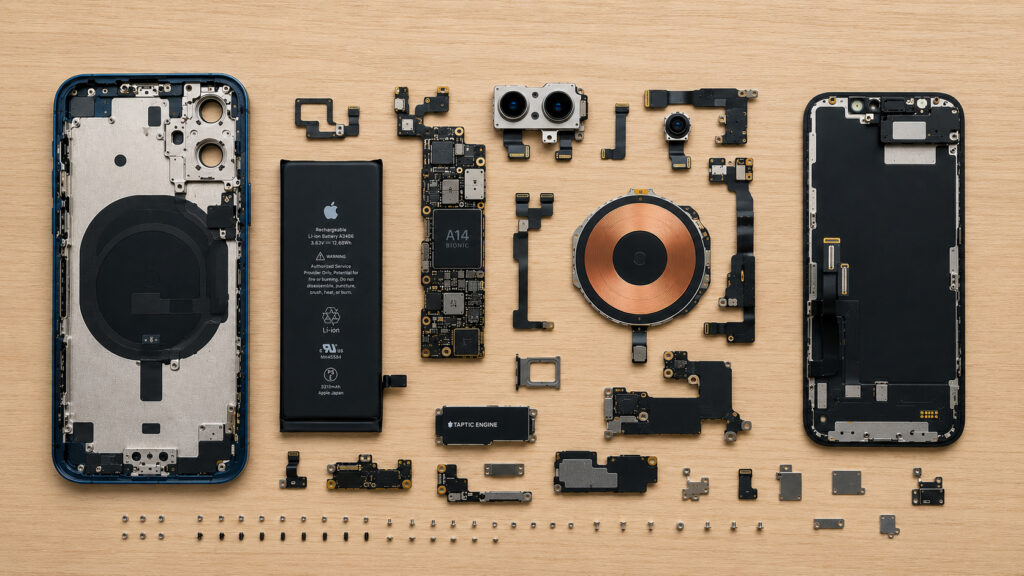
You can look at the internals of virtually any iPhone
What’s Inside an iPhone: Processors, Cameras, and Modems by Year
The project gathers key component data about Apple smartphones in one place. The site shows processors, modems, cameras, and displays, as well as third-party manufacturer chips that were used in different years. The result is a neatly organized history of the hardware across the entire lineup.
For example, the camera section reveals a long-standing partnership with Sony, the display section shows involvement from Samsung and LG, and the modem section traces the long journey from Qualcomm and Intel to Apple’s own chip. Previously, you had to dig through forums and teardown reviews to find this data — now it’s all in one window.
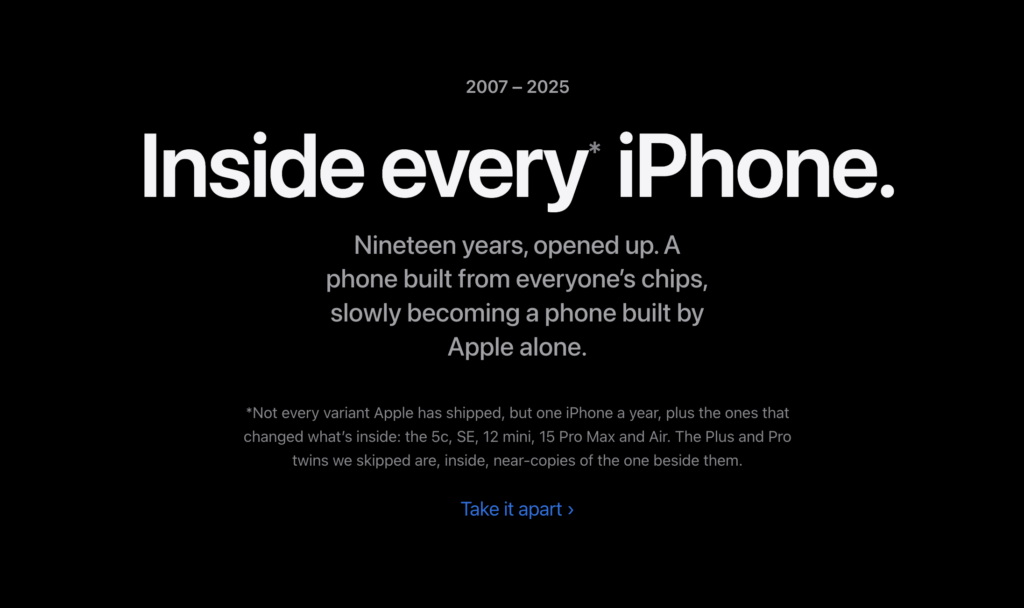
The site greets you with a black screen and English text. Just start scrolling
The value here isn’t in individual numbers, but in seeing the entire evolution in one continuous flow. You don’t need to gather specifications across dozens of pages — just scroll through a ready-made timeline and compare generations side by side.
Which iPhones Can Be Compared by Components
The creators didn’t include every single smartphone — instead, they made a smart selection. The interactive covers each key model per year, plus devices that significantly changed the lineup’s hardware.
Devices that marked turning points are highlighted separately:
- iPhone SE: a compact model running on hardware that was current at the time
- iPhone 12 mini: an attempt to build a small but fully-featured flagship
- iPhone 15 Pro Max: one of the most component-rich models
The creators intentionally skipped some comparable versions to avoid cluttering the visuals. The approach is honest: instead of a dump of every variant, you only see what actually pushed the lineup forward.
How iPhone Processors and Chips Have Changed
The site is designed as a long scrollable timeline. You can scroll through 19 years of iPhone development and trace how Apple gradually moved away from third-party solutions in favor of its own.
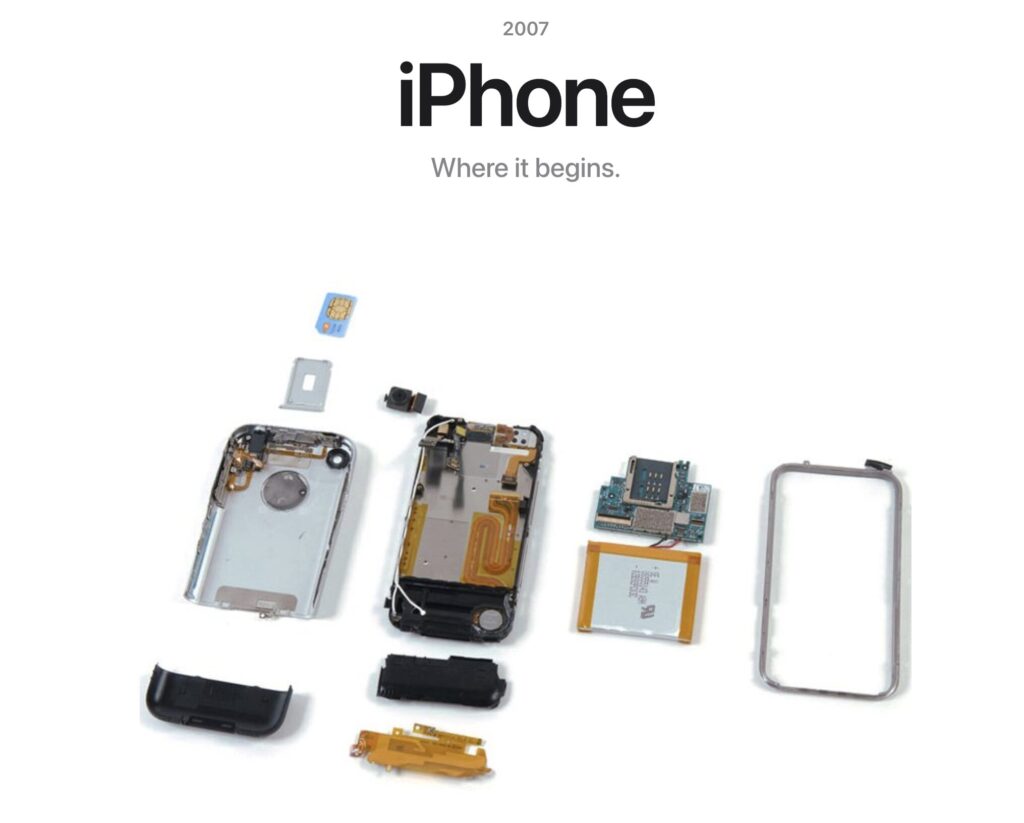
Start with the original iPhone
This is the main narrative of the project. Using specific components as examples, you can see how the company replaced third-party chips with its own year after year: first transitioning to its own A-series processors, then tackling modems and wireless modules. Each such step on the timeline looks like a separate milestone in the lineup’s history, making it easy to track where Apple accelerated the transition and where it paused.
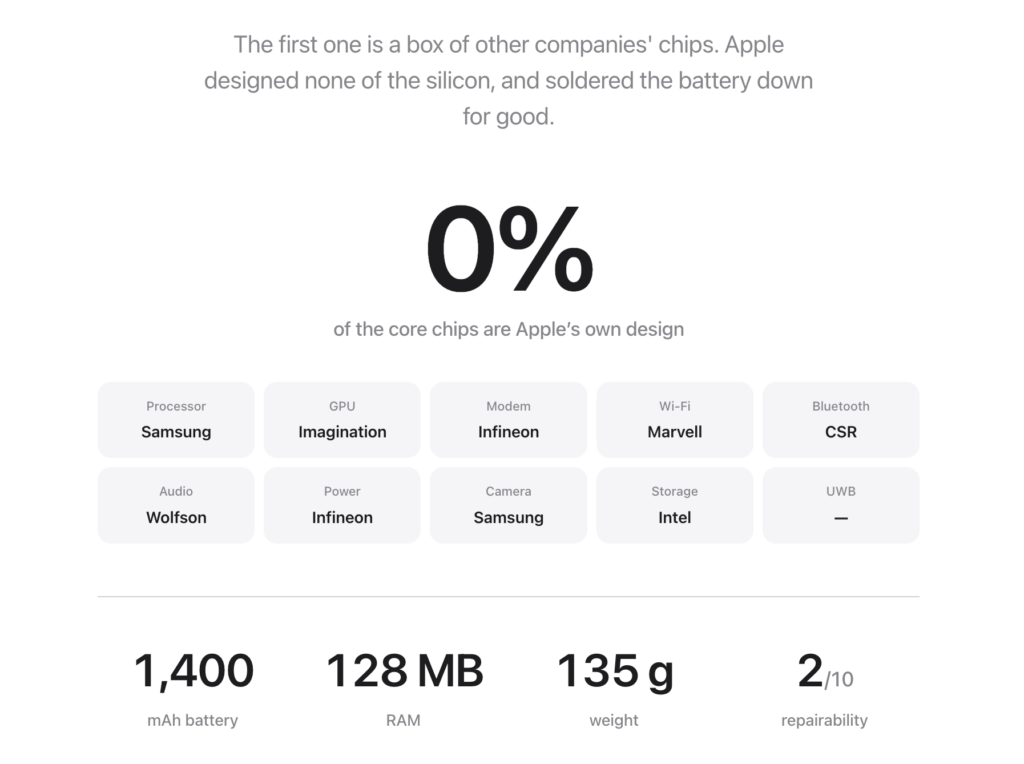
It had no Apple-made components at all
Visually, everything is presented neatly: components are color-coded by category, so even without deep technical knowledge, it’s easy to understand what changed inside the case and when.
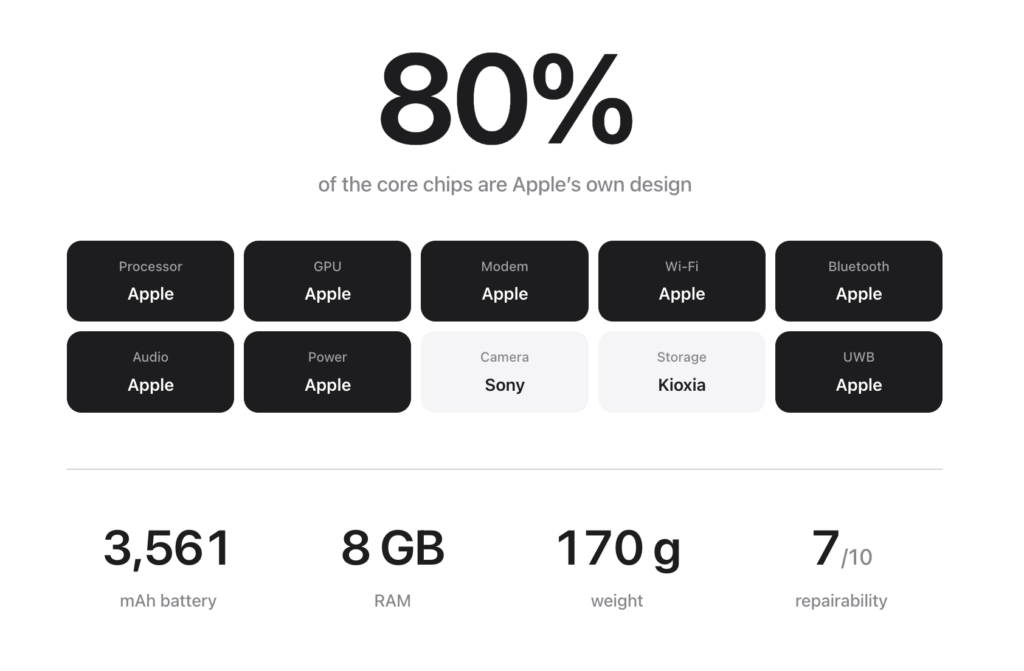
Compare it with the iPhone 16. Here, Apple already makes 80% of the components itself
Components of Different iPhones: Who Is This Site For
The site has no impact on everyday iPhone usage. This is an educational project for enthusiasts who are interested in the internals, tech history, and Apple’s engineering decisions. Essentially, it’s an interactive museum of components that’s fun to check out from time to time.
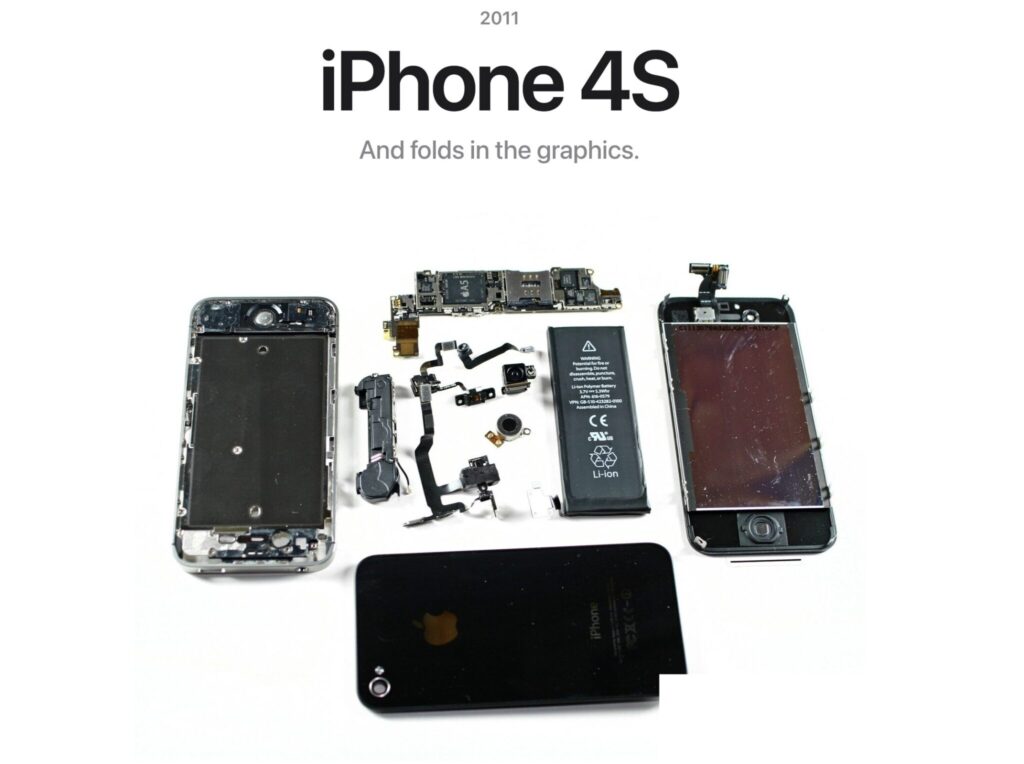
Sometimes it’s just cool to see what an iPhone looks like inside
Who will definitely enjoy it:
- Those who love digging into hardware and comparing generations
- Those choosing between a new and older model who want to understand the component differences
- Those following Apple’s transition to its own chips
But if you only use your phone for calls, photos, and messaging, the project won’t offer much practical value — it’s entertainment for the curious, not a buying tool.