I wrote about why I don’t use MAX as my primary messenger, and predictably got comments saying “well, that’s your loss.” Now there’s a new reason to revisit the topic. The American certificate authority Let’s Encrypt announced that it is revoking MAX’s TLS certificate — which expires on September 4, 2026. In parallel, Belgian-based GlobalSign is doing the same. Let me break down what this means, what it doesn’t mean, and whether you should worry at all.
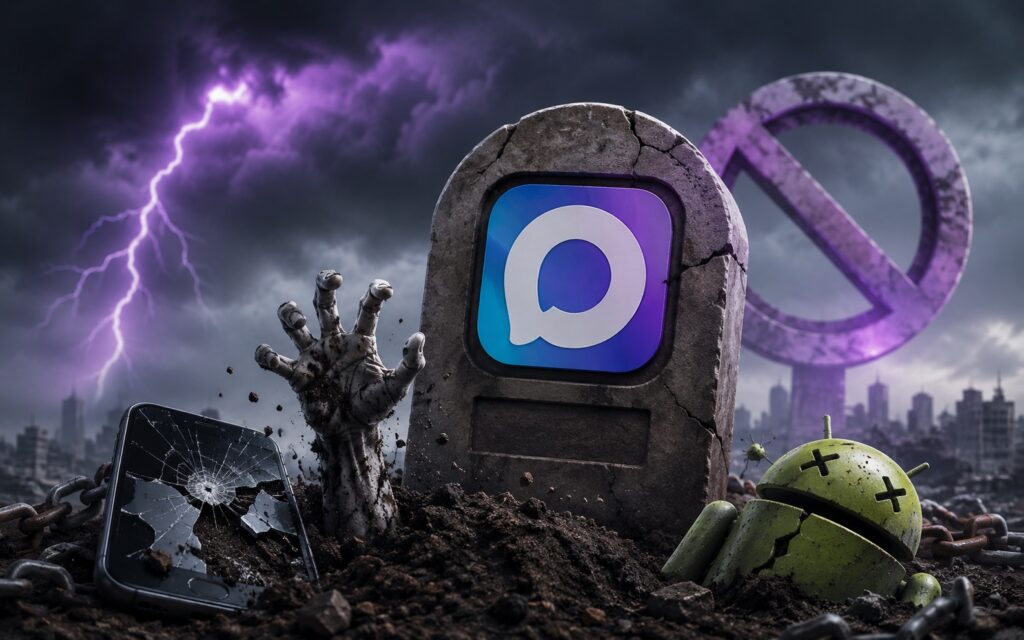
MAX is facing serious problems
What Will Happen to MAX on September 4
A TLS certificate is what’s behind the padlock icon in your browser’s address bar. Without it, the browser considers the connection insecure and either shows a scary warning or blocks access entirely. On September 4, 2026, this will happen with the web version of MAX messenger.
What this specifically means: accessing max.ru through Chrome, Safari, or Firefox will become difficult — the browser will warn about danger or block access entirely. For those who use the web version of MAX for messaging from a computer — this is a real problem.
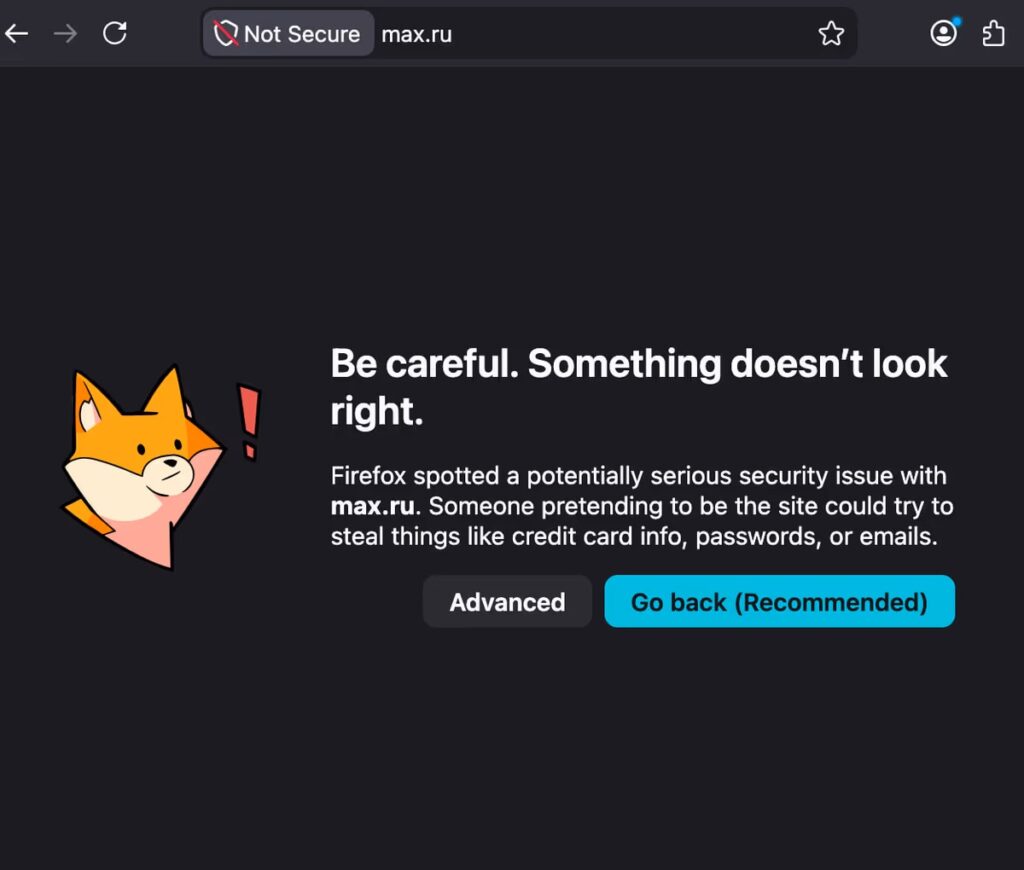
Soon MAX will stop opening in popular browsers
What this doesn’t mean: MAX on Android and other mobile platforms works through its own protocols that don’t depend on the web TLS certificate. The MAX app on your phone will continue working after September 4. Calls, messages, channels — all of this exists independently from the web version.
MAX Security Certificate Revocation — What It Means
The reason is straightforward: sanctions. Let’s Encrypt is an American nonprofit organization, GlobalSign is a Belgian company. Both operate within Western sanctions regimes and cannot provide services to organizations on sanctions lists. This isn’t a political decision in the sense of “we’re against MAX,” but a standard automatic procedure for any company under sanctions. This is exactly how many Russian banks and services lost their certificates in 2022-2024. MAX simply reached its turn.
Blocking MAX in this sense is not direct, but infrastructural. Nobody is pressing a “disable MAX” button. Western certification infrastructure simply stops servicing it. The difference is fundamental, and this is precisely why Russian alternatives, including the Ministry of Digital Development’s own certification authority, exist. MAX could theoretically switch to a Russian certificate. Browsers like Yandex Browser accept it, but Chrome and Safari do not.
Why MAX Messenger Is Being Blocked
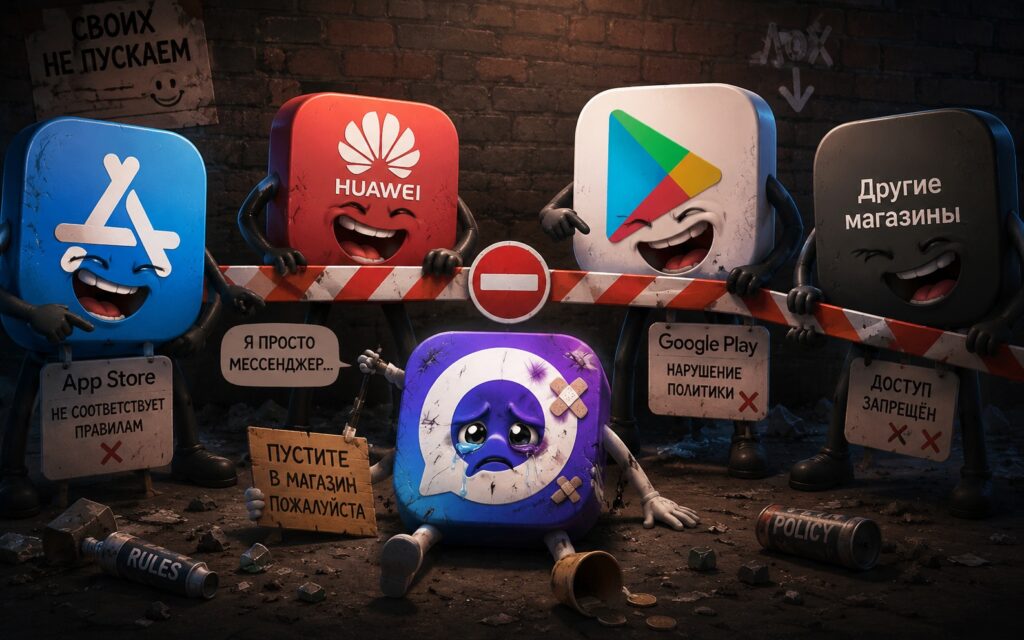
Nobody likes MAX
The TLS certificate revocation is neither the first nor the last event in this story. Looking at the timeline:
- Cloudflare flagged the max.ru domain as spyware (removed after a day, but the damage was done);
- Apple removed the MAX app from the App Store on June 3, 2026 (official reason: sanctions, no return expected);
- HUAWEI hid MAX in AppGallery outside of Russia, and now the app is unavailable for users from other countries;
- now — TLS certificate revocation by two independent certificate authorities.
These are not random events. This is a systemic picture: MAX in 2026 is being systematically pushed out of Western internet infrastructure. Not explicitly banned, not centrally blocked — Western services simply stop servicing it one by one. You can learn about whether MAX will be removed from Google Play in a separate article.
Will MAX Work on Android
MAX on phone through the Android app is the most resilient to what’s happening. Google Play hasn’t touched MAX yet, RuStore is Russian infrastructure and doesn’t comply with Western sanctions, and the APK from the official website is always available. Installing and using MAX on Android is possible regardless of the TLS situation.
The real risk is notifications. Push notifications on Android work through Firebase from Google. If Google ever disconnects MAX from Firebase, notifications will stop arriving, as already happened on iPhone after the App Store removal. This hasn’t happened yet, but the iPhone precedent shows that such a scenario is not fiction.
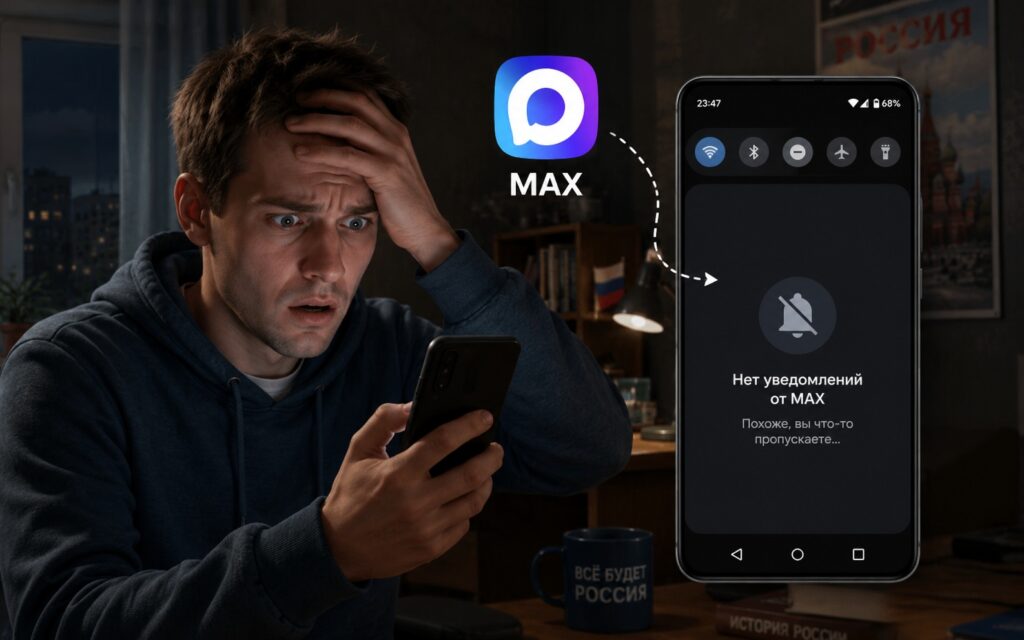
MAX notifications could be cut off at any moment
The danger of MAX for users right now isn’t that the app will stop working tomorrow. The risk is that infrastructure support is gradually narrowing, and each next event makes the service slightly less stable for those outside of Russia. I covered separately whether you should delete MAX yourself.
What Will Happen to MAX in 2026
MAX messenger is an infrastructure project of national importance. It wasn’t created to compete with Telegram globally, but to provide Russian citizens with a working messenger within the country after competitors were blocked. It handles this task and will continue to do so. MAX’s global expansion is a closed chapter. Western infrastructure won’t allow it. HUAWEI has already removed MAX from the international AppGallery, Apple removed it from the App Store worldwide.
MAX will continue working in Russia through Android apps, RuStore, and APK. The web version after September 4 will either migrate to a Russian TLS certificate — making it accessible only in compatible browsers — or die as a user tool. MAX doesn’t work as a global messenger and never will. As a Russian state messenger — it will continue to work. That’s the honest answer about its future.