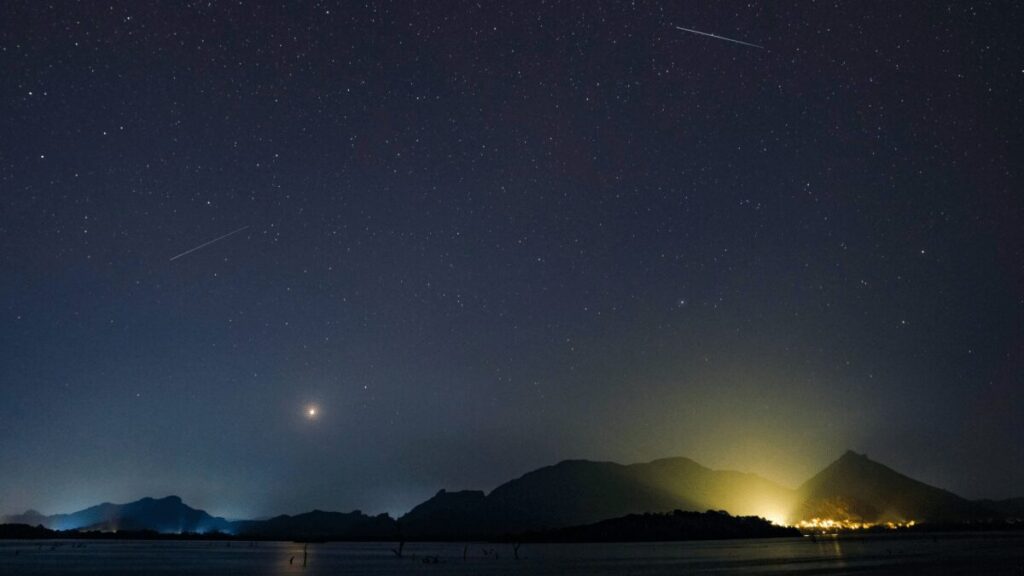
Astronomical events of May 2026: blue moon, comet, and meteor shower.
In May 2026, the sky will showcase five notable events at once — from two full moons in a single month to a meteor shower spawned by the famous Halley’s Comet. Many of them are easy to miss if you don’t know the exact dates and times for sky observations.
Flower Moon in May 2026: The First Full Moon of the Month
May opens with a full moon. The first full moon of May, known as the Flower Moon, awaits us today — May 1. The peak of the full moon will occur during daytime (around 17:23 GMT), but that’s not a problem: the Moon will appear full on the night of May 1 as well.
Unlike a supermoon, the Flower Moon is a micromoon: it will appear slightly smaller than usual due to a greater distance from Earth. However, the difference is so small that it’s hard to notice. And the most interesting part — this full moon is only the first of two in May. Precisely because the Moon became full at the very beginning of the month, another full moon awaits us at the end of May, and it will receive a special name.
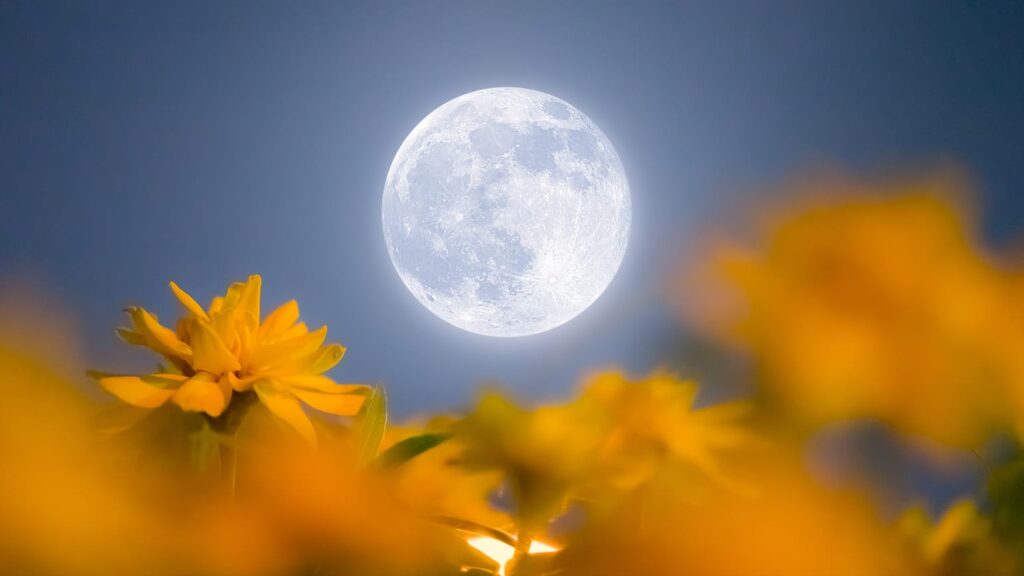
The Flower Moon will shine in the constellation Libra. Image source: starwalk.space
Comet C/2025 R3 PanSTARRS in May 2026: Where to Look
Comet C/2025 R3 (PanSTARRS) passed perihelion (its closest point to the Sun) on April 19, 2026, at a distance of 0.499 AU from the Sun. April was the best time for observations, but in May there is still a small window of opportunity.
As of late April 2026, the comet is no longer a good target for the Northern Hemisphere but is beginning to appear in the evening sky for Southern Hemisphere observers. It has already passed peak brightness and is fading, yet it is moving farther from the Sun in the sky, making it easier to detect.
For those in the Southern Hemisphere, observations are still possible with binoculars or a small telescope. In early May, the comet will pass through the constellation Eridanus, then from May 7 to 8 it will slip between the Witch Head Nebula and NGC 1788, and from May 8 it will enter the constellation Orion, passing approximately 2° from the famous Orion Nebula.
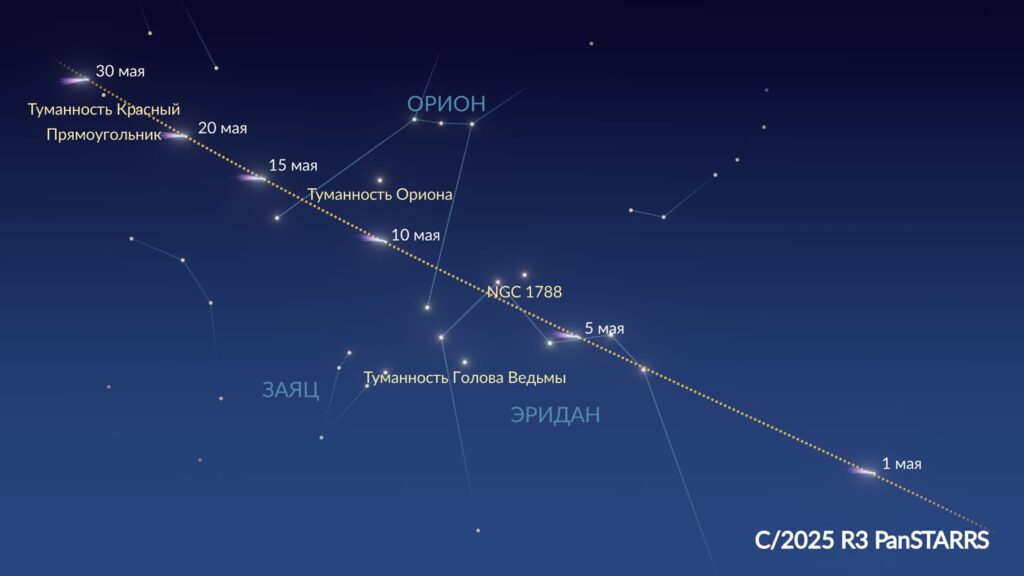
Comet C/2025 R3 is fading but still accessible for observation. Image source: starwalk.space
If you miss it — there won’t be another chance. The comet’s trajectory shows that it will be ejected from the Solar System. The comet is likely traveling on a hyperbolic trajectory and is making a single flyby past the Sun, so April–May 2026 may be humanity’s only chance to see it.
Eta Aquariid Meteor Shower 2026: When to Watch
The source of the Eta Aquariid meteor shower is the famous Halley’s Comet. Every May, Earth passes through the trail of particles left by this comet along its orbit. Tiny particles enter the atmosphere at speeds of about 65 km/s and burn up, creating bright streaks of light.
The best time for observation is May 5, 2026, in the pre-dawn hours. However, unlike most major meteor showers, the Eta Aquariids don’t have a sharp peak — good rates persist for about a week around May 4–7.
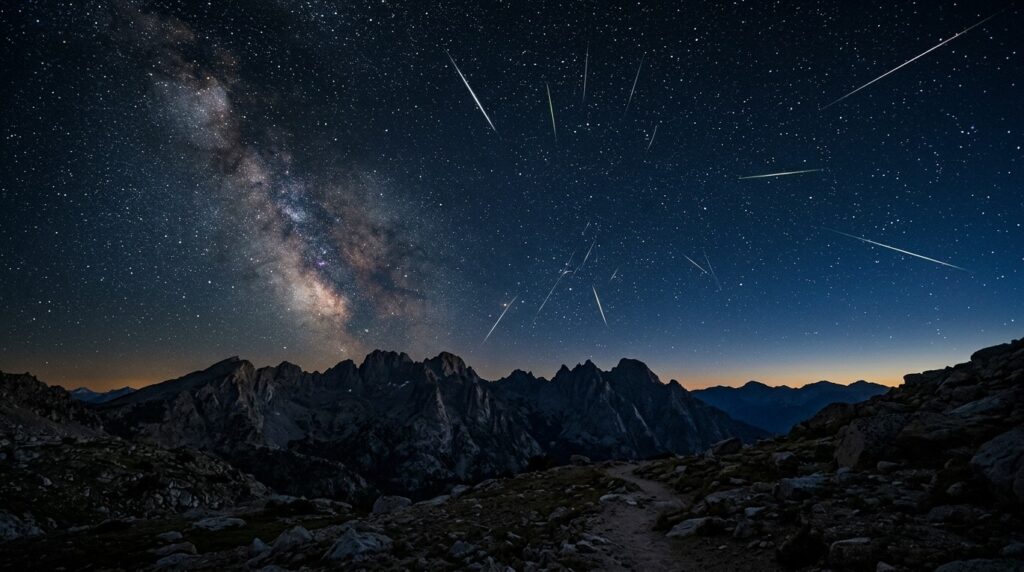
Eta Aquariid meteors in the pre-dawn sky
The main challenge for observation this year is the bright Moon. The waning Moon near the last quarter phase will significantly affect the shower’s visibility, reducing the number of noticeable meteors. Here’s what you can do about it:
- Observe in the pre-dawn hours when the Moon sinks toward the horizon
- Position yourself so that a building, tree, or hill blocks the Moon from view but leaves the rest of the sky open
- Look toward the south, toward the constellation Aquarius
- Give your eyes 15–20 minutes to adjust to the darkness
In the Northern Hemisphere under dark skies, you can typically see about 10–30 meteors per hour, while in the Southern Hemisphere — up to 50 meteors per hour. However, in 2026, due to bright moonlight, visibility for northern observers may drop to approximately 10 meteors per hour.
An interesting fact: the second meteor shower from Halley’s Comet — the Orionids — is observed every October when Earth passes through another part of the comet’s orbit. The comet itself orbits the Sun on average every 76 years and last visited the inner Solar System in 1986.
Blue Moon in May 2026: The Second Full Moon of the Month
The second full moon of the month will also be a micromoon and will occur on May 31, receiving the name “Blue Moon” (the term used for the second full moon in a single calendar month). Despite the name, the Moon will not turn blue. Peak illumination will occur at 11:45 Moscow time, and the best viewing will be on the evening of May 30 and the early morning of May 31.
Two full moons in a single month are possible because the lunar cycle averages 29.53 days. Because of this, roughly once every 2.8 years there are 13 full moons in a year instead of the usual 12, and one of the months ends up with two.

Blue micromoon rising over the ocean
Lāhainā Noon in May 2026: Shadowless Midday in Hawaii
And if you’re planning to visit Hawaii in May, you’re in luck. Starting in mid-May, one of the most unusual solar phenomena begins there: Lāhainā Noon — the moment when shadows disappear in Hawaii. This unique astronomical event is observed twice a year in May and July, when the Sun passes directly overhead in the tropics and vertical objects cast no shadows.
The southernmost points of Hawaii will see it first: as early as May 14 around 12:19 local time. After that, the phenomenon “moves” northward along the island chain. The term was coined by the Bishop Museum in 1990 and translates from Hawaiian as “cruel sun.” The sight looks surreal: streetlights cast no shadows, and a person’s shadow shrinks to the outline of their shoes.
May 2026 is a generous month for sky observations, even if you’ve never done it before. The meteor shower and two full moons are visible to the naked eye, and the comet can be spotted with binoculars.