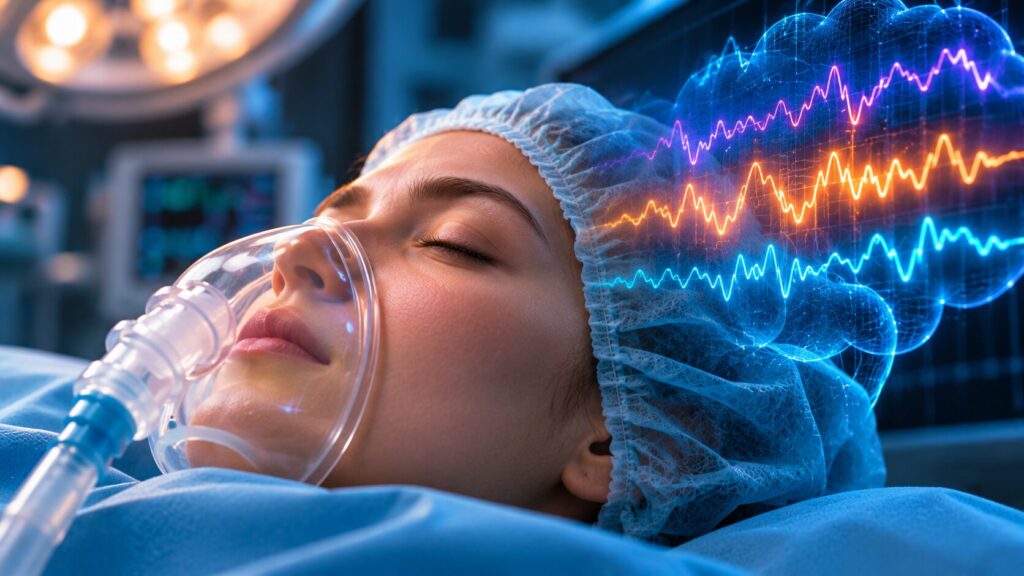
A female patient under anesthesia wearing an oxygen mask. In the background is a visualization of the brain’s electrical activity.
Even under general anesthesia, the human brain can keep analyzing speech and show signs of anticipating what comes next. That is the central finding of a study published in Nature, in which researchers recorded individual neurons in the hippocampus of seven patients undergoing brain surgery. Their neurons distinguished unusual sounds, encoded aspects of word meaning, and carried information about the likely meaning of words before they were spoken. Yet none of the patients remembered anything afterward. The result does not show that anesthetized patients consciously hear or understand conversations, but it sharpens a difficult question: what exactly does it mean to be conscious?
What you need to know
- Seven patients with severe epilepsy had electrodes placed in the hippocampus during brain surgery under general anesthesia with propofol.
- Hippocampal neurons told rare sounds apart from repeated ones, and their response to unexpected sounds changed over roughly ten minutes.
- During recorded stories, neural activity contained information about semantic categories, parts of speech, and the likely meaning of upcoming words.
- None of the seven patients recalled anything from the period under anesthesia, and the study does not show conscious hearing, understanding, or pain.
Recording single neurons during surgery
All seven participants had severe epilepsy and were undergoing brain surgery under general anesthesia using propofol. That clinical setting allowed the researchers to do something that is practically impossible under ordinary conditions: record the activity of individual neurons deep inside the human brain.
Ultra-thin electrodes were placed in the hippocampus, a region involved in learning and memory formation that helps assemble memories into a coherent narrative.
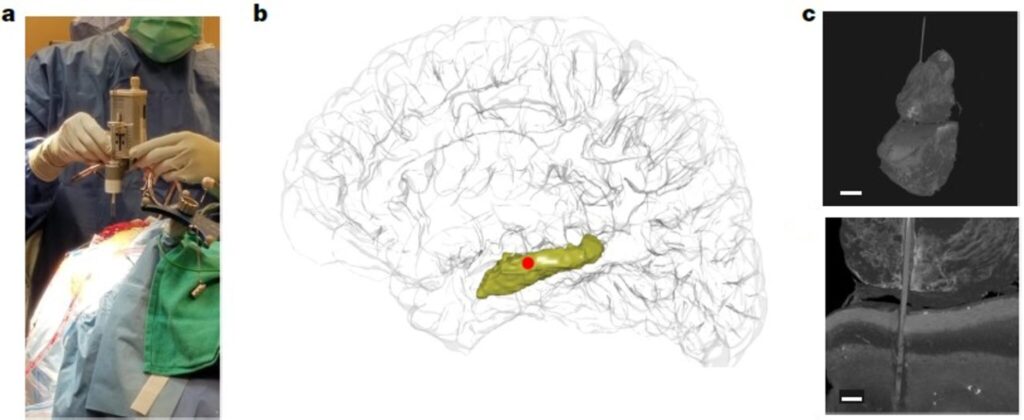
A and C — images from the surgery; B — location of the Neuropixels electrode (red dot) in the hippocampus (marked in yellow)
Three patients heard short tones, while the other four heard recorded stories. Although all were under anesthesia, their neurons kept responding to what they heard — and in ways the researchers had not expected.
Neurons noticed unusual sounds and adjusted
In the first experiment, patients heard a sequence of identical tones in which one tone was occasionally replaced by a different one — think of a monotonous “beep-beep-beep” interrupted by an entirely different sound.
Hippocampal neurons distinguished the rare tones from the familiar ones. Over roughly ten minutes, their response to the unexpected sounds also changed, suggesting that the brain can adapt to incoming information even under anesthesia.
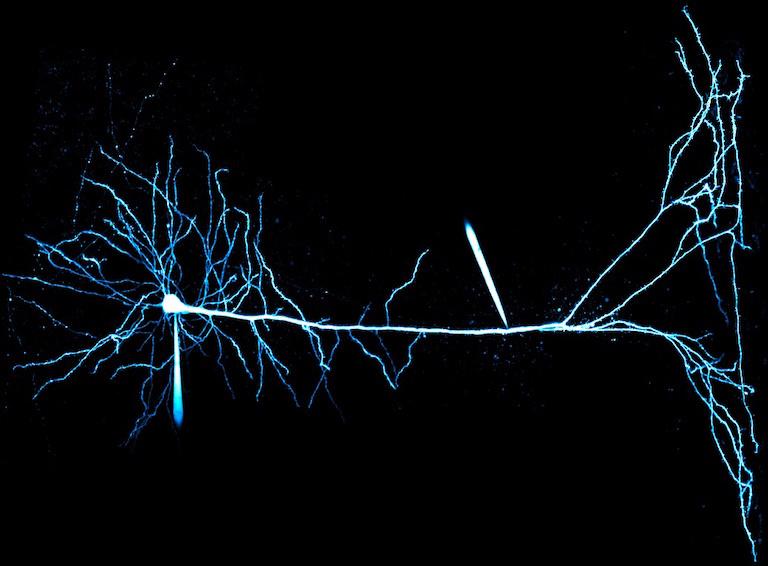
A neuron under a microscope with electrodes measuring its electrical activity
This resembles one of the simplest mechanisms of learning. But it is not evidence that people can study under anesthesia: the researchers observed changes in how nerve cells behaved, not proof that a person can consciously acquire new knowledge.
Signs of word prediction without consciousness
The story experiment produced even more striking results. When patients heard human speech, the researchers detected activity linked not only to sounds but also to the meaning of words.
The neural signals contained information about semantic categories and parts of speech. Most surprisingly, the brain’s activity carried information about the likely meaning of the next words before they were actually heard.
In some ways, this resembles predictive text on a smartphone, which uses previous words to guess what will come next. Here, a comparable process appeared in a human brain under general anesthesia.
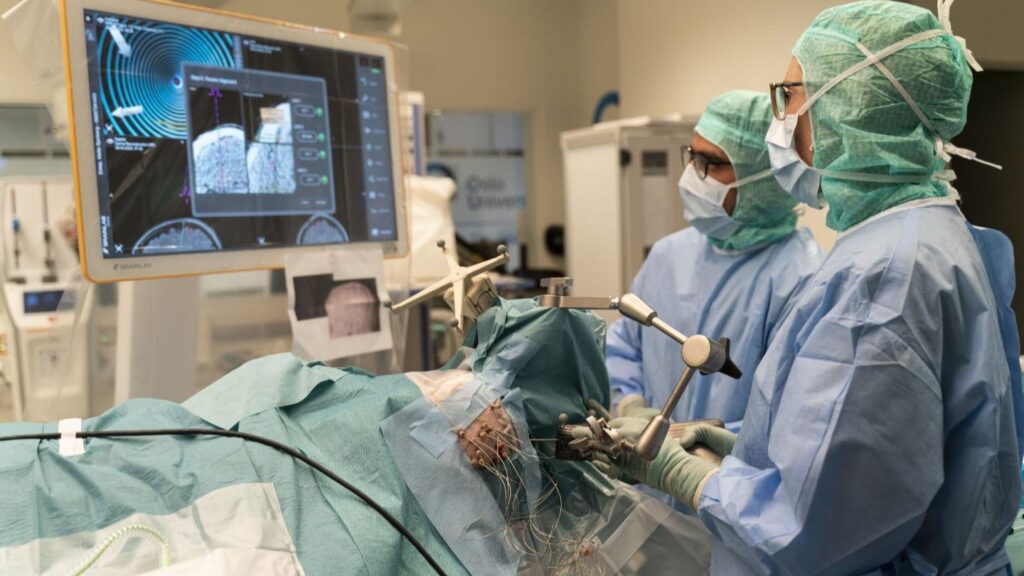
A neurosurgical operation during which scientists record the patient’s brain electrical activity
It is important to be precise about what this means. The researchers did not guess specific words or read patients’ thoughts. They identified signs of meaning processing and prediction — functions usually associated with the waking brain.
Why patients remember nothing
After surgery, none of the seven patients recalled what had happened while they were under anesthesia. That highlights a key distinction: the brain can process information without the person necessarily being aware of it.
Something similar happens during sleep. Research has shown that the sleeping brain responds to words even when the person has no idea anyone was speaking to them. Still, ordinary sleep and drug-induced anesthesia are far from the same thing.

A patient receives oxygen through a mask before being put under general anesthesia
One possible explanation involves communication between brain regions. Under anesthesia, individual areas may keep analyzing signals while their interaction with other regions is disrupted.
Consciousness, in this view, may depend not just on neuronal activity but on the coordinated work of entire brain networks. For now, however, this is a proposed explanation, not a proven mechanism.
A possible path toward helping people who cannot speak
The research also has a potential practical application. If scientists can more accurately decode the information carried in neuronal activity, it could inform new brain-computer interfaces.
Such technologies already exist. In one example, a paralyzed woman was able to speak through a digital avatar that converted her brain signals into speech.
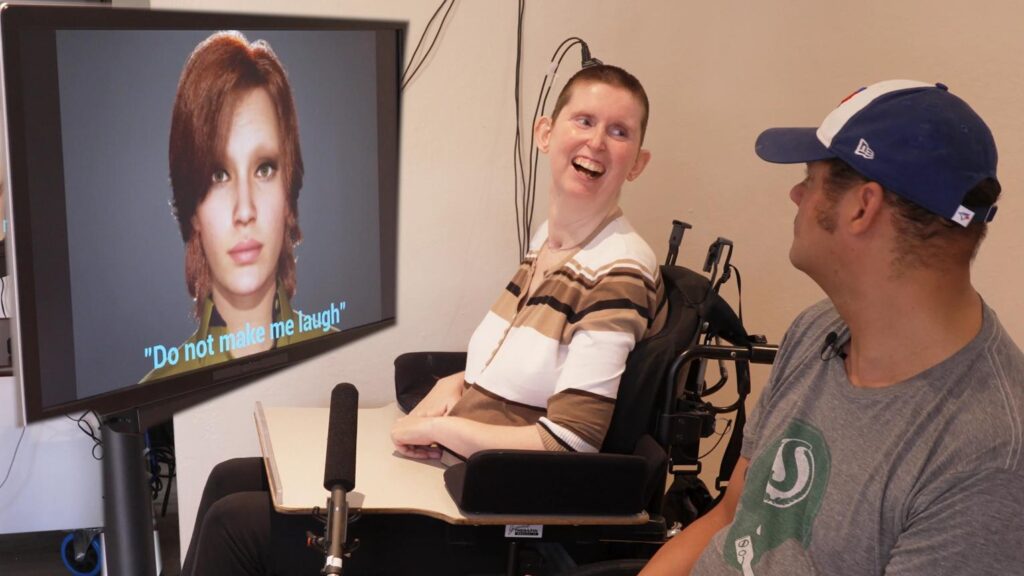
A paralyzed woman communicates using a brain-computer interface and a digital avatar on a screen
As reported by ScienceDaily, the new findings may point to additional ways of extracting language information from the brain. In the long run, that could benefit people who have lost the ability to speak after a stroke or injury.
Important limitations
Any such application remains a long way off. The study included only seven patients, examined only the hippocampus, and used one specific type of anesthesia. It is not known whether these abilities persist under other forms of anesthesia, during sleep, or in a coma.
Most importantly, the finding does not prove that a person under anesthesia consciously hears conversations, understands them, or feels pain. What it does offer scientists is a new way to investigate which complex processes may continue without our conscious participation.