Illustration of a human brain wearing glasses
Living nerve cells grown in the lab have moved from virtual tasks to physical ones. In one study, tiny brain organoids helped a computer identify Braille letters with up to 83% accuracy. In separate work, living neurons on a chip were used to steer a four-legged robot. The word “brain” needs a caveat, though: these are small clusters of cells, not grown human brains. The cells did not learn to read, and electrical activity is not evidence of thought or consciousness.
In March, Hi-News reported on brain cells playing Doom. That work stayed inside a virtual world. The new experiments add raised Braille dots and a physical robot dog.
What you need to know
- University of Bristol researchers used millimetre-sized organoids to process signals from all 26 Braille letters of the English alphabet. Accuracy was 61% with one organoid and 83% with three.
- A computer algorithm, not the organoids, performed the actual letter recognition.
- Cortical Labs converted the activity of living neurons into movement commands for a four-legged robot.
- In a Cortical Labs and Honda preprint, only 12 of about 1,300 tested settings consistently showed signs of learning. The preprint has not yet been peer-reviewed.
Small clusters of neurons, not whole brains
No one has grown a complete human brain. The Braille experiment used organoids. These are miniature structures made of nerve cells and supporting cells that resemble certain features of brain tissue. Researchers grow these “mini-brains” from stem cells in the lab.
The robot experiment used a different system: living neurons placed on a specialised chip. Electrodes make it possible to send signals to the cells and record their responses. The result is an unusual hybrid of living cells and a conventional computer. Electrical activity alone does not mean such a system has thoughts or consciousness.
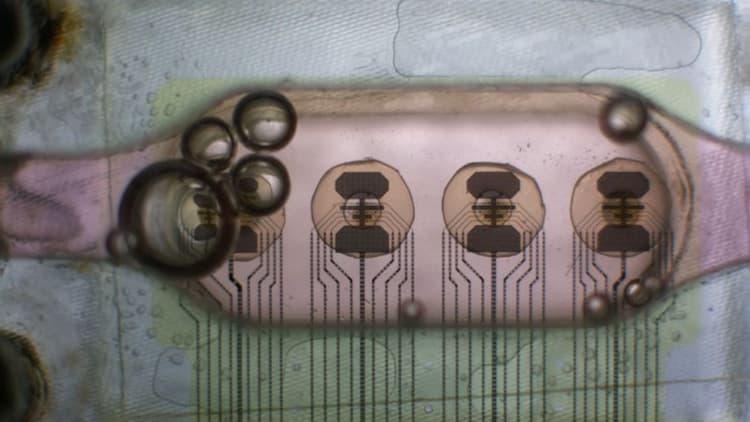
A real micrograph of a FinalSpark biochip with electrodes and organoids. It shows how far real mini-brains are from the familiar image of a human brain.
Three organoids together reached 83% accuracy on Braille
In October 2026, researchers at the University of Bristol published a paper describing experiments with organoids about a millimetre in size. The organoids received information about the 26 letters of the English alphabet written in Braille.
How the setup worked
- A sensor slid across the raised Braille dots.
- A computer converted the sensor data into electrical pulses.
- The organoids responded to those pulses.
- An algorithm analysed the nerve cells’ activity and determined which letter had been presented.
With one organoid, accuracy was 61%. With three working together, it rose to 83%. The three-organoid system also coped better with artificially added noise.
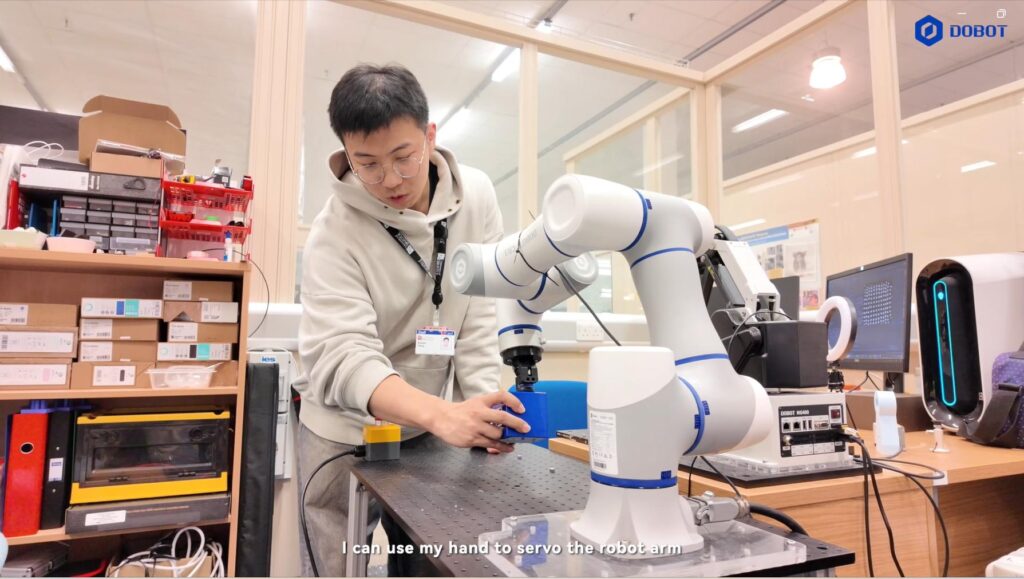
The actual equipment from the experiment. A robotic sensor reads the raised dots of Braille. Photo by Tianyi Liu, University of Bristol.
What the organoids did not do
The organoids did not learn to read and did not understand the letters. They were never even trained on the Braille alphabet. The living cells took part in processing the signals, while a computer algorithm did the recognition.
A robot dog moved on commands derived from living neurons
Australian company Cortical Labs connected its living-neuron system to a four-legged robot. The system converted the cells’ electrical activity into movement commands that let the robot move toward a set target.
According to New Scientist, the system was first trained to navigate a simple virtual space. Those results were then used to control the physical robot dog.
This is not an autonomous robot with a human mind. The living cells work together with electronics and software, and so far the task is limited to simple movements.
Neurons learned to search for “food” in a virtual world
In a separate experiment, Cortical Labs and Honda connected living neurons to a virtual agent. The agent had to find a target by following a simulated smell. It could move forward or turn, and the cells received electrical signals linked to what was happening in the virtual environment.
To find a workable way of interacting with the neurons, the researchers tested about 1,300 configurations over more than 4,000 hours of trials in total. Only 12 configurations consistently showed signs of learning across several consecutive attempts.
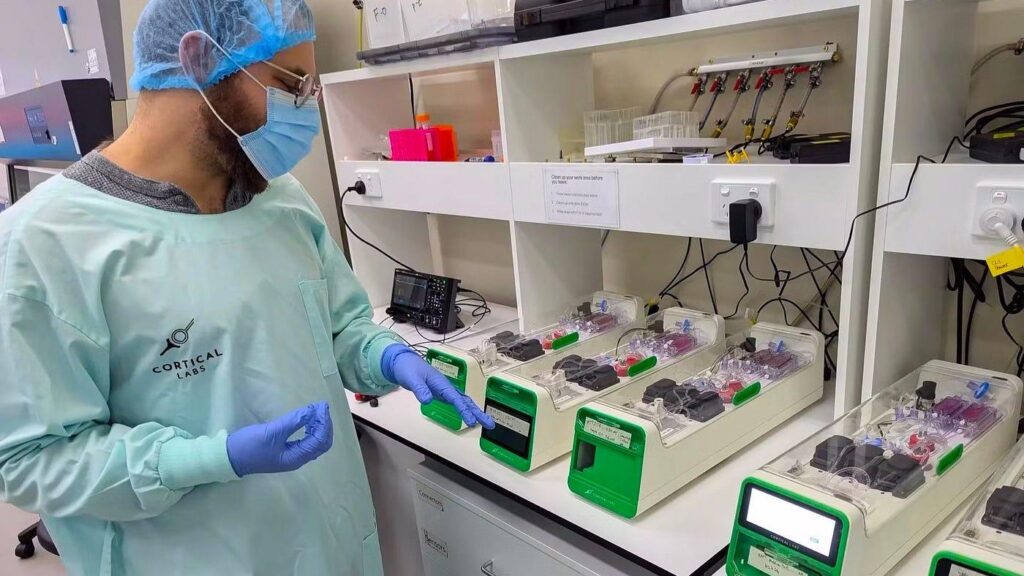
Photo of the Cortical Labs laboratory. A researcher works with equipment used for experiments with living neurons.
The results are described in a preprint that has not yet undergone independent peer review. Even so, the experiment suggests that living neural networks can improve at simple tasks when the feedback is set up correctly.
Living computers could save energy, but there is a catch
Why pursue this when conventional processors and artificial intelligence already exist? The appeal is that biological neurons can adapt to new conditions and process information using little energy.
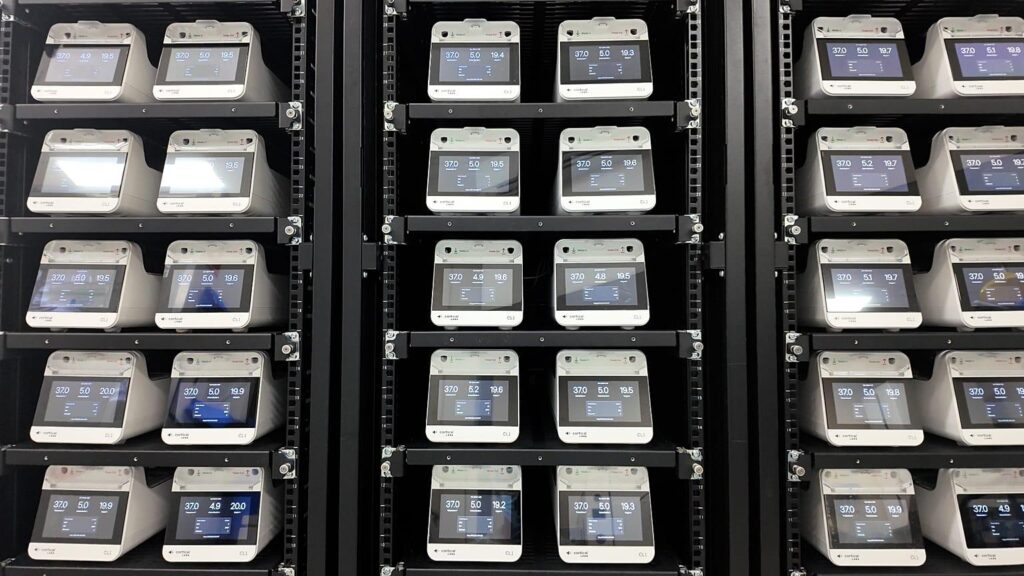
Real CL1 biocomputers. Units containing living neurons are housed in server racks, with displays showing the parameters needed to run the systems.
The idea of computers built on brain cells is not new. Such systems could one day help robots that must make decisions in unfamiliar environments. They could also support research into how the brain works and how drugs act.
The catch is upkeep. Living cells need a constant supply of nutrients, a stable temperature and protection from harmful conditions. All of that equipment uses electricity too.
As a result, it is not yet known whether biocomputers will actually prove more efficient or practical than conventional ones. It also remains to be seen how reliably the neurons will perform beyond simple laboratory tasks.