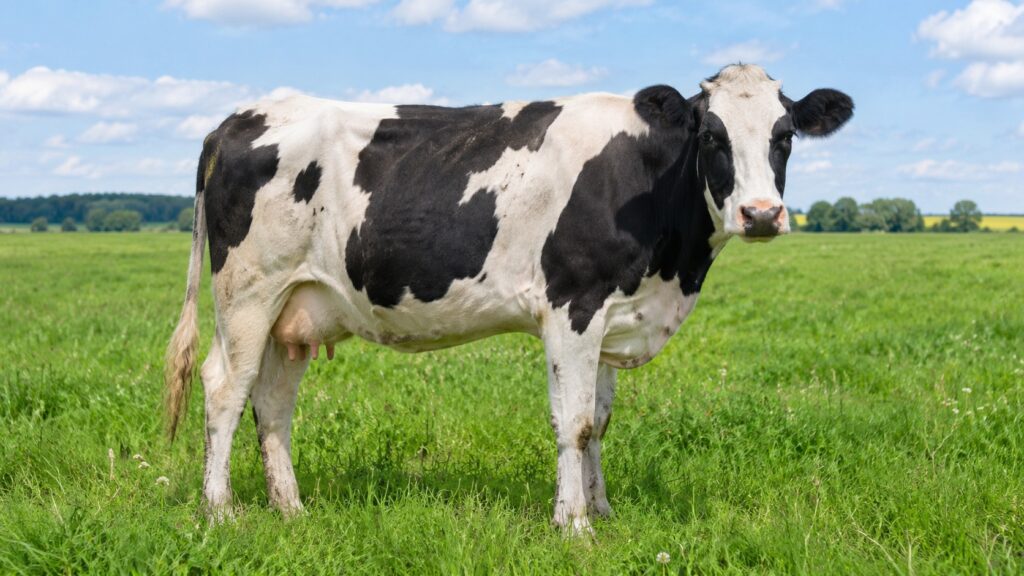
A cow standing in a field
Ask most people which animal farts the most and they will say the cow. That answer is not quite right: cows release most of their methane by burping, not farting. The stronger contenders are plant-eaters whose food ferments in the rear part of the gut. Depending on how you count, the best current answer points to termites, horses or nutria, but scientists have not produced a reliable ranking, because almost no one directly measures animal intestinal gas.
What you need to know
- According to a recent estimate, all livestock together emit about 117 teragrams of methane a year, mostly through burping rather than farting.
- Termites, estimated at around 27 quadrillion individuals, emit roughly 10 teragrams of methane a year, and almost all of it leaves from the rear end.
- A 2019 IPCC report lists the horse as the top methane emitter among hindgut-fermenting animals, at about 18 kg per animal per year; the nutria emits more per kilogram of body weight.
- Methane is usually measured in an animal’s breath, so these figures do not directly show how much an animal farts.
Cows mostly release methane by burping
Livestock, especially cattle, produce large amounts of methane, a flammable gas formed as grass is digested. According to a recent estimate, all livestock together emit 117 teragrams of methane a year. One teragram is a billion kilograms, or a million tonnes. So much gas can build up that a cowshed in Germany once exploded.
People often assume all this gas comes out of the cow’s back end. It does not. Ermias Kebreab, a professor of animal science at the University of California, Davis, told Live Science that in livestock the overwhelming share of methane leaves through belching, not farting.
Where plant-eaters produce their gas
Herbivores cannot break down plants on their own. Microbes in the gut do this work for them, fermenting the food and releasing gases, including methane and carbon dioxide. That is the explanation given by Marcus Clauss, head of research at the Clinic for Zoo, Exotic and Wild Animals at the University of Zurich.
Some of the gas is absorbed into the blood and exhaled. The rest exits through the nearest opening. If food ferments in the front part of the digestive system, the animal mostly burps; if fermentation happens toward the rear, it mostly farts. It all depends on where the body’s “fermentation vat” sits.
In cows, buffalo, sheep, goats and camels, that vat is at the front: the rumen, a large compartment of the stomach. As New York University professor Matthew Hayek noted, this is why their methane mostly comes out as burps. The real contenders for the farting title are animals that digest plant matter in the large intestine. Carnivores are barely in the running, as they generally produce far less methane than herbivores.
Termites win on sheer numbers
Termites digest wood and grass in the rear part of the gut. By one estimate, about 27 quadrillion termites live on Earth, a number with 15 zeros. Together they emit roughly 10 teragrams of methane a year.
That is more than ten times less than all livestock combined. But nearly all of the termites’ gas comes out of the back end, which makes them strong candidates for the top spot by total volume of farting.
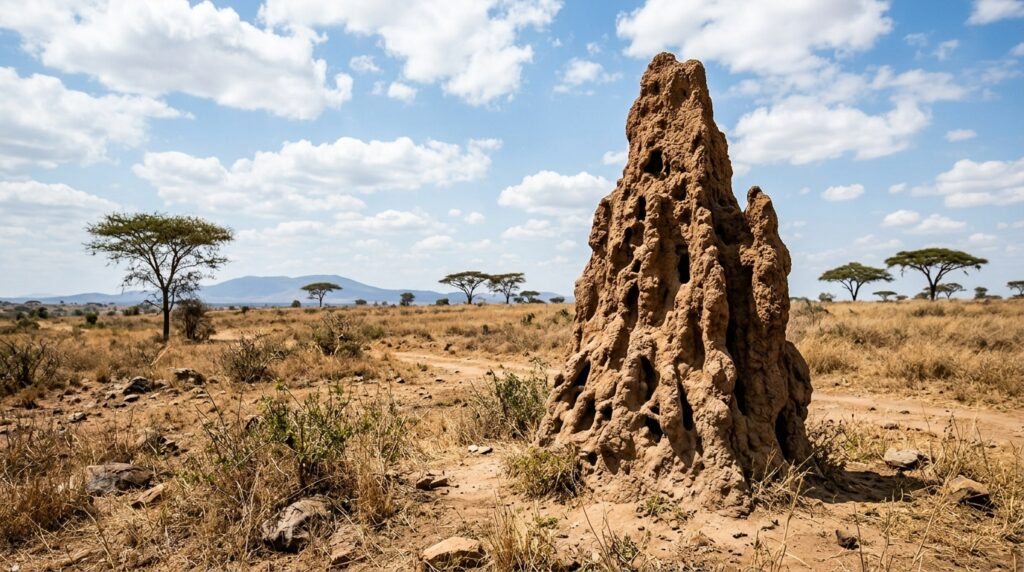
A tall termite mound in a dry savanna under a cloudy sky
The horse leads only among animals that have been measured
Per individual animal, the top spot appears to go to the horse. A 2019 report by the Intergovernmental Panel on Climate Change (IPCC) states that among animals that digest plant matter in the large intestine, the horse emits the most methane: about 18 kg per animal per year.
Clauss is skeptical of this lead. In his view, the horse ranks first only because it has actually been measured. Many similar animals, such as rhinoceroses, have never been tested. Elephants, which also ferment food in the large intestine, face the same gap in data.
Measured per kilogram of body weight, the horse loses. The nutria, a plant-eating rodent that lives near water, emits more methane per unit of body mass. So the answer depends on the metric: the total for a whole species, the amount per animal, or the amount per kilogram of body weight.
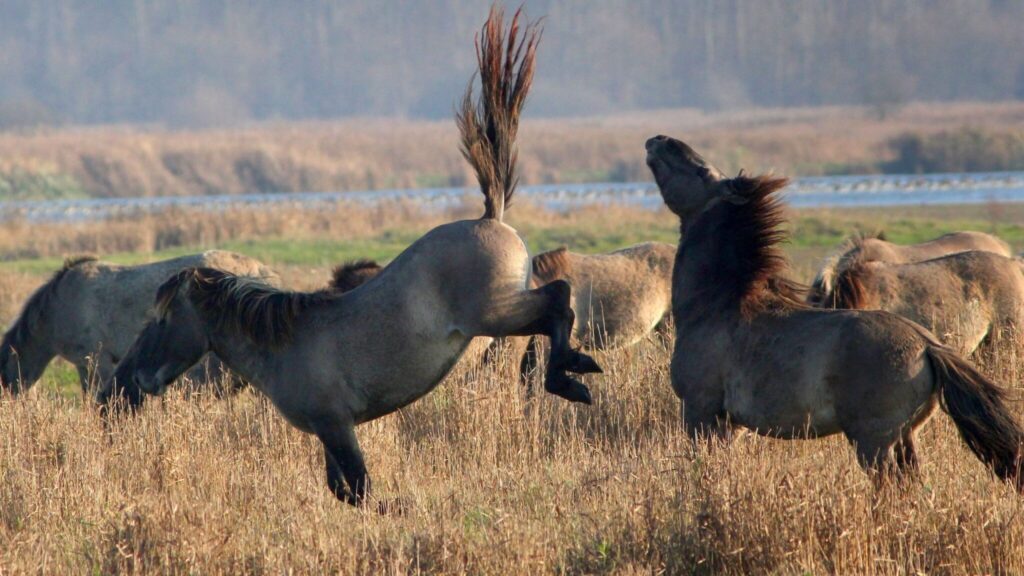
Which animal farts the most
Animal methane is measured in breath
Here is the key caveat. Scientists almost always measure the gas an animal exhales. The animal may be placed in a special respiration chamber, or given a capsule that releases a harmless tracer gas in the stomach while a harness collects breath samples. Breath can also be sampled where the animal feeds or is milked.
For this reason, Clauss doubts that methane totals are a good indicator of how much an animal farts. Intestinal gas does contain methane, but in his view most of it probably enters the bloodstream, travels to the lungs and is exhaled. Methane figures describe an animal’s gas output overall, not its farting specifically.
Any ranking is still an educated guess
Until scientists can measure animals’ intestinal gas directly, any ranking remains speculative. Such tools already exist for humans: swallowable electronic capsules that measure gases inside the gut, and sensors attached to underwear that detect hydrogen in passed gas. Animals are not yet monitored this way.
The best answer for now is this: among measured animals, the horse leads per individual; the nutria leads per kilogram of body weight; and termites lead in total. The cow, despite its reputation, is mostly a burper.