In my first look at the realme P4, I mentioned the peak screen brightness — 4000 nits. It sounds impressive, and the brightness parameter seems quite significant when choosing a new smartphone, so it’s no surprise that everyone looks at it. But the problem lies elsewhere. Peak brightness tells you almost nothing about real-world comfort. Let me explain why.
Explaining what’s wrong with peak screen brightness
Peak Screen Brightness — What Is It
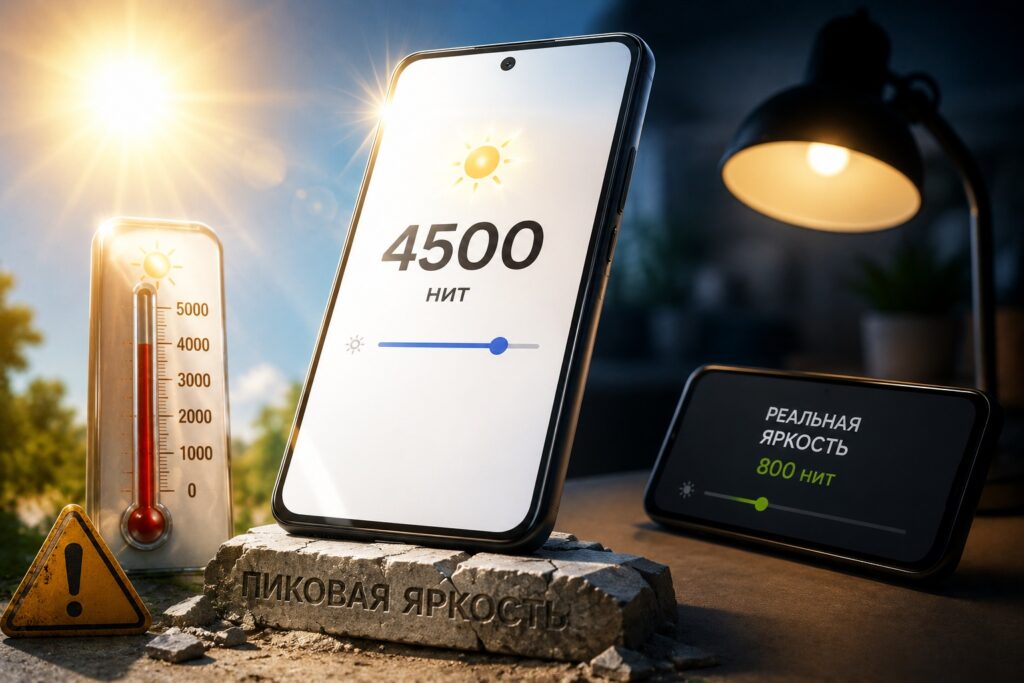
Peak screen brightness is the maximum a display can achieve under ideal conditions. It sounds like a useful phone specification, but the devil is in the details. First, manufacturers measure it differently. Some measure brightness across the entire screen area, others measure it on 1% of the area at peak HDR mode. So 4000 nits from one manufacturer and 4000 nits from another are fundamentally different things, even though the number is the same.
Second, this brightness usually includes the automatic HBM (High Brightness Mode). This isn’t something you turn on manually. It’s something the system activates on its own under certain conditions. And this is where the main catch is hidden.
How Peak Screen Brightness Is Achieved
Here’s the key question: how often do you actually see those 4000 nits? The unpleasant answer is — practically never in everyday life. Maximum screen brightness in peak mode is activated in only one scenario: playback of HDR content with Dolby Vision or HDR10+ metadata on compatible platforms — Netflix, Apple TV+, YouTube Premium.
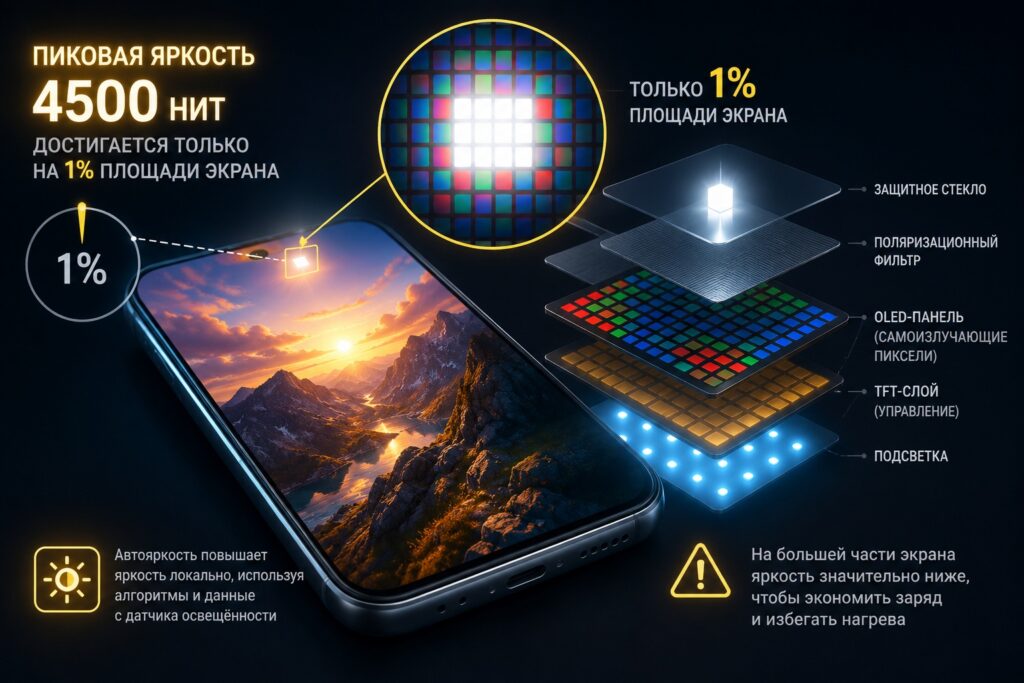
The basic principle of how peak brightness works
Moreover, peak brightness only works on individual bright elements of the frame, not the entire screen (sometimes just 1% of the area). Under normal conditions (at home, in the office, in a café), phone screen brightness is 400-800 nits, and only in sunlight can it rise slightly above the 1000-nit mark, but nowhere near the claimed 4000 nits.
What Screen Brightness Actually Matters
I’ve covered separately what phone brightness should be for comfortable use. Here I’ll explain the logic.
Instead of peak brightness, when choosing a smartphone you should look at two other numbers. HBM brightness — this is what the screen delivers consistently under bright outdoor lighting without time restrictions. This is what determines whether the screen is readable in the sun throughout your entire walk. Manual maximum brightness — the ceiling during normal use without auto-brightness. This is what you get when you manually slide the brightness slider to the maximum.
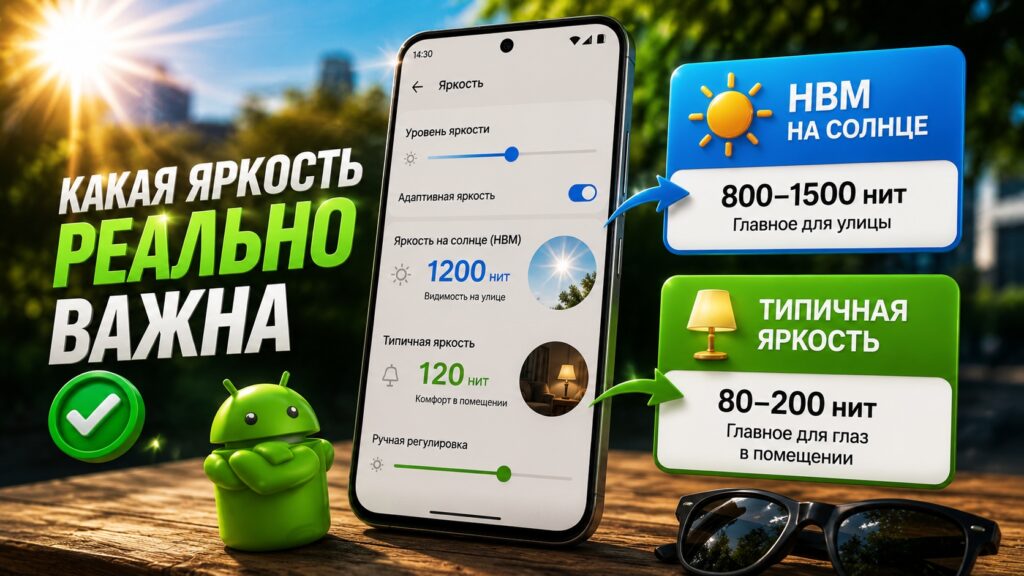
What matters is typical screen brightness and HBM
Guidelines for typical brightness:
- up to 600 nits — you’ll be squinting or seeking shade in bright sunlight;
- 600-1000 nits — fine for outdoors on a cloudy day;
- above 1000 nits — comfortable in direct sunlight.
Manufacturers list these numbers far more modestly than peak brightness. Sometimes they don’t list them at all, and that speaks for itself.
Smartphone with High Peak Screen Brightness — What’s the Catch
Let’s look at specific examples to back this up. The realme P4 claims 4000 nits of peak brightness. This is a budget smartphone for 13,000 rubles with a Snapdragon 685. Sounds like a flagship screen. In reality, the typical brightness there is significantly more modest:
- 600 nits — with manual adjustment;
- 1200 nits — under sunlight.
Unfortunately, smartphone specs in marketing materials are arranged according to one principle: the most impressive number is pushed to the front. 4000 nits looks better than 600 nits of typical brightness — even though the latter matters more than the former. At the same time, display manufacturing is set up so that almost any modern AMOLED is theoretically capable of producing high peak brightness on a small area for a short time. This isn’t an engineering achievement but a feature of the technology that’s used in marketing.
What to Look for When Choosing a Smartphone Screen
Here’s the practical takeaway without the fluff. When studying smartphone specifications regarding the screen — look at the following:
- typical HBM brightness — the most important thing for outdoor comfort;
- panel type: AMOLED saves battery on dark interfaces, IPS consumes the same regardless;
- refresh rate and whether there’s an adaptive mode (saves battery without sacrificing smoothness);
- color space coverage matters for those who work with photos and video.
Peak brightness in nits doesn’t make this list. If you want to genuinely improve the screen comfort on your current smartphone, be sure to read about how to increase your phone’s brightness beyond the maximum (there are specific settings there). They’ll give you more practical benefit than any marketing number in a smartphone description.