My three-year-old Samsung Galaxy S23 Ultra handles everyday tasks confidently. Plus it has a good screen, One UI updates arrive regularly, and there’s no formal reason for an upgrade. But there’s one hardware change that can’t be fixed with a firmware update — the transition to silicon-carbon batteries. It’s precisely because of this that the old flagship suddenly starts feeling outdated, and it’s the main argument in favor of a replacement.
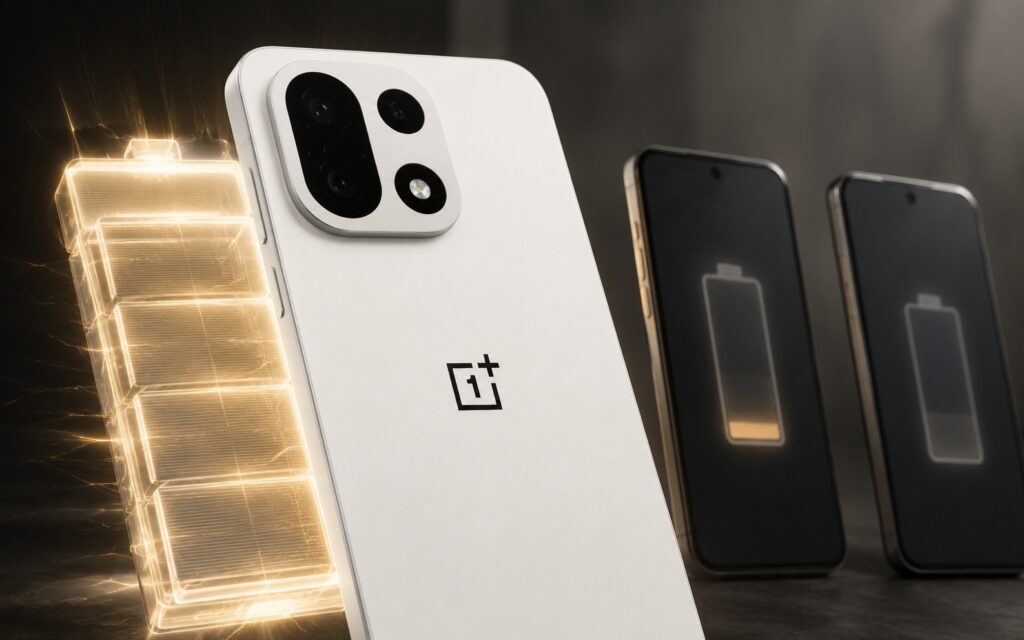
I decided to buy a new smartphone and chose a suitable model
What Battery Does a Smartphone Need in 2026
In 2023, the battery life of a 5000 mAh battery in the Galaxy S23 Ultra looked decent. Now it’s just enough to last until the evening, nothing more. A heavy day with navigation and messengers drains the battery by evening.
An important detail: it’s not about wear. The battery was recently replaced, and it didn’t provide a noticeable boost in battery life. In other words, the problem isn’t with the fatigue of a specific battery, but with the fact that the capacity itself is already modest by today’s standards.
What Are Silicon-Carbon Batteries and Why Are They Needed
The main star of this story is the new battery chemistry. In short, silicon-carbon batteries hold more energy in the same physical volume than traditional lithium-ion ones. Simply put, a higher-capacity battery fits into the same-sized body without making the phone thicker.
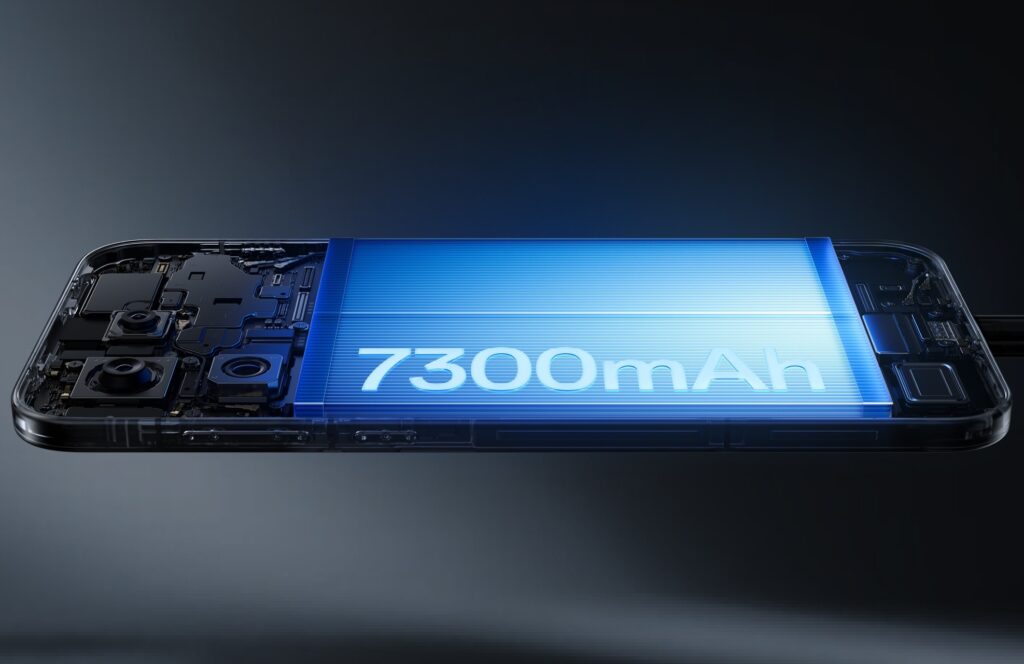
Same dimensions, but a bigger battery
The OnePlus 15 smartphone is a clear example of this. It uses a completely new battery — 7300 mAh based on silicon-carbon chemistry, which on paper looks like a massive capacity increase compared to the 5000 mAh batteries in many models. At the same time, the phone hasn’t become thicker or heavier for the sake of this capacity.
The manufacturer also promises decent longevity. OnePlus claims that this new generation of silicon-carbon batteries retains about 80% of capacity after 4 years of use. This can’t be confirmed in practice yet — the phone was released recently, so treat the figure as a promise rather than a proven fact.
OnePlus 15 Battery Life on a Single Charge
In practice, OnePlus 15 is similar in size to the Galaxy S23 Ultra, but its battery life is on a completely different level. Where the old Samsung barely lasts until evening under heavy load, the new flagship easily lives a day and a half to two days. This is the kind of difference that eliminates the usual battery anxiety.
After nearly a month with the OnePlus 15 as my main phone, it has the best battery life I’ve ever encountered: thanks to the 7300 mAh battery, I consistently got two full days of heavy use with over 10 hours of screen-on time. Moreover, this is confirmed by independent tests from GSMArena.com.
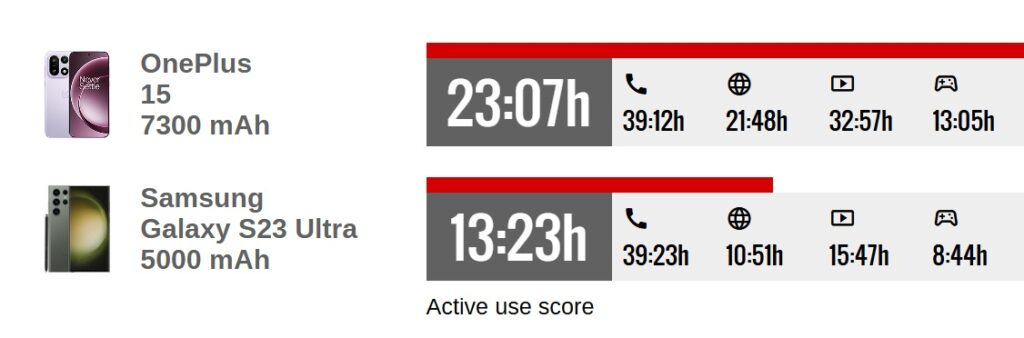
The smartphone lasts almost twice as long
To understand the scale of the leap: OnePlus 15 received a serious upgrade from 6000 mAh in the OnePlus 13 to 7300 mAh with a silicon-carbon battery — this is one of the largest batteries ever installed in a mainstream flagship. Against this backdrop, the 5000 mAh in the three-year-old Samsung looks modest.
How Long Does the OnePlus 15 Take to Charge
You’d logically expect a larger-capacity battery to take longer to charge. But that’s not the case here. The OnePlus 15 supports wired charging up to 100W and wireless charging at 50W. The massive battery fills up in roughly the same time as the much smaller battery in the old Samsung.
In tests, it looks like this. Even at a peak speed of about 65W in a real-world test, the phone charged up to 81% in 30 minutes. For comparison, the Galaxy S23 Ultra is limited to 45W wired charging — over the years this didn’t seem slow, but after the fast top-ups with OnePlus, going back to the old pace feels like a step backward.
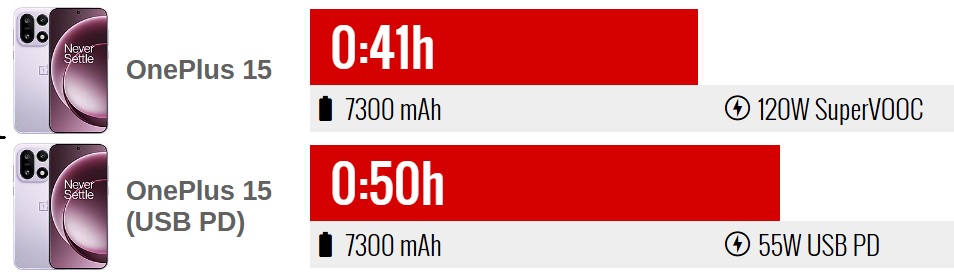
The smartphone charges in 40-50 minutes depending on the power adapter
The practical takeaway is simple: 15 minutes at an outlet in the morning is enough to last until the end of the workday. The larger capacity doesn’t penalize you with charging time, and this is the second reason why battery anxiety disappears.
Is It Worth Buying a Smartphone in 2026
The honest answer depends on how important battery life is to you. If your phone spends most of its time next to a charger and you plug it in overnight anyway, your current battery might be sufficient. In that case, it’s wiser to tweak your power-saving settings than to spend money on a new device.
But if you’re often on the go, frequently use navigation, and constantly catch yourself thinking “will it last or not,” switching to a silicon-carbon battery provides a real, tangible everyday benefit. This is exactly the kind of upgrade that changes not the numbers in the specs, but the very habit of watching your battery percentage.