I wrote about the dangers of the Telega messenger back in April — warning directly and without beating around the bush. Many didn’t listen: the app gathered, according to the developers themselves, a multi-million user base in a year. Now Telega is shutting down, and information has emerged that user messages are being sold on the darknet. Let me break it down step by step.
Telega users have finally reaped what they sowed
What Is the Telega App on Android
The Telega messenger is a fork of Telegram. The developers took the open source code of the official client, added their own components, and released a separate Telega app. Visually, it was almost indistinguishable from the original: the same chats, the same channels, the same interface. But under the hood — a different story.
This third-party Telegram client was positioned as a solution for those whose Telegram was unstable due to blocks. They promised it would work without a VPN through their own proxy servers. The app was developed by the Russian company JSC “Telega” — formerly JSC “Dal.” The code was found to contain SDKs from Odnoklassniki, MyTracker from VK, and API from OK.ru, but VK itself officially denied any connection to the project.
Why the Telega App Is Dangerous
In April 2026, independent researchers conducted a code analysis of version 2.4.2. The results were telling. The app connected not to Telegram’s servers, but to JSC “Telega’s” own infrastructure. An additional RSA key was found in the code, making the company’s servers trusted participants in the exchange — meaning the service operator could technically act as a full party to the encryption.
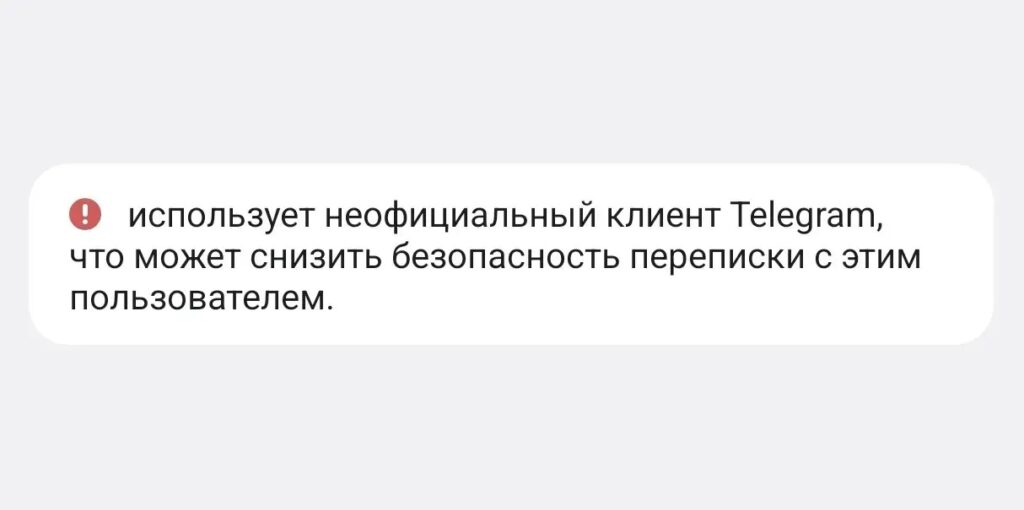
This is how Telega users were marked in Telegram
Full list of discovered problems with the Telega app:
- all traffic went through JSC “Telega” servers rather than directly to Telegram, meaning the company could see metadata: who you write to, when, and how often;
- voice calls were processed through Odnoklassniki infrastructure with SSL certificate verification disabled, opening the possibility of interception;
- the app tracked VPN usage and transmitted this data through the MyTracker analytics SDK from VK;
- 75 permissions, including background geolocation, app installation, and clipboard reading;
- app behavior could be changed remotely without an update through the store — without the user’s knowledge;
- photos were re-encoded after sending, which technically proved access to content.
Apple removed the Telega app from the App Store on April 9, 2026, and iOS began flagging the already-installed messenger as malicious. The danger of the Telega app and other similar clients has been covered in detail previously.
Why the Telega Messenger Stopped Working
As of July 1, Telega ceases operation. The project’s administration announced this in their Telegram channel. The stated reasons were the inability to ensure full localization in a third-party client format and external restrictions from technology platforms — primarily the removal from the App Store.
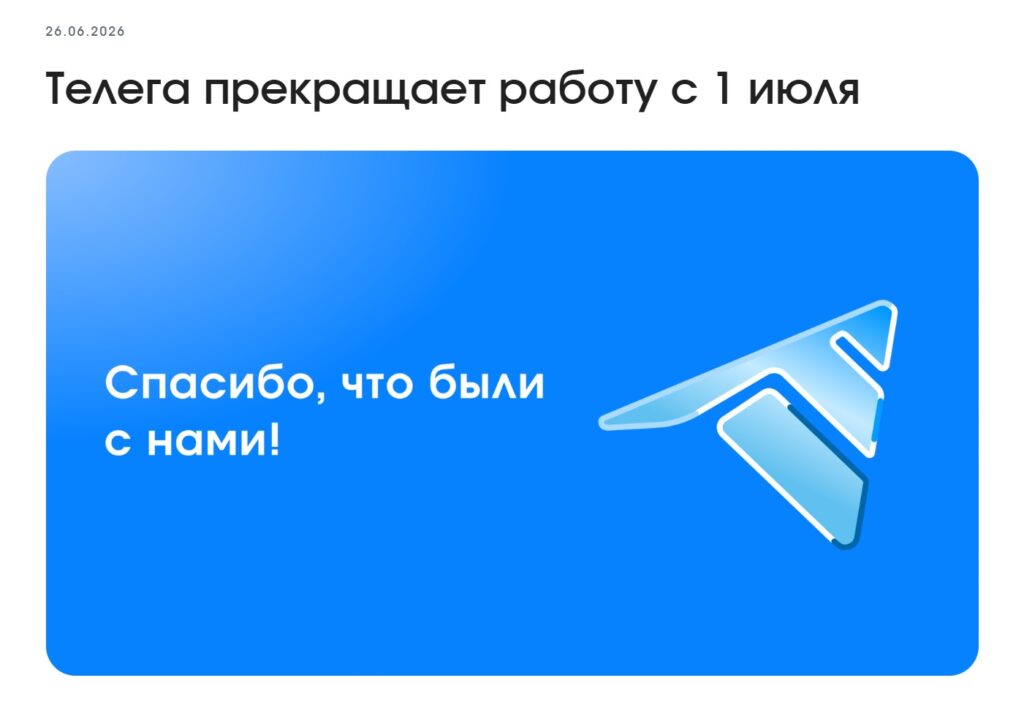
Telega itself announced its shutdown
The Telega app is not working, and this is not a temporary glitch but a permanent shutdown. Users with an active paid “Telega Plus” subscription were promised refunds, with refund timelines to be communicated separately. The fact of the shutdown, along with the circumstances, raises the question that concerns everyone who used this client: what happened to their data.
Telega Leaking Chats — True or Not
VGTRK journalist Eduard Petrov wrote in his Telegram channel, citing an informed source:
Offers to sell leaked chats of users who used the now-defunct alternative Telegram client have appeared on the darknet. For 155,000 rubles, hackers are allegedly ready to provide the 100 most recent messages from the chats of any 10 users of this client.
Such a statement citing an anonymous source is not a verified fact. It’s impossible to independently verify the presence of specific data on the darknet. But the technical context makes this claim plausible: the code analysis in April showed that the Telega operator had access to messages through its own intermediary servers.
If you used the Telega app, you should assume the worst-case scenario: your metadata and possibly your messages may have been compromised. What to do right now: go to the official Telegram, open “Settings — Privacy — Active Sessions” and terminate all unfamiliar sessions. Enable two-step authentication if you haven’t already.
Alternatives to the Telega App
The answer is uncomfortable: there is no proper replacement for Telega in the familiar format, because Telega was never proper to begin with. All chats, channels, and contacts in Telegram continue to exist in the official client. Your account is tied to your phone number, not to Telega — there’s nothing to transfer.
Only MAX remains standing
If the official Telegram is unstable, the state-backed MAX remains. But if there’s no choice, it technically works. It’s important to understand: MAX’s privacy policy explicitly provides for the transfer of user data to third parties upon request, including government agencies. This is not a hidden threat but an open declaration.
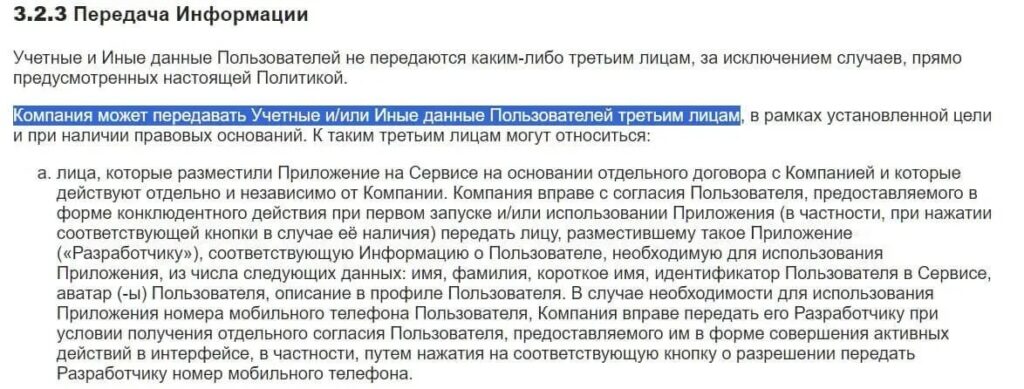
MAX itself hands over data upon request
Alternatives to Telega in the form of other third-party Telegram clients are the same game with the same risks. The next such client could very well repeat Telega’s story.