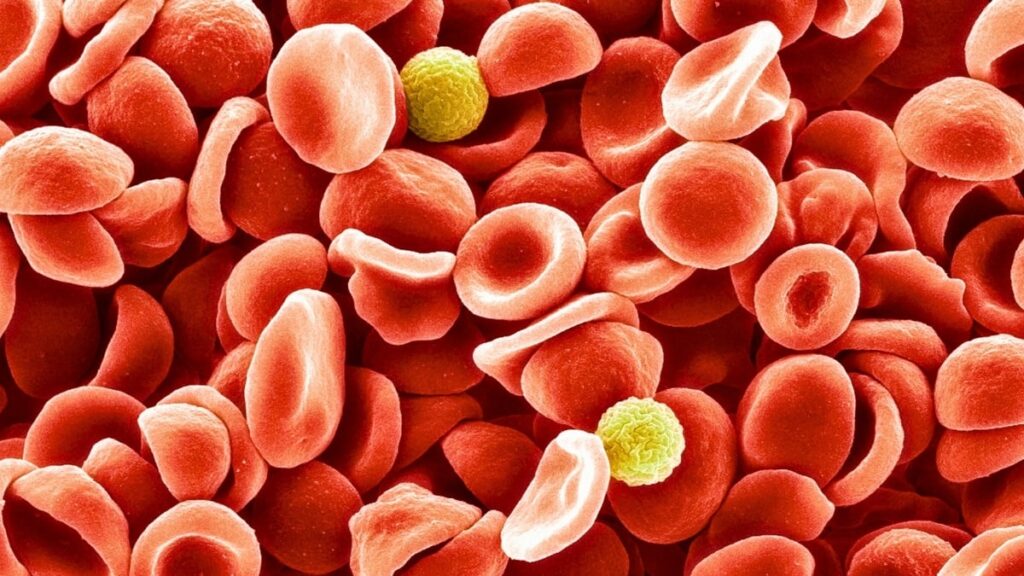
Stress physically changes the structure of your blood: new research shocks
When anxiety hits us before an important presentation or deadline, we tend to think of it as purely a “head” problem — just pull yourself together. But new research shows it’s not that simple: acute psychological stress physically restructures blood, making it more prone to clot formation. And it all happens within minutes. This is yet another way stress harms the heart.
How Stress Travels From the Head Into the Blood
The work by physiologists from the University of South Wales was published in The Journal of Physiology. The scientists were the first to capture the “mind–body” connection in real time and demonstrate the exact mechanism through which an emotion transforms into a measurable biological change.
The key takeaway: the brain is not an isolated island, and anxiety doesn’t stay locked somewhere between your ears. Stress triggers a cascade of biochemical changes that spread through the bloodstream and affect the body in entirely measurable ways.
Scientists have long known that chronic stress is harmful to the heart — major studies have repeatedly identified emotional strain as a risk factor for cardiovascular disease. What remained unclear was how exactly an emotion turns into a specific biological change capable of increasing that risk.
When we get anxious, the finely balanced hemostasis system — the mechanism that keeps blood fluid while always being ready to stop bleeding — is disrupted. Blood shifts into a so-called hypercoagulable state, meaning it begins to clot more easily than necessary. The question was what exactly serves as the trigger.
Oxidative Stress as the Trigger for Blood Changes
Until now, scientists debated the mechanism. Some suggested that stress activates the immune system and causes inflammation. Others proposed the so-called hemoconcentration hypothesis: as blood pressure rises, blood supposedly becomes more “thick” and concentrated.
The authors of the new study suspected a third possibility: the real instigator is oxidative stress — a burst of free radicals. These are highly reactive molecules that the body produces in response to stress. According to the researchers, they act as the main “switch” that directly alters the structural properties of blood.
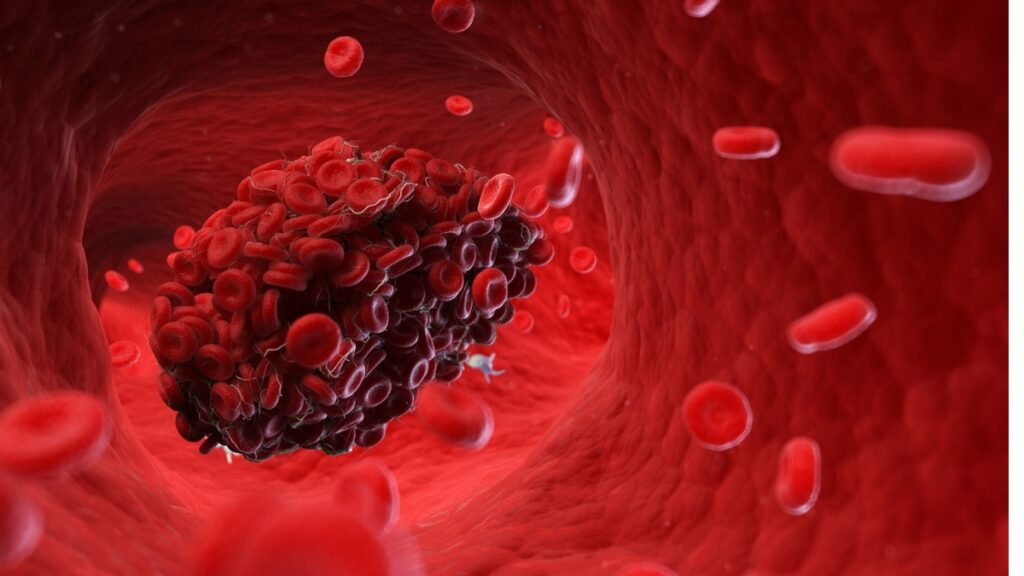
Stress increases the production of highly reactive molecules known as free radicals. These molecules alter the clot formation process.
Interestingly, our body signals stress in a variety of ways — even the color of morning urine may be linked to stress resilience.
How the Laboratory Stress Experiment Was Conducted
To test the hypothesis, the scientists conducted a randomized crossover study involving eight healthy men aged 18–30. Yes, the group is small, but experiments that track biological changes in living people under tightly controlled conditions are complex, labor-intensive, and expensive. Such studies look not for population-level statistics but for the mechanism itself within the body.
Each participant came to the laboratory twice, one week apart. During one visit, he simply rested quietly. During the other, he underwent the Trier Social Stress Test (the gold standard for artificially inducing acute psychological stress). The order of visits was randomized.
The test is deliberately made uncomfortable because it simulates ordinary social pressure. Here’s what participants faced:
- They had five minutes to prepare a speech and deliver it in front of a camera and a panel of impassive judges
- Just before the presentation, their prepared notes were taken away
- Immediately afterward, they had to count backward in their heads from 2003 in steps of 17, restarting from the beginning with every mistake
Blood was drawn immediately before and after both sessions. Free radicals were measured using a sensitive method — electron paramagnetic resonance. At the same time, the structure of blood clots was analyzed as they were forming, in order to examine the effect of stress at a microscopic level.
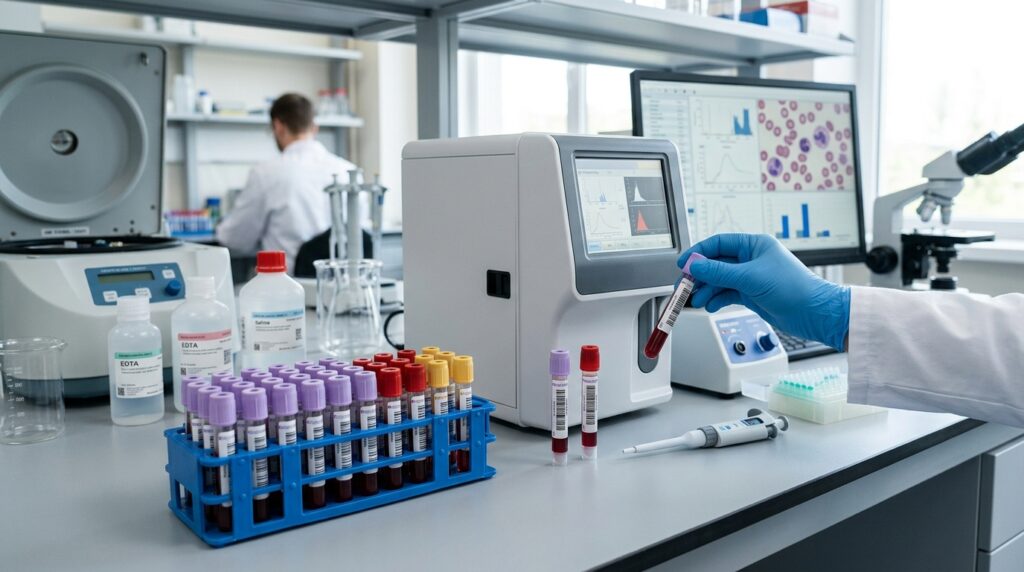
Blood samples were taken before and after each session
What Blood Analysis Revealed After the Stress Test
The results were striking. During quiet rest, blood chemistry remained stable. But after the stress test, two things happened immediately:
- Free radical levels spiked,
- The structure of blood clots changed completely.
The scientists recorded an increase in ascorbate free radical — their marker for oxidative stress. This means emotional strain really did rapidly amplify oxidative stress in the body.
At the same time, clots became larger, denser, and more saturated with fibrin — the protein fibers that form the scaffold of a blood clot. There were also signs that stress activated part of the coagulation system known as the intrinsic pathway.
Equally important is what the scientists did NOT find: no signs of changes in blood viscosity or thickness. This undermines the idea that stress works primarily by concentrating the blood. It appears that it’s about the quality and architecture of the clot itself, not the blood becoming “thicker.”
What Blood Changes Under Stress Mean for an Ordinary Person’s Heart
An important caveat right away: the study does NOT mean that a nerve-wracking presentation or a tough day at work will immediately cause a heart attack or stroke. Cardiovascular diseases are more complex: the risk of stroke is composed of many factors. The results provide clues about the mechanism but require cautious interpretation.
The reason is simple: only eight healthy young men participated in the experiment. To understand how broadly applicable the findings are, larger studies are needed involving women, older adults, and patients with pre-existing heart conditions.
However, there is a practical takeaway for the future. It may be that protecting the heart requires not only managing the experience of stress itself but also addressing the biochemistry — those very free radicals. In the meantime, proven ways to reduce stress remain valid: for example, spending time with animals has been shown to genuinely help lower stress, and this too is backed by research.
The main thing that has become clearer: the phrase “it’s all in your head” is inaccurate when it comes to stress. Emotion leaves a very physical trace in the blood, and almost instantaneously. Science now has a working hypothesis for the exact pathway this happens — through oxidative stress — and further, larger-scale studies will show who should be paying attention to this and how much.