Against the backdrop of a potential 4 billion ruble fine, Russia has once again started talking about why RuStore on iPhone still hasn’t appeared, even though Apple has already opened its platform to third-party stores in other countries. Meanwhile, the law requiring pre-installation of the Russian app store has been in effect since last fall. Let’s figure out where third-party stores for iPhone actually work, what’s going on in Russia, and why sanctions aren’t the real reason.
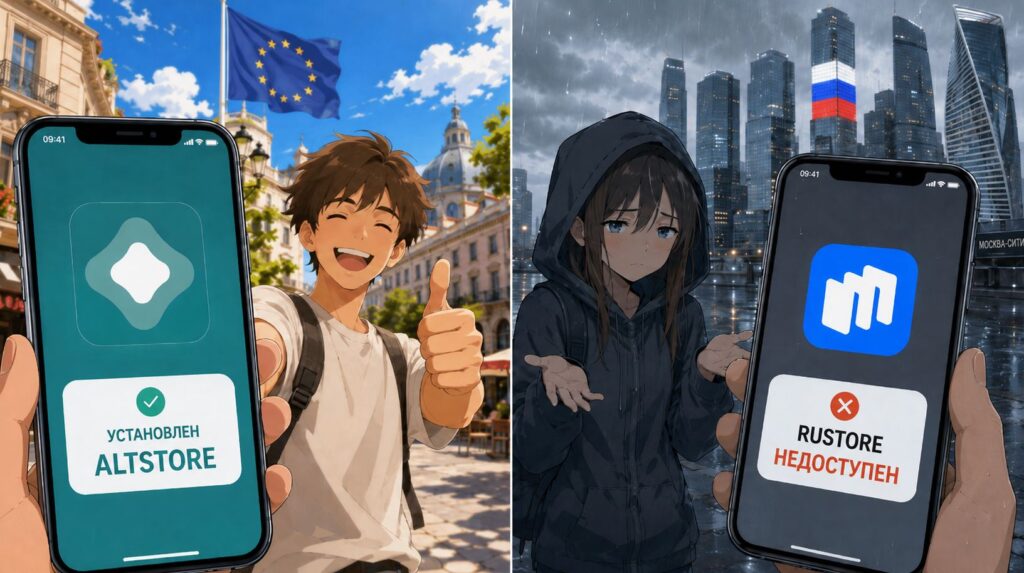
Why is there still no RuStore on iPhone in Russia?
Which Countries Have App Store Alternatives on iPhone
EU residents were the first to get third-party app stores for iPhone. Back in iOS 17.4 in 2024, Apple allowed installing alternative stores and downloading apps directly from developer websites. The reason was the local Digital Markets Act. We’ve already shown in detail how the first such store works.
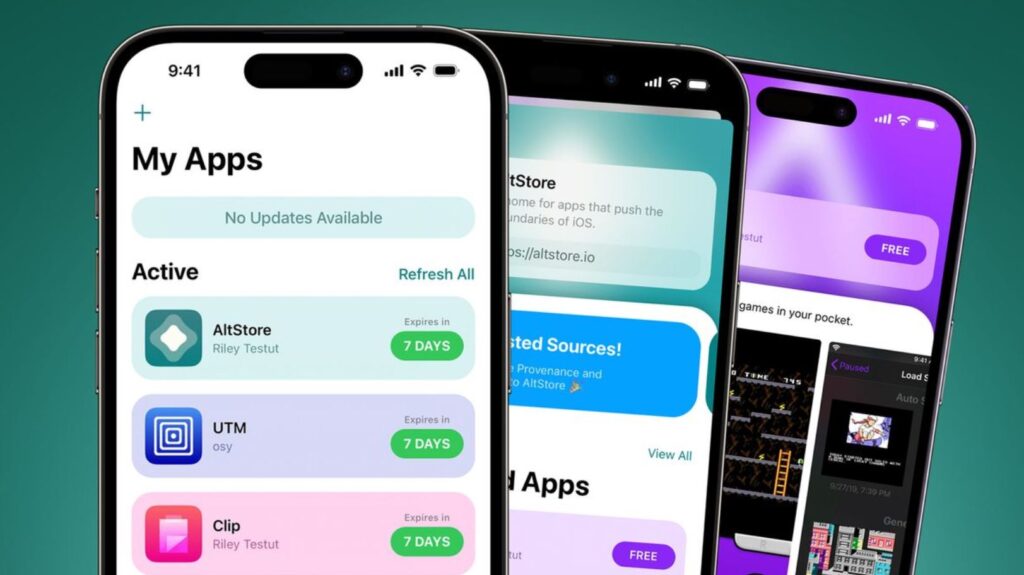
They say App Store alternatives haven’t taken off in other countries. But in Russia, a conditional App Store would be relevant
Later, Brazil and Japan were added to the list. In Brazil, antitrust regulators approved tariffs for third-party platforms at the end of 2025, and in Japan, a separate law went into effect on December 18, 2025, with iOS 26.2 opening up both stores and payments bypassing the App Store on the same day. Japan went even further: they allowed changing the browser engine instead of Safari and the voice assistant instead of Siri.
Do Third-Party App Stores for iPhone Work in Russia
In Russia, there are still no alternative stores or app installations from websites. RuStore is mandatory only on Android, and iPhones have been sold without it for almost a year, even though by law it should have been pre-installed on iOS since September 1, 2025.
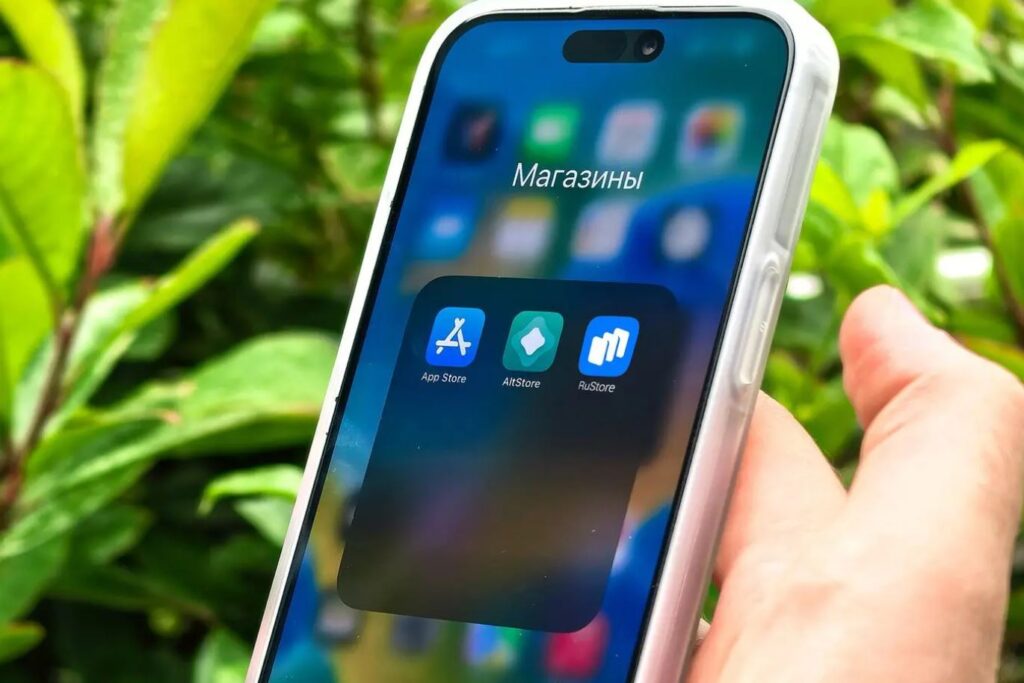
RuStore on iPhone in Russia exists only on paper so far
Negotiations about allowing RuStore on iPhone have been going on for a while: Apple has been discussing this with Russian authorities for a long time, but it has never reached an actual launch.
At the same time, apps continue to be purged from the App Store. Apps from sanctioned banks have been hit, and MAKS was removed from iPhone: the Russian messenger was simply pulled from the store. Add to this that Apple Pay in Russia hasn’t worked since March 2022, and the picture is rather bleak.
Why Russia Still Doesn’t Have RuStore for iPhone
Formally, the law is on our side: since September 1, 2025, RuStore must be pre-installed on iOS devices. But Apple effectively ignores this requirement, and RuStore on iPhone simply doesn’t exist.
The most frustrating part is that the company has the technical capability. Back in late 2024, Alfa-Bank announced that it had received access to the iPhone’s NFC module from Apple and would restore contactless payment with Mir cards — without any hacking or jailbreaking. In other words, Apple can grant selective access when it wants to.
But nothing has changed overall: widespread NFC payments on iPhone still don’t work, and banks have to resort to workarounds like QR codes, stickers, and Bluetooth payments. Vadim Glushchenko, director of the ANO Center for Global IT Cooperation, explains why in an interview. In short, his conclusion is this:
Apple gives up some of its ecosystem restrictions not voluntarily, but only under pressure from local regulators. In Russia, it has been limited to a couple of agreements with banks, and a full platform opening has never materialized.
The result is a very strange situation: the company in Russia keeps devices viable, helps users, makes concessions to developers, and releases updates on time. But there’s still no RuStore for iPhone, even though precedents for allowing alt-stores already exist — and more than one.
Has Apple Really Left Russia
Many are convinced that the reason is sanctions and that Apple has left Russia for good. In reality, that’s not the case: the legal entity LLC “Apple Rus” has not been liquidated, unlike Microsoft and Google, and it reported 1.1 billion rubles in net profit for 2024. And Apple diligently pays fines in Russia: antitrust penalties alone have amounted to nearly two billion rubles.
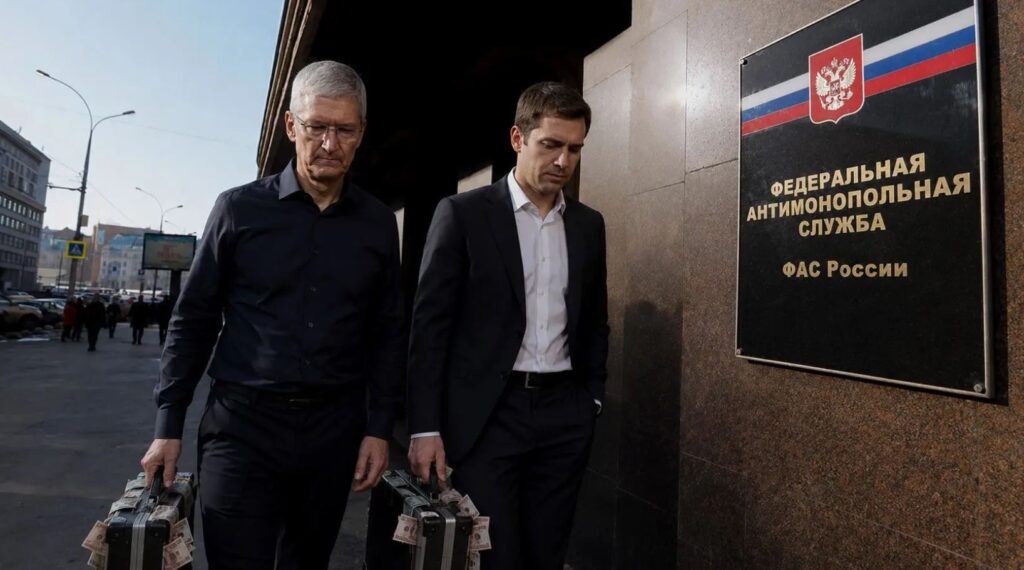
The company complies with legal requirements, pays taxes and fines. So why is there still no RuStore?
Moreover, the company actively removes banned apps and VPN services from the App Store. So let’s put the “Apple left and won’t comply with anything” talk to rest once and for all. It’s already clear that those who think so simply don’t follow the news.
Fresh confirmation that Apple continues to operate in Russia: the company recently even made it easier for Russians to change their Apple account region. However, Apple only agrees to open its platform to third-party stores where local law requires it. In Russia, such a lever specifically for iOS stores hasn’t materialized yet, which is why a full-fledged RuStore on iPhone is most likely still a long way off.