Forbes reports that the Russian Ministry of Digital Development is working on an idea to require Russians to confirm significant online actions through MAX or SMS. In effect, many online operations could be blocked without the messenger, since verification would go through Digital ID. This concerns a potential provision in the third package of anti-fraud amendments — laws against fraud. For now, this is a discussion rather than an adopted decision, but it could affect almost everyone who uses banks and online services from their phone.
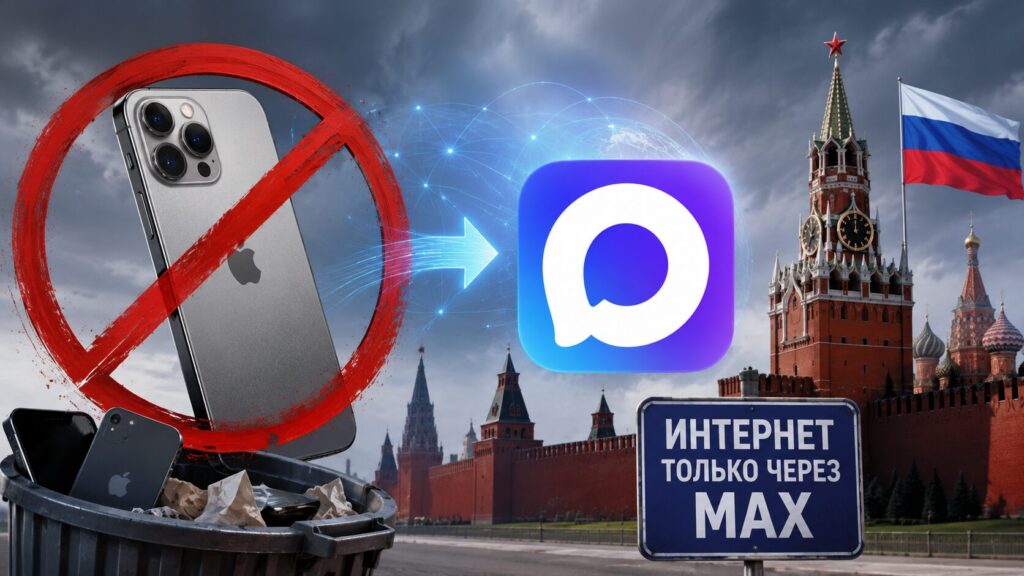
Confirmation of all significant online actions may be required through MAX
What the Ministry of Digital Development Proposes: Internet Through MAX
According to Forbes, the Ministry of Digital Development proposes confirming all significant online actions through MAX or SMS. This is one of the measures that could appear in the third package of anti-fraud amendments — a set of laws aimed at combating phone and internet fraud.
An important nuance: the term “significant actions” is not defined in the source. A huge number of events could be classified as “significant,” which is why even the publication’s source in the IT market stated that it’s unclear what exactly the Ministry of Digital Development means. That is, formally, anything could fall under the rule — from logging into a personal account to confirming a transfer.
Action confirmation via code — that’s what the new regulation could boil down to. This mechanism is familiar to anyone who has ever received a one-time password from a bank.
If MAX becomes a mandatory verification tool, continuing to use an iPhone in Russia could be difficult
However, mass implementation of such a rule would mean far more confirmations than currently required — and this is already raising questions among businesses and users.
MAX on iPhone in Russia: Can You Still Use It?
Let’s reassure you right away: this is not about banning iPhones or shutting off internet access. Neither MAX nor SMS are tied to a specific phone brand — both methods work equally on iPhone and Android. That said, if MAX is not returned to the App Store, using it on an iPhone and confirming actions could be difficult.
Moreover, the main burden will fall not on users but on businesses. For banks and major platforms, the rule will lead to increased costs for sending messages and notifications via MAX, according to Forbes’ source.
For the average person, the potential consequences look like this:
- more code confirmations when performing online actions
- a possible need to keep yet another messenger installed
- extra steps where there were none before
At the same time, there’s a sober caveat from the market itself: both confirmation methods are “not the most reliable.” In other words, this measure won’t radically improve security, but it could certainly add inconvenience.
Is MAX Secure and Why This Idea Was Already Rejected Once
This is not a new initiative. The measure was originally included in the second package of anti-fraud amendments but was removed. The reason is simple: virtually all businesses opposed it — except for telecom operators and VK, whose subsidiary develops MAX.
This alignment explains a lot. The idea is supported precisely by those who profit from it: operators earn revenue from SMS, and VK gets promotion for its messenger. This is worth keeping in mind when evaluating whose benefit the regulation is being pushed for.
For now — there’s no need to worry. The Ministry of Digital Development stated that “such a measure is not being considered,” and the third package of anti-cybercrime measures is only being coordinated with agencies and the industry. In other words, this is not yet law on paper, but a topic for discussion around which there has already been a conflict of interest.
This is a typical situation for Runet regulation: an initiative surfaces, meets business resistance, disappears, and returns in a new version. There is reason to follow the topic, but there is certainly no reason to panic and “throw away your iPhones.”
What iPhone Owners Should Do
No specific actions are required right now — there is no enacted law. A reasonable minimum is as follows:
- don’t install MAX “just in case” until it becomes mandatory
- follow official statements from the Ministry of Digital Development, not retellings
- distinguish between rumors, discussed initiatives, and rules that have actually taken effect
In short: this is a discussed initiative, not an active requirement. It poses no threat to iPhone owners right now and certainly doesn’t force anyone to change their device. The topic deserves attention as an indicator of where regulation is heading, but reacting to it with purchases or app installations is premature.