Russia’s Federal Security Service (FSB) has placed Telegram founder Pavel Durov on an international wanted list, charging him under Article 205.1, Part 1.1 of the Russian Criminal Code for allegedly aiding terrorist activity. Rosfinmonitoring has added Durov personally to its registry of terrorists and extremists, and Russian lawmakers have begun publicly discussing whether to designate Telegram itself as a terrorist resource. The developments have raised questions about the future of the platform and its paid services — but crucially, the charges apply to Durov personally, not to Telegram as a legal entity. No Russian court has designated the messenger itself as a terrorist or extremist organization as of this writing.
What you need to know
- Russia’s FSB announced Durov’s international wanted status on July 29, charging him with aiding terrorist activity under Part 1.1 of Article 205.1 of the Russian Criminal Code.
- The charges and terrorist/extremist registry listing apply to Durov personally — Telegram as an entity has not been formally designated a terrorist organization by any Russian court.
- Russian legal experts are divided on whether payments for Telegram Premium could theoretically be treated as financing a terrorist organization, but only if the messenger itself receives such a designation in the future.
- As of publication, purchasing Telegram Premium or other digital products within Telegram remains fully legal — no court ruling or prosecutor’s action targets the platform itself.

The question of whether Telegram Premium subscriptions remain safe to purchase has become a live issue.
What Russia’s authorities allege
On the morning of July 29, it became known that the FSB had placed Durov on an international wanted list. According to Russian security officials, Telegram’s administration allegedly ignored repeated demands over the years to remove channels and bots used for recruitment. Official materials reference a dating service scenario in which agents posing as young women reportedly contacted young men, intimidated them, and pushed them toward acts of sabotage. These allegations form the basis of the criminal case that has placed Telegram at the center of a major legal confrontation.
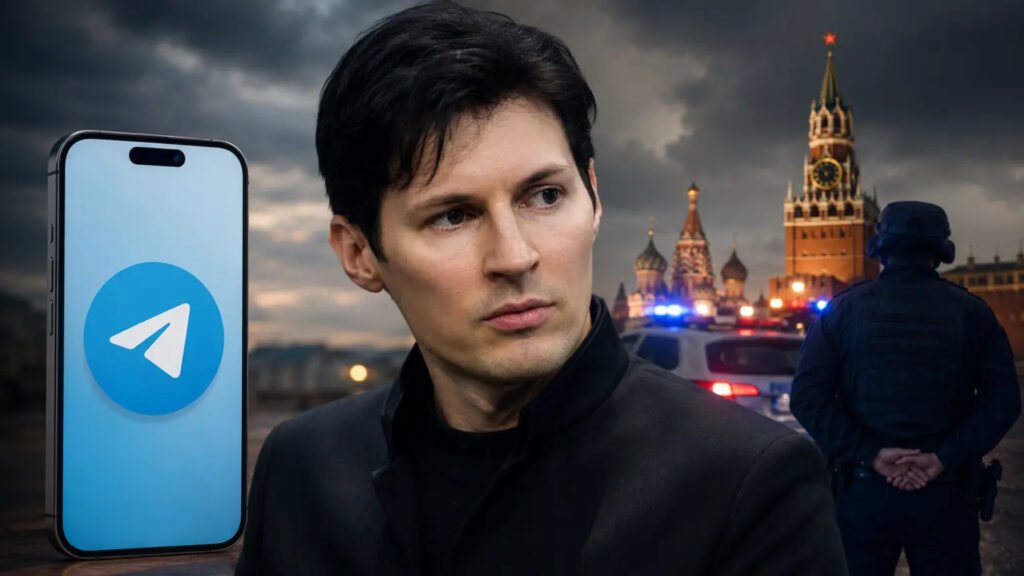
Durov is accused of aiding terrorism under Russian law.
A critical legal distinction: Durov vs. Telegram
A nuance that is often lost in headlines is that the charges and the terrorist/extremist registry listing apply to Pavel Durov personally, not to Telegram as a legal entity. According to the source, Russian lawyers broadly agree that until a separate court ruling targets the messenger itself, nothing changes legally for ordinary users. Throttling or blocking by Russia’s communications regulator, Roskomnadzor, is also not equivalent to designating an organization as banned.
Why Telegram Premium payments are under scrutiny
The concern around Telegram Premium subscriptions draws on a precedent: the case of Meta (designated as extremist and banned in Russia*). After Meta received that designation, certain payments to the company were potentially interpretable under Russian law as financing prohibited activity. Experts fear a similar scenario could apply to Telegram.
Urvan Parfentyev, coordinator of Russia’s Center for Safe Internet, has stated that purchasing Telegram Stars or a Premium account could theoretically be equated with financing a terrorist organization — but only if the messenger itself is given that legal status. A former presidential adviser on internet policy reportedly expressed a similar view: in a worst-case scenario, all financial operations on the platform — including advertising, gifts, and bot-based purchases — could be criminalized.
However, as of the time of publication, no such prohibition exists. Russia’s Supreme Court has not issued a ruling, and no administrative lawsuit from the prosecutor’s office has been filed against Telegram. Purchasing any digital products within Telegram remains fully legal at this time.
Legal opinion is divided. Some specialists view a Premium subscription as an ordinary consumer service rather than a donation, and see no basis for a terrorism-financing charge even under a negative scenario. Others advise caution. The lack of consensus is itself a reason to pay close attention to developments.
For now, subscribing to Telegram Premium carries no legal consequences, but the situation is evolving.
How to cancel Telegram Premium auto-renewal
For users who wish to take a cautious approach, here is how to disable auto-renewal. This may be relevant for anyone who wants to retain control over future payments while the legal situation remains uncertain.
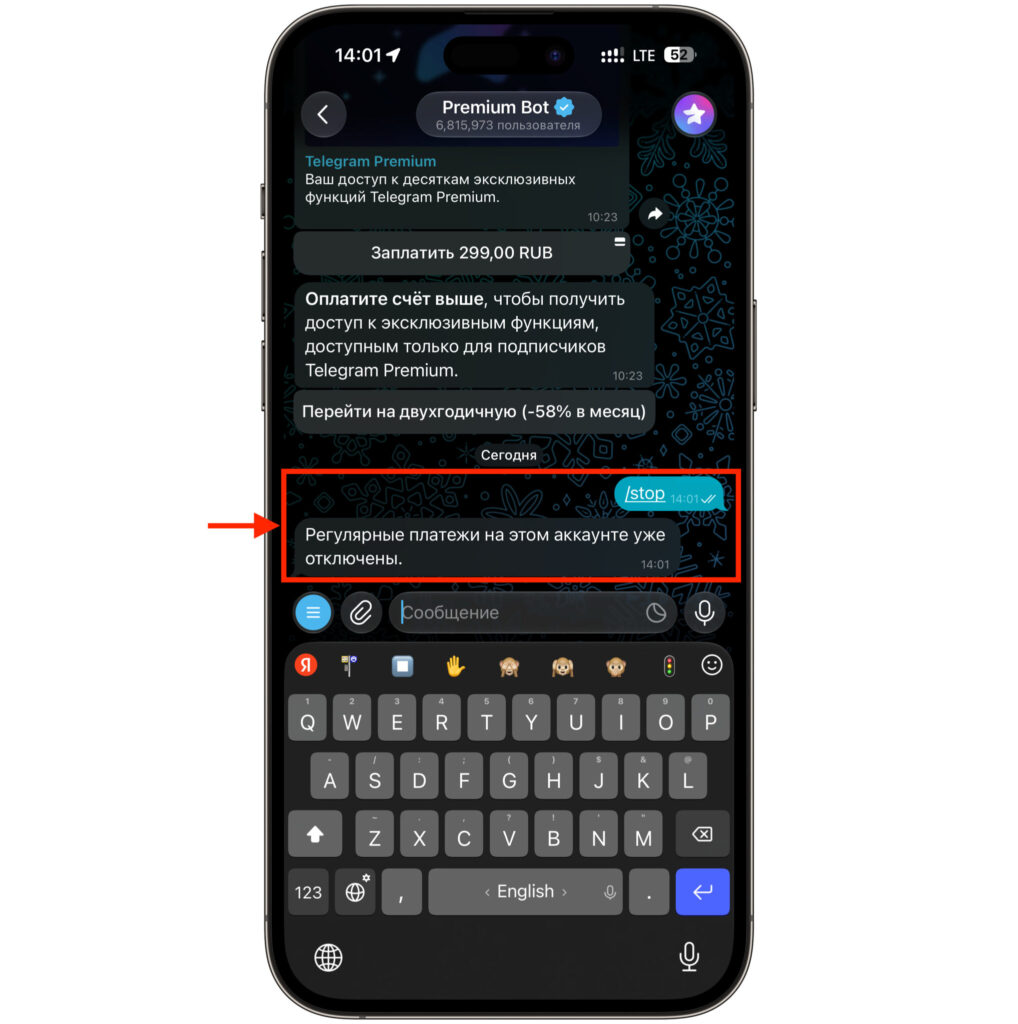
A single command disables auto-renewal via Telegram’s official bot.
Via Telegram’s official bot (for subscriptions purchased through the bot):
- Search for the official @PremiumBot in Telegram and open a chat with it.
- Send the command
/stopor tap the “Manage Subscription” button. - Select “Disable auto-renewal” and wait for confirmation.
The subscription will not disappear immediately — all Premium features continue working until the end of the already-paid period, but no further charges will occur. Note that the bot only manages subscriptions originally purchased through it. If Premium was purchased another way, the /stop command will simply report that no active subscription exists.
Via Apple ID (for subscriptions purchased through the App Store):
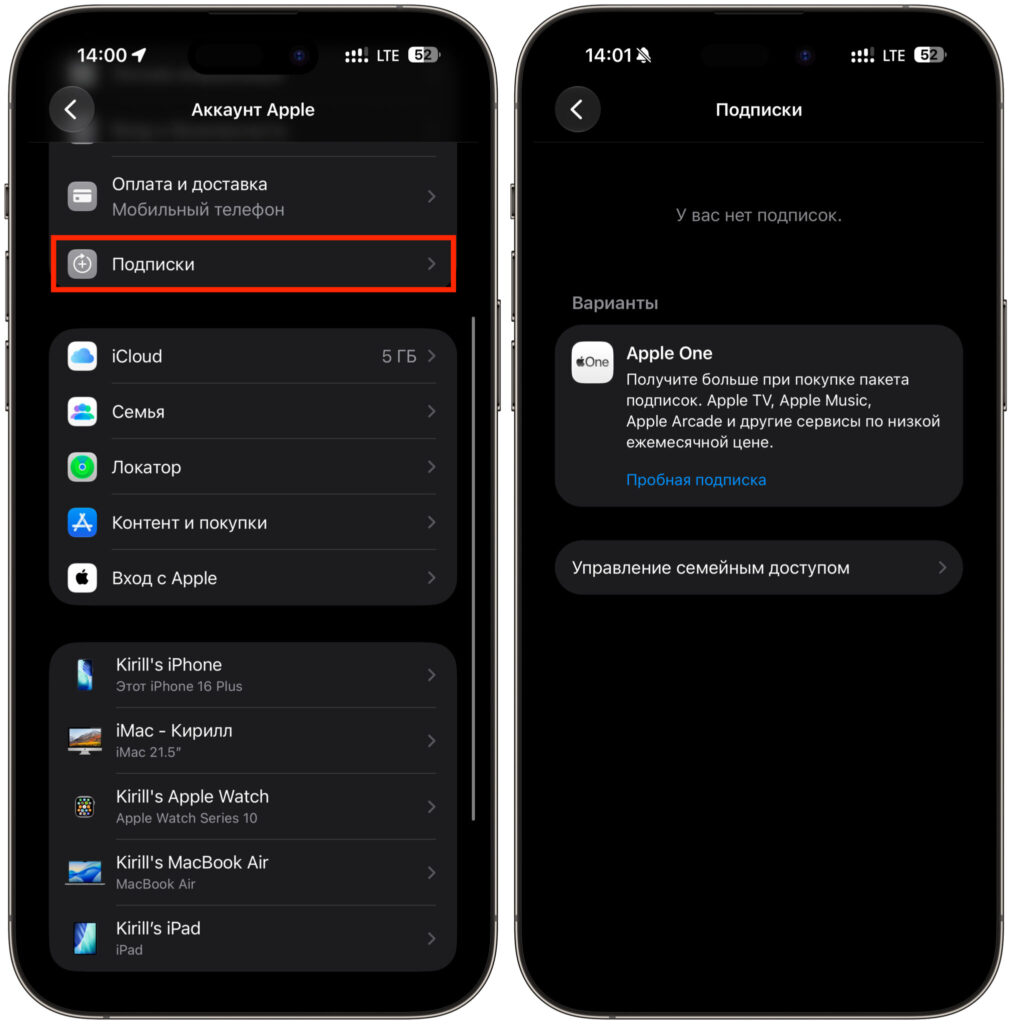
Cancel the subscription through the Subscriptions section in iPhone settings.
- Open Settings and tap your name at the top of the screen.
- Go to the “Subscriptions” section.
- Find Telegram Premium in the list and tap “Cancel Subscription.”
After cancellation, Premium features remain active until the end of the paid period, with no further charges. If Telegram Premium does not appear in the list, the subscription was not purchased through the App Store, and users should try the @PremiumBot method instead.
What remains uncertain
All of the risk scenarios discussed above are hypothetical. No court has designated Telegram as a terrorist or extremist organization. The situation is evolving rapidly — messaging platforms have been disrupted in Russia without warning before, as seen with KakaoTalk and BiP, which stopped working in the country abruptly.
The source author’s assessment is that a one-time purchase is currently safe, but that long-term subscriptions with auto-renewal warrant caution. The reasoning: if Telegram’s legal status changes, a payment processed after a court ruling could theoretically create problems, whereas anything paid in advance would not retroactively put users at risk. The prudent approach, according to the source, is to stay informed and avoid auto-renewal until the legal picture becomes clearer.
*Meta has been designated as extremist and banned in Russia.