News you’ve probably already seen in panicked Telegram channels: the government is taking on tracking all smartphones by their IMEI. The retellings use increasingly alarming language. Supposedly, your phone will stop making calls, and before selling an iPhone you’ll have to “unlink” it somewhere. Some of these scare stories are exaggerated, but some, surprisingly, are close to the truth. Spoiler right away: the registration in the IMEI registry itself will be free, so you can forget about hidden fees. The Federation Council approved the law on June 17, and I’ve broken down what it actually says and what it means for the average iPhone owner.
All smartphones in Russia must be entered into the IMEI database
First, the facts. Senators at a plenary session approved a law that is part of the second package of measures to combat cyber fraud. People are already calling it “Antifraud-2.” In addition to the IMEI story, it includes a limit of 20 bank cards per person, a self-imposed ban on international calls, a “red button” for reporting scammers through Gosuslugi and the Max messenger, and a ban on terminating mobile contracts earlier than 90 days. We’re primarily interested in the provision about the number database, because it affects everyone who has a smartphone in their pocket.
Why a Unified IMEI Registry Is Being Created in Russia
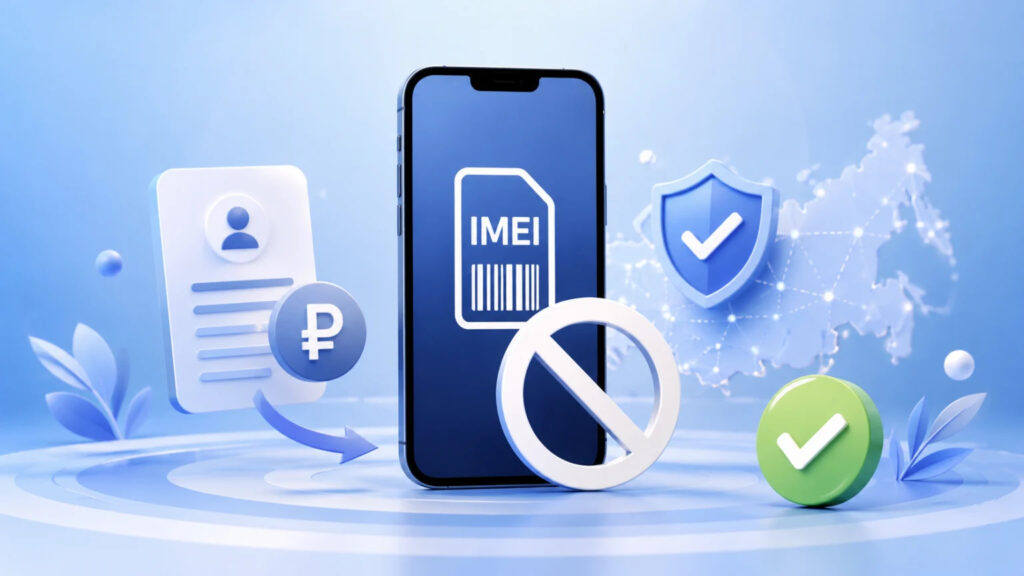
IMEI is a unique 15-digit number that every device with a SIM card slot has. It’s essentially the phone’s passport. Your iPhone has one too — you can check it in “Settings,” under “General” and “About,” or by dialing a command with asterisks and a hash symbol on the phone’s dialer. The number is embedded in the hardware and doesn’t change when you reinstall the system or swap the SIM.
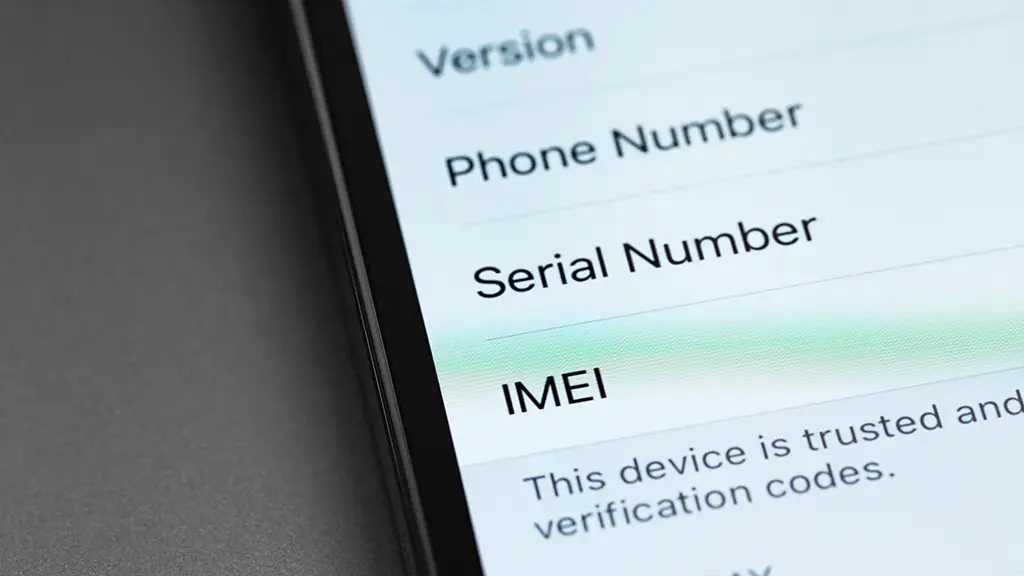
Every smartphone has a unique IMEI. You can view it in settings
The law introduces a unified database of such numbers. When mobile devices are imported into Russia, each one will receive this passport number, and the database will record which devices are authorized for use in the country and which are not. It will be populated by mobile operators and government agencies, the specific list of which the government will determine later. Additionally, operators will need to indicate which SIM card each device is linked to.
The government’s logic is clear. If a scammer has a stolen device, it can be identified by its number and, if desired, cut off from the network. This is a common global practice — similar registries have long been operating in Turkey, Azerbaijan, and several other countries. So the idea itself isn’t a Russian innovation but a well-tested approach, and in theory, device tracking benefits honest users. The question is always in the implementation.
And here’s an important detail that somehow gets lost in the loud retellings. No fee will be charged for including a device in the database. This provision was specifically written in back in May, so talk about an “iPhone tax” or a hidden duty can be put aside immediately. You won’t be charged a single ruble for registering your device.
Which Phones Could Be Blocked by IMEI
The main thing to understand right away: all devices that have already been imported into the country and are working on networks with Russian SIM cards are automatically recognized as legal and authorized. Your iPhone that has been happily picking up a Beeline or MTS signal for a year isn’t going anywhere out of this category. The registry will be populated partly with operator data, and since your device is already visible to the network and linked to a SIM, it will end up on the whitelist by default. You won’t need to take it out of your pocket and run somewhere with it.
You can breathe easy about parallel imports too. Currently, they are essentially equivalent to official shipments: iPhones travel through legal channels, clear customs, and have all the proper documentation. The government has no reason to target such devices — they’re no different from those sitting on a major retailer’s shelf. So buying an iPhone from a legitimate seller through parallel import remains a safe bet.
The question remains how devices purchased for personal use abroad will be registered in the database
Problems, if any, await specifically gray market devices. These are devices imported bypassing all channels, without documentation and without a trace in the system. These could theoretically be flagged as prohibited and restricted from working. At the same time, legislators will clearly provide the ability to register a phone purchased for personal use in the database. A hypothetical iPhone you brought back from a trip to Dubai or Istanbul can, according to the law’s logic, be legally registered by yourself. The mechanics will be spelled out in separate regulatory acts, but the idea of “bought it for myself abroad and using it peacefully” doesn’t fall outside the scope of the law.
How Used Phones Will Be Sold After the Registry Launches
Now we’ve reached the juiciest part. A claim circulating on Telegram says that phones will stop making calls altogether, and when selling one, you’ll have to “unlink” it from your SIM. Let’s separate these two claims, because one is an exaggeration and the other is quite realistic.
When selling and buying used smartphones, you’ll first need to unlink it from the SIM card, then link it to the new owner’s SIM
You don’t need to worry about the “will stop making calls” part. Your legal iPhone that’s already working on the network isn’t going to be disconnected by anyone. That wording applies only to prohibited and stolen devices, not honestly purchased ones. So the scare story about a dead phone in your pocket is a loose retelling, not a quote from the document.
However, the story about unlinking when selling appears to be true. The law establishes a link between the device and the SIM card in the database. This means that when selling a used smartphone privately, you will actually need to unlink the device from your SIM, and the buyer will need to link it to theirs. Otherwise, the device will remain registered to you in the registry, and that’s exactly the kind of IMEI-SIM desynchronization the law doesn’t allow for. Apparently, the entire procedure will work through Gosuslugi: log in, confirm the change of ownership, and the device moves to a new account.
So buying and selling used iPhones now requires a bit more attention. If you’re buying a device secondhand, make sure the previous owner properly unlinked it. If you’re selling yours, don’t forget to remove the link — otherwise you’ll create a problem for both yourself and the buyer.
When Will the IMEI Registry Start Working