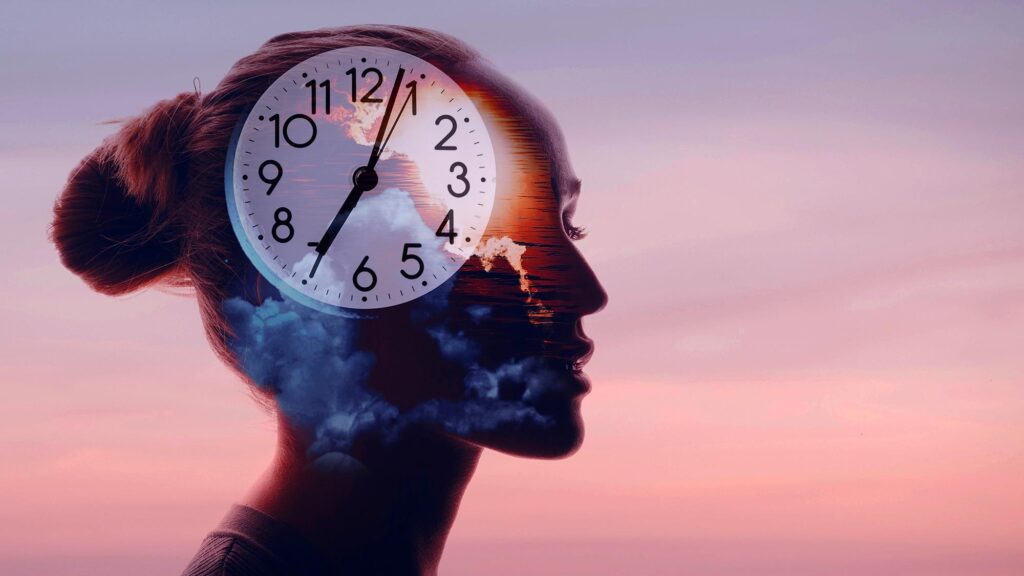
Symbolic image of the body’s internal clock
Australian researchers have proposed a previously unrecognized subtype of depression that may be rooted less in mood than in the body’s internal clock. In a large analysis of people with severe, recurrent or long-lasting depression, nearly a quarter showed a distinct pattern of seasonal episodes, oversleeping, waking up exhausted and going to bed late. If the idea is confirmed, it could help explain why standard antidepressants work well for some people and barely at all for others. For now, however, the subtype remains a hypothesis: the study found associations, not proof of cause.
What you need to know
- Of more than 10,000 Australians with severe, recurrent or prolonged depression, 2,604 people (almost 25%) fit the proposed circadian subtype.
- The group reported seasonal episodes, longer sleep during flare-ups, waking without energy and a tendency to go to bed late.
- Participants in this group reported less benefit and more side effects from first-line antidepressants (SSRIs and SNRIs), but these were self-assessments, not results of a controlled trial.
- The researchers suggest light therapy, melatonin and melatonin-acting antidepressants may suit this group better, but no trials comparing them with SSRIs in this group are described.
The 24-hour internal clock and mood
The body has a circadian system: a network of internal clocks running on a cycle of roughly 24 hours that governs when we feel sleepy and when we are awake. When these clocks are disrupted, a person may go to bed late, sleep for a long time and still wake up feeling drained.
Sleep problems have long been known to accompany depression. The Australian researchers went further, suggesting that for some patients the issue is not simply poor sleep. Instead, a disruption of daily rhythms may lie at the core of the illness itself, which would mean this form of depression might call for a different treatment approach.
Seasonal episodes, long sleep and morning fatigue
The team drew on clinical and genetic data from the nationwide Australian Genetics of Depression Study. The sample included more than 10,000 Australians with severe, recurrent or prolonged depression. The circadian subtype was identified in 2,604 people, or almost 25%.
People in this group shared a recurring set of features:
- their depressive episodes depend on the time of year;
- during an episode they sleep longer than usual;
- they wake up without energy after sleeping;
- they tend to go to bed late.
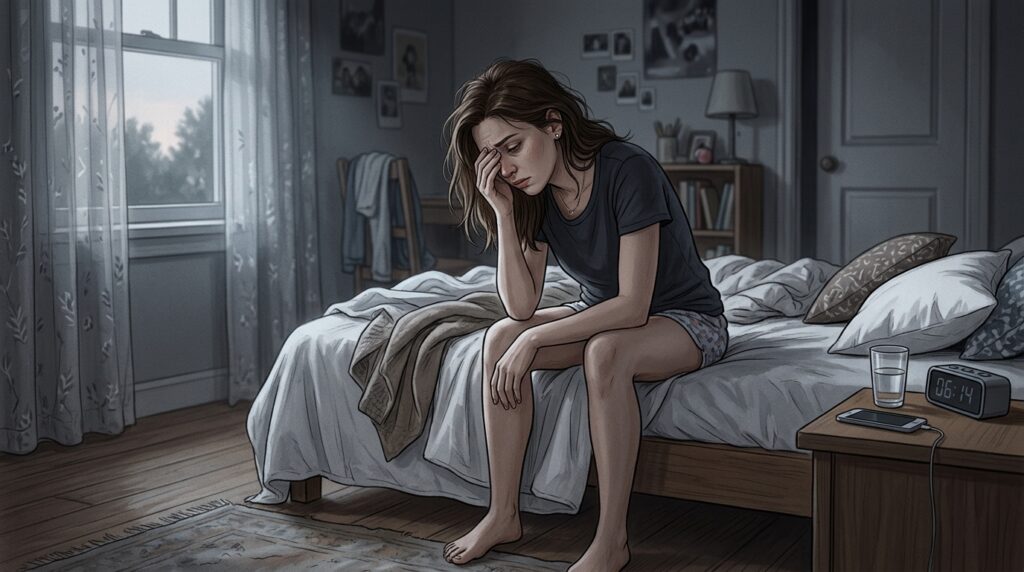
A woman sitting on the edge of a bed in a dimly lit bedroom
All of these symptoms relate to the workings of the circadian system. That is why the researchers named the subtype after the biological clock rather than after mood or anxiety.
Earlier onset, more severe symptoms and a genetic signal
In people with circadian depression, the illness more often began at a younger age and followed a more severe course. Episodes of mania and more pronounced suicidal thoughts were more common in this group.
The genetic data also showed differences. This group had a higher inherited predisposition to inflammatory and cardiovascular diseases and to neurodevelopmental conditions, including ADHD. The authors suggest these genetic features may explain why medications designed to target other brain systems work less well for these patients.
First author Emiliana Tonini of the Brain and Mind Centre at the University of Sydney said that depression is not a uniform illness, and that understanding the features of different subtypes could allow people to receive the treatment best suited to them sooner. The paper appears in The British Journal of Psychiatry.
First-line antidepressants appeared to help this group less
Depression treatment usually starts with SSRIs (selective serotonin reuptake inhibitors) or SNRIs, which act on both serotonin and norepinephrine. Put simply, these drugs keep signaling molecules in contact between nerve cells for longer.
People with the circadian subtype reported that they got less benefit from these medications and experienced more side effects. An important caveat: these are participants’ own assessments, not a comparison of drugs in a controlled trial.
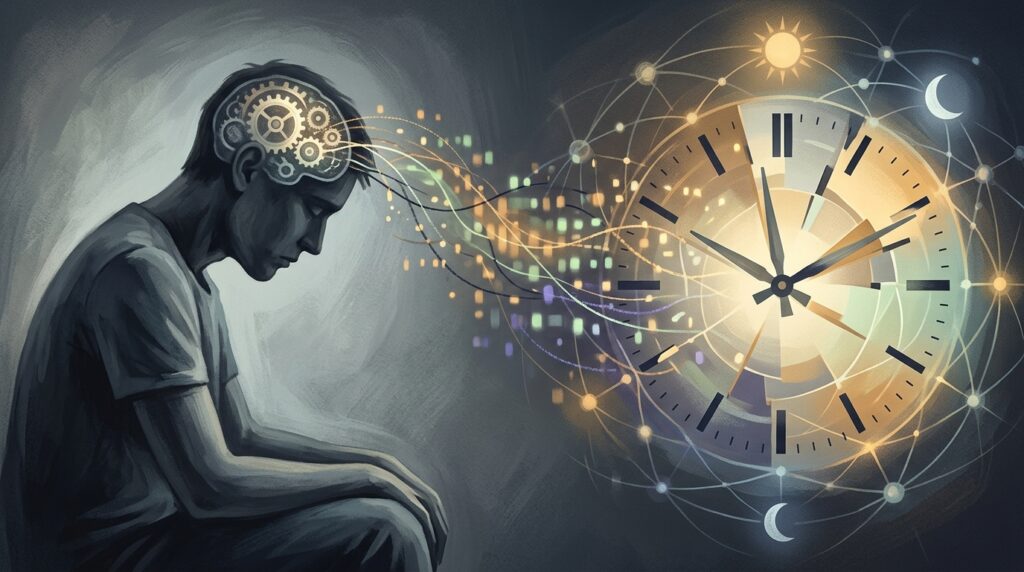
A dejected man beside a clock showing a sun and a moon
Light therapy, melatonin and clock-targeting drugs
The researchers suggest that this group may respond better to approaches that act on the brain circuits controlling daily rhythms. These include light therapy, melatonin (a hormone that signals to the body that night has arrived) and antidepressants that work through melatonin-related mechanisms.
Co-author Jacob Crouse believes doctors should consider these methods much earlier when treating patients with this subtype. Professor Ian Hickie, co-director of the Brain and Mind Centre, highlights young patients in particular: they are most often prescribed SSRIs first, and recognizing the subtype early could help avoid unsuccessful first courses of treatment and unnecessary side effects.

A doctor and a patient talking at a desk in a consulting room
The authors warn against self-experimentation. If antidepressants are not helping, Crouse advises discussing it with your doctor rather than changing treatment on your own.
Why circadian depression is still a hypothesis
The authors themselves describe the subtype as proposed. The work is based on an analysis of previously collected clinical and genetic data and identified associations, but did not prove that a disrupted biological clock causes depression. The description of the study includes no trials comparing light therapy or melatonin with SSRIs specifically in this group.
In addition, the sample included only people with severe, recurrent or prolonged forms of the illness. How common this pattern is among people with milder depression is not yet known. The findings also still need to be replicated in other countries.
The study nonetheless fits a broader shift in psychiatry, in which depression is increasingly viewed as a group of conditions with different underlying mechanisms, and researchers are searching for objective markers, such as blood tests, to tell them apart. In the most treatment-resistant cases, brain-stimulating implants are sometimes used. If the circadian subtype is confirmed, some patients might benefit from considerably simpler treatments that simply need to be offered earlier — but that remains to be tested.