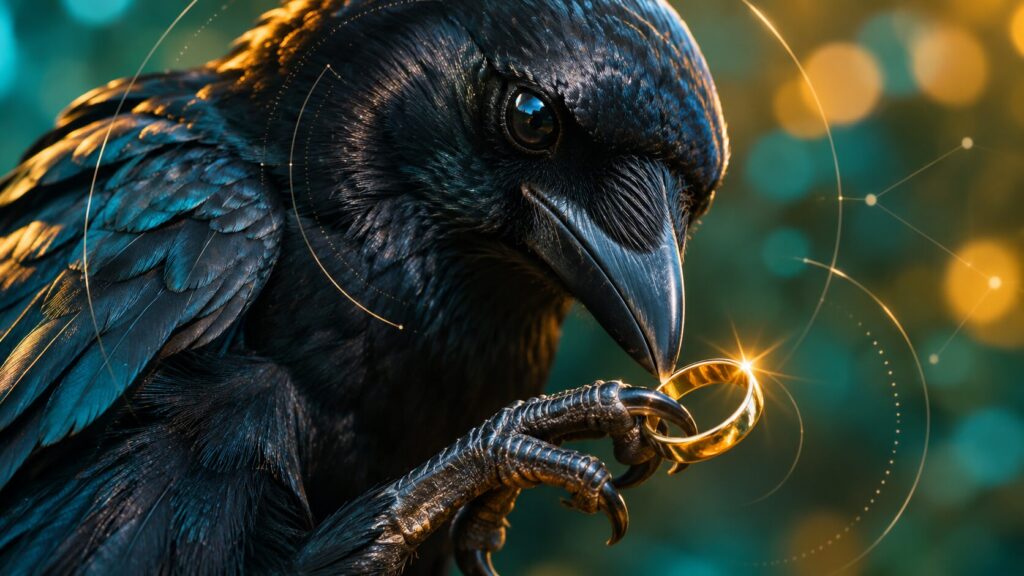
A raven holding a gold ring in its foot.
The idea that crows and magpies are drawn to shiny objects is largely a myth. In an experiment, magpies offered shiny screws, rings and foil next to food almost entirely ignored them, and ornithologists have not found convincing evidence of such a habit in wild crows either. Corvids do pick up small objects, but the likely reasons are curiosity, play, nest-building and food storage rather than a taste for glitter. Notably, the reputation for stealing jewelry originally belonged not to crows but to magpies.
What you need to know
- In 64 trials, magpies picked up a shiny ring only twice and dropped it immediately both times.
- The birds were wary of both shiny and matte blue objects, and unfamiliar items sometimes kept them away from food.
- According to ornithologists, young corvids handle objects to explore and play; they are drawn less by shine than by the chance to tinker with an interesting find.
- Wire and metal parts have been found in corvid nests, and in Europe nests have even been built from anti-bird spikes.
How magpies became feathered thieves
Magpies have long been blamed for stealing rings, coins and silver spoons. Like crows, they belong to the corvid family. In 1817, Rossini’s famous opera The Thieving Magpie appeared: in it, a bird steals a silver spoon and an innocent young woman is accused of the theft.
The story helped cement the magpie’s dubious reputation, and over time a love of shiny things came to be attributed to other corvids as well.
There is also a perception bias at work. When a bird picks up an ordinary twig, people barely notice. When it grabs a ring, the story is memorable. Rare incidents gradually turned into a persistent myth about thieving birds.
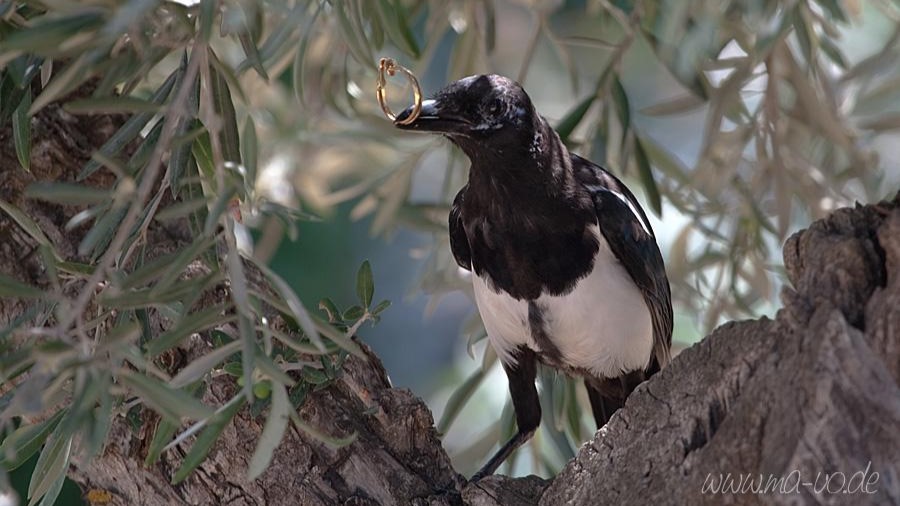
A magpie with a gold ring in its beak. A real photograph by Marion Vollborn: the ring was deliberately left out for the bird, which picked it up. A vivid illustration of the legend, although the shot was staged.
What happened when scientists offered magpies shiny objects
To test the popular belief, researchers placed shiny screws, small rings and foil near food. For comparison, they also laid out similar objects painted matte blue.
The result was unexpected. Across 64 trials, the magpies picked up a shiny ring only twice, and both times dropped it straight away. The birds were also cautious around both the shiny and the matte objects; sometimes the unfamiliar items even deterred them from approaching the food.
As the experiment showed, the magpies displayed no particular attraction to shiny things. There is an important limitation: the study involved magpies, not crows. However, ornithologists have not found convincing evidence of this habit in wild crows either.
Why crows do carry off small objects
Corvids are highly curious, especially when young. They may pick objects up in their beaks, move them around, take them apart and even hide them. In nature, these are typically sticks, pebbles and shells. Near people, keys, bottle caps and other small items come within reach.
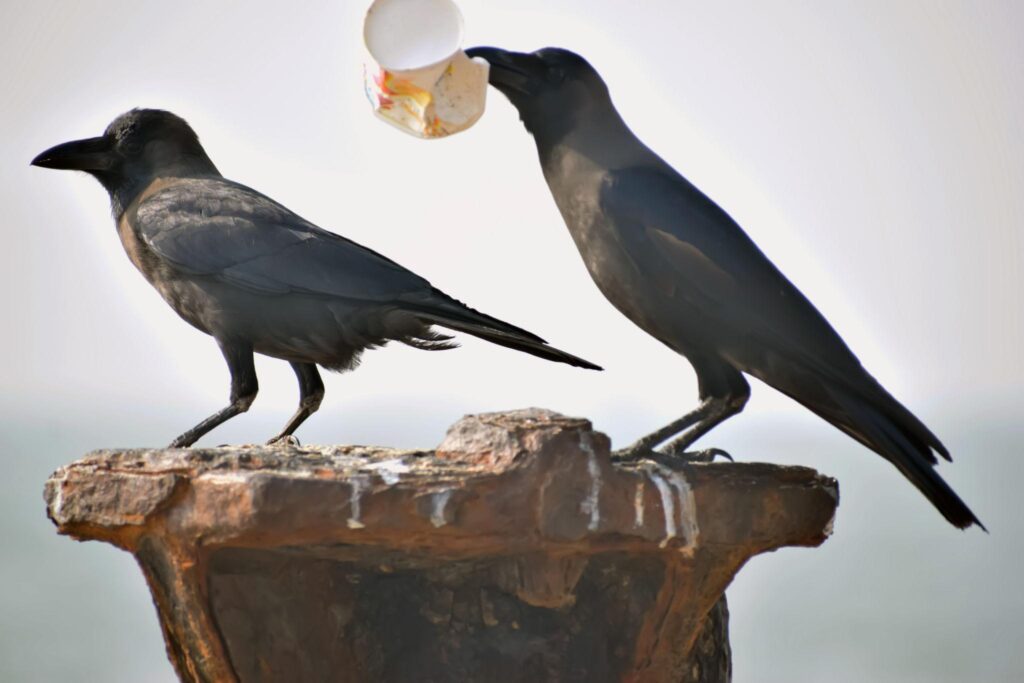
A crow carrying a plastic cup in its beak.
As ornithologists explain, young corvids use this behavior to explore their surroundings and to play. What attracts them is less the shine than the chance to tinker with an interesting find.
Real thefts do happen
Genuine thefts are on record. In Canada, a crow named Canuck became famous after carrying off a knife from a police investigation scene in 2016, as reported by Audubon. However, the bird had grown up around people, which made it especially curious about human belongings.
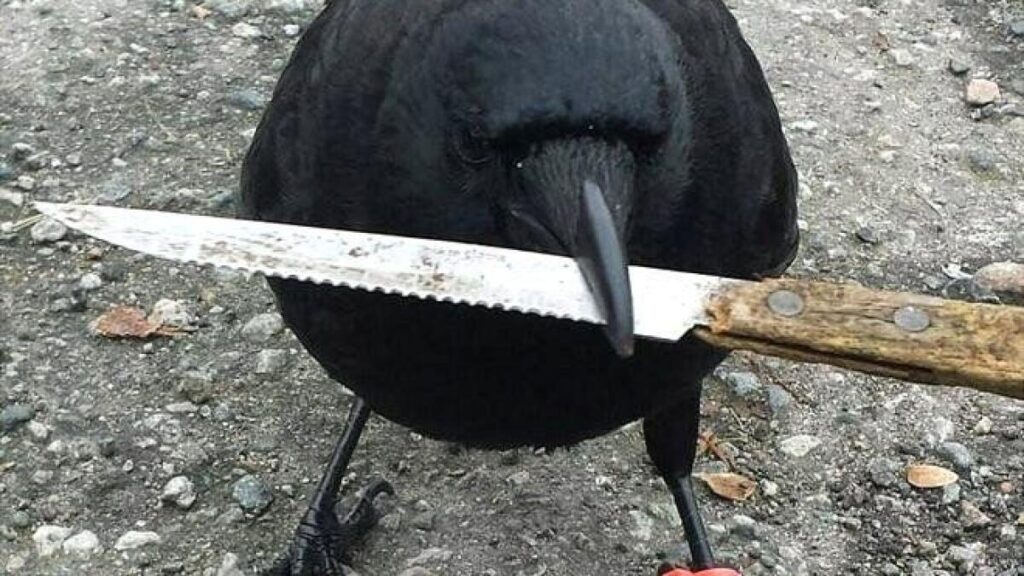
The famous crow Canuck with a knife in its beak. This bird really did try to carry off a knife from a police investigation scene in Canada in 2016. An important clarification: the photo shows a different knife, picked up by Canuck on a separate occasion.
Do crows bring gifts to people?
There are stories of crows leaving coins, buttons or pebbles for the people who feed them, and such cases have indeed been described. But a “gift” does not necessarily mean gratitude. The bird may simply have dropped whatever it was carrying after spotting food.
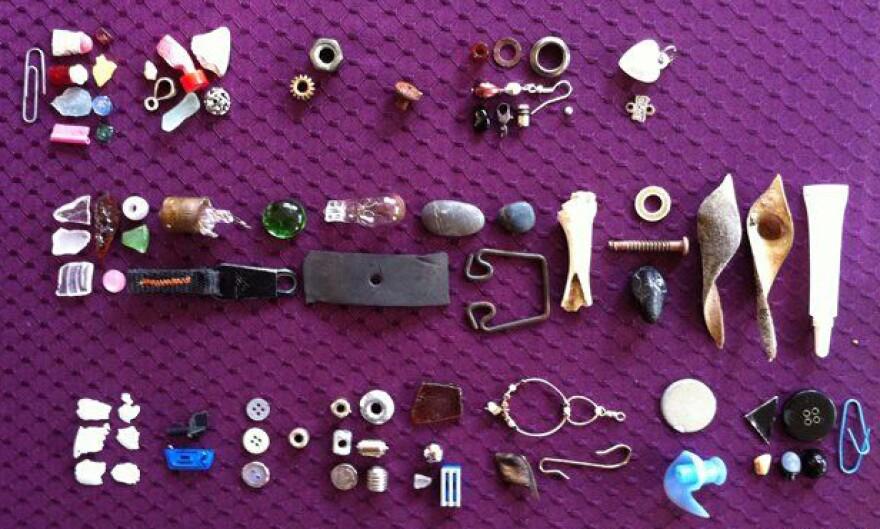
A real collection of small items that crows brought to a girl named Gabi Mann.
Another possible explanation: if a person starts handing out more food after receiving such an item, a clever crow may learn the connection.
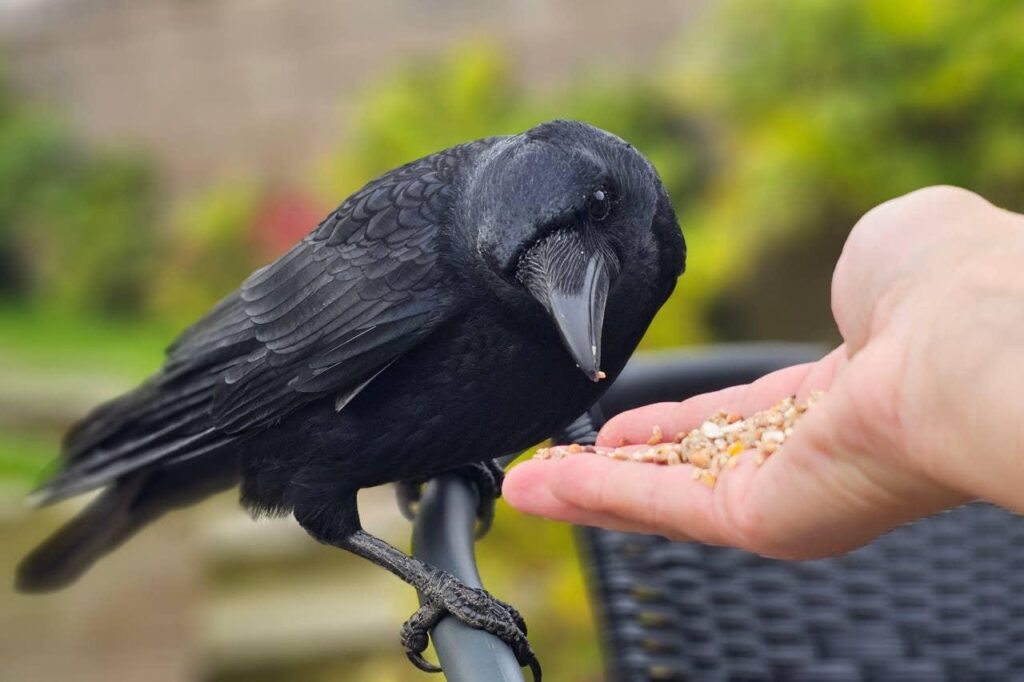
A raven taking food from a person’s palm.
As specialists note, the exact motives behind this behavior have not yet been established. So every coin a crow leaves behind should not be read as a deliberate sign of appreciation, even if the stories remain charming.
What crows and magpies may actually take from your garden
If a hardware nut, a small metal part or a piece of jewelry disappears from your yard, don’t rush to blame the birds. Without witnesses, identifying the culprit is practically impossible.
What is known is that corvids can take human items to build their nests. Wire and metal parts have indeed been found in them. In Europe, nests have even been discovered built from the spikes installed on buildings to deter birds.
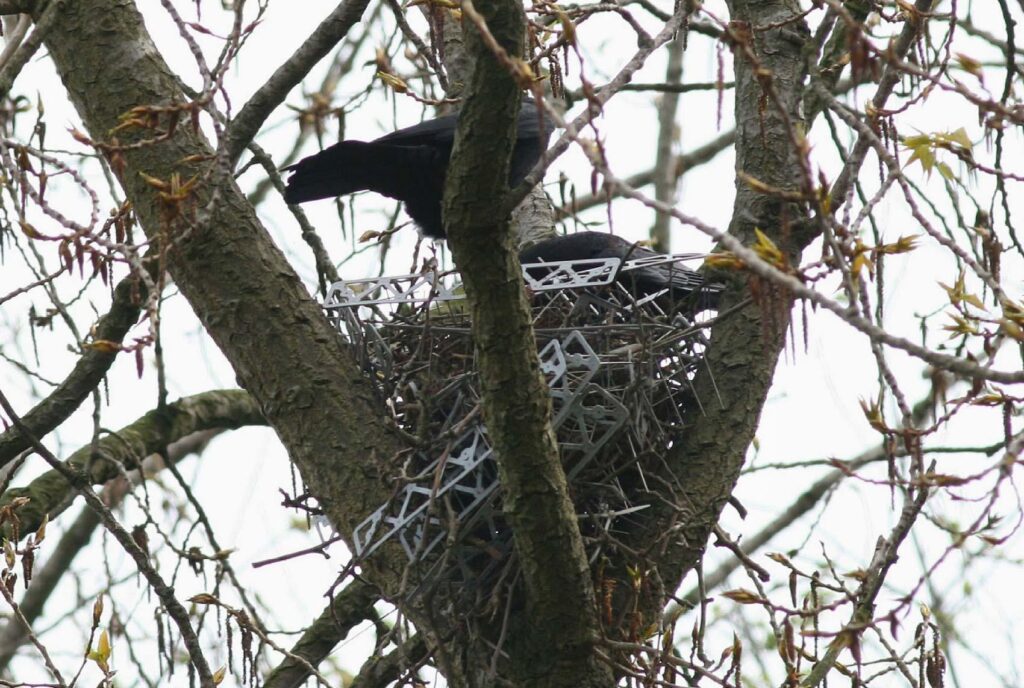
A real corvid nest built with metal spikes.
Food is a simpler case: crows may carry off nuts and other edible finds and hide them for later. Collecting jewelry, however, serves them no purpose.
How to avoid hunting for lost items
A few simple precautions help:
- Keep rings, keys and small hardware in a closed box rather than leaving them on a table.
- Do not leave fishing line, thread or thin wire lying around the garden: birds may use them for nests and accidentally injure themselves.
- If something goes missing, check the grass, gaps in decking and the area under the table first, and keep in mind wind and simple forgetfulness.
There is also no need to search a magpie’s nest for a lost ring. Birds generally do not keep secret jewelry stashes there, however appealing the legend may be.