New realme P4 smartphones have arrived in Russia, and I have the top model in the 8/256 GB configuration for review. Over two weeks, I managed to test the battery, the camera, and how the Snapdragon 685 processor performs in real life. Here’s my honest take — without marketing fluff from press releases — on how the realme P4 smartphone turned out.
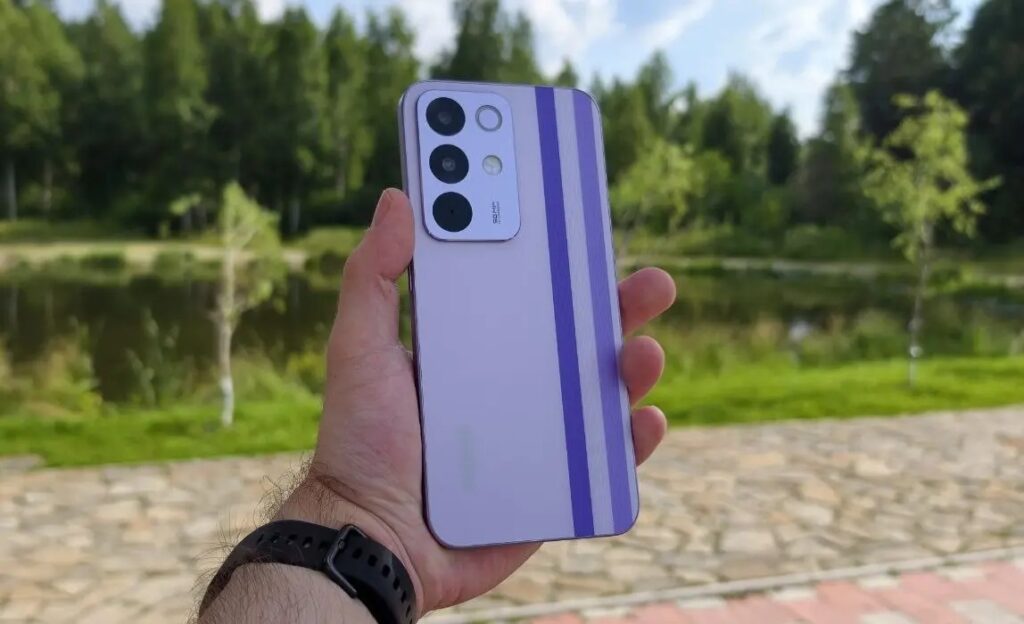
Review of the new smartphone with a large battery
Where to Buy the realme P4
The realme P4 in Russia officially went on sale on July 14, 2026. It’s available online on OZON, Wildberries, Yandex Market, and Citilink. Launch prices:
- 6/128 GB — starting from 15,499 rubles;
- 8/256 GB — starting from 18,999 rubles.
realme P4 Specifications
I covered the unboxing and first tactile impressions in detail in my first look at the realme P4 — I won’t repeat myself here. Instead, I’ll focus on what’s under the hood.
realme P4 specifications in numbers:
| Specifications | realme P4 |
|---|---|
| Display | 6.8 inches, AMOLED, FHD+ (1080×2344), 120 Hz, 381 PPI |
| Processor | Snapdragon 685, Adreno 610 |
| Memory | 6/128 or 8/256 GB, eMMC 5.1, LPDDR4X, microSD |
| Main Camera | 50 MP, f/1.8, FOV 75°, no OIS |
| Front Camera | 8 MP, f/2.0 |
| Battery | 7000 mAh (Si-C), 45W charging |
| Connectivity | Bluetooth 5.0, Wi-Fi 5, NFC, 4G LTE |
Two things immediately stand out in the specs. First — the 7000 mAh battery, which positions itself as the smartphone’s main selling point. Second — the eMMC 5.1 storage. This is a slow memory standard that you typically only find in outright budget phones nowadays.
realme P4 — A Smartphone with a Bright Display
AMOLED, 6.8 inches, FHD+, 120 Hz — sounds great on paper. In practice, the display is indeed good, but let’s be honest about the brightness. realme claims 4000 nits. That’s a peak value, meaning brightness on a very small area of the screen in an HDR scenario. In real-world use, the realme P4 phone delivers 1200 nits when using auto-brightness in sunlight.
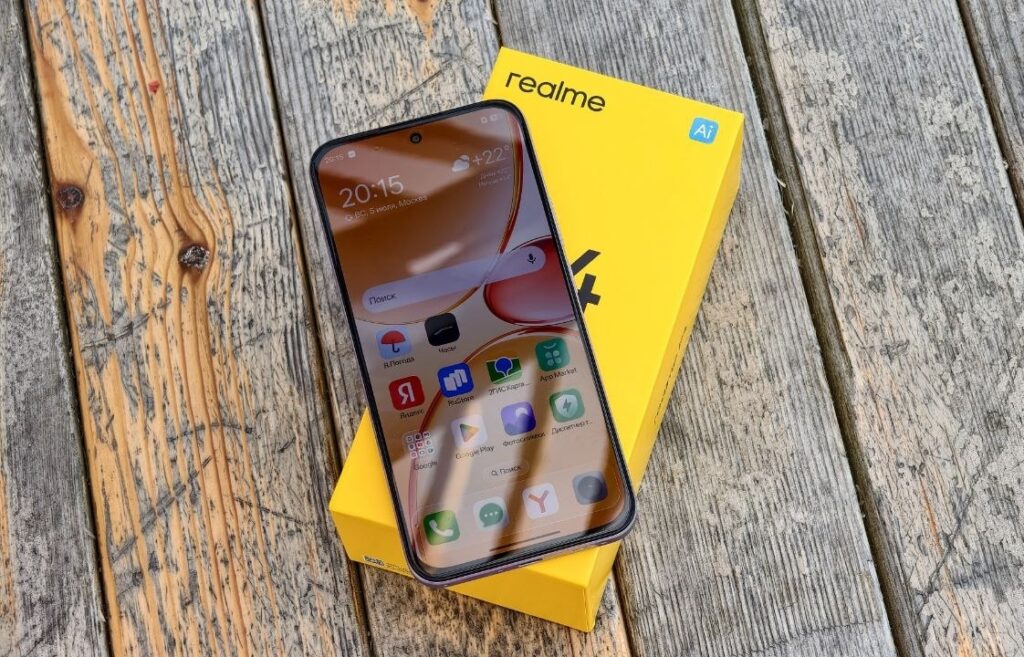
The smartphone’s screen brightness is quite sufficient even for sunny weather
You won’t see 4000 nits in everyday life. I’ve held many smartphones in my hands, and some had brighter screens. That said, the real 1200 nits HBM in sunlight is perfectly comfortable: you can read without any major issues. Color reproduction is pleasant, DCI-P3 coverage is 100%, FHD+ resolution — no complaints about image quality. 120 Hz subjectively works smoothly, without drops. One note about the display: the bezels are noticeable, especially at the bottom. That’s a budget phone trait, not a flagship one.
Snapdragon 685 and eMMC 5.1 — The Main Drawback of realme P4
This is where we need to be straightforward. The Snapdragon 685 processor is a chip that’s not about speed. Roughly 450,000 points in AnTuTu — that’s a result from a two-year-old smartphone. It’s enough for browsing, messaging apps, and social media. In games — only medium-low graphics settings, otherwise the frame rate starts to stutter.
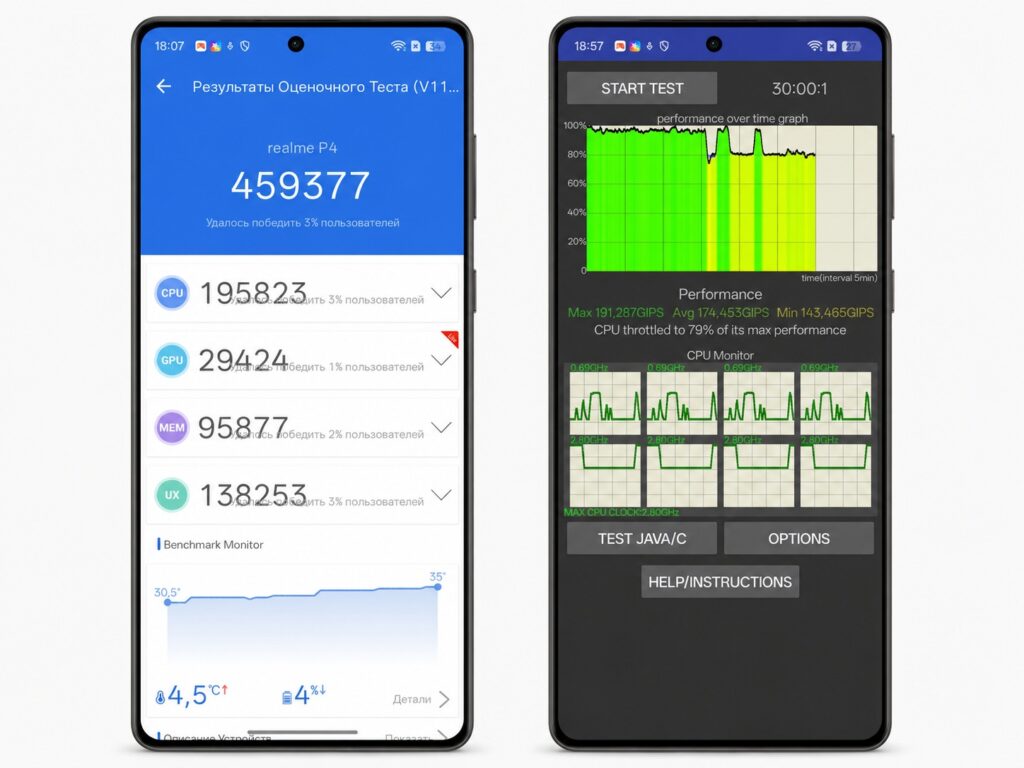
Smartphone benchmark results
But the Snapdragon 685 itself isn’t bad. The storage — eMMC 5.1 — is worse. It’s a slow standard that manufacturers are moving away from in favor of UFS 2.2 and above. Because of it, when switching between apps, you occasionally get freezes — brief stutters lasting a fraction of a second. Not critical, but noticeable. Especially if you previously used a smartphone with UFS. There is an upside to this combination though: the smartphone barely heats up. Under load — slightly warm, nothing more. That’s precisely why realme chose this chip.
Smartphone Running realme UI 6.0
The realme P4 runs on realme UI 6.0 with Android 15. It’s an odd decision — other realme smartphones have already moved to realme UI 7.0 with Android 16, and Google introduced Android 17 a month ago. There are no specific promises about support, but it’s logical to expect at least realme UI 7.0 and realme UI 8.0 in the future.
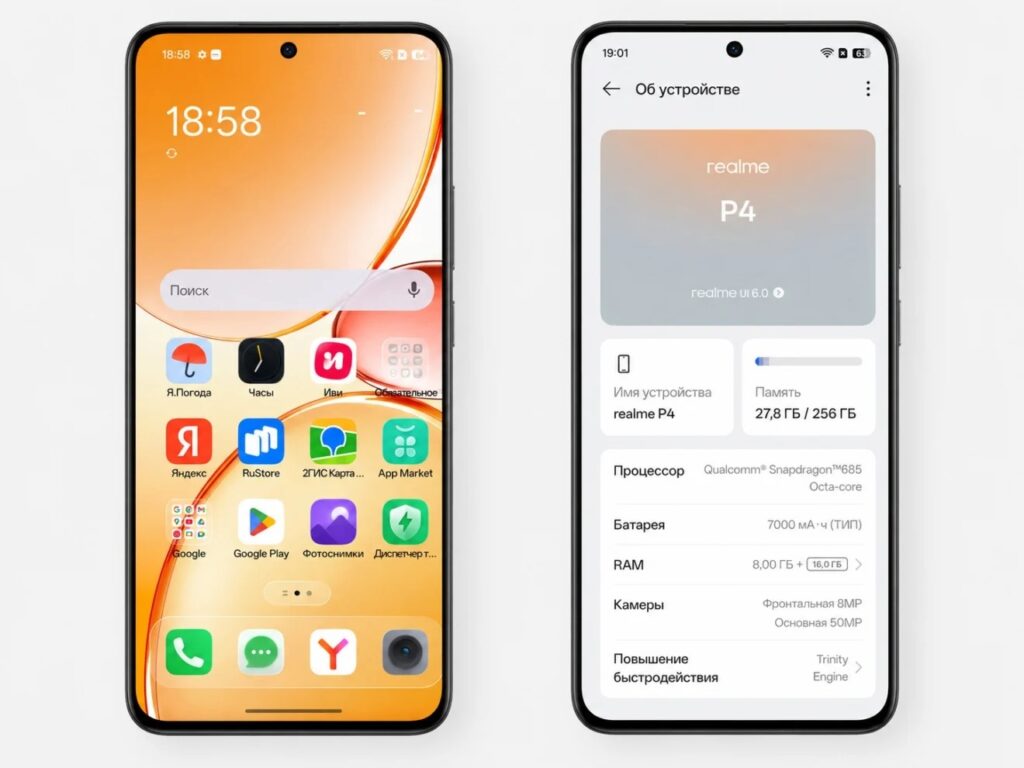
The look of the realme UI 6.0 interface
The shell itself is attractive and functional. What I liked:
- a wide selection of themes and customization options;
- a dedicated Pulse Light settings menu — a LED on the back with 9 colors and 5 pulsation speeds that reacts to notifications, calls, and gaming events;
- the gallery has a built-in AI photo editor — object removal, sharpness enhancement, editing by description. It works locally, without an internet connection.
AI in the system itself is minimal. After all, the realme P4 is not a flagship. But the photo editor in the gallery turned out to be a pleasant surprise.
realme P4 Camera and Photo Samples
The realme P4 phone’s camera is modest, and that needs to be accepted as a given. One 50 MP module with a small sensor and no optical stabilization. No ultrawide, no telephoto lens. The front camera is 8 MP.
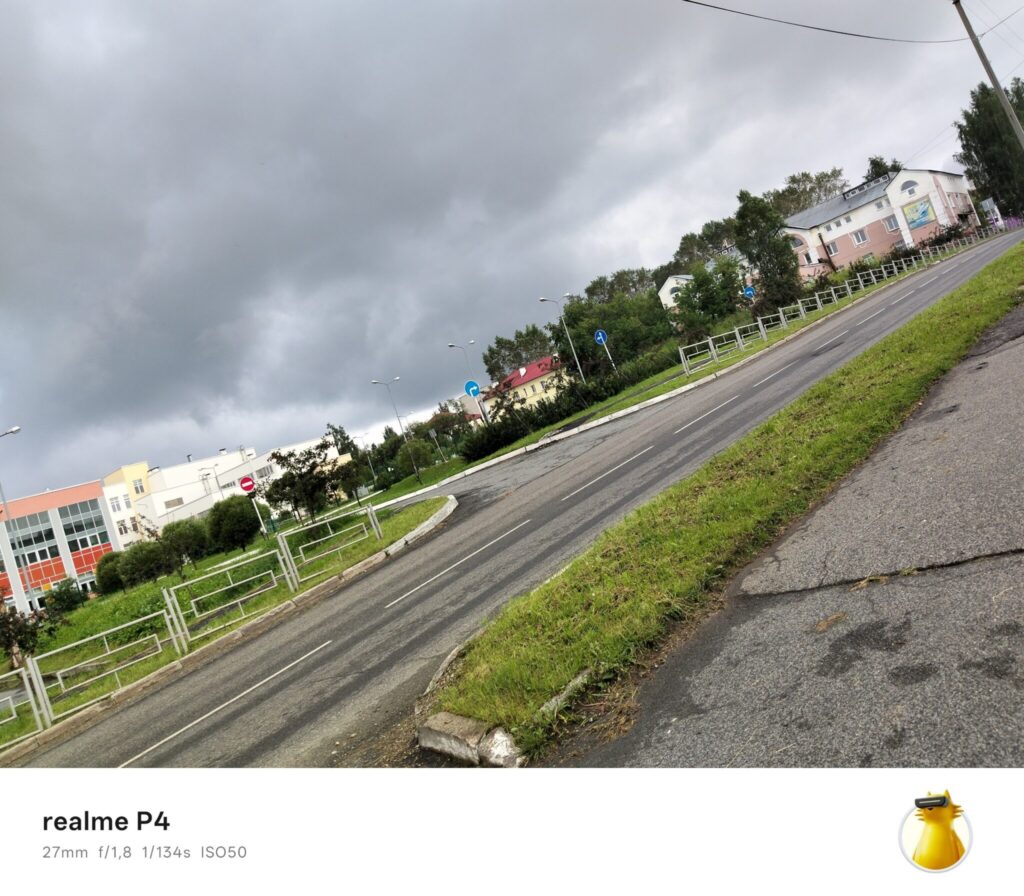
Photos from the realme P4 in daylight come out quite decent, as long as you don’t overdo the zoom. Up to 2x, detail is fine. At higher magnification, the image starts to get blurry. At night, noise becomes noticeable, and even slight magnification beyond 2x makes shots mediocre.