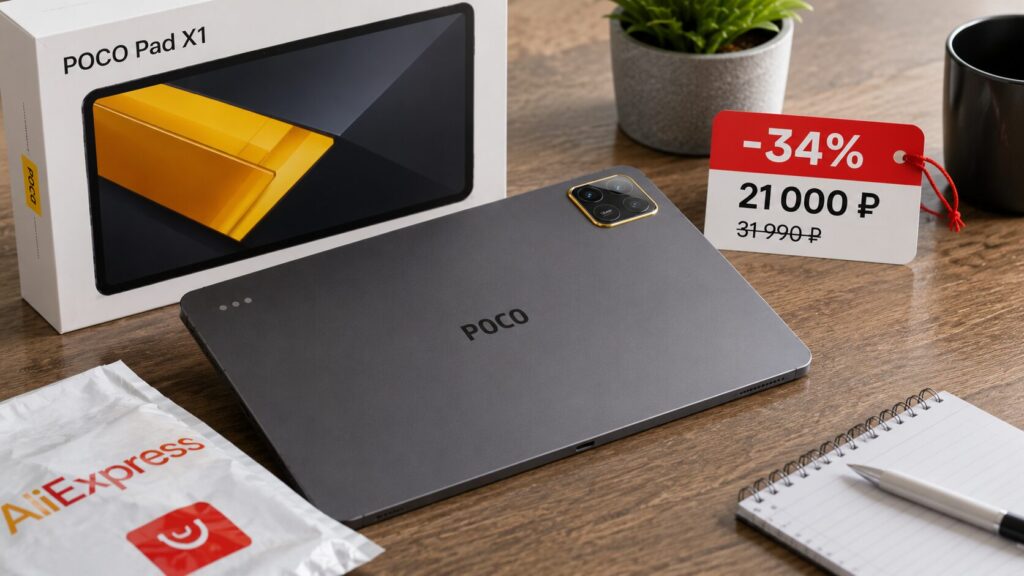
POCO X1 Pad is essentially a rebranded Xiaomi Pad 7
POCO Pad X1 Specs: Display, Memory, and Processor
The main draw here is the memory configuration. For such a modest sum, you get 8 GB of RAM and 512 GB of internal storage, using modern LPDDR5X and UFS 4.0 standards. In other words, it’s fast RAM and fast storage that are usually found in significantly more expensive devices. And since memory prices are currently rising the most, this much storage at this price is a rarity.
The POCO X1 Pad runs on the Snapdragon 7+ Gen 3 processor — a solid mid-ranger that handles both everyday tasks and games at medium settings. The display is an 11.2-inch IPS panel with a 144 Hz refresh rate and a resolution of 3200 x 2136 pixels. The high refresh rate makes scrolling and animations smooth, while the resolution above standard Full HD delivers a sharp picture for reading and video.
Rounding out the package are a quad-speaker stereo system and an 8,850 mAh battery. For a tablet primarily used at home for video, reading, and casual gaming, this capacity provides more than enough comfort.
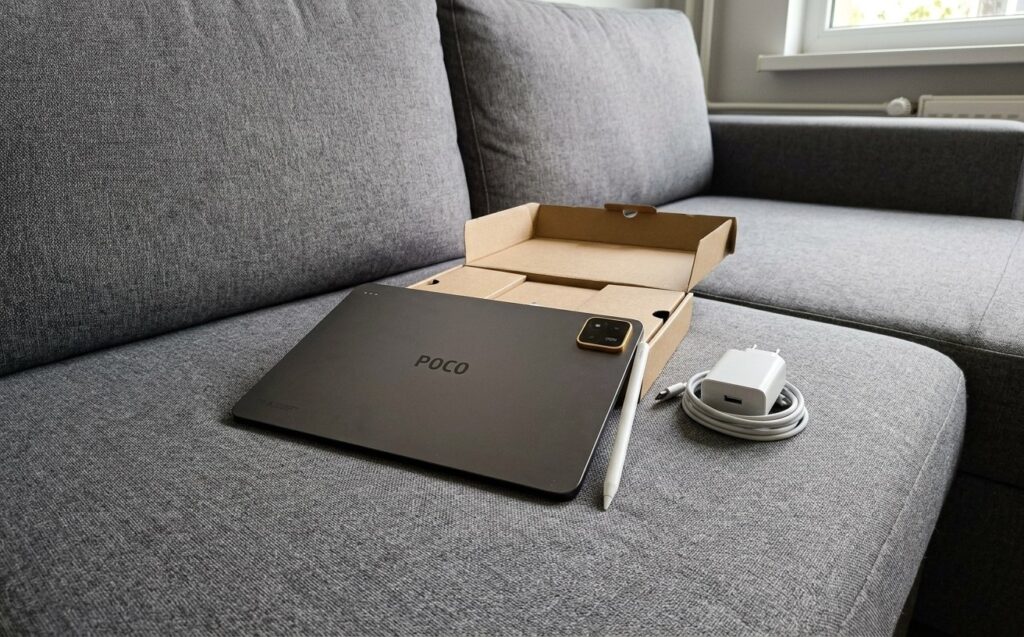
A great tablet for a great price. I already got one for myself
POCO Pad X1 Is Xiaomi Pad 7 Under a Different Name
An important thing to keep in mind: POCO Pad X1 is essentially a renamed Xiaomi Pad 7. POCO is owned by Xiaomi and regularly re-releases existing devices under its own brand. There’s nothing wrong with that, but it explains why the specs look so impressive for the price.
The practical takeaway is simple: if you wanted to buy a Xiaomi Pad 7 but were put off by the price, the POCO-branded version can be cheaper while offering the same hardware. The difference is usually in the box design, naming, and regional distribution — not in the internals.
Best Tablet Under 25,000 Rubles in 2026: What to Compare It With
In the under-25,000-ruble segment, very few devices offer a 144 Hz display, 512 GB of fast storage, and a Snapdragon 7+ Gen 3 all at once. Usually, you have to choose: either lots of memory with a weak chip, or a decent processor with a simpler screen. The balance here is rare.
If your budget is much tighter, there are simpler options available. But in terms of the combined display quality, speed, and sound, the POCO Pad X1 plays in a different league and justifies the price difference.
POCO Pad X1 Price and Sale Conditions
According to the source, the tablet is selling for approximately 21,000 rubles as part of a limited-time sale. This is the seller’s price during a temporary offer, not a permanent price tag, so it can easily change once the sale ends.
Things to keep in mind before ordering:
- this is a marketplace offer, not an official retail price in Russia
- sale prices are limited by time and quantity
- before paying, check the seller’s rating and return policy
- verify the shipping region and whether the interface language you need is available
POCO Pad X1 Downsides That Ads Don’t Mention
Promotional copy usually focuses only on the positives, so let’s go over the limitations. The display here is IPS, not OLED: it’s bright and smooth, but it falls short in black depth and contrast compared to more expensive tablets with OLED panels. This is noticeable when watching movies in a dark room.

You can actually even game on the POCO Pad X1
The Snapdragon 7+ Gen 3 is a good but not flagship chip. It may not be enough for heavy games at maximum settings, but it handles everyday tasks and medium graphics with confidence. If you need a true gaming powerhouse, you should look at devices with a more powerful processor.
Another nuance is cellular connectivity support: the tablet is primarily designed for Wi-Fi, so for internet access away from home, you’ll need to tether from your phone. Also remember that warranty issues are harder to resolve when buying through a marketplace compared to official retail.
Bottom line: the POCO Pad X1 at around 21,000 rubles is a strong proposition for a home tablet with large, fast storage and a smooth display. It’s worth getting for those who use a tablet for video, reading, studying, and casual gaming. Those who expect OLED, flagship performance, or built-in cellular data should look at other models and avoid overpaying for features they don’t need.