A fresh rumor has arrived from the Chinese social network Weibo: the anniversary iPhone 20 may ditch its aluminum body in favor of glass. It looks impressive, but such a switch comes with an obvious cost — fragility. And this is still just a rumor, not confirmed Apple plans. What’s funny is that the company hasn’t even released the iPhone 18 Pro yet, but rumors have already raced several generations ahead.
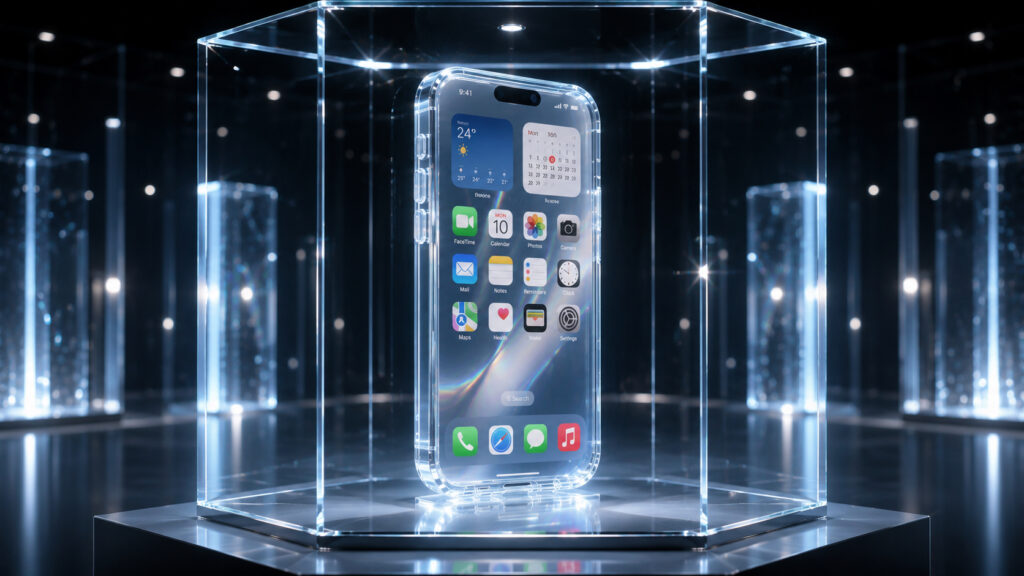
Would you want a fully glass iPhone?
iPhone 20 Body: Latest Rumors and Leaks
The leak comes from a Weibo insider under the nickname Fixed-focus digital cameras. Previously, he claimed that the iPhone 20 would stick with aluminum, but now he’s done a 180-degree turn: allegedly the entire lineup will get glass instead of metal. So the same person issued two opposite versions in a short period, and that’s the first reason not to rush to conclusions. This happens often with Chinese insiders: they catch fragments of information from suppliers and at early stages easily confuse test prototypes with final decisions.
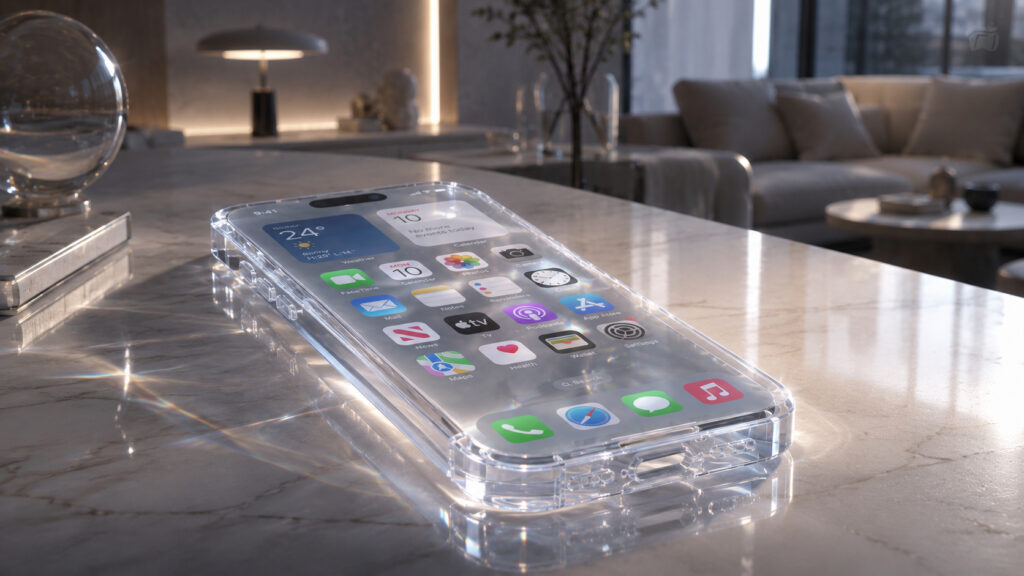
The glass body looks stylish, but it’s very impractical
A glass body fits well with discussions about what the iPhone 20 design will look like, where curved screens and a bezel-less appearance are also being discussed. The current iPhone 17 Pro and iPhone 17 Pro Max are built from aluminum with Ceramic Shield glass, and it looks like the iPhone 18 Pro and iPhone 18 Pro Max will maintain this approach. So even if the glass story is real, don’t expect it before the anniversary model.
Why Apple Wants to Replace Aluminum with Glass
The idea behind the rumor is that the glass body is designed for the Liquid Glass interface — Apple’s new visual style where elements seem to refract light. According to insider Ice Universe, the interface plays with light along the edges and enhances the feeling of a unified design. And a screen with curved edges should bring the concept even closer to completion.
In short, the idea is purely aesthetic: to make the body and the image on the screen merge into one. The concept is that the boundary between the frame glass and the display glass should become almost invisible, and reflections along the edges will only emphasize the effect. But whether an average person will notice the difference in everyday use is an open question. I’m holding an iPhone 16 Plus right now and honestly: after a week you stop noticing even more obvious things than light play along the edge.
Pros and Cons of a Glass iPhone Body
The main downside is immediately obvious. Switching to glass hurts durability: to avoid paying for expensive repairs, you’ll have to hide the phone in a case. And the beautiful bezel-less look that the whole thing was designed for will most likely be covered by a case on day one. We’ve already been through glass backs with the iPhone 8 and iPhone X, and replacing the back panel back then cost nearly half the price of the smartphone. Going back to that for the sake of beauty in a vacuum is a questionable pleasure.
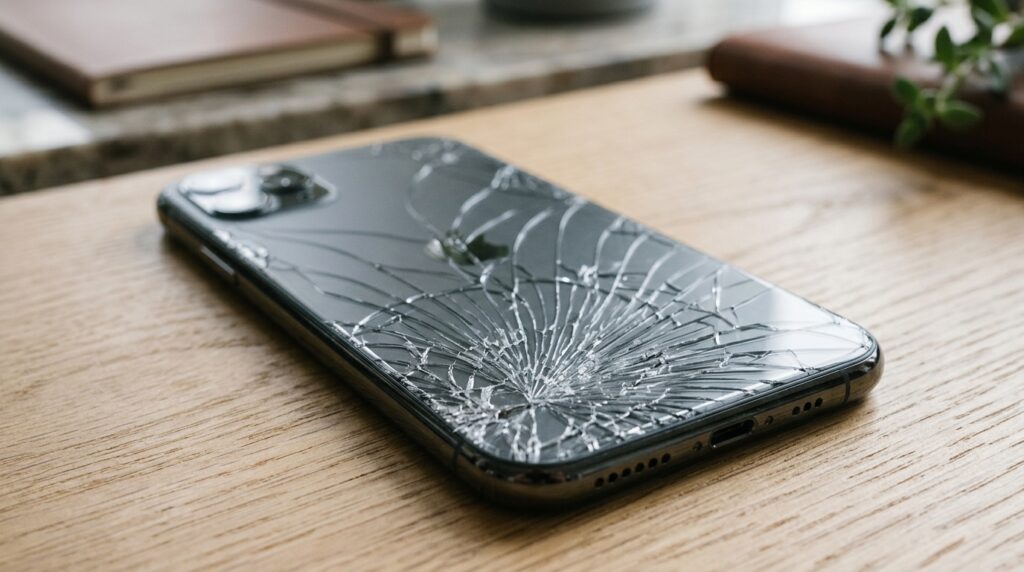
Glass fragility is the main practical downside of such a body
There is a potential upside. The anniversary model is rumored to feature improved wireless charging and a look the market has never seen before. Glass does indeed transmit wireless charging better than metal, and this is the only truly practical argument for changing the material.
If we boil it down to a simple list:
- pro — potentially better wireless charging
- pro — a more unified look with the Liquid Glass interface
- con — higher risk of breaking the body
- con — an almost mandatory case that hides the entire design
What Apple Might Use Instead of Aluminum
The haziest part of the rumor is what exactly will replace the metal. The Weibo insider claims that iPhone 20 production will resemble the iPhone Air, and that Apple has already retooled the factory for body manufacturing. If so, the company may return to a titanium alloy: the device would be lighter, but heat dissipation would noticeably suffer.
We already saw titanium in the iPhone 15 Pro and iPhone 16 Pro, and Apple faced overheating issues at launch with those models. In practice, poor heat dissipation means a risk of overheating and performance drops under load, whether it’s demanding games or long video recording. For now this is a guess on top of a guess, but the direction is interesting.
Will iPhone 20 Get a Glass Body
In short — treat this rumor with skepticism. The same insider recently argued that aluminum would remain the primary choice for the iPhone 20, and now he’s switched to the opposite version. It’s worth keeping an important thing in mind: we’re talking about an anniversary model, and Apple still needs to release the iPhone 18 lineup first. During that time, Apple’s plans for materials and design will change more than once, and the source has already contradicted himself.
If you’re choosing an iPhone right now, this news doesn’t affect your decision at all — it’s about the distant future. For those following the lineup, the rumor is interesting as an early signal about the design direction. But making decisions based on it is frankly premature. The anniversary iPhone is largely an image product for Apple, so body experiments are entirely possible. But between “an insider wrote” and “Apple released” there usually lie several years and dozens of revisions.