Bad news has arrived about the tablet. The new iPad mini with an OLED screen may launch without ProMotion: according to a leak, its display is limited to a 60 Hz refresh rate. There is no official confirmation, and the source of the rumor is an insider with a mixed reputation, so these numbers should be taken with a grain of salt.
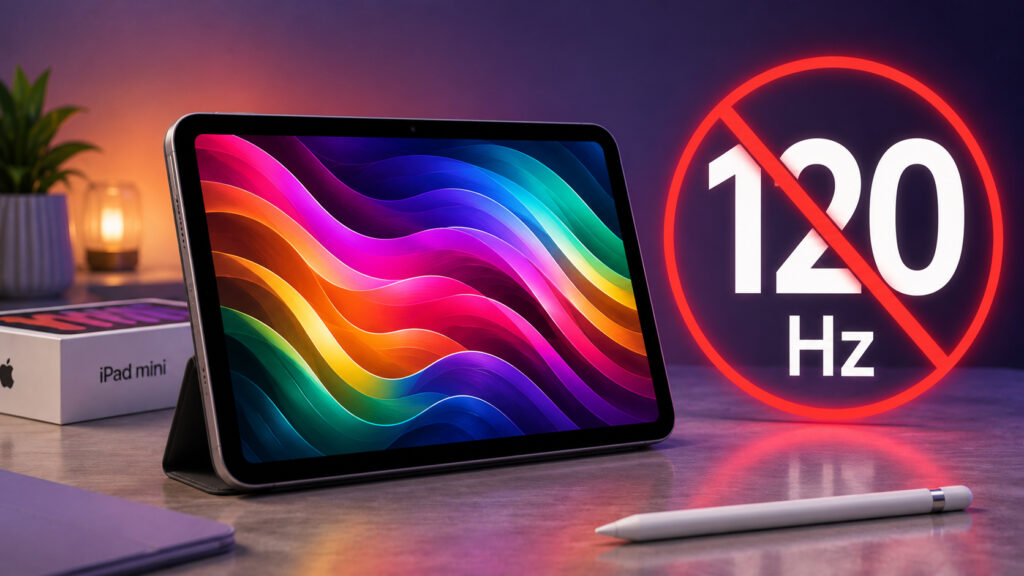
A high refresh rate display won’t be added to the iPad mini
What We Know About the iPad mini 8 OLED Display
The source is the author of a Korean blog on the Naver platform under the nickname yeux1122. According to him, someone from Apple’s supply chain revealed that the upcoming compact tablet will feature an OLED screen measuring 8.4 inches with a 60 Hz refresh rate.
The display in question is an LTPS panel. This is a simpler and cheaper technology compared to what’s used in the iPad Pro. These screens operate at a single fixed refresh rate: they simply cannot adapt to content.
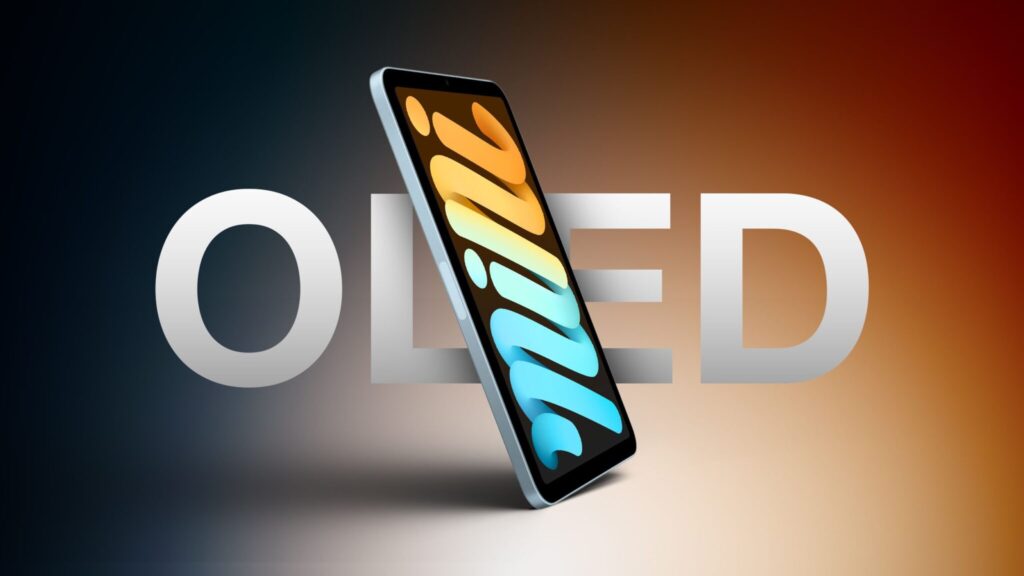
OLED will appear in the iPad mini, but with one important limitation
The leaker himself is known for inconsistency. Some of his predictions have come true, while others have missed the mark, so this is a rumor, not a confirmed fact. Until Apple unveils the tablet on stage, any specifications could change — right up until announcement day.
Still, the rumor is intriguing. Many buyers have spent years choosing between the iPad mini and iPad Air, and display refresh rate has long been one of the key arguments in that debate.
The Difference Between 60 and 120 Hz on iPad
Refresh rate is how many times per second the screen redraws the image. The higher the number, the smoother scrolling and animations appear.
- 60 Hz — the standard refresh rate, the image updates 60 times per second. Everything works fine, but slight stuttering is noticeable during fast scrolling.
- ProMotion (10-120 Hz) — the screen automatically adjusts its refresh rate to the task: up to 120 Hz during scrolling and down to 10 Hz with static content to save battery.
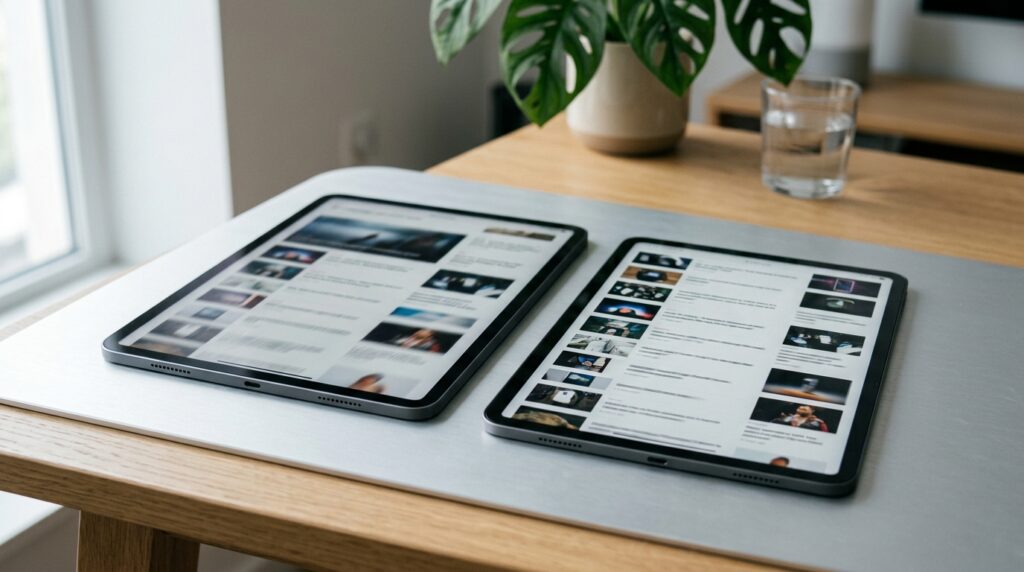
ProMotion makes scrolling and animations noticeably smoother compared to 60 Hz
The difference is felt not in numbers but in the details. Scrolling through a feed, minimizing an app, pulling down the notification shade — at 120 Hz the motion looks seamless, while at 60 Hz it tears slightly. You can get used to it in a couple of days, but going back to 60 Hz feels unpleasant. Especially if an iPhone with ProMotion is sitting right next to you.
There’s also a second nuance. ProMotion panels (which Apple calls LTPO technology) are typically brighter as well. LTPS screens, which the leak mentions, often fall short in maximum brightness and contrast headroom. On a sunny day outdoors, this is more noticeable than scrolling smoothness.
Why iPad mini 8 May Launch Without a 120 Hz Display
Those who were expecting iPad Pro-level smoothness from the new mini will be the most disappointed. The logic was simple: since even the standard iPhone 17 got a 120 Hz display, it was reasonable to expect the same from the first OLED tablet in the compact lineup.
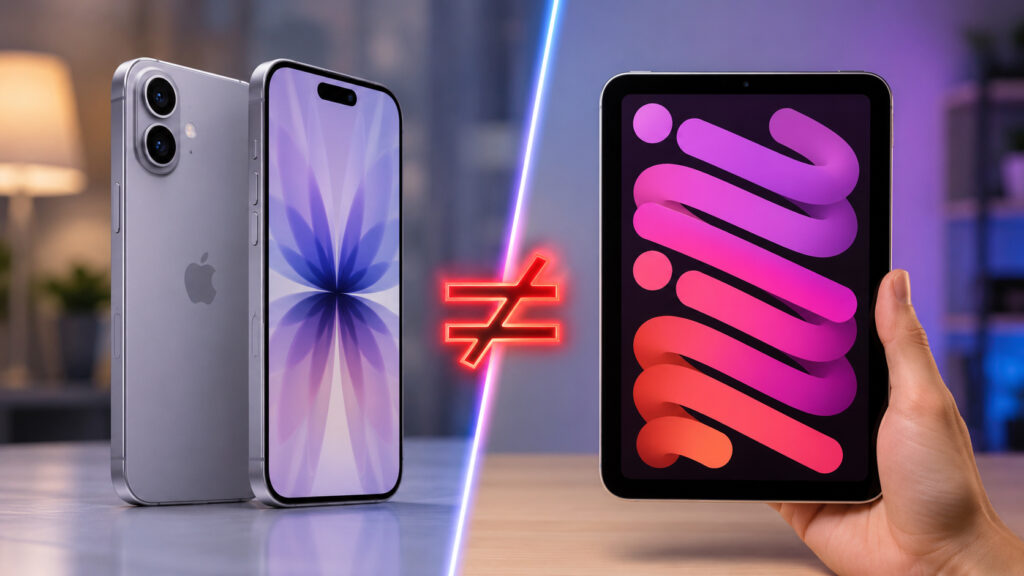
Even the standard iPhone 17 got 120 Hz
But there’s a counterargument. Apple released the iPhone 17e with a 60 Hz OLED screen, which means the company is comfortable putting OLED without a high refresh rate in more affordable devices. It’s possible that Cupertino considers the mini market too niche to justify an expensive panel. The tablet sells in volumes incomparable to the iPhone, and every additional cost item eats into margins.
That said, there’s still room for doubt. The same leaker reported that the new iPad mini is already in mass production at a Samsung Display facility in South Korea. The catch is that the same production line manufactures both advanced LTPO panels and simpler LTPS ones. The mere fact of production there proves nothing.
Earlier, the Korean publication ETNews also reported the start of production at a Samsung factory. No one has named an exact release date; the market estimate is late 2026.
OLED vs LCD: Which Display Is Better for iPad
Even if the refresh rate stays at 60 Hz, the transition from LCD to OLED alone is a significant step forward. The current iPad mini 7 uses a liquid crystal display, and the difference will be apparent from the very first second.
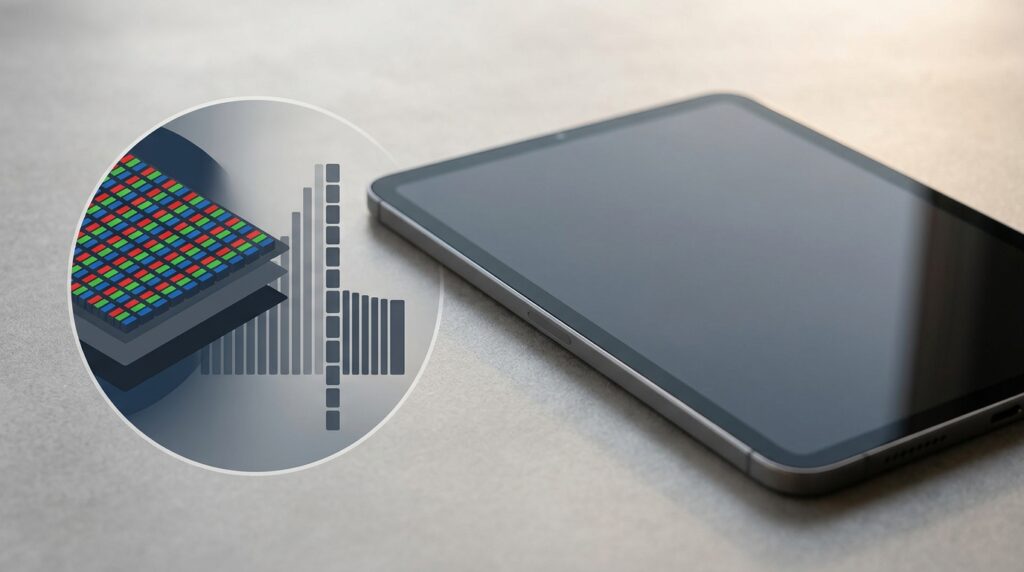
OLED iPad mini may stay with a 60 Hz display — what this means
- deeper blacks and higher contrast;
- more vivid visuals in movies and games;
- more efficient battery usage with dark interfaces.
For a tablet that’s most often held in bed or on the go, image quality matters more than smoothness. A movie in a dark room on OLED looks completely different from a backlit LCD where black appears grayish. So even without ProMotion, the new mini’s screen will still be better than the current one.