Apple has confirmed that iOS 27, due out on September 14, will include iPhone Handoff, a feature that lets a user switch between two iPhones while keeping the same phone number on both. One iPhone holds the primary eSIM, the other a companion eSIM, and calls follow whichever device the user picks up — without moving a SIM card or asking the carrier to transfer the line. The catch: at launch it works only with T-Mobile in the US and Telekom in Germany. According to the source, neither Google nor any Android manufacturer has shown anything comparable.
What you need to know
- iPhone Handoff arrives with iOS 27 on September 14 and pairs a primary eSIM on one iPhone with a companion eSIM on a second iPhone, so both stay reachable on one number.
- At launch, only T-Mobile (US) and Telekom (Germany) support it; CNET reports Verizon and the UK’s EE are expected by year-end, with no names or dates for other carriers.
- The feature depends on carrier support, not just the software update — two iPhones running iOS 27 gain nothing without a participating operator.
- Apple first briefly mentioned the feature at WWDC in June; details became visible in last week’s iOS 27 beta.
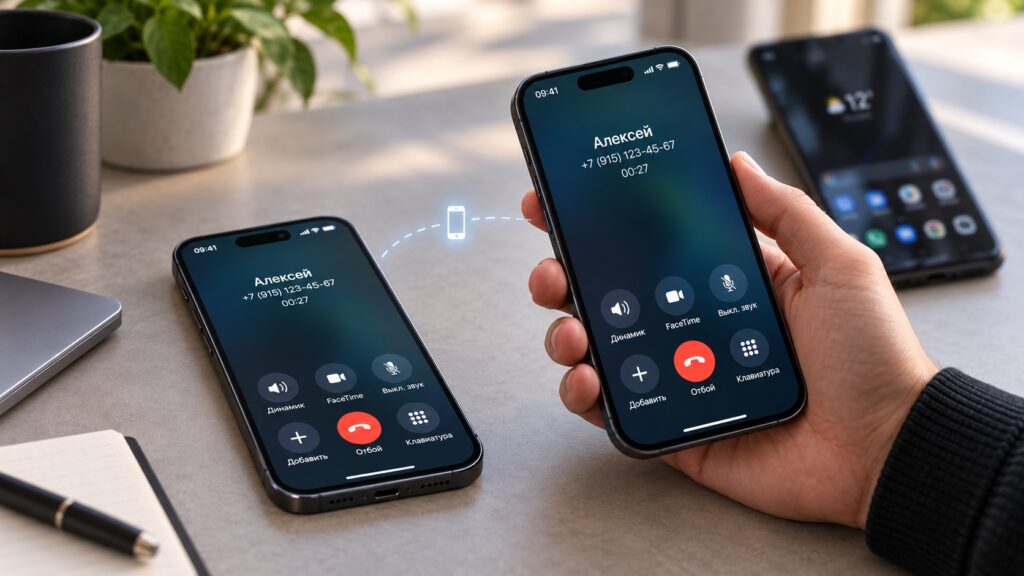
A single number ringing two iPhones at the same time
Two iPhones, one number, no SIM swapping
The mechanism is straightforward. One iPhone carries the primary eSIM; the second carries a companion eSIM tied to the same line. Pick up either device and you remain reachable on the same number, with no manual SIM transfer and no call to the carrier. In Apple’s own wording, customers on supported carriers will be able to easily switch back and forth between two iPhone models with a single phone number.
Note: eSIM itself is not exclusive to Apple — dozens, if not hundreds, of smartphones from other manufacturers support it. What is new here is the carrier-level pairing of two devices on one line.
It may sound minor, but anyone who carries two phones knows the hassle. The source author, who uses a vivo X300 as a daily phone and occasionally carries a Xiaomi 12T Pro as a second handset, describes the two options available on Android today: either carry the second phone with a different number, or physically pull the SIM from one device and insert it into the other. The first means nobody can reach you on the second phone; the second means sooner or later a SIM tray or card gets lost.
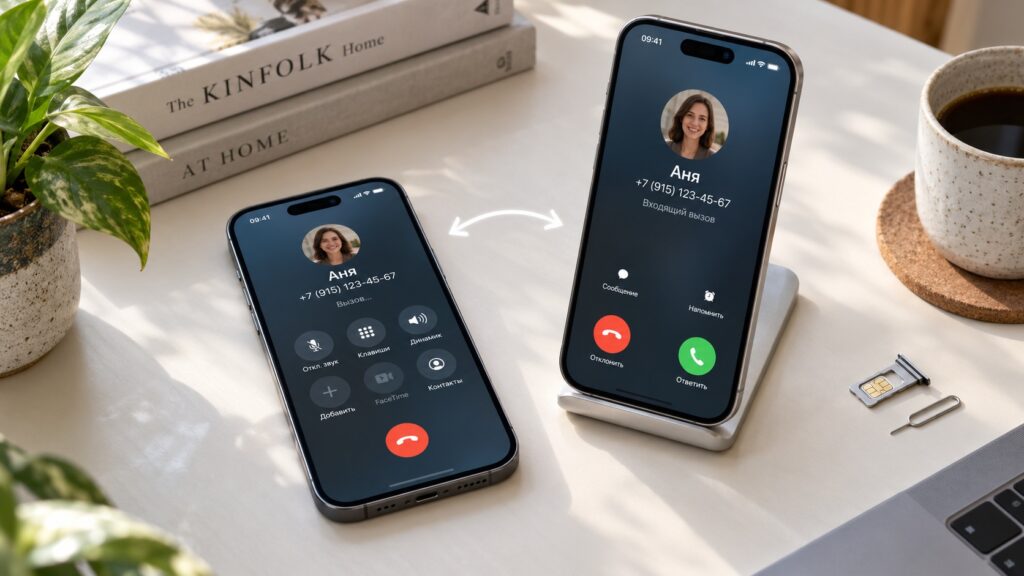
How iPhone Handoff works

iPhone Handoff targets exactly that problem: one number, two phones, both live. Leave the house with the main device and calls ring there; take the other one for the weekend and calls follow it.
Only T-Mobile and Telekom at launch
The main caveat sits in the fine print of the announcement. At launch, iPhone Handoff will work only with T-Mobile in the United States and Telekom in Germany. According to CNET, Verizon and the UK carrier EE are expected to add support by the end of the year, and more operators are promised afterward — but no specific names or timelines have been given.
Practical implication: owning two iPhones and installing iOS 27 is not enough on its own. The feature depends on the carrier, not just the firmware, and beyond the carriers named above, no others have been confirmed or ruled out.
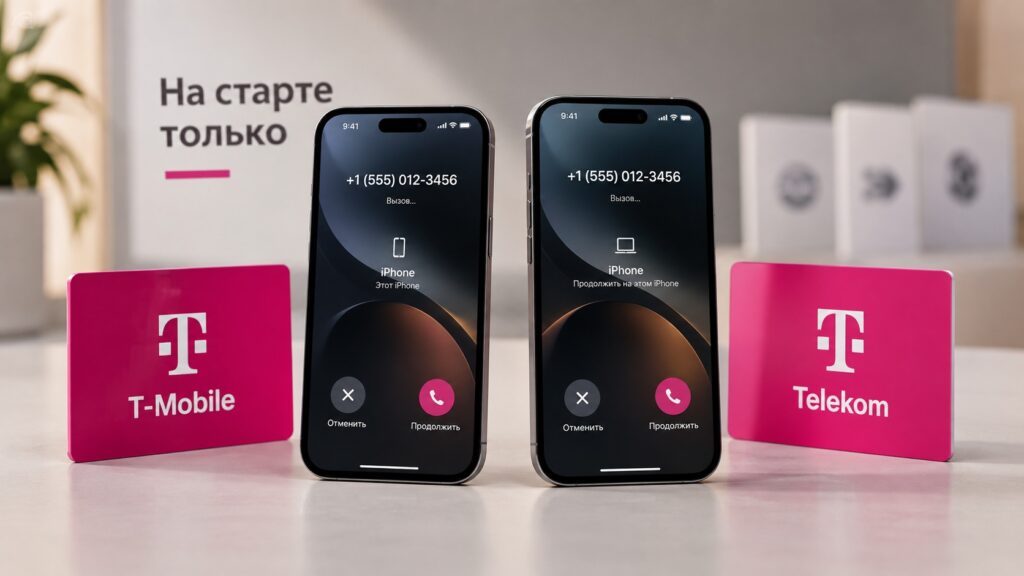
iPhone Handoff working with eSIMs from two carriers
This is a familiar pattern for features that lean on eSIM and network infrastructure. Apple can showcase them on stage, but real-world availability comes down to whether the company has struck an agreement with each individual operator.

A foldable or gaming phone as the second handset
Android Authority points out that the feature is especially useful for people who keep a specialized device alongside their main phone — a foldable, a gaming phone, or another niche model. Such setups are more common among Android users than iPhone owners, simply because the range of hardware is wider.
The source author notes the irony: while many iOS 27 additions borrow ideas long present on Android, this one runs the other way — a feature that seems tailor-made for the Android ecosystem has shipped first on iPhone.
The author says the vivo X300 covers almost every need, but on days when a larger screen would be welcome, the same question resurfaces: what to do about the phone number.
Android has no answer yet
Apple has beaten Android to implementing this idea. Neither Google nor any other manufacturer has demonstrated anything similar, so Android owners are left with the old workarounds: moving a SIM between devices or running a second number on the second phone.
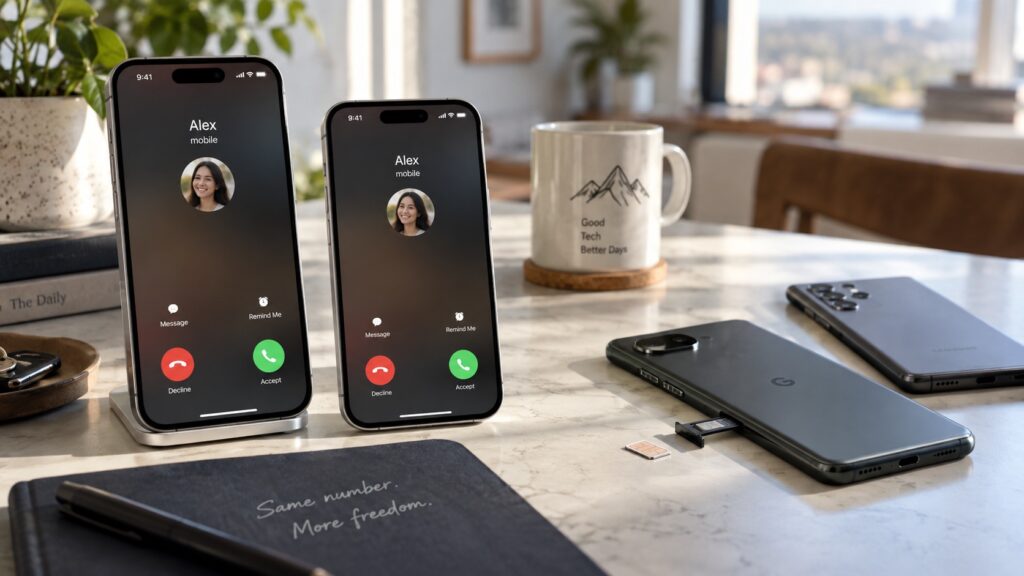
iPhones alongside Android smartphones that lack an iPhone Handoff equivalent
What to watch
Two things will determine whether this matters beyond a handful of markets. First, how quickly Apple’s carrier list grows: if Verizon and EE do come on board by year-end as CNET reports, the feature stops being an exotic niche. Second, whether Google responds — the technical foundation, eSIM support on Android, has existed for years. For now, the source author concludes, it is a rare case where an Android owner has something to envy in iOS.