Comparing iOS 27.2.1 battery life with other iOS versions
A new Geekbench battery test of iOS 27.2.1 suggests the update brings small runtime gains to four of six tested iPhones compared with iOS 27.2, while two models lose a few minutes. The bigger story appears over a longer period: the iPhone 15 ran nearly three hours less on iOS 27.2.1 than it did on iOS 18.2.1 in the same type of test, and even the iPhone 16 has not returned to its iOS 26.2.1 result.
Apple released iOS 27.2.1 as an update with no new features, focused on bug fixes and security fixes. Even small patches can affect battery life, however, so the results were compared across four iOS versions.
What you need to know
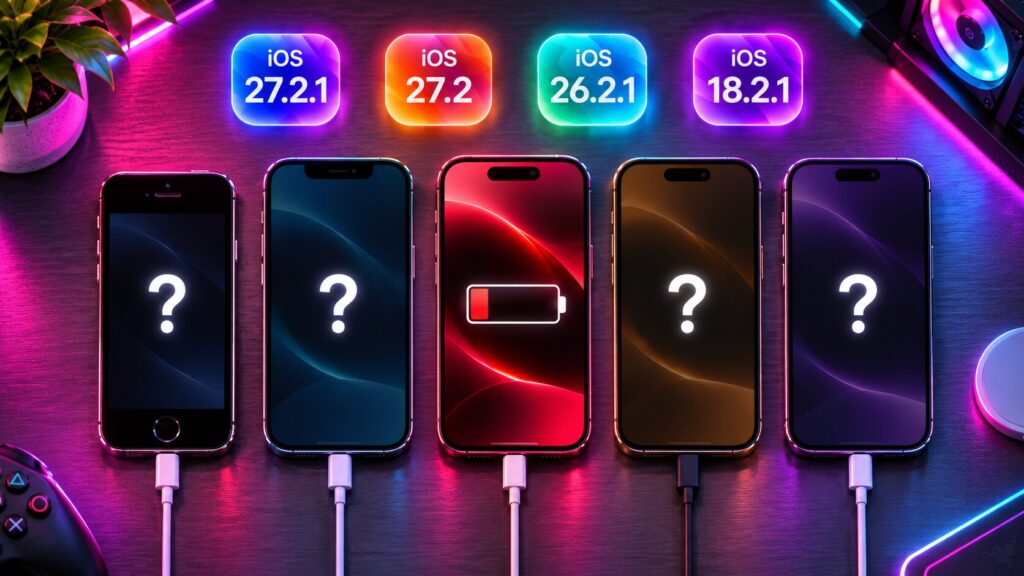
- YouTuber iAppleBytes ran Geekbench Battery Test on the iPhone SE 2020, 11, 12, 13, 15 and 16, using identical brightness settings and running each phone until it was fully discharged.
- Compared with iOS 27.2, the iPhone 16 gained the most runtime (+17 minutes), while the iPhone 13 (−16 minutes) and iPhone 12 (−7 minutes) lost time.
- The iPhone 15 lasted 7 hours 56 minutes on iOS 27.2.1, compared with 10 hours 54 minutes on iOS 18.2.1, the largest gap in the comparison.
- Geekbench applies a continuous load, so a loss of an hour in the test does not necessarily mean an hour less battery life in everyday use.
How the test was run
The results come from YouTuber iAppleBytes, who ran Geekbench Battery Test on six iPhones: the iPhone SE 2020, iPhone 11, iPhone 12, iPhone 13, iPhone 15 and iPhone 16. All phones used the same brightness settings and ran the test until the battery was empty. Runtime is the main focus here because hours and minutes are easier to interpret than benchmark points, but the Geekbench scores are listed too.
iOS 27.2.1 results
- iPhone SE 2020: 3 hours 15 minutes, 1,957 points
- iPhone 11: 5 hours 1 minute, 2,999 points
- iPhone 12: 5 hours 33 minutes, 3,328 points
- iPhone 13: 6 hours 22 minutes, 3,820 points
- iPhone 15: 7 hours 56 minutes, 4,760 points
- iPhone 16: 14 hours 13 minutes, 8,530 points
On its own, the ranking is predictable. The iPhone 16 lasts longest, and the compact iPhone SE runs out first. The comparison with earlier versions is more revealing. An earlier test of iOS 27.2 had shown battery-life declines on some models, so the question was whether iOS 27.2.1 would reverse them.
How iOS 27.2.1 compares with earlier versions
The table below compares Geekbench runtimes (hours:minutes) on iOS 27.2.1, iOS 27.2, iOS 26.2.1 and iOS 18.2.1. No iOS 18.2.1 result is listed for the iPhone 16.
| Model | iOS 27.2.1 | iOS 27.2 | iOS 26.2.1 | iOS 18.2.1 |
|---|---|---|---|---|
| iPhone SE 2020 | 3:15 | 3:13 | 3:21 | 3:18 |
| iPhone 11 | 5:01 | 4:50 | 5:30 | 5:18 |
| iPhone 12 | 5:33 | 5:40 | 5:50 | 5:57 |
| iPhone 13 | 6:22 | 6:38 | 5:19 | 5:31 |
| iPhone 15 | 7:56 | 7:44 | 9:37 | 10:54 |
| iPhone 16 | 14:13 | 13:56 | 15:08 | — |
Comparing only the two most recent versions, the picture looks fairly positive: four phones gained runtime and two lost a little. The iPhone 16 showed the largest improvement, with 17 additional minutes. Against last year’s iOS 26 release, however, several models still fall short, especially the iPhone 15, which previously delivered much stronger results.
Model-by-model results
iPhone SE 2020: very stable
The iPhone SE 2020’s battery life has barely changed. Across all four iOS versions, its results vary by only eight minutes, from 3:13 to 3:21.
iPhone 11: partial recovery
The iPhone 11 gained 11 minutes compared with iOS 27.2. It still runs 29 minutes less than it did on iOS 26.2.1.
iPhone 12: slight decline
The iPhone 12 moved in the opposite direction. It lost seven minutes compared with iOS 27.2 and now runs 24 minutes less than on iOS 18.2.1.
An iPhone draining faster after a software update
iPhone 13: still ahead of iOS 26
The iPhone 13 is the most unusual case. On iOS 27.2, it gained more than an hour compared with iOS 27.0.1. On iOS 27.2.1, it gave back 16 minutes of that improvement, but it still runs 63 minutes longer than it did on iOS 26.2.1. The small drop after the latest update has not erased the earlier gain.
iPhone 15: the largest gap
The iPhone 15 raises the most questions. iOS 27.2.1 restored 12 minutes compared with iOS 27.2, but the phone still lasted nearly three hours less than it did on iOS 18.2.1: 7:56 versus 10:54. That is the largest difference in the comparison.
iPhone 16: strong, but below its earlier result
The iPhone 16 lasted 14 hours 13 minutes, the best result in the test. Even so, it remains 55 minutes behind its iOS 26.2.1 result. The newest phone in the test has not yet returned to its earlier level.
Why benchmark results do not equal everyday battery life
Geekbench does not reproduce a normal day of iPhone use. During the test, the phones work continuously under load, while in real life people switch between messaging apps, the camera, the browser and standby. For that reason, losing an hour in the benchmark does not necessarily mean a phone will run out of battery an hour earlier in daily use. Battery condition, mobile network conditions and installed apps also play a large role.
The figures come from one tester’s set of devices, so they indicate a trend under a single test method rather than a guaranteed result for every iPhone of the same model.
A drained iPhone during an update
What comes next
Overall, iOS 27.2.1 appears to improve battery life slightly, but not on every device. Apple has already released iOS 27.3 beta 2, which adds new features and continues bug fixing. Battery-life improvements could be among the changes, but that is only speculation, not a reason to install a test build.
The original report’s author advises against switching to the beta for the sake of battery life, noting that experimental software can itself use more power and that its stability remains uncertain. For iPhones that already run iOS 27, the author considers installing iOS 27.2.1 reasonable, because the battery-life changes in the test are small and the security fixes are genuinely useful.
For people still using iOS 26, the author recommends not rushing the decision, since the choice of version also depends on security, stability and features, not battery life alone. The broader takeaway from this test is that no single iOS version is ideal for every iPhone: the same update can recover lost minutes on one model and make little difference on another.