I’ve been using iPhones for many years, and over that time I’ve noticed one unpleasant trend. With each new generation, iPhones are becoming increasingly slippery. When I had the iPhone X, I comfortably carried it without a case and didn’t really worry. Yes, the body was glass, but the stainless steel frame and relatively compact size did their job — the smartphone sat firmly in my hand. But when I switched to the iPhone 16 Plus, real problems began. The phone literally flew out of my hands several times a week. I had to figure out what was going on and find a solution.
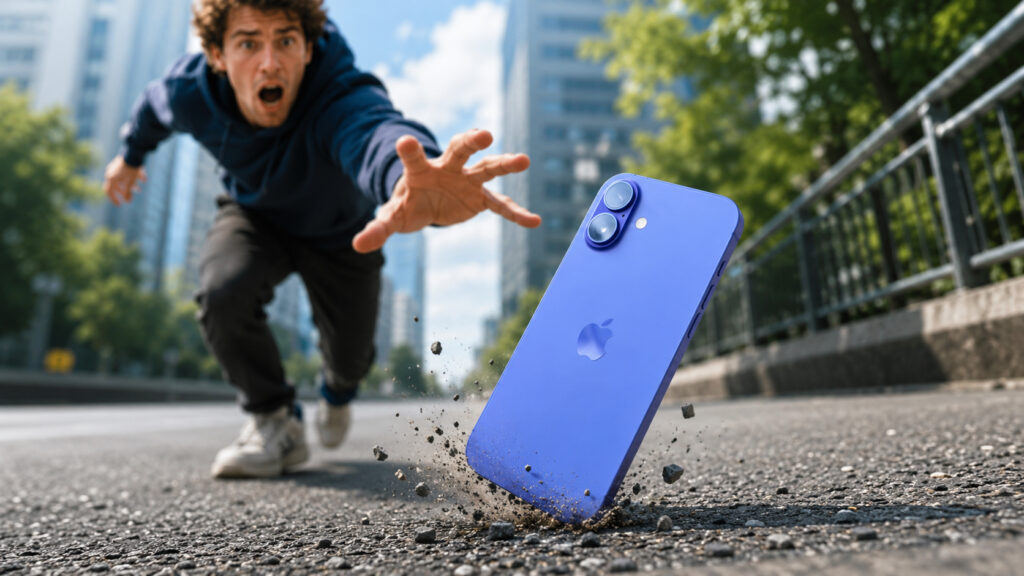
This is roughly the face I made reaching for my dropped smartphone
Why a Large iPhone Is Uncomfortable to Hold with One Hand
The first thing that stands out is the aluminum frame. The base models iPhone 16 and iPhone 16 Plus, and in the iPhone 17 lineup all smartphones except the iPhone Air, have aluminum bodies. It sounds nice, looks stylish, but in practice it means the smartphone literally slips out of your fingers. Especially if your hands are even slightly damp or you’re trying to use it one-handed while walking.
The second issue is the size. The iPhone 16 Plus is noticeably larger than the iPhone X. A 6.7-inch screen is, of course, convenient for watching videos and working with text. But try holding such a “slab” with one hand while walking down the street and simultaneously typing a message in Telegram. The grip becomes extremely uncomfortable: you spread your fingers trying to reach the top of the screen, and at that moment the phone simply flies out of your hand.
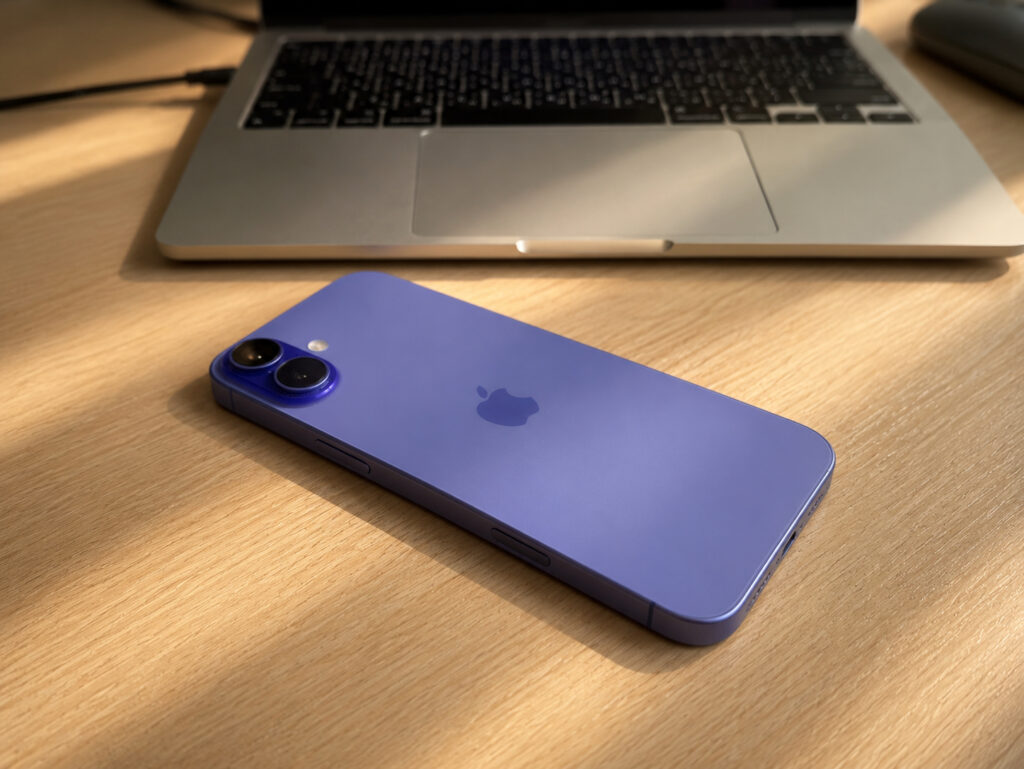
Aluminum is great, but it’s terribly slippery
Compact models don’t have this problem. The iPhone X I mentioned fit perfectly in my palm. Even a standard-sized iPhone 15 feels more secure — simply because you don’t need to readjust your grip every five seconds. But the Plus version requires constant concentration.
Add another detail: the glass back panel. It’s also smooth and also slippery. As a result, the iPhone 16 Plus has slippery surfaces on both sides plus the frame. The perfect combination for your device to regularly meet the asphalt.
Which iPhone 16 Plus Case Provides the Best Grip
When my iPhone flew to the floor for the third time in a week, I realized this couldn’t continue. At first, I hoped I’d get used to it and learn to hold it more securely. That didn’t help. Then I started looking for an iPhone 16 Plus case, but quickly realized it wasn’t that simple.
First, I bought a regular plastic case. Thin, light, no extra weight — it seemed like the ideal option. But no. Smooth plastic slides almost as much as bare aluminum. Especially if it doesn’t have a soft-touch coating. And even if it does — it wears off after a couple of months, and you’re left with a slippery piece of plastic in your hands again.
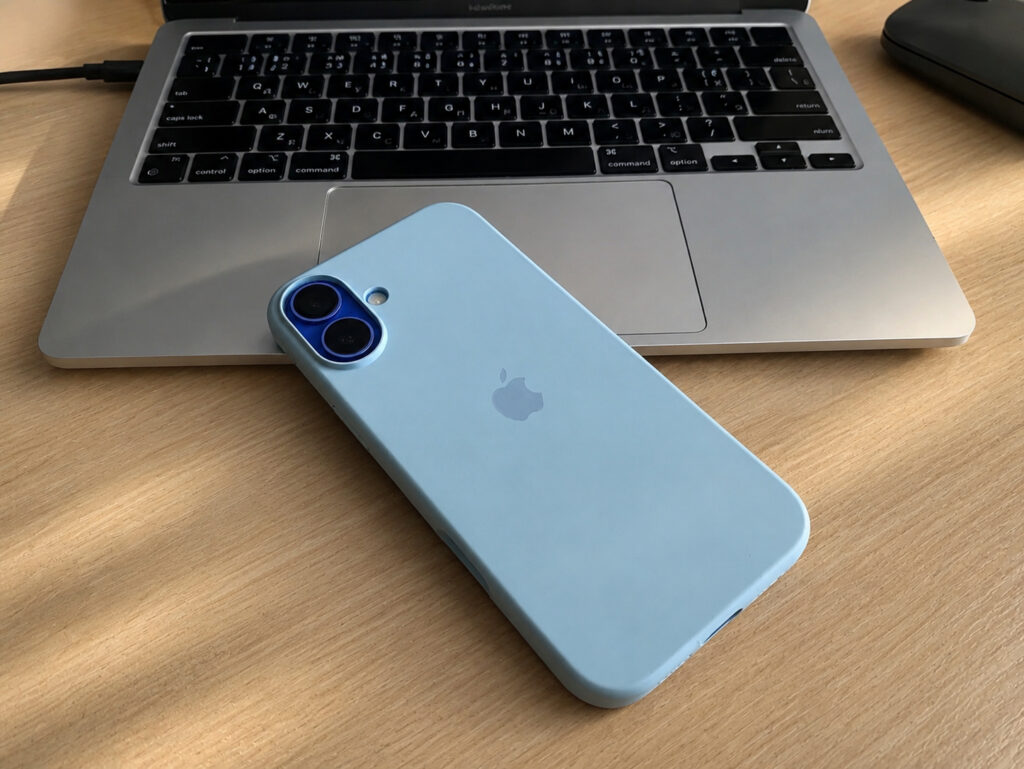
In this kind of case, the smartphone stays securely in your hand
Then I tried a silicone case replicating the original Apple one. And that’s when I finally felt the difference. Silicone grips the skin, and the smartphone sits in your hand like a glove. Even if you’re holding it with one hand and reaching for the top of the screen — the case prevents the phone from rotating in your palm. The feel is completely different compared to a bare body or plastic.
An important note: I’m talking specifically about replicas of the original silicone case. The original is unreasonably expensive, while quality copies from Chinese manufacturers are just as good. The same pleasant tactile feel, the same reliable grip, and the price is several times lower.
A Clear iPhone Case That Doesn’t Yellow
But silicone has its downsides. It attracts dust, threads, and crumbs. Plus, it completely hides the body color. If you bought an iPhone 16 Plus in ultramarine or another beautiful shade — it’s a shame to hide it under an opaque case.
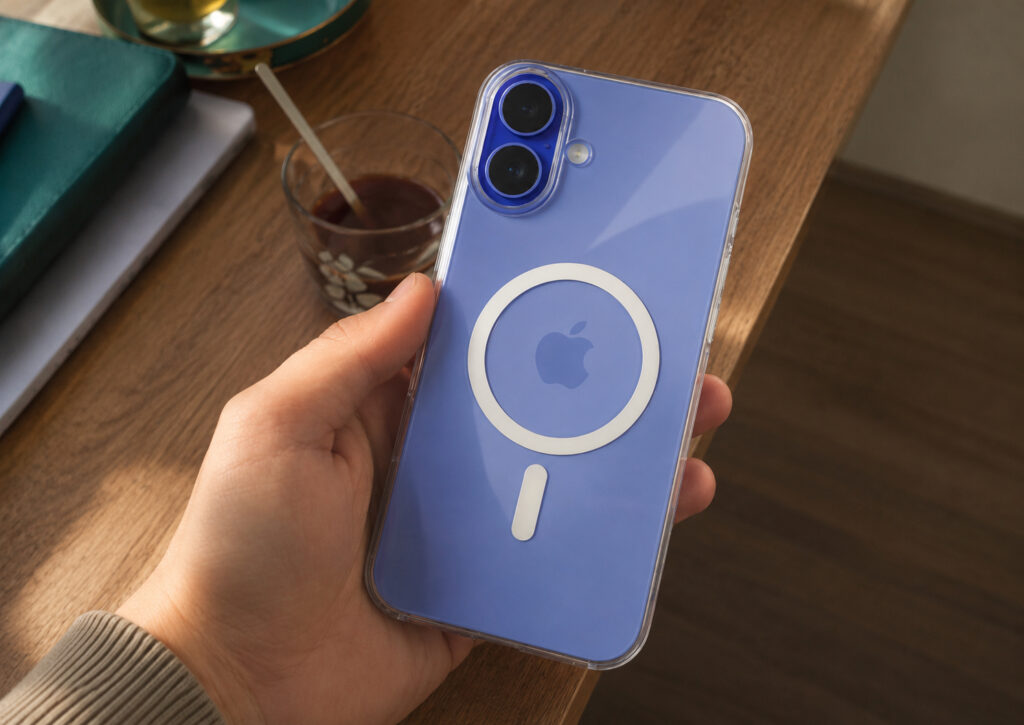
I recommend trying a quality replica of the clear case too
For such cases, I found a great option — a clear case replicating Apple’s original Clear Case. It’s a clear plastic case that doesn’t yellow over time (unlike cheap silicone alternatives), supports MagSafe, and feels pleasant to the touch. The cool thing is that it barely slips in your hand, even though it’s made of plastic. Plus it doesn’t break the bank, which is also important.
Tips for Choosing a Case for Large iPhones
If you’re also struggling with a slippery iPhone, here are some recommendations from my experience.
- Avoid smooth plastic without coating. Such cases are cheap but slide almost as much as a bare body. Money down the drain.
- Silicone Apple replica cases are the best choice in terms of price-to-grip ratio. They hold great, cost reasonable, and look decent.
- Clear cases replicating Apple’s Clear Case are an excellent option if you want to show off your iPhone’s color while not worrying about it flying to the floor. Just get quality replicas, not the first case you find for 200 rubles on a marketplace.
Pay attention to textured cases. Some manufacturers make cases with ribbed or matte surfaces — they also do a good job solving the slipping problem.
Is It Worth Carrying an iPhone Without a Case
I know many people refuse to use cases on principle. They say Apple created a beautiful design, so why hide it. I thought the same when I used the iPhone X. But with Plus models, the situation is different. A large screen and slippery body plus an uncomfortable one-handed grip — that’s a recipe for disaster. Especially considering how much it costs to replace the screen on an iPhone 16 Plus.
So here’s my advice: if you have a large iPhone and it keeps slipping out of your hands — don’t wait until it breaks. Pick a proper case and forget about the problem. A silicone replica or a clear Clear Case solves the issue completely. Tested from personal experience.