Recently, I was putting together a rating of the best value smartphones in 2026 and caught myself increasingly recommending 2024-2025 models rather than new releases. This is no coincidence. The market is facing a crisis that few are talking about openly, but which is visible in the specs of every other new 2026 smartphone. Let me explain what’s happening.

New smartphones have genuinely gotten worse
Why New Smartphones Are Weaker Than Older Ones
The memory market crisis began at the end of 2025. Demand for DRAM and NAND from AI infrastructure surged, supply couldn’t keep up — memory manufacturers raised prices. Smartphone companies had to choose: raise the device price or cut costs elsewhere. Most chose the latter. And the first thing they cut is the processor.
I have specific examples. The July 2026 newcomer realme P4, which I reviewed a week earlier, runs on the Snapdragon 685. The same chip was in the realme 12 back in 2024. Last year’s realme P3 has the Snapdragon 6 Gen 4 under the hood — a fundamentally more modern and powerful chip, despite launching a year earlier. The new smartphone is literally weaker than the previous generation.
The same goes for the REDMI Note 17 lineup: the base model got the Snapdragon 4 Gen 4 versus the Snapdragon 6 Gen 3 in last year’s REDMI Note 15 5G. The memory crisis in action: newer doesn’t mean better.
Cameras in New Smartphones Are Also Degrading
Manufacturers are betting that most people look at the headline numbers: megapixels of the main camera and memory capacity. Everything else gets the axe.

New budget smartphones take worse photos than older ones
Compare for yourself:
- realme P4 vs realme P3: the front camera dropped from 16 MP to 8 MP (halved);
- REDMI Note 17 5G vs REDMI Note 15 5G: they removed the ultrawide camera.
By picking new 2026 smartphone models, you risk getting a worse camera system than last year’s model at the same price.
Which Smartphones Won’t Be Released in 2026
2026 flagships are also under threat. Xiaomi won’t release the Xiaomi 18 Ultra. At all. The company didn’t postpone or rename it — they refused outright. Downgrading a flagship without hurting reputation is impossible, and releasing it with the same specs when memory is expensive means taking a loss.
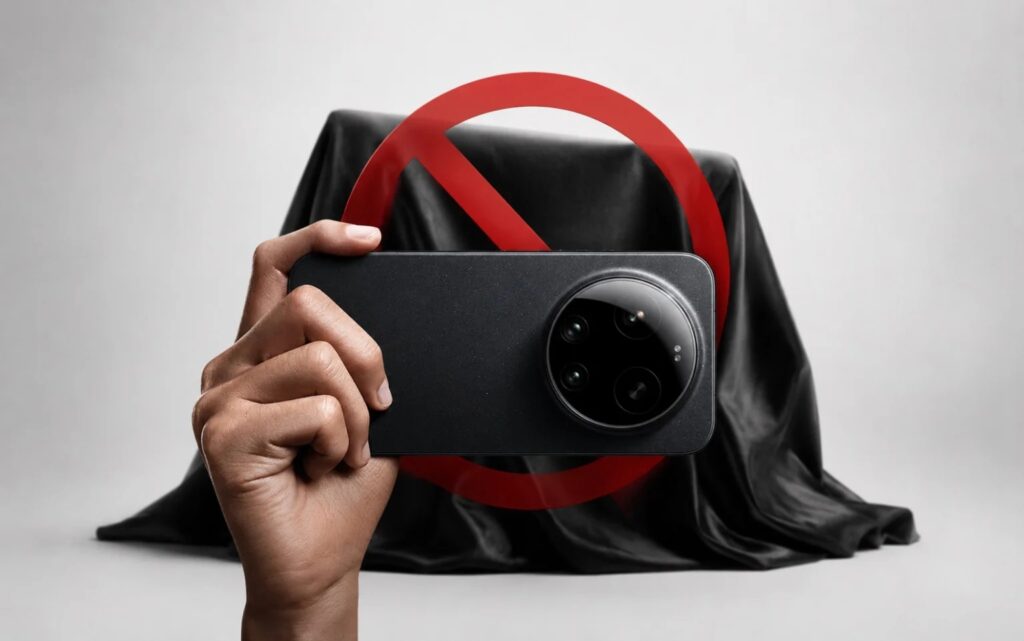
The Xiaomi 18 Ultra release has already been canceled
Meanwhile, another story is unfolding:
- OPPO is moving realme and OnePlus to its own ColorOS shell, reducing funding for the brands;
- OnePlus is leaving the US and European markets;
- realme is scaling back its presence in its home Chinese market.
A 2026 smartphone launches in conditions where manufacturers themselves are cutting ambitions and optimizing costs.
The Only Advantage of New Smartphones — Battery
To be fair: 2026 smartphones do have one real improvement. Batteries have grown noticeably. In particular, the REDMI Note 17 Pro got a 9000 mAh battery. Silicon-carbon technology has allowed fitting more capacity into the same body, and manufacturers are actively taking advantage of this, developing this direction.
But here’s the question: is a bigger battery worth getting a weaker processor, trimmed cameras, and losing the ultrawide? For most people — no. A 7000 mAh battery on last year’s model also lasts a full day with room to spare.
Which Smartphone to Buy in 2026
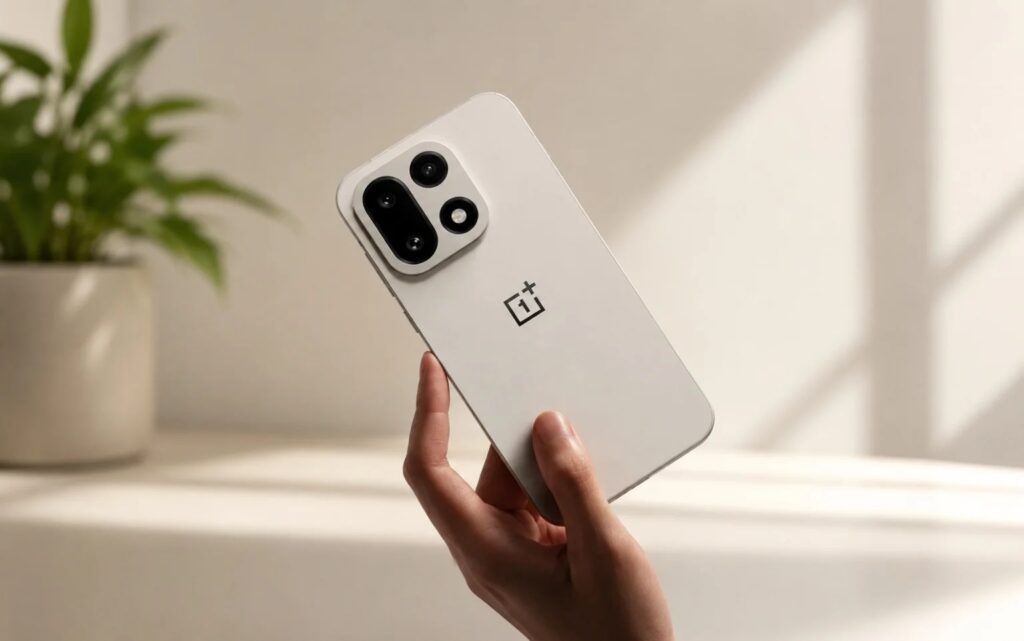
Hurry to buy the OnePlus 15 and other smartphones released before the memory crisis
My advice — look at models that came out before the crisis started dictating terms. Four options for different budgets:
- OnePlus 15 — the most balanced flagship. Snapdragon 8 Elite Gen 5, triple 50+50+50 MP camera, 7300 mAh battery, 120W charging.
- realme 15 5G — the best under 20 thousand. Dimensity 7300+, AMOLED 144 Hz, Sony IMX882, 7000 mAh battery.
- POCO X8 Pro — powerful and affordable. Dimensity 8500-Ultra, silicon-carbon 6500 mAh battery, 100W charging, IP68.
- POCO M7 — best under 10 thousand. FullHD screen, Snapdragon 685, NFC, 7000 mAh battery.