Before every vacation, the same scenario runs through my head: somewhere in the mountains or on the shore, my phone will die at the worst possible moment, right when I need a map or a ticket. This time I decided not to risk it and took the UGREEN MagFlow Air magnetic battery with 10,000 mAh on my trip. For two weeks I put it through its paces not on a desk at home, but in real conditions: in the mountains, on the beach, on the road. If in short, the battery won me over, but it has its own character, and it’s important to know about it in advance.
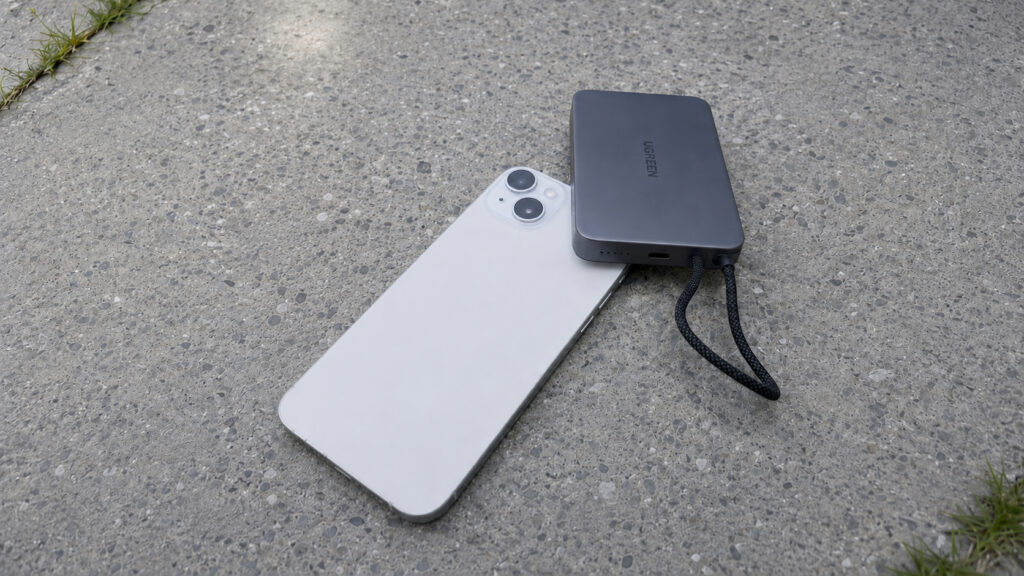
This battery handled charging iPhones on vacation perfectly
UGREEN MagFlow Air 10,000: What Kind of Power Bank Is This
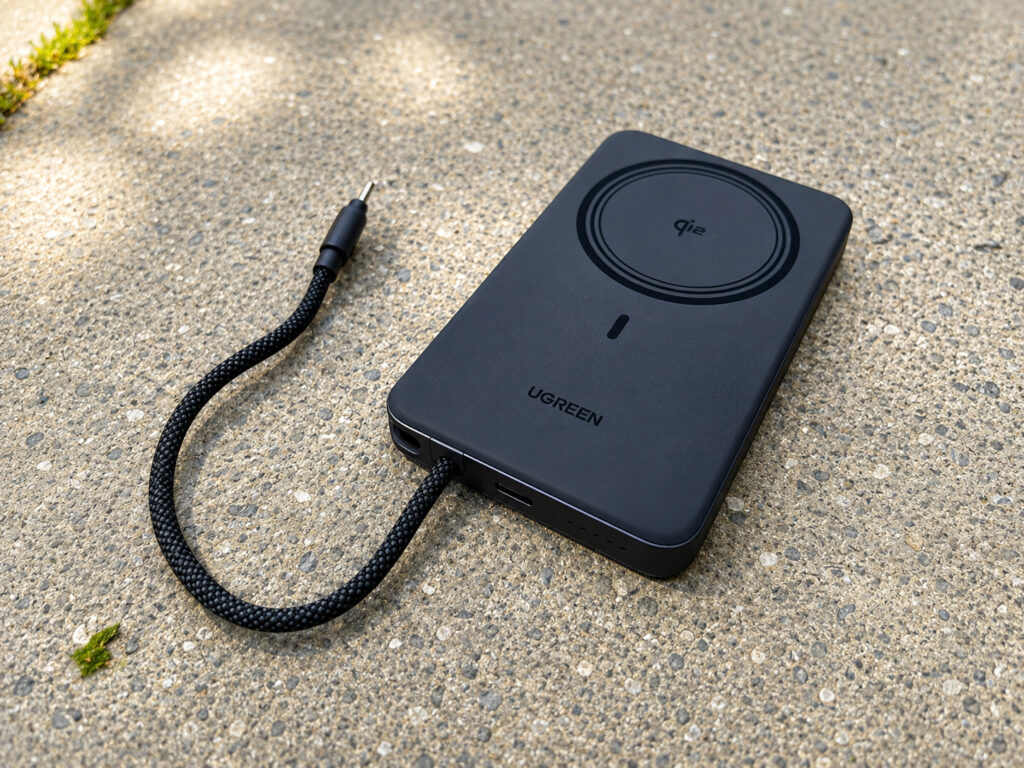
We’re looking at the PB570 model, and this is already a serious class of device, not a lightweight charger for a single emergency. Inside are two cells connected in series, which accounts for the solid capacity. The body is black and matte, with a Qi2 coil circle on the front, by which magnetic power banks are instantly recognizable.
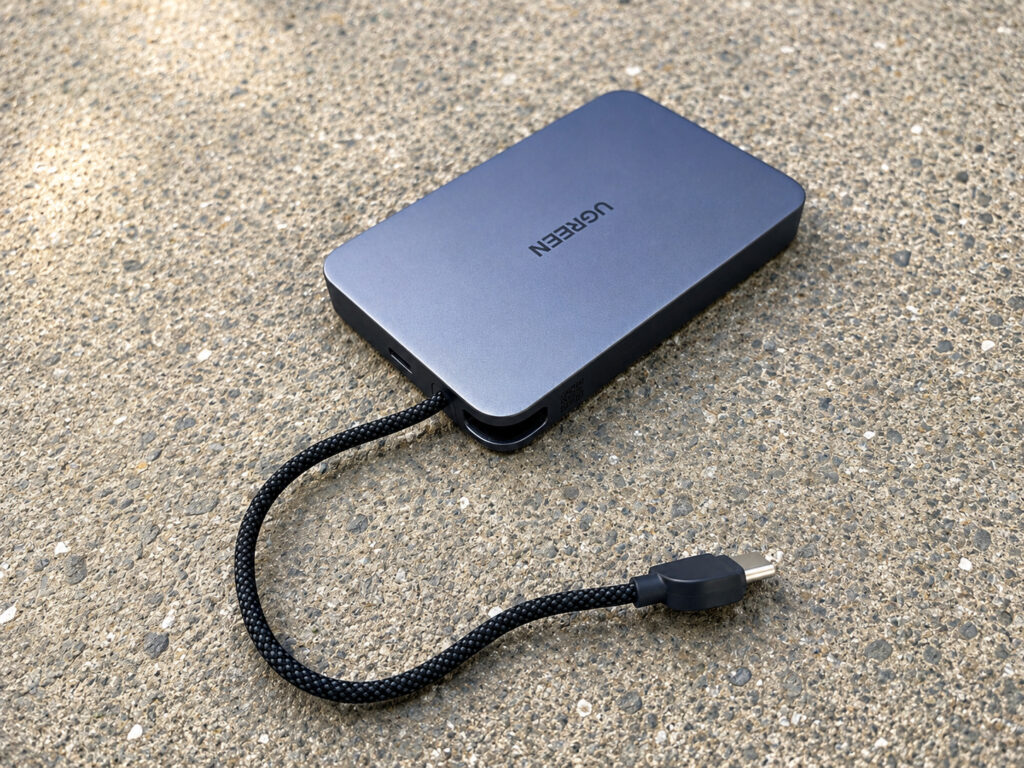
The built-in cable can also be used for carrying
The main feature that sets this model apart is the built-in braided USB-C cable. It sticks right out of the body and is immediately visible. It sounds like a small thing, but in practice it eliminates an entire class of problems: you don’t need to bring a separate cord on your trip, it’s already permanently built into the battery. The cable is also convenient for holding the battery when carrying it in your hand. Wired charging goes up to 30W, wireless via Qi2 up to 15W. I’ll also note that the power bank is approved for airplane carry-on, which is right on point for vacations: they don’t like extra questions about such things at security.
In terms of dimensions, the device can’t be called miniature. It’s noticeably thicker and heavier than lightweight pocket batteries, but that’s an honest price for two cells and a decent energy reserve. The battery sits firmly in the hand, without wobble or creaking, and the materials feel pleasant. You can tell this is made as a proper product, not a disposable trinket from a marketplace for pennies.
How Well Does the MagSafe Power Bank Hold Through a Case
For a magnetic power bank, attachment is half the point, so I tested the magnets separately and critically. On a bare iPhone, the battery sticks perfectly. You apply it, and it locks onto the body with a death grip — you can shake the phone, walk and run, nothing falls off. This is that satisfying hold that makes people choose magnetic models over regular power banks with cables.
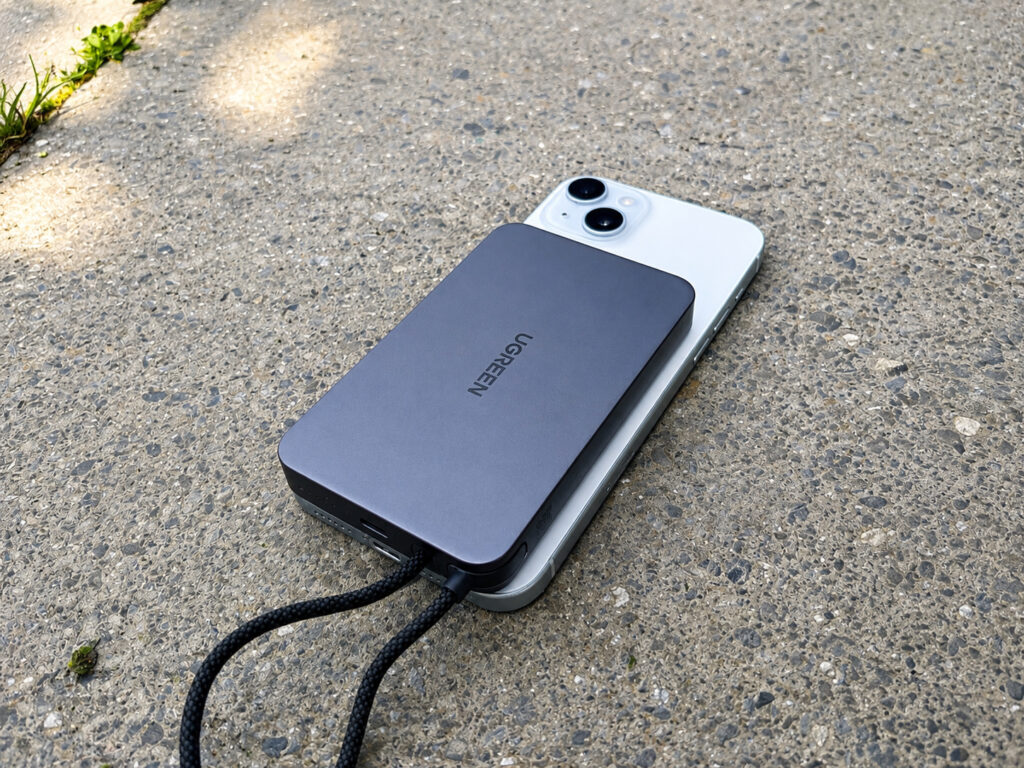
The battery slightly extends beyond the edges of the iPhone 15 Plus and 16 Plus body
Through a case it holds slightly weaker, but that depends not on the battery but on the magnets in the case itself. If you have a proper case with genuine MagSafe, the hold remains confident and the power bank isn’t going anywhere. If the magnets in the case are weak, the battery will hold, but without that death grip. I ran part of the test specifically through a case, and over two weeks the battery never fell off on its own, even when the phone was bouncing around in a jacket pocket while walking.
The only ergonomic note: on the iPhone 15 Plus and 16 Plus, the battery slightly extends beyond the body edges. Nothing terrible — it doesn’t interfere with using the phone, but visually the edge sticks out a bit past the frame. On larger models this will be completely unnoticeable.
How Long Does a 10,000 mAh Power Bank Last
Numbers on the box are nice, but on vacation the simpler question matters more: how many times will this thing charge my phone. I tested on the iPhone 16 Plus, a device that’s not the most power-hungry, but also not a tiny phone with a small battery.
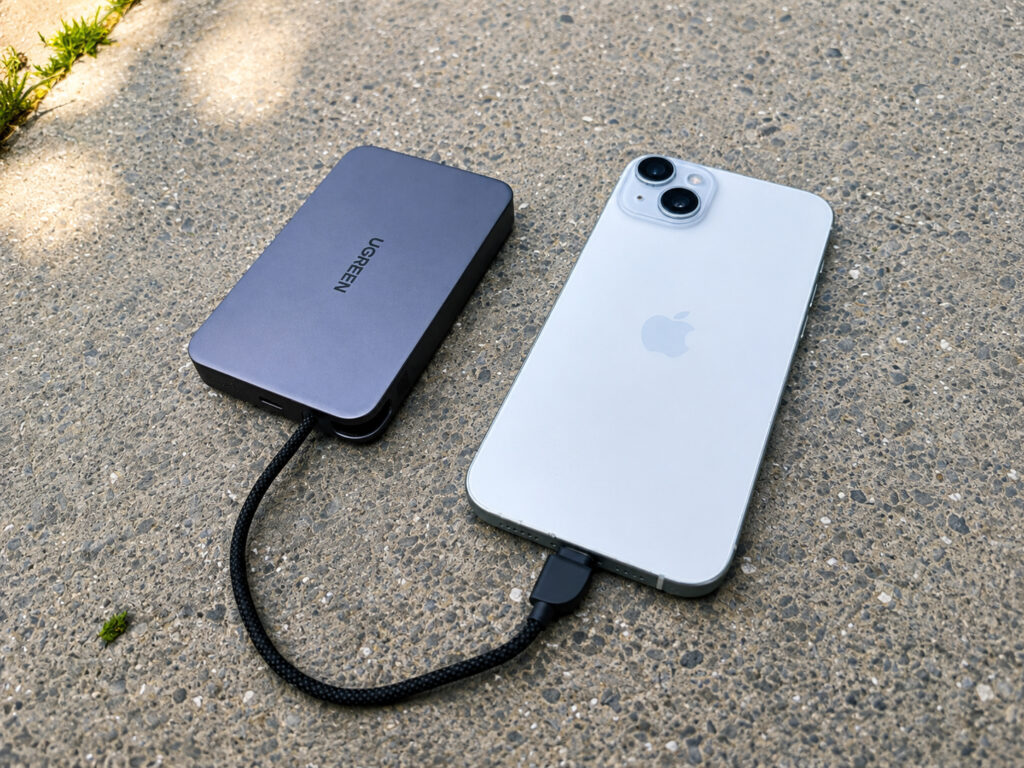
It charges a completely dead 16 Plus to full twice
In practice, 10,000 mAh covers a full charge twice. The battery brings a completely dead 16 Plus up to 100%, and after that it still has roughly enough for the same operation again. So for two people, or for one day with active navigation, photos and video, it’s already a comfortable reserve without any stress. My wife and I actually split it this way: we’d head out for a full day in the mountains, attach the power bank, and until evening we could completely forget about wall outlets.
The capacity handles more than just an iPhone. From this same battery I easily topped up the charge in my AirPods case and Apple Watch, and the capacity handles that without issues. For a vacation for two, when you accumulate about a dozen devices in your bag, this is the right capacity: you don’t have to calculate who gets the charger today and who has to wait until the hotel.
Charging Speed of the Magnetic Power Bank via Cable and Qi2
And here’s where things get really interesting — the reason I love testing gadgets thoughtfully. On this model, the charging speed was a pleasant surprise, specifically via the magnetic connection rather than the cable, as you might expect.
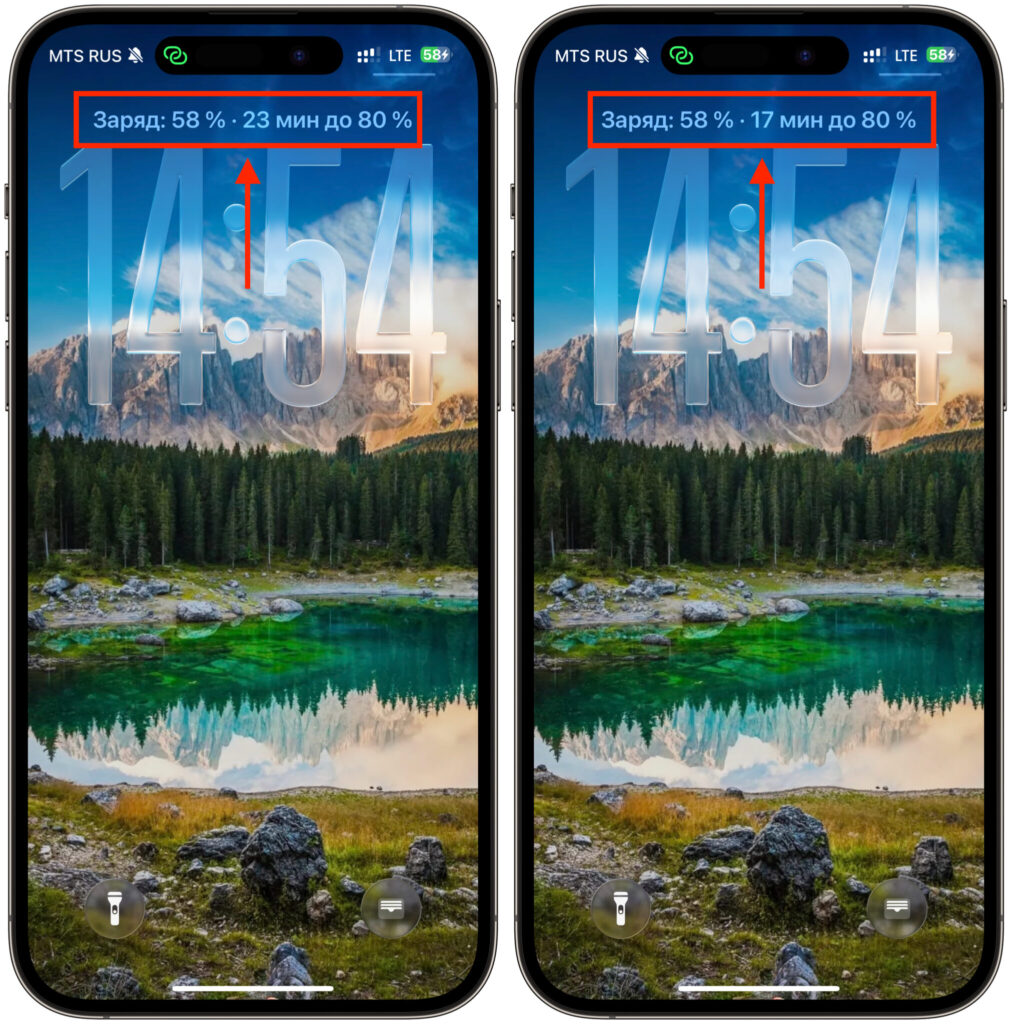
Going by system data
First I connected the power bank to the iPhone with the built-in cable. The phone honestly showed that the stretch from 58 to 80 percent would take 23 minutes. But when I switched to wireless charging via MagSafe, the battery covered the same range in just 17 minutes. Yes, charging via the magnet turned out faster, and for me that was unexpectedly pleasant. Usually wireless charging loses to cable, but here it was the opposite, so there’s not much point in taking the phone off the magnet and looking for the port.
A separate note on heat, because for batteries this is always a sensitive topic. During operation, the battery barely warmed up at all, even toward the end of a charging cycle. This is a big plus in its favor for me: apparently, the two cells and a more thoughtful cooling design make a difference. The phone also stayed cool, which means its battery wears out more slowly than with cheap batteries that heat the body like a frying pan.
Is It Worth Buying the MagFlow Air 10,000 mAh
After two weeks of heavy use, my conclusion is simple: this is a solid universal power bank for those who don’t like being left without connectivity on the road.