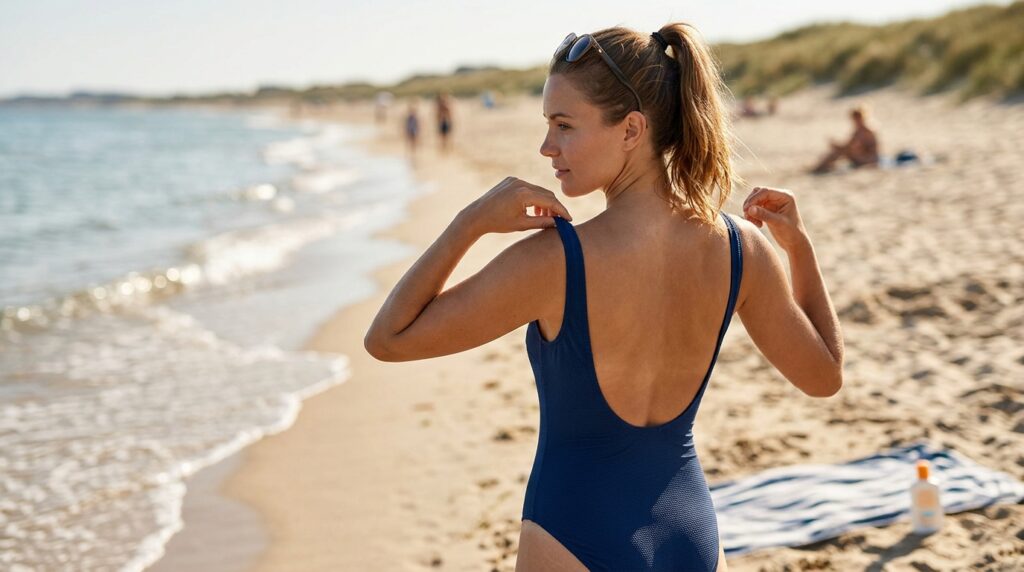
How to choose a truly good swimsuit?
Summer, heat, everyone is heading to the water to cool off and relax, of course bringing a swimsuit. But how good is your swimsuit, exactly? Roskachestvo (Russian Quality System) tested 21 swimsuit brands from seven different countries — only three brands passed all the tests. It turned out that an expensive swimsuit can easily fade, make your skin sweat, and tear at the seams, while an inexpensive one can serve season after season without a single complaint. Let’s figure out what truly distinguishes a good swimsuit from a bad one, why fabric quality matters more than the price tag, and what to look for when shopping in-store or online.
Which Swimsuits Passed Roskachestvo’s Testing
Let’s start with the results. All requirements — both mandatory and enhanced — were passed by only three brands: Karosport from the Kaluga region, as well as Chinese-made 25Degrees and Incanto. These were the ones that proved simultaneously safe, durable, and honest in their labeling.
The study examined women’s one-piece swimsuits from seven countries, including Russian brands from Saint Petersburg, Moscow, and the Kaluga region. The testing was rigorous: 53 parameters — from material safety to how the fabric behaves after washing and in the sun. The results were disappointing: nine brands failed to meet even the mandatory requirements of the technical regulation, and another nine didn’t pass the enhanced quality standard.

Three brands that passed all requirements and took 1st place in the ranking. Image source: rskrf.ru
Interestingly, price says nothing about quality. The most expensive sample in the test cost almost 8,000 rubles, while one of the flawless ones cost less than 1,800. So paying extra for a brand guarantees perhaps a label, but not quality.
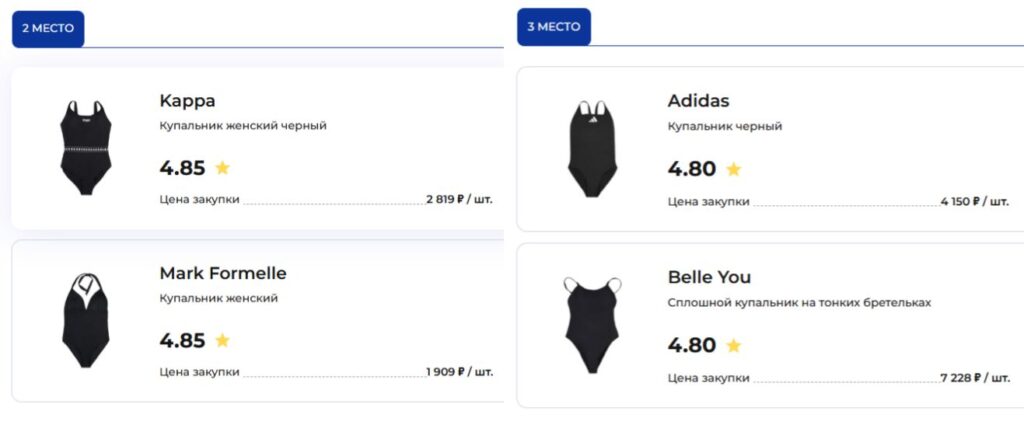
Swimsuits that took 2nd and 3rd places in the Roskachestvo ranking. Image source: rskrf.ru
Why Swimsuit Fabric Has Poor Breathability
The first problem experts found was poor air permeability. It might seem unimportant, but it’s precisely what determines whether you’ll be comfortable at the beach or spend the entire day feeling like you’re wrapped in plastic.
According to the rules, the fabric must allow air to pass through no worse than a specified standard. Four brands failed this standard: the worst performer was Termit, followed by Cheremushki, Women’s Secret, and Befree. Their fabric breathes poorly, and here’s what that means in practice:
- Greenhouse effect: skin sweats and becomes irritated
- Moisture and heat stagnate — synthetics trap sweat and create an ideal environment for bacteria and fungus, especially in the bikini area
- Thermoregulation is disrupted: wet fabric heats up in the sun but doesn’t dissipate heat — and that’s already a risk of overheating
Constant moisture and sweat also destroy the swimsuit itself faster — colors fade and fabric loses elasticity. The good news: if a swimsuit violates technical regulations, you can return it to the store under consumer protection law (though try proving it on your own).
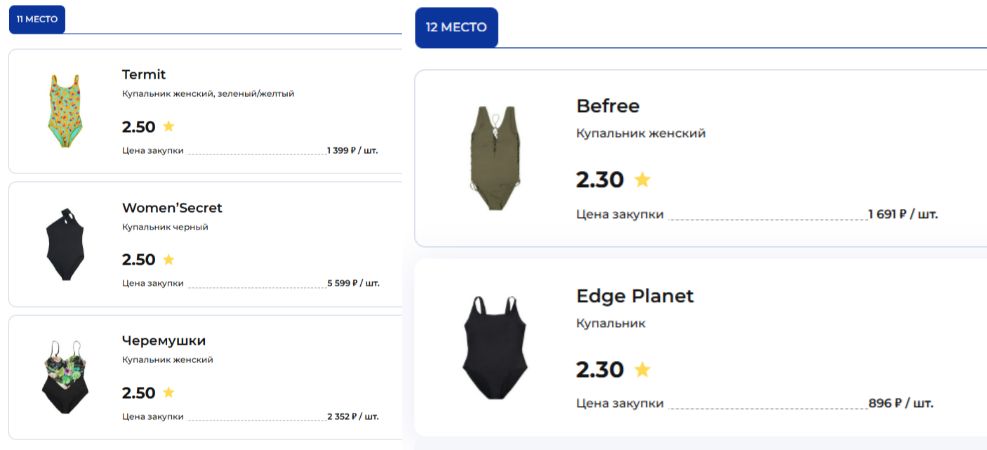
Swimsuits that took the last places in the ranking. Image source: rskrf.ru
Which Swimsuits Failed the Seam Quality and Durability Test
Next, they tested mechanical strength — whether the swimsuit would come apart at the seams when you’re actively swimming or pulling it on.
The picture here wasn’t pretty: ten brands fell short of the standard on one or more durability parameters. The most common weak point was seams — a problem for seven brands at once. The absolute worst performer was Tezenis: issues were found across all durability parameters.
Swimsuits that took the last places in the ranking. Image source: rskrf.ru
If a swimsuit is a bit too small and you pull it on — and the fabric is weak — it deforms or tears like thin stockings. For the buyer, this means a risk of tearing during movement, loss of shape after a few wears and washes, and stretched-out areas where the fabric is under the most tension.
Hence a simple tip from the experts: choose a swimsuit that fits your exact size. Tight clothing is bad for health, and in the case of a swimsuit, it also overloads the fabric and seams. A model that’s too loose will stretch out even more in the water and hang off you.
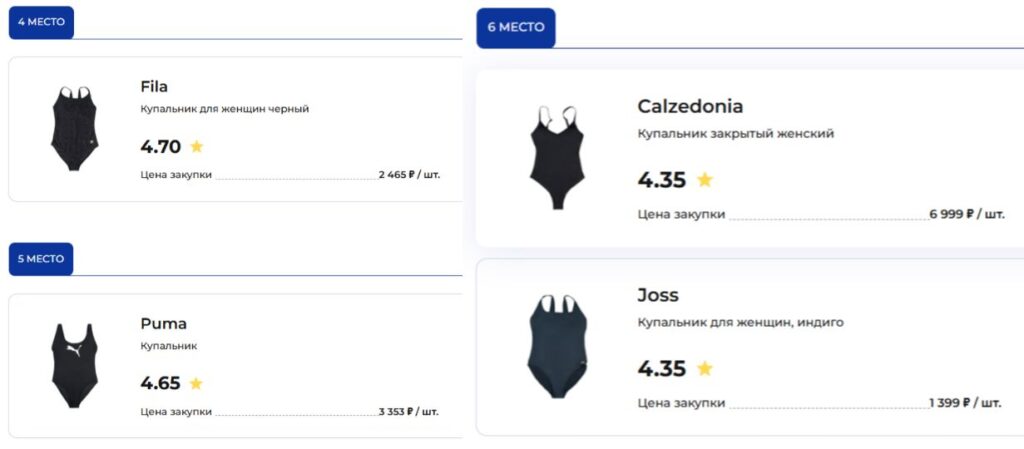
Swimsuits that took 4th, 5th, and 6th places in the Roskachestvo ranking, partly because they can tear quickly. Image source: rskrf.ru
Which Swimsuits Fade and Bleach in the Sun
They also separately tested whether the dye would survive the swimming season. There were almost no complaints about washing, but beyond that, the nuances began.
Two brands failed the sweat resistance test — Edge Planet and Reebok. And Edge Planet’s dye also couldn’t withstand seawater. The color of such swimsuits is unlikely to last through the summer in its original state.
Another parameter was UV resistance. Ultraviolet light is dangerous not only for fabric: UV damages the skin even without a visible sunburn. In the tests, Termit stumbled at this stage: the sample yellowed and faded. On a real sunny beach, the same thing would happen. So if a swimsuit fades or bleaches — it’s not an accident, it’s a quality defect.
What to Look for When Buying a Swimsuit
What should an ordinary person do at the counter or in a marketplace app? Let’s compile the study’s findings into a few simple rules.
What to look for when buying a swimsuit:
- Don’t chase the price tag. An expensive swimsuit doesn’t mean a quality one — there were budget models among the flawless ones.
- Choose your exact size. Neither a tight nor a loose swimsuit will last long.
- Check the composition on the label. If it’s not listed or seems questionable — that’s already a warning sign.
- For swimming in the sea, choose swimsuits with dye that’s resistant to salt water and sweat.