Last week, several Xiaomi smartphones received the HyperOS 3.3 update based on Android 17, and now the first alleged screenshot of the HyperOS 4 home screen has leaked online. It reveals redesigned system icons, more pronounced shadows, and a new vertical widget switcher. What’s particularly interesting is that the screenshot appears to have been taken not on a regular test device, but on a prototype of Xiaomi’s upcoming flagship. Let’s note right away: this is a leaked early build, not an official announcement. But even from these small bits of information, we can understand what HyperOS 4 will look like.
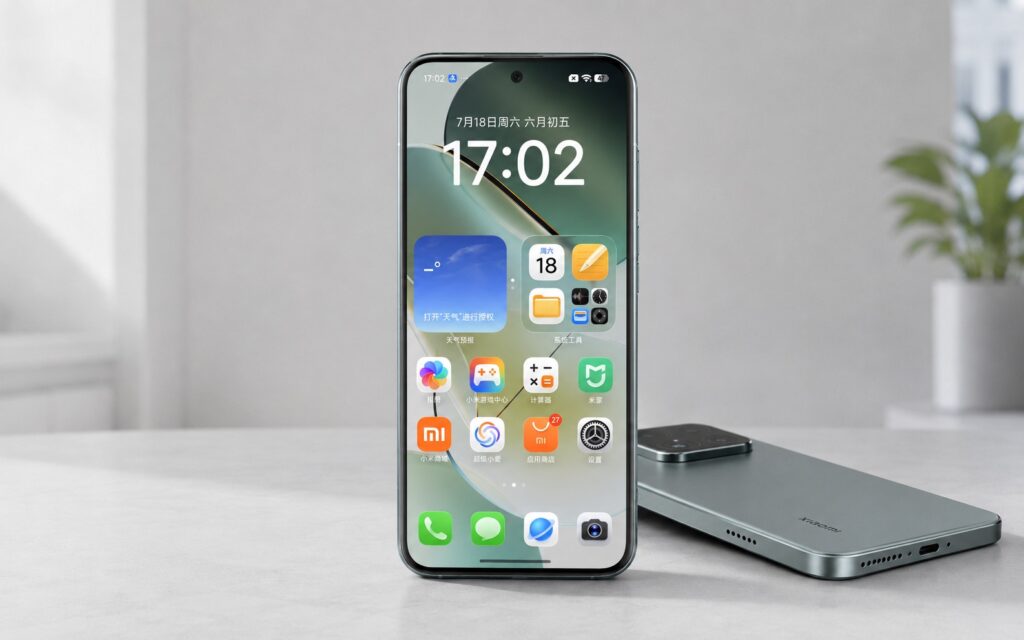
The latest leak reveals what HyperOS 4 will look like
HyperOS 4 Screenshot on the New Xiaomi 18 Flagship
According to the source, the image shows partially visible device identification numbers. These numbers are linked to a smartphone codenamed HONGKONG — the designation for the top model in the upcoming Xiaomi 18 series.
If this is true, then Xiaomi is already testing the new system directly on a top-tier prototype, rather than on a generic engineering sample. Previously, the codename HONGKONG and the Q5 platform were associated specifically with the Xiaomi 18 series, not the MIX lineup. However, the company has not officially confirmed the commercial name of the smartphone, so there’s still room for speculation.
How HyperOS 4 Differs from HyperOS 3
For comparison, the leak showed two screenshots: an English one with HyperOS 3 and a Chinese one with an early build of HyperOS 4. The overall home screen layout has barely changed, but a closer look reveals several differences.
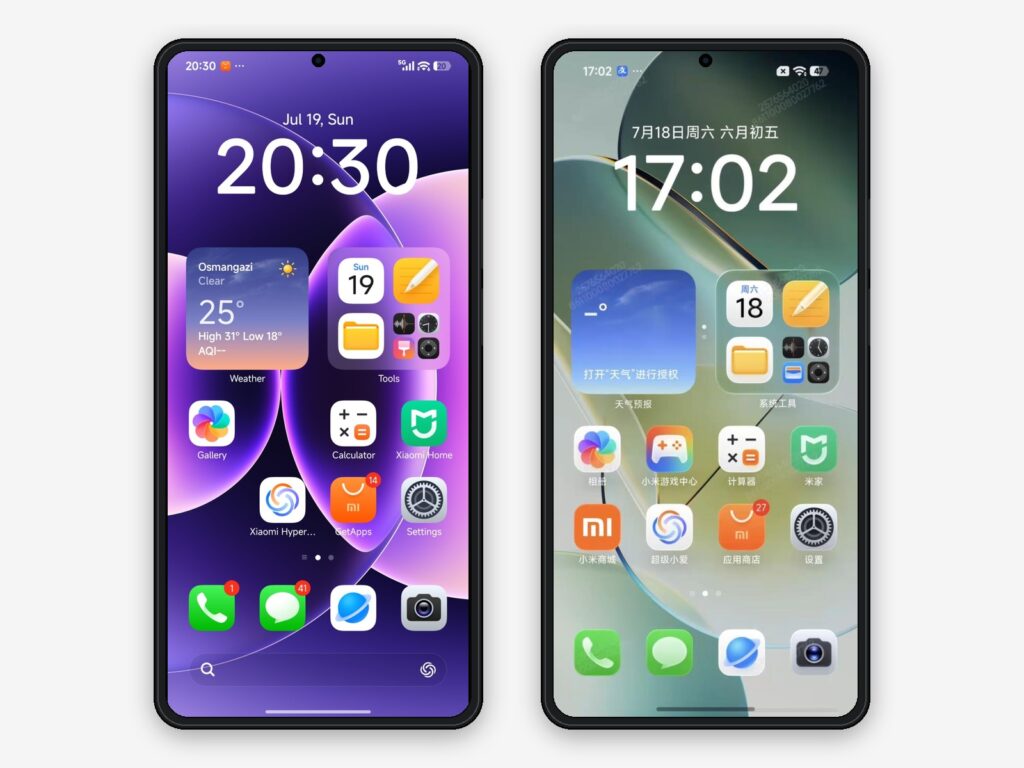
Left — HyperOS 3.3, right — HyperOS 4
The main functional innovation is the vertical widget switcher. Between the weather widget and the system tools folder, a vertical row of dot indicators has appeared. Based on this, it seems users will be able to scroll vertically between different widget cards without taking up space with another large widget on the screen. HyperOS 3 doesn’t have this element in that area.
The second noticeable change is more pronounced shadows under icons. The icons now stand out more from the wallpaper, making the interface look more three-dimensional and layered. In HyperOS 3, the icons look flatter and “cleaner,” while the new version emphasizes depth.
Which Icons Were Redesigned in HyperOS 4
A wide variety of system icons have been updated. The changes are mostly cosmetic but noticeable in direct comparison. Here’s what changed:
- Settings: a darker and more detailed “mechanical” design with deep shadows instead of the previous light silver look;
- Camera: enhanced shadows on the body and a bright blue-purple glare on the lens, making the icon look more three-dimensional;
- Game Center: a new icon with a white gamepad on a blue-orange-purple gradient;
- Calculator: the familiar symbols and orange “equals” button remain, but elements have become larger and shadows more noticeable;
- Gallery: the signature multicolored flower remains, but gradients have become softer;
- Mi Home: the same green background and white logo with more delicate shadow work.
Separately worth noting is the system tools folder: it now has a transparent, glass-like background through which the wallpaper is more visible, and the internal icons have more distinct separation.
What HyperOS 3 and HyperOS 4 Have in Common
Despite all the changes, HyperOS 4 doesn’t completely overhaul the home screen. The overall structure remains the same and familiar to Xiaomi users. The following have been preserved:
- large clock at the top;
- two main widget areas;
- app grid in four columns;
- bottom bar with four icons;
- rounded square icons;
- centered page indicator.
So in reality, this is not a revolution but rather visual polish: icon depth, shadows, transparency, widget navigation, and minor graphical improvements. If you’re already used to HyperOS 3, you won’t need to readjust.
When Will HyperOS 4 Be Released
The value of this leak is that it ties together three things: the first visible interface changes in HyperOS 4, firmware testing based on Android 17, and the HONGKONG flagship prototype from the Xiaomi 18 series.
HyperOS 4 release is expected in the fall
But it’s important to keep the limitations in mind. This is an early build, not a finished system. Icons, widgets, spacing, and visual effects may well change before release. The official release of HyperOS 4 is expected in September 2026 alongside the Xiaomi 18 presentation.