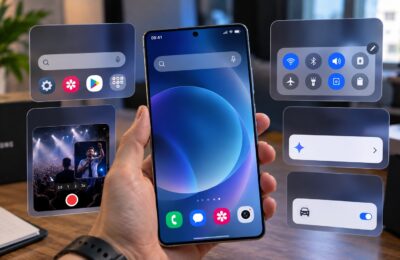
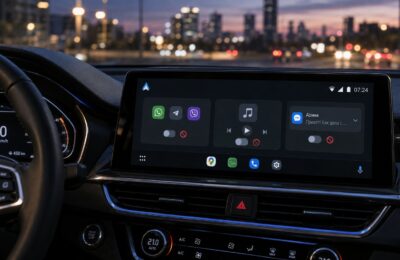
Android ecosystem head Sameer Samat called Android 17 the biggest update in the platform’s entire history. The new version will be officially shown on May 12 at The Android Show 2026, and the full feature set will be revealed at Google I/O on May 19-20, although many of them are already known now. The update will affect not only smartphones but also watches, TVs, cars, and even laptops.
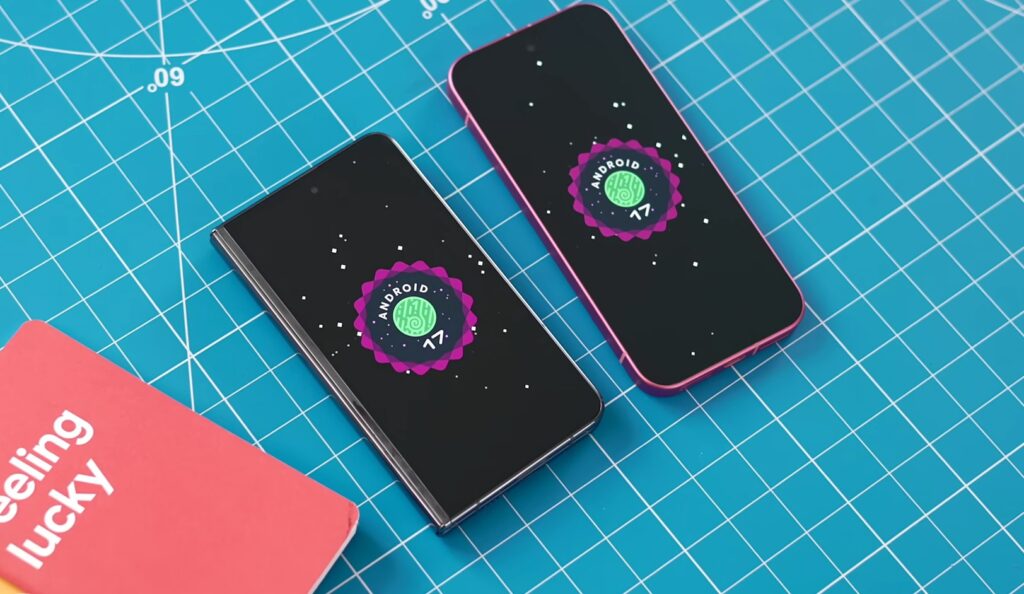
Android 17 is expected to change perceptions of Google’s operating system. Image: 9to5Google
What Is Already Known About Android 17
The Android 17 update is in its final testing stage. Google released Android 17 Beta 4 on April 16, 2026, and designated it as the last planned beta before the stable release, which is expected in June. The feature set is essentially locked in, and what’s visible in the beta version will very likely make it into the final release.
According to Google, Android 17 will offer improved camera and media apps, performance boosts, AI agent capabilities, and a more optimized interface for larger screens: foldable phones, tablets, and desktop devices. Here are the main changes already confirmed in beta versions:
- Separate Wi-Fi and mobile data toggles in the quick settings panel. Google merged them into a single “Internet” toggle back in Android 12, and since then switching required an extra tap. This has now been fixed.
- Pop-up “bubble” windows for any app. Long-pressing an icon on the home screen will minimize the app into a small floating widget on top of other windows.
- A separate volume slider for Gemini and Google Assistant, no longer tied to media volume.
- A new permission for local network access. Apps will no longer be able to silently scan your home Wi-Fi network in the background.
- The ability to manually exclude individual apps from forced dark theme — useful if dark mode breaks the layout in some banking app.
- RAM limits. The system will begin throttling apps that consume excessive memory — this should eliminate stuttering and extend battery life.
- Post-quantum cryptography: new encryption methods resistant to future quantum computers.
For the average user, the main takeaway is this: the system will become more stable, toggles more convenient, and privacy slightly better. It’s not a revolution, but a set of specific improvements that are noticeable in everyday use.
Liquid Glass Design in Android 17
After the release of The Android Show teaser video, in which the Android mascot became semi-transparent, the internet decided that Google was copying the Liquid Glass style from iOS 26. Google officially denied these rumors: Android ecosystem head Sameer Samat confirmed that the platform will retain its signature Material Design style.
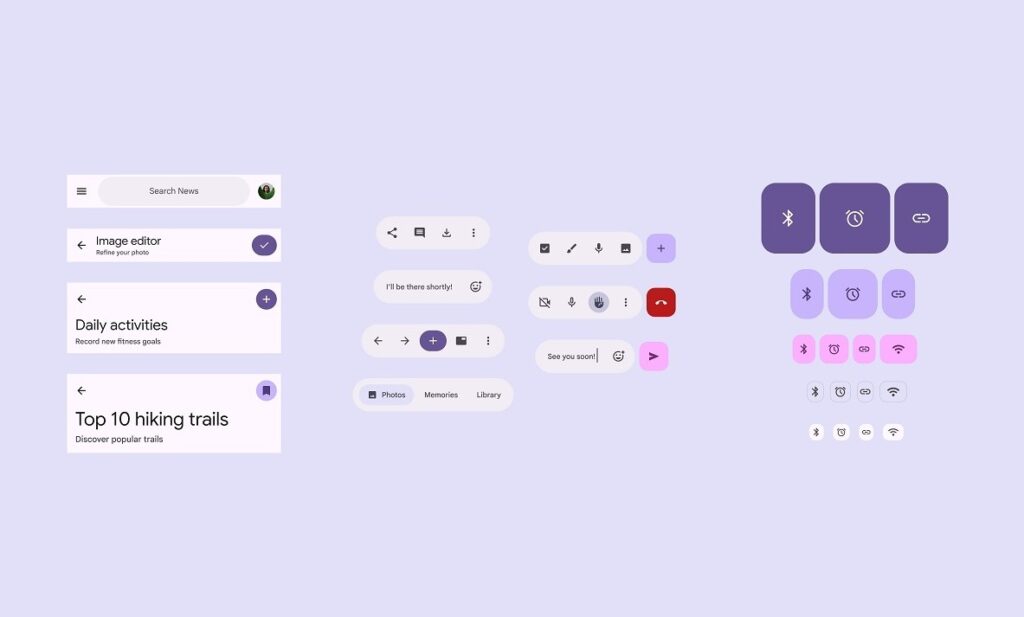
Google will continue using its signature design
Over the past couple of years, Google has been developing its own Material 3 Expressive language: redesigned icon shapes, flexible quick settings, smooth animations, and a rich color palette. According to rumors, Android 17 may add more transparency and blur effects, but we’re talking about a soft, flat approach, not the multi-layered reflections and glare in Apple’s style. For those who don’t like Apple’s new design, this is good news. Android will continue on its own visual path.
What Are AI Agents in Android 17
The main strategic bet of Android 17 is so-called agentic AI, or AI agents. This is an approach where artificial intelligence can perform chains of actions within apps independently, without constant user oversight.
Google has already launched the first such features on Pixel 10 and Galaxy S26 in the US and Korea: the AI can, for example, order a taxi, groceries, or make purchases. In Android 17, Google plans to expand artificial intelligence features through an updated UI automation system for AI agents that will be able to perform tasks within installed apps.
Android 17 will add many AI features. Image: 9to5Google
In practice, this could mean that the Gemini voice assistant will be able to not just find information but perform real actions for you: book a table, place an order in a delivery app, or reschedule a meeting in your calendar. But it’s important to understand that for now, these features only work in select countries and on a limited number of devices, and there are no guarantees they will be available in all markets right away.
Android on Watches and Laptops
Along with Android 17, Google will showcase Wear OS 7 for smartwatches and the Aluminium OS project — a new version of the operating system for laptops. Updates for Android Auto, Android XR, and Android TV are also expected. A session titled “Adaptive Development for the Expanding Android Ecosystem” has been confirmed at Google I/O, where the platform is described as working with an Adaptive Everywhere approach: a unified system that covers phones, cars, living rooms, and augmented reality environments.
A separate major topic is laptops. According to exclusive information from SamMobile, Samsung is developing laptops based on Android 17 and One UI 9. Three versions are planned: budget, mid-range, and a flagship with a thin design. On the software side, there will likely be a revamped Samsung DeX tailored for keyboard and mouse use.

The update will affect more than just smartphones
Samsung has not yet revealed exact release dates for such laptops, but the target is the second half of 2026. For those who have long been in the Samsung ecosystem, this is a significant shift: phone, tablet, watch, and laptop — all on one shell with a shared set of AI features.
When Will Android 17 Be Released and Which Devices Will Get the Update
One UI 9 based on Android 17 will debut alongside the Galaxy Z Flip 8, Galaxy Z Fold 8, and Galaxy Z Fold 8 Wide in July 2026. The stable version of stock Android 17 for Pixel may arrive earlier — in June or July.
The One UI 9 beta will apparently first be available for the Galaxy S26. After that, the usual pattern follows: flagships first, then mid-range devices a few months later. On Pixel, the Android 17 beta is already available for models from Pixel 6 and newer, including the entire Pixel 10 lineup. Samsung, OnePlus, Motorola, and Xiaomi will release their builds based on Android 17 within several months after the stable release.
When to Install Android 17
The Android 17 update is not a visual revolution but rather a comprehensive set of practical improvements across performance, privacy, AI capabilities, and multi-device integration. Whether it lives up to Google’s bold claims will become clear after the official announcements at The Android Show and Google I/O in May.