Researchers have used CRISPR gene editing to produce two beagle puppies that completely lack the protein responsible for most dog allergies in humans. The puppies, named Bailey and Alfie, were created by a biotech company called Kindred Companion Sciences. According to Wired, lab tests found no trace of the key allergen Can f 1 in their saliva or dander, and the company’s founder — himself allergic to dogs — reports living with one of the animals for a year and a half without symptoms. The advance could eventually benefit millions of people who cannot keep dogs due to allergies, though no timeline for broader availability has been announced.
What you need to know
- The protein Can f 1 is the primary trigger for more than half of people with dog allergies; it is present in dander, saliva, and skin — not just fur — meaning so-called “hypoallergenic” breeds still produce it.
- Scientists at Kindred Companion Sciences used CRISPR to delete the gene responsible for Can f 1 in skin cells from a female beagle, then created embryos via somatic cell nuclear transfer (cloning), resulting in two healthy puppies.
- DNA analysis confirmed the edit was successful with no dangerous off-target mutations detected, and lab tests showed a complete absence of Can f 1 in both puppies.
- The company plans to breed edited dogs naturally so future litters inherit the modification without requiring laboratory cloning for each animal.
Why “hypoallergenic” dog breeds are a myth
Many allergy sufferers turn to poodles, goldendoodles, and other breeds marketed as safe. But research has shown that these dogs produce the Can f 1 protein in the same — and sometimes even greater — quantities as mixed-breed dogs. The only practical difference is that curly-coated breeds shed less, so the allergen spreads more slowly around a home. During close contact, however, the protein still reaches human skin and mucous membranes.
Can f 1 is produced naturally in a dog’s body and is found in dander, saliva, and skin secretions. It triggers an immune response in more than half of people who are allergic to dogs. Understanding that the allergen cannot simply be washed or brushed away led biologist Matt Walker — himself an allergy sufferer who had always wanted a dog — to pursue a genetic solution: preventing the animal’s body from producing the protein in the first place.
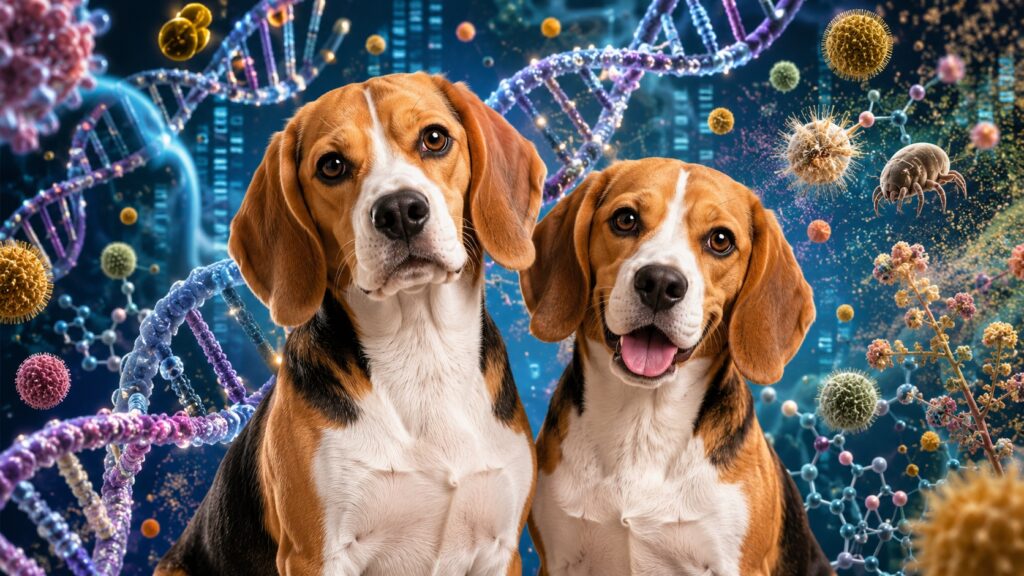
In the future, all dogs could potentially become hypoallergenic.
How CRISPR was used to remove the allergen gene
Walker’s team at Kindred Companion Sciences used the Nobel Prize-winning CRISPR gene-editing technology — often described as molecular scissors — to locate and precisely disable the gene responsible for Can f 1 production in ordinary beagle skin cells. The process did not affect other vital genetic functions, according to the source.
The edited cells were then used to create embryos through somatic cell nuclear transfer, a well-established cloning technique. A total of 25 viable embryos were prepared and transferred to a surrogate mother. Two beagle puppies — Bailey and Alfie — were born as a result.
Post-birth health checks found both puppies had normal birth weight and no congenital abnormalities. Detailed DNA analysis confirmed the gene edit was on target and that no dangerous mutations had occurred elsewhere in the genome.
Testing whether the dogs are truly allergen-free
Laboratory analysis of saliva and dander samples from Bailey and Alfie showed a complete absence of Can f 1. By comparison, samples from ordinary poodles and golden retrievers tested positive for high concentrations of the allergen.
Walker then performed a standard skin-prick allergy test on himself. A drop of extract derived from the gene-edited dog produced no immune reaction. When the same procedure was repeated with extract from an unedited dog of the same age, his skin immediately became red and inflamed.
Walker took Bailey home and has been living with the dog for a year and a half without experiencing a single allergy symptom. The dog reportedly behaves like any other healthy puppy — running, playing, and interacting closely with its owner.
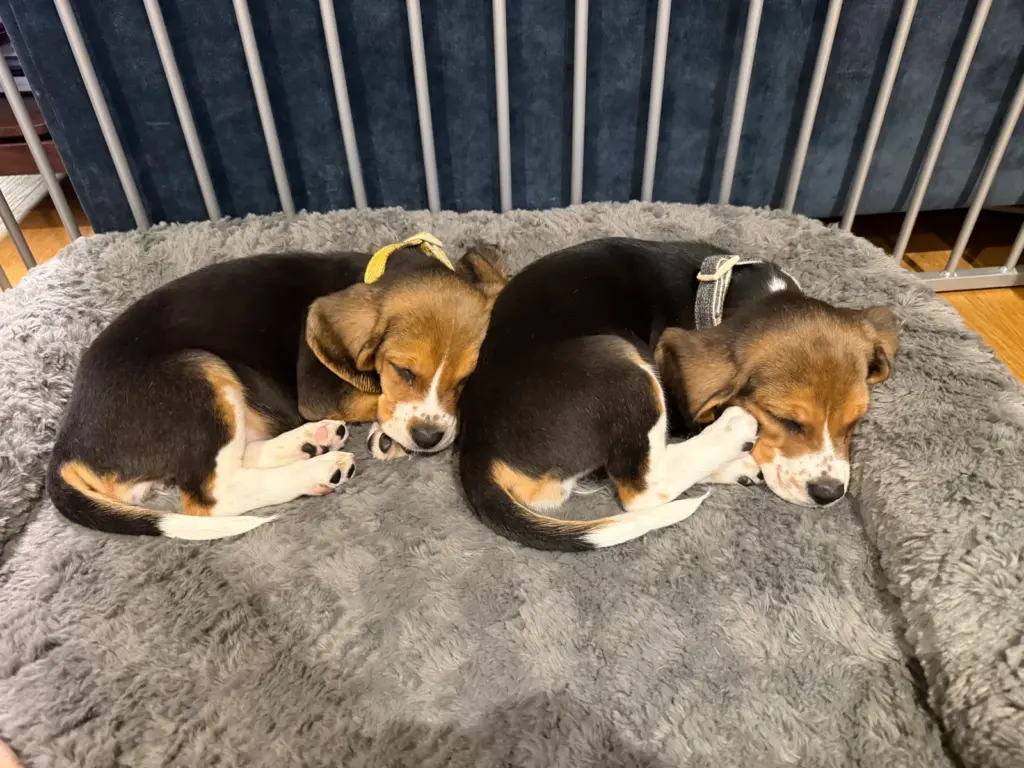
Puppies Bailey and Alfie. Image source: wired.com
What comes next — and what remains uncertain
Fyodor Urnov, a prominent gene-editing specialist at the University of California, Berkeley, is quoted as praising the work, emphasizing that such technologies should be applied to solve real human problems rather than novelties — a reference to earlier, ethically controversial efforts by other companies to create glow-in-the-dark rabbits.
The source also notes that gene-editing tools could eventually help address health problems in dogs themselves. Many breeds today suffer from serious conditions caused by decades of aggressive selective breeding for appearance. Precise genome editing could potentially restore health to these breeds while preserving their characteristic traits.
Kindred started with beagles because the breed is well studied in biological research. The company’s near-term plans include extending the technology to other popular breeds and developing hypoallergenic service dogs and guide dogs — animals critically needed by people with disabilities who may also have allergies.
A key goal is to create “founder” animals: because every cell in an edited dog carries the modified gene, natural mating between two such dogs should produce offspring that also lack the ability to produce Can f 1. This would eliminate the need for expensive laboratory cloning of each individual puppy.
Important caveats
While the results reported so far are promising, several uncertainties remain. No timeline has been given for when gene-edited dogs might become broadly available. The long-term health effects of removing Can f 1 production have not yet been studied over a full canine lifespan. Additionally, Can f 1 is the dominant allergen but not the only one — some people may react to other dog proteins. Independent peer-reviewed confirmation of these results has not been mentioned in the source.