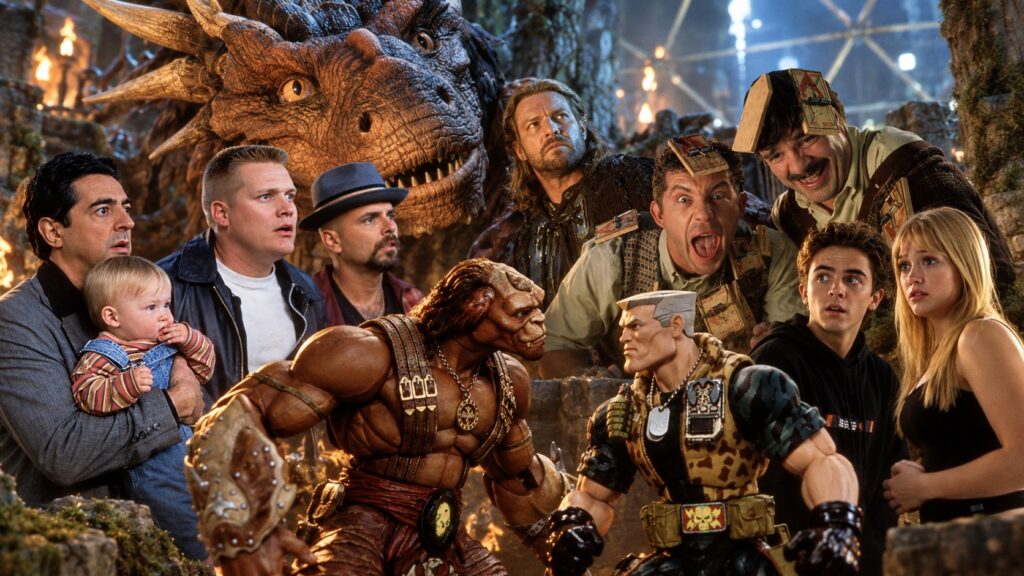
Characters from several films of the 1990s and 2000s
Seven films from the 1990s and 2000s are worth revisiting today: Baby’s Day Out (1994), Dragonheart (1996), Mousehunt (1997), Small Soldiers (1998), Evolution (2001), Agent Cody Banks (2003) and Zathura (2005). According to the source author, many titles from that period have faded from popular conversation as modern franchises took over. Viewers often remember them only in fragments: a suburban house drifting through space, toys waging war on a lawn, a giant talking dragon. The author argues that rewatching them as an adult reveals satire, dark humor and practical filmmaking craft that were easy to miss in childhood.
What you need to know
- Baby’s Day Out was written by John Hughes, the writer of the original Home Alone.
- Dragonheart received an Oscar nomination for best visual effects, and Sean Connery gave the dragon Draco his voice and facial expressions.
- Mousehunt was the first feature film by Gore Verbinski, who later directed The Ring and Pirates of the Caribbean.
- For Zathura, director Jon Favreau kept digital effects to a minimum, so the sets physically fell apart during filming.
Baby’s Day Out (1994)
Three not-very-bright criminals kidnap baby Bink from a wealthy family for ransom, but the child manages to escape. He sets off on a long journey across Chicago, crawling through a dangerous construction site, visiting the zoo and crossing busy streets. Bink follows the exact route from his favorite picture book while his kidnappers chase him, falling into painful traps again and again.
The script was written by John Hughes, author of the original Home Alone, and the source author says the story’s mechanics work flawlessly as a result. The film plays like a classic live-action cartoon with entirely make-believe physics: the villains suffer injuries no one could survive, yet comically dust themselves off and keep running. The source notes that the comedy was a hit on videotape in Russia and still holds solid audience ratings. It describes the film as an ideal hour-and-a-half ride that makes no attempt to be serious cinema.
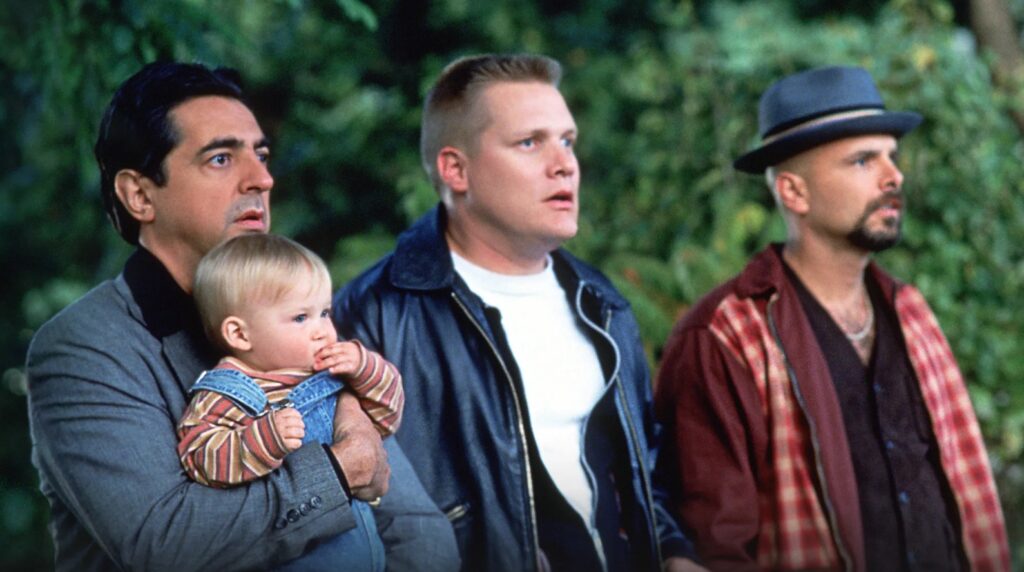
A still from Baby’s Day Out
Dragonheart (1996)
Bowen, a knight disillusioned with his former ideals, teams up with Draco, the last dragon living on Earth, to con superstitious peasants out of their money. The huge beast stages an attack on a village, the knight theatrically “defeats” him, and the partners split the gold. This odd friendship between two aging cynics is interrupted when they must face a real fight against the cruel King Einon, whom Bowen once taught nobility.
For its time, the film was a genuine breakthrough in computer graphics and earned an Oscar nomination for best visual effects. Sean Connery provided the creature’s facial expressions and deep voice. The source author credits this with making Draco a lively, sarcastic and complex character. Although rendering technology has advanced considerably since then, the author writes that the chemistry between the two leads still works and keeps viewers invested right up to an exceptionally heavy ending.
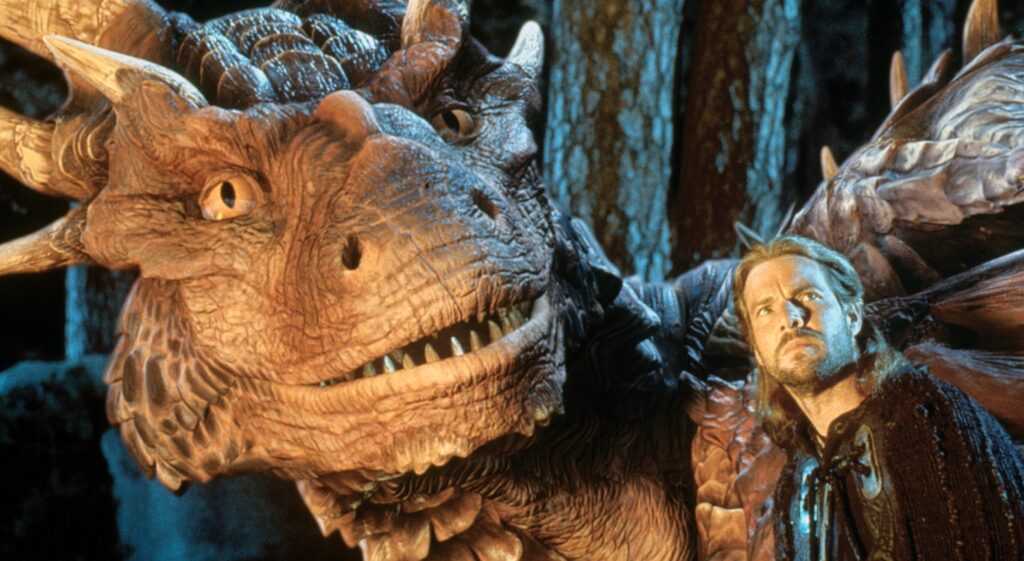
A still from Dragonheart
Mousehunt (1997)
Two brothers inherit a dilapidated mansion that, on closer inspection, turns out to be an architectural masterpiece worth millions of dollars. To sell it profitably at auction, they need to solve just one small household problem: evict the single mouse living in the walls. The tiny rodent flatly refuses to leave. It responds to the brothers’ traps as if it had spent years in elite sabotage training, forcing them to hire an eccentric exterminator played by Christopher Walken.
This was the first feature-length project from Gore Verbinski, who a few years later would direct The Ring and Pirates of the Caribbean. According to the source, the director deliberately gave the film a dark, expensive-looking and slightly gothic visual style, filling a family comedy with a generous dose of well-crafted black humor. By the end of the standoff, the scale of destruction goes far beyond reason. The author says this turns a simple pest-control premise into visually flawless chaos, adding that the film has very high audience ratings.
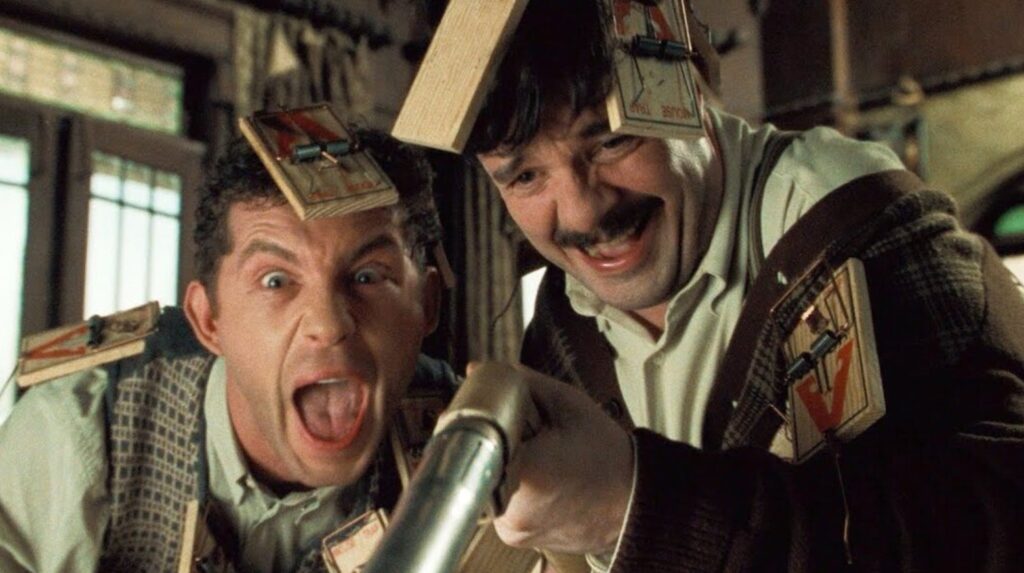
A still from Mousehunt
Small Soldiers (1998)
A large corporation decides to launch two new lines of smart toys: aggressive military “Commandos” and peaceful fantasy monsters called the “Gorgonites.” Eager to beat competitors, engineers install real military microprocessors in the plastic figures, and the artificial intelligence begins to take its programming literally. The plastic soldiers declare all-out war on their opponents, and on the ordinary people trying to stop the absurdity.
The source author notes that, as a child, the film felt like an exciting fantasy about living toys building siege weapons out of office supplies and kitchen appliances. Watched as an adult, it becomes clear that director Joe Dante made a sharp, clever satire of aggressive marketing. The company’s executives don’t care at all about children’s safety; they just want a loud, high-tech product. Meanwhile, the frightening-looking aliens turn out to be peaceful philosophers.
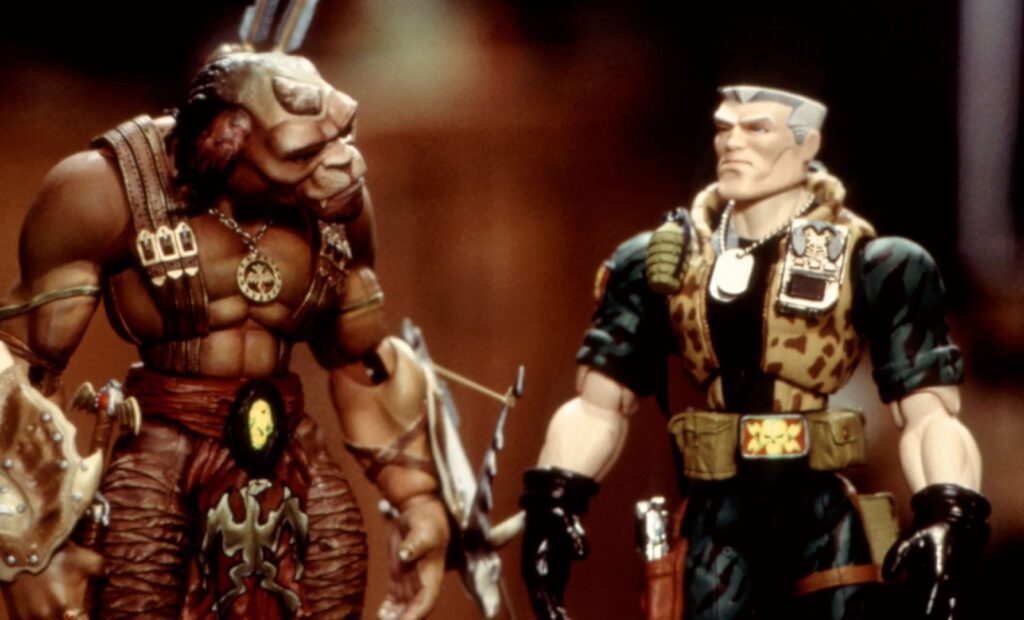
A still from Small Soldiers
Evolution (2001)
A meteorite crashes in the American desert, bringing alien single-celled organisms to Earth that can survive in any conditions. These creatures pass through billions of years of biological development in a matter of days, from simple cave slugs to giant flying reptiles and dangerous primates. The government and a group of scientists soon realize that humanity is at serious risk of giving way to a new dominant life form.
The script was originally written as a serious science-fiction horror film. Director Ivan Reitman reworked the concept and turned the story into a comedic parody of his own Ghostbusters. The source author says the film works thanks to its straightforward absurdity. One example is the memorable finale, in which dandruff shampoo becomes a powerful weapon because of its high content of selenium compounds.
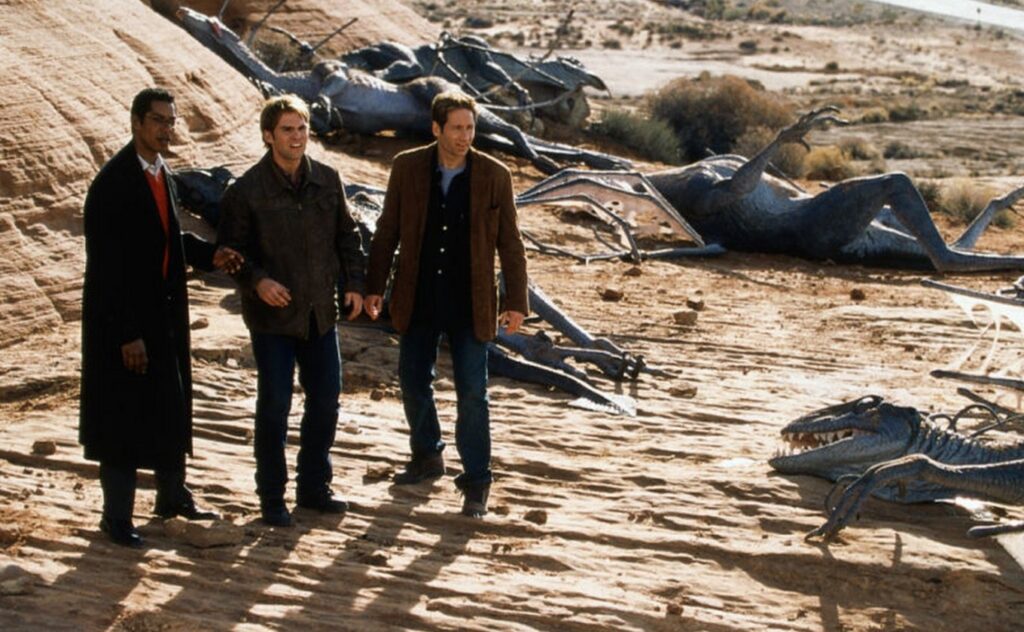
A still from Evolution
Agent Cody Banks (2003)
An ordinary 15-year-old schoolboy secretly works as a CIA field agent. He is a skilled martial artist and marksman and uses cutting-edge spy gadgets. His one and only problem is that he has no idea how to talk to girls and freezes up in any conversation. His superiors assign him to get close to the daughter of a kidnapped scientist, so the teenager has to awkwardly juggle deadly covert missions, homework and first dates.
According to the source author, the film captured the perfect teenage dream of the early 2000s: skateboards, lasers in wristwatches, hacked laptops and secret underground bases all seemed like an unattainable ideal. The film stars teen-TV favorite Frankie Muniz. It makes no claim to being a masterpiece and has fairly average ratings, but the author argues it works well as a nostalgic time capsule. It reflects a distinctive era when earnest spy action films for schoolchildren could compete at the box office on equal terms with major blockbusters.
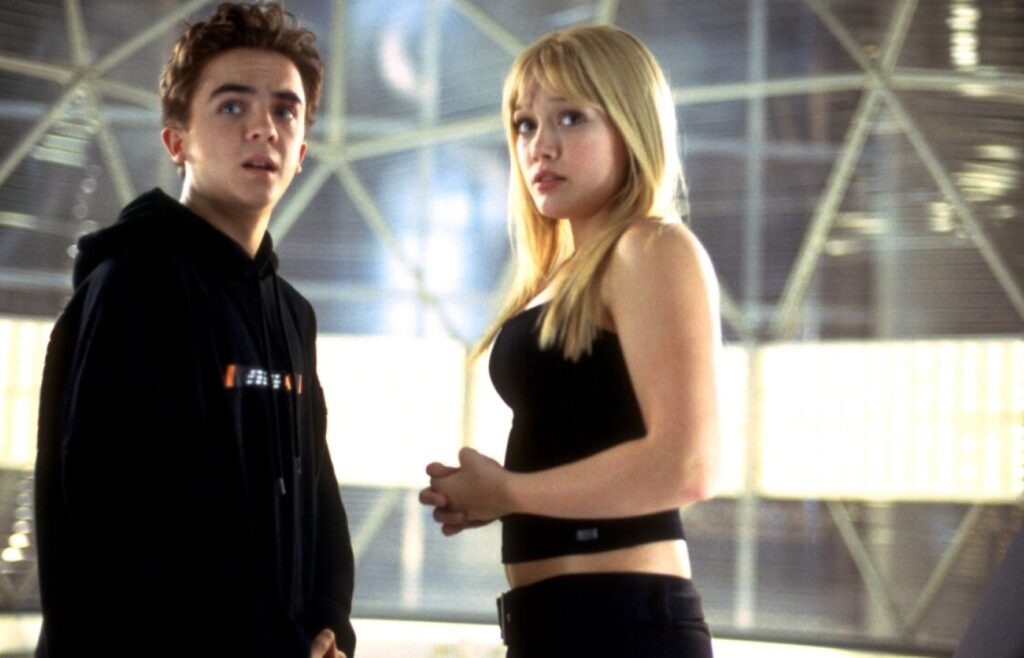
A still from Agent Cody Banks
Zathura (2005)
Two constantly bickering brothers find a mechanical board game in an old basement, and their very first move literally launches their suburban house into outer space. Every new card they draw brings a deadly threat to life. A destructive meteor shower smashes through the living room ceiling, a crazed robot appears in the kitchen, and bloodthirsty alien lizards attack the house from outside. The only way to bring the house back to Earth is to overcome their fear and play the game through to the end.
Director Jon Favreau, long before his work on the Marvel universe, chose to use a minimum of digital effects, so expensive sets physically fell apart during filming. The source author calls the film’s box-office failure unfair, saying it was overshadowed by the fame of the original Jumanji. This happened even though, as a literary work, Zathura is a direct follow-up to Jumanji and comes from the same writer.
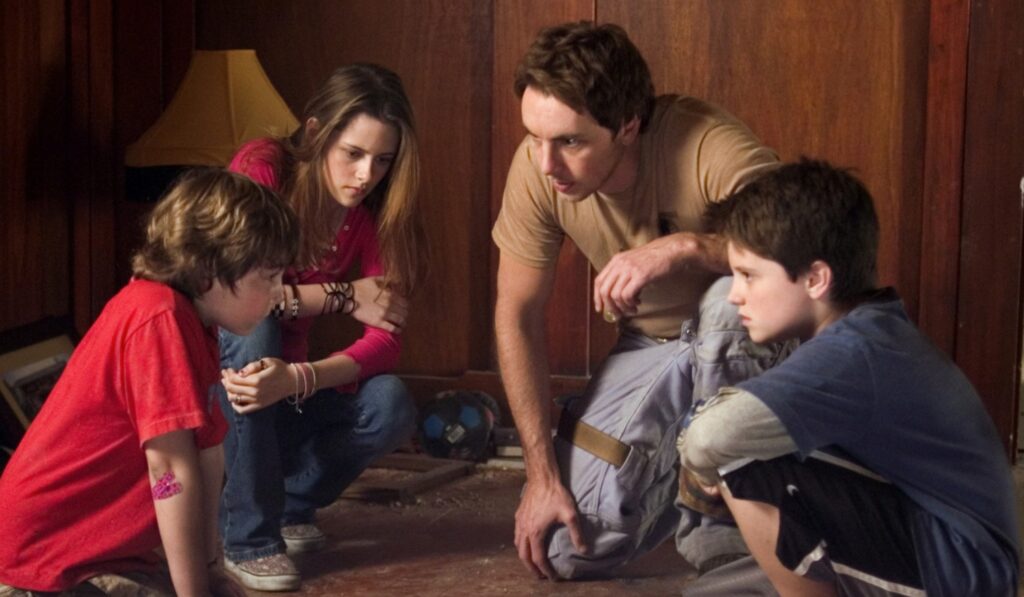
A still from Zathura (2005)
Why these films hold up
In the source author’s view, rewatching these films today offers more than warm nostalgia for the era of video rentals and early DVDs. It is a chance to see how Hollywood filmmakers solved difficult visual problems with animatronics and physical sets before green screens became ubiquitous. These films were unafraid to mix genres and readily added a pinch of unsettling black humor to family stories. Most importantly, they told tight, self-contained stories rather than aiming for endless multi-year franchises.