During the fuel crisis, apps for finding gasoline have gained great popularity. And in addition to specialized services, major players have joined the race. Sber has launched a gas station search service that helps drivers find gas stations with a high probability of fuel availability. Against the backdrop of gasoline supply disruptions in several regions, such maps are becoming a practical tool, and Sber is not the only player here — similar services have already been created by T-Bank and Yandex.
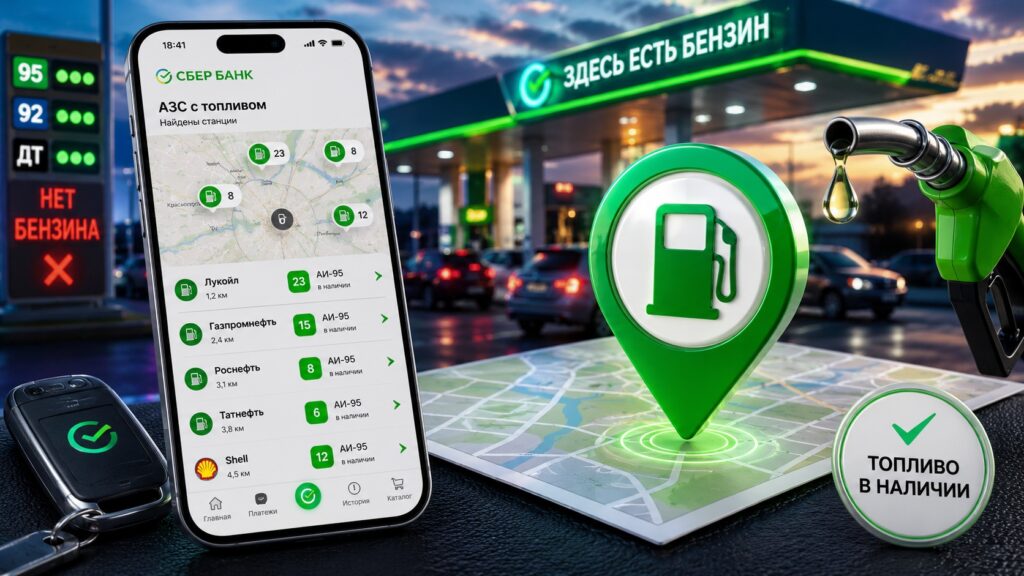
Now you can search for gasoline through SberBank
What’s Happening with Gasoline in 2026
Context matters. At the end of May, fuel supply disruptions began in certain regions, the government was developing measures to increase domestic market supplies, and authorities were considering a ban on diesel fuel exports. That’s precisely why gas station maps quickly transformed from a niche feature into a sought-after tool.
It’s worth keeping in mind that this is a local Russian story and a response to a specific market situation. When supplies stabilize, the value of such maps will decrease, but the underlying mechanism of suggestions based on recent payments may remain in apps as a convenient feature.
Finding Gasoline in the SberBank Online App
We’re talking about a gas station map right inside the familiar app. The service is already available in the web version and in the SberBank Online app. To find gasoline:
- Launch SberBank Online.
- Open the “For Life” tab.
- Go to the “Gas Available Here” section.
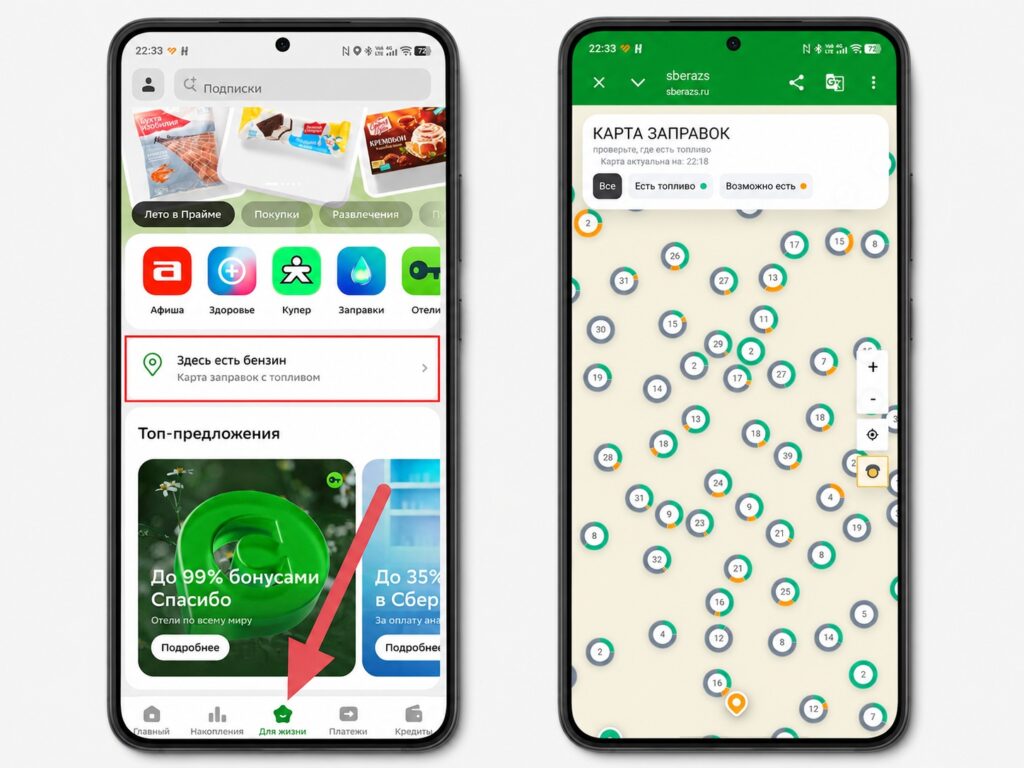
You just need to launch the SberBank app
According to the bank, the service covers about 23,000 gas stations across Russia. The map shows nearby stations where fuel purchases were recently recorded, and you can select a suitable one and immediately build a route.
How Sber’s Map Determines Fuel Availability at Gas Stations
The key thing to understand: the map is not directly connected to sensors at gas stations. The service operates based on anonymized payment data from over 100 million Sber clients. Algorithms analyze transactions that are highly likely to be related specifically to fuel purchases, taking into account the payment amount, type of retail outlet, and other parameters.
Simply put, if people recently paid for gasoline at a specific gas station, the system assumes that fuel is most likely available there and assigns an up-to-date status to the station. This is an indirect indicator, not a guarantee: the map shows where people recently refueled, but not how many liters remain in the tanks right now.
How Sber’s Map Differs from Other Fuel Search Services
Similar services have been rolled out by several companies in recent days, and the principle is similar for all — anonymized data on payments and driver activity:
- T-Bank launched an online map with 20,000 gas stations several days earlier. It’s available on the toplivo.tbank.ru website and in the bank’s app, and for each station it shows the time of the last purchase and data relevance.
- Yandex created an interactive map with information about fuel availability and queues at gas stations. Data is generated based on Yandex services, orders through “Yandex Fueling,” and driver surveys, with a filter by fuel type. Testing began on July 3.
- Sber uses payment data from its clients and the 2GIS map, covering about 23,000 stations.
And this is actually a plus: the more independent sources there are, the easier it is to cross-check data for the same gas station. If you already have the Sber, T-Bank, or Yandex app on hand, you don’t need to install anything extra.
Is It Worth Using Sber’s Gas Station Map
If you’re driving in a region with supply disruptions — yes, Sber’s map can save you time and stress, especially when the tank is nearly empty. But don’t rely on it blindly: this is a probability estimate, not a real-time fuel balance at the pumps.
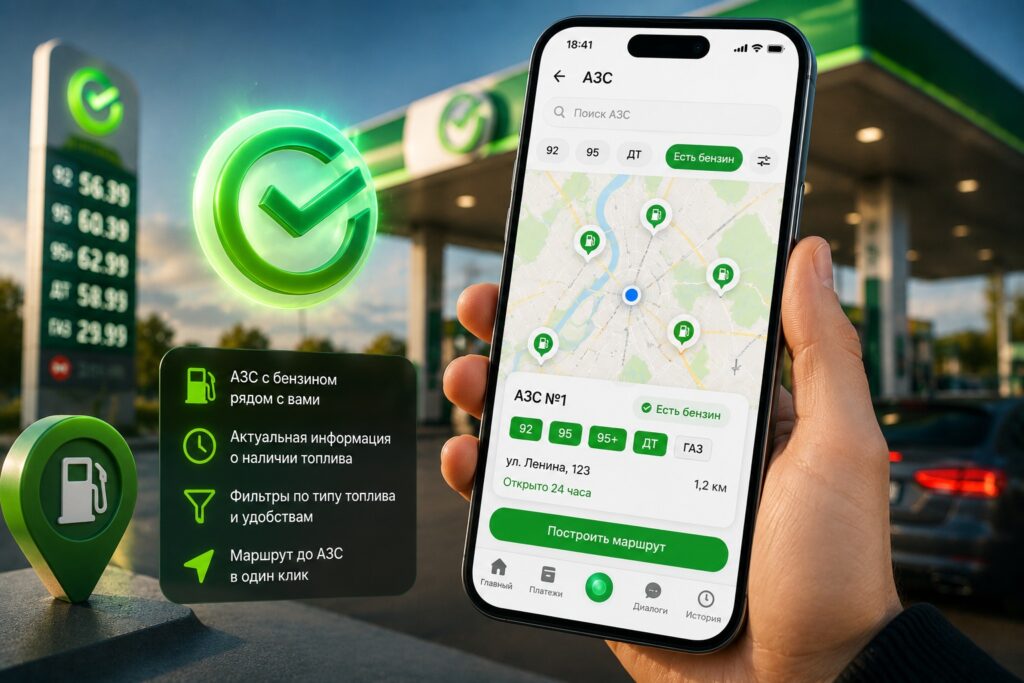
Use it while there’s no gasoline
A smart strategy is to cross-reference two sources at once, such as Sber and Yandex, and refuel without waiting for a critical tank level.