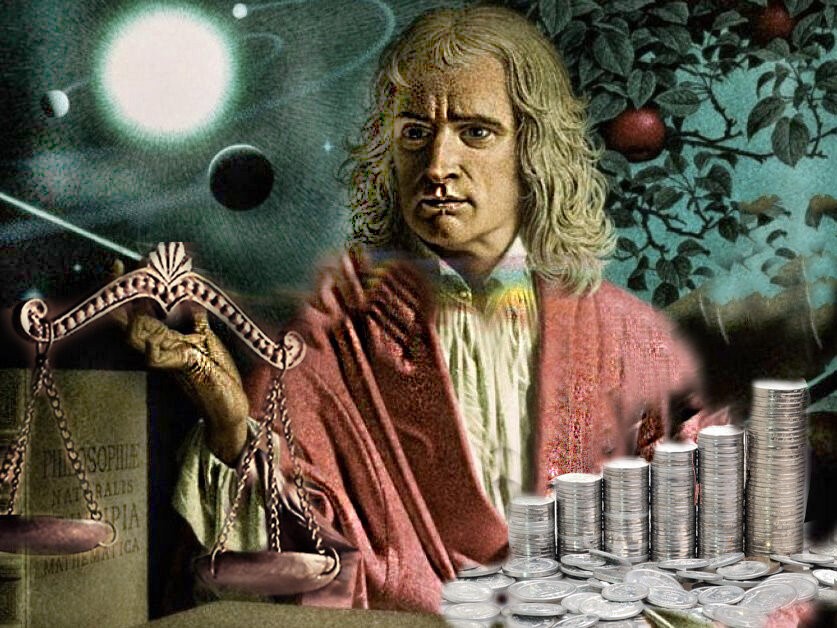
Five historical figures who lived double lives and hid dark secrets. Image source: stootvetov.ru
In textbooks, the life of a famous person is usually reduced to a brief summary: “first to fly across the Atlantic,” “invented the little black dress,” “discovered the law of universal gravitation.” That’s why the past easily turns into a set of labels. And behind that single line summarizing achievements, there often hides an entire second life — with secret families, espionage missions, and criminal investigations. Here are five such real stories of people known to everyone.
Isaac Newton Hunted Counterfeiters
Newton’s discoveries in physics and mathematics are known to every schoolchild: he has long been placed among the greatest scientists in history. But few people know that he devoted a significant part of his life to criminal investigations. At the end of the 17th century, the English economy suffered from mass counterfeiting of coins. Fraudsters would clip a thin layer of silver from the edges of coins, melt down the shavings, and essentially get silver out of nothing.
The Crown appointed Newton as Warden of the Royal Mint, and he threw himself into the work with the zeal of a true detective. Newton personally investigated counterfeiting networks and played a key role in exposing William Chaloner — one of the biggest fraudsters of the era. Moreover, it was Newton who introduced milled coin edges and improved engraving to make clipping impossible.
Everything is well documented: he held the position of Warden from 1699 until his death in 1727. And this is a rare case where a great person’s “second life” looks not like a legend, but like a well-documented part of their biography.
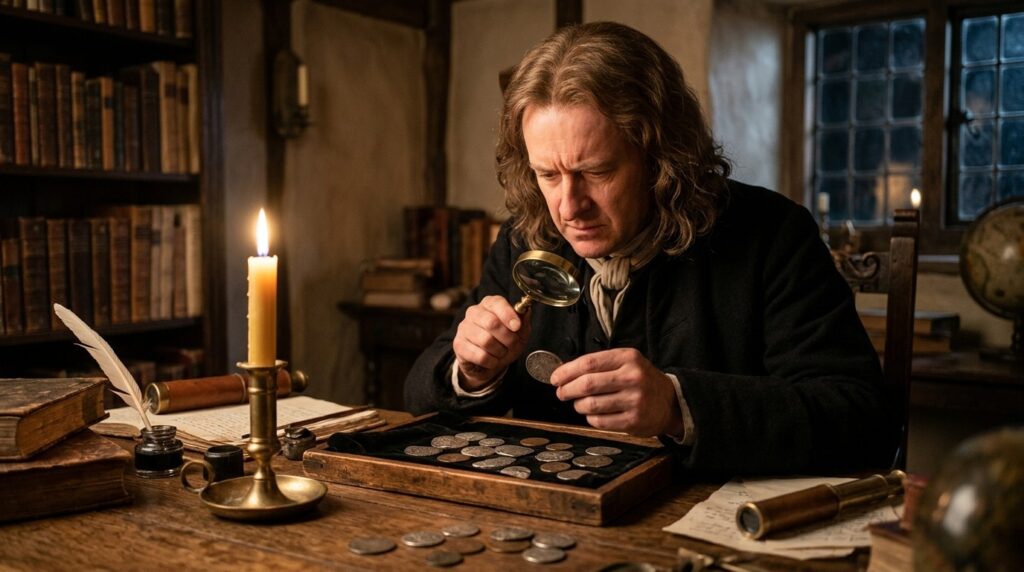
Newton personally investigated counterfeiting cases in London
Coco Chanel Worked for Nazi Intelligence
The name Coco Chanel is firmly associated with French elegance. But during World War II, the famous designer was engaged in a very different kind of activity. During the occupation of Paris, Chanel began a romance with Baron Hans Günther von Dincklage — a German nobleman and Nazi intelligence officer. This romance opened doors for her into the Abwehr — Nazi counter-intelligence.
Chanel passed information from the Nazi party to her contacts in British high society and even moved into the Ritz Hotel in Paris, which served as the headquarters of German intelligence. She also had a financial motive: using Nazi “Aryanization” laws, she tried to seize the Jewish Wertheimer family’s share in the Chanel perfume business. The Wertheimers foresaw this and had preemptively transferred their share to a non-Jewish business partner.
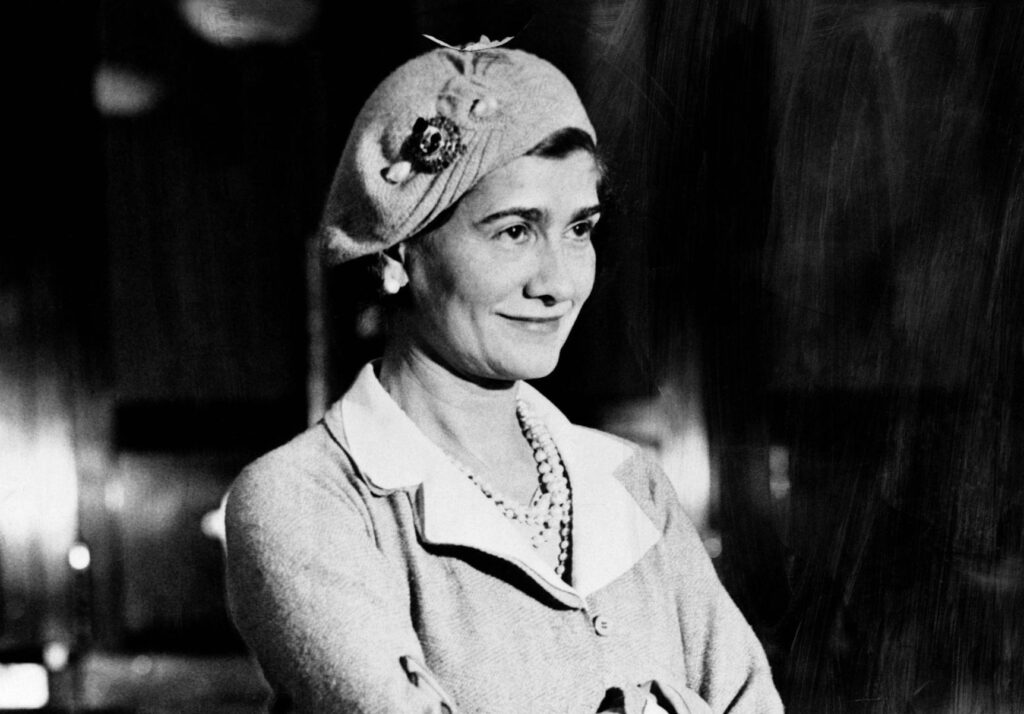
Chanel carried out numerous assignments for Nazi intelligence under the code name “Westminster.”
Chanel operated under the code name “Westminster” and participated in the failed Operation Modellhut — an attempt to establish secret peace negotiations between the Nazis and the British. The mission collapsed when British socialite Vera Lombardi, through whom Chanel tried to reach diplomats, reported her friend’s Nazi connections to British intelligence.
After the liberation of France in 1944, Chanel was interrogated but released without charges — apparently thanks to her friendship with Winston Churchill. She later moved to Switzerland, and over time managed to restore her good name.
Who Spy Mata Hari Really Was
Margaretha Zelle, better known as Mata Hari, is perhaps the most famous “spy” in history. But her real life was far more complicated and sadder than the image of a femme fatale seductress.
After an unsuccessful marriage to a Dutch army captain, Zelle moved to Paris and reinvented herself as “Mata Hari” — an exotic dancer with a fabricated biography. She claimed to be a Javanese princess trained in sacred dances. Her provocative performances brought her fame and the attention of Europe’s most influential people. Alongside her dancing, Hari worked as an escort and became the mistress of several high-ranking officials.
During World War I, Hari, as a citizen of a neutral country, could travel freely across Europe, which attracted the attention of French military intelligence. When her lover, Russian captain Vadim Maslov, was wounded at the front, the French allowed her to visit him on the condition that she agree to spy for France.
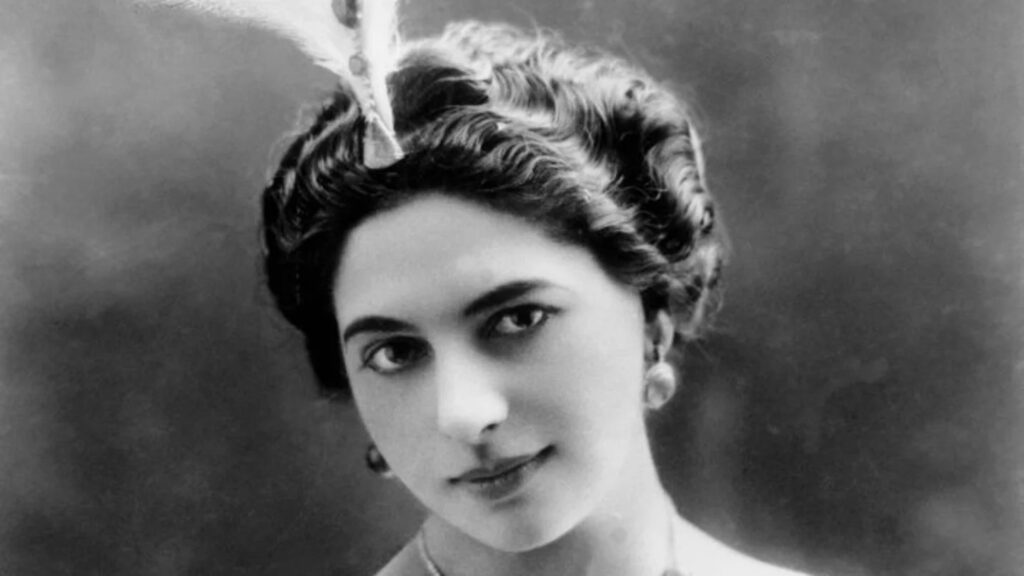
Mata Hari on stage — the “Javanese princess” image was entirely fabricated.
Several espionage missions failed, after which she was arrested on charges of working for Germany. The trial was swift, and the evidence was circumstantial and flimsy. On October 15, 1917, Mata Hari was executed by firing squad. Later research by historians paints a very different picture: most likely, she was not a “master spy” but a minor adventuress who became a convenient scapegoat. Some researchers believe that Mata Hari’s execution was meant to boost French morale, as the public needed a simple answer to the question “who is to blame.”
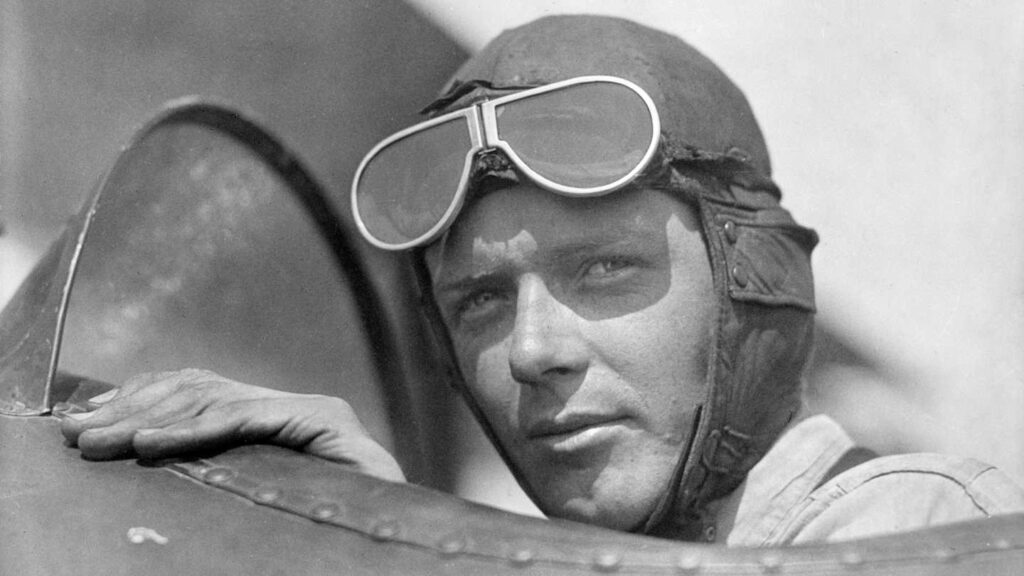
Charles Lindbergh: Aviation Hero and His Three Secret Families
In 1927, American pilot Charles Lindbergh completed the first solo nonstop flight across the Atlantic — from New York to Paris. Overnight he became a world celebrity and a symbol of the aviation era. Soon he married Anne Morrow, and the couple had a son, Charles Jr. But in 1932, the boy was kidnapped and murdered — the crime was dubbed “the crime of the century.” Fleeing media attention, the family moved to Europe.
It was in Europe that the lesser-known part of his biography begins. Lindbergh openly sympathized with Nazi Germany, and alongside his six children from his legal wife, he secretly fathered at least seven more children with three German women — two sisters and his personal secretary. This only became known in the early 2000s, when a DNA test confirmed that Lindbergh was the father of Astrid Bouteuil and her brothers David and Dyrk Hesshaimer. The pilot himself died of lymphoma in 1974, taking his secret to the grave for nearly three decades.
Hedy Lamarr: Hollywood Star Who Helped Create Wi-Fi and Bluetooth
Austrian actress Hedy Lamarr shone on MGM screens alongside Clark Gable, but behind the scenes she was engaged in something entirely different. Her first husband, Fritz Mandl, was an arms dealer with fascist connections in Italy. Through this marriage, Lamarr met scientists working on military technologies, and this sparked her interest in inventing.
After separating from Mandl, she moved to London and then to Hollywood. But the acting role of “exotic seductress” quickly bored her, and Lamarr, together with composer George Antheil, developed a radio guidance system resistant to enemy frequency jamming. In 1941, they received a patent for this technology.