The fresh operating system Android 17 came out just a couple of weeks ago, but that doesn’t mean you’ll have to wait a whole year for the next update. Now Google has released the first monthly Android patch, and it has started rolling out to Pixel smartphones. The update brings security fixes and addresses several annoying interface bugs, but it doesn’t yet resolve the most talked-about issue with disappearing widgets. The update is small, but these kinds of patches usually affect the daily stability of your phone more than big announcements.
The first security patch for Android 17 has been released
Who Will Get the Android Security Patch and When
Google has published the changelog for the July 2026 security update. The patch covers Pixel 6 and all newer models up to the Pixel 10 lineup.
Globally, users will receive the build numbered vCP2A.260705.006 when it reaches their device. An important note: the update is rolling out in stages over the course of a week. This means that if the patch isn’t available for you today, that’s normal — availability is spread out over time, and your phone will pull the update when it’s your turn. You can manually check for the update in your phone’s settings, but you can’t force it to install faster — you just have to wait your turn.
What’s New in the Android 17 Security Patch
The Android 17 interface receives a couple of targeted fixes. The first one concerns only the Pixel 10 Pro Fold: users complained that navigation buttons changed position after the foldable phone was opened and closed. The July patch should eliminate this issue for those who experienced it.
The second fix affects all supported Pixels — from Pixel 6 to the Pixel 10 lineup. It addresses the wallpaper shape effect: previously, it could incorrectly overlap an object on the screen instead of staying in the background.

Standard changes for a security patch
In addition, the patch includes several more notable fixes for all supported models:
- fixed a situation where some apps would suddenly close or fail to launch at all;
- resolved a bug with incorrect colors and contrast on some system widgets;
- eliminated a glitch that caused certain devices to fail to boot or get stuck in an endless reboot loop.
The Main Problem with the Android 17 Update
It’s important to be honest here. Google is releasing a small fix for widgets, but it doesn’t address the main complaint from most Pixel owners. After upgrading to Android 17, many users encountered widgets on the home screen disappearing on their own.
The company is aware of this problem and says a full fix is already in the works. It has been spotted in the Android 17 QPR1 Beta 5 test build and specifically targets widgets that disappear or vanish from the list after a device reboot. In other words, the July patch is not the update that will bring back your missing widgets.
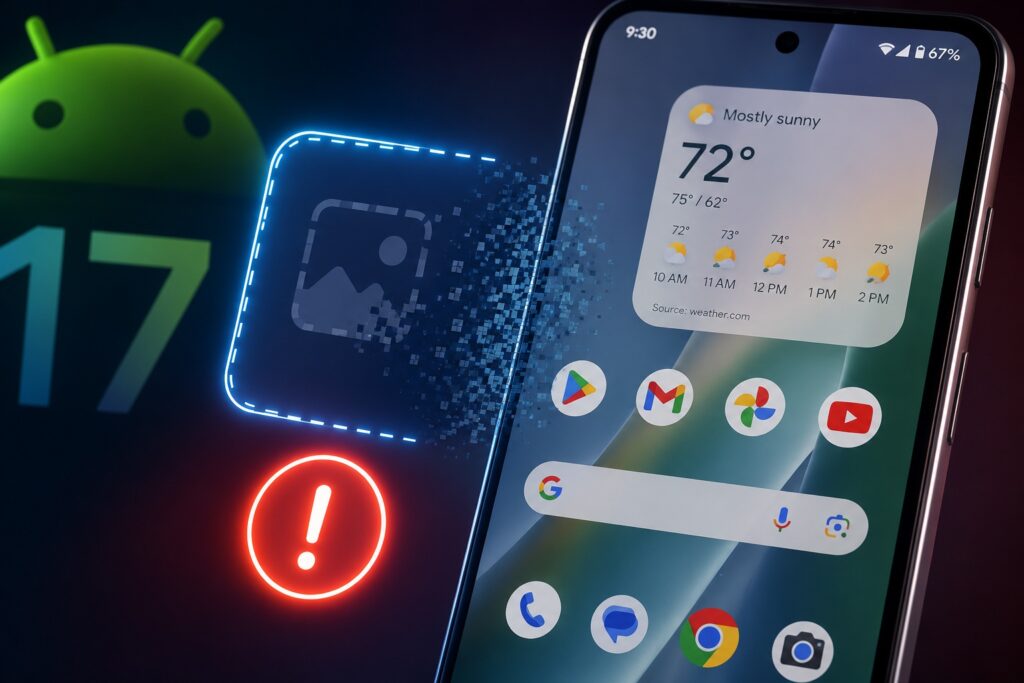
Widgets keep disappearing just as before
Since the fix is in the QPR1 beta version, the widget issue will most likely be fully resolved only with the first quarterly Android 17 update — that’s exactly what the current tests are for. Google is moving fast though: last week the Android 17 QPR1 Beta 6 build was released, and it has already reached the platform stability stage.
Should You Update Android 17
The short answer is yes, you should update. This is a security update, and it closes vulnerabilities, fixes app crashes, and eliminates the boot hang glitch. There’s no reason to skip such patches, and they usually don’t introduce new risks.
But don’t expect the July update to fix everything. Android 17 itself is not a flashy release packed with new features — it’s an update focused on security and threat protection. If the disappearing widgets issue is specifically bothering you, you’ll have to wait a bit for the quarterly patch — and in the meantime, just keep your system up to date.