I’ll admit right away: I love Nothing smartphones. And yet I never recommend them to anyone under any circumstances. It sounds like a split personality, but there’s logic behind this paradox, and I’ll try to break it down. In short, it’s not the most sensible choice by common sense standards, but it’s one of the few phones you genuinely fall in love with. Today I’ll be honest: about both the love and the pain.
I love this phone, but I wouldn’t recommend it to anyone
Nothing Smartphones in Russia: What Downsides You Should Know Before Buying
I’ll start with the unpleasant stuff, because Nothing Phone drawbacks are real, and there are quite a few. The first thing you’ll encounter is the brand’s complete anonymity. No joke. You pull out the phone, and the response is “what even is that?” Every time people ask you to repeat the name, as if you just showed them a Nokia from the 2000s. The reaction is about the same.
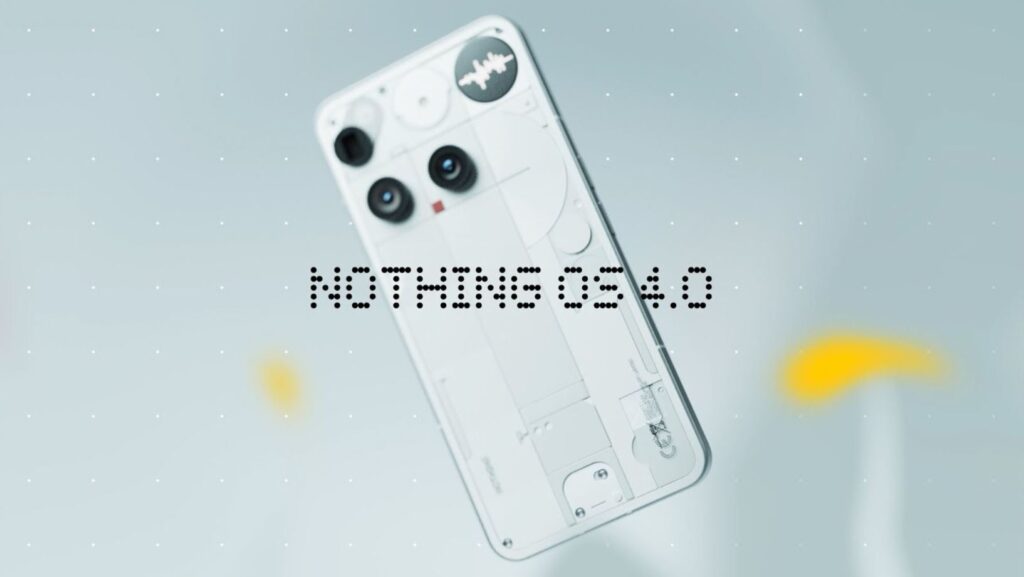
Not all Nothing OS features are available in Russia
Now for the more serious issues. The company is British, founded by Carl Pei — a guy well-known in niche circles — while the devices are assembled in China, and Nothing has no official presence in Russia. That means if something breaks, repair turns into a quest to find a technician and spare parts. The official Nothing X app, used to configure Nothing headphones and accessories, only works reliably through a VPN in Russia, and even then it glitches periodically. The same goes for some features like widgets and official websites.
Add to that the not-quite-top-tier hardware even in the flagship, the relatively short update support compared to Samsung with its seven years, and you get a phone that’s hard to recommend with a clear conscience. That’s why I don’t recommend it to people who just need a good, predictable phone without surprises.
Nothing Smartphone Design: Pros and Cons
And now about what makes me forgive everything. Nothing is an unusual smartphone in the literal sense. A transparent body that lets you see the internals, the signature Glyph lighting on the back panel that blinks for calls and notifications. It’s a smartphone with unusual design that you can’t confuse with anything else. There are only two phones this recognizable: this one and the iPhone.
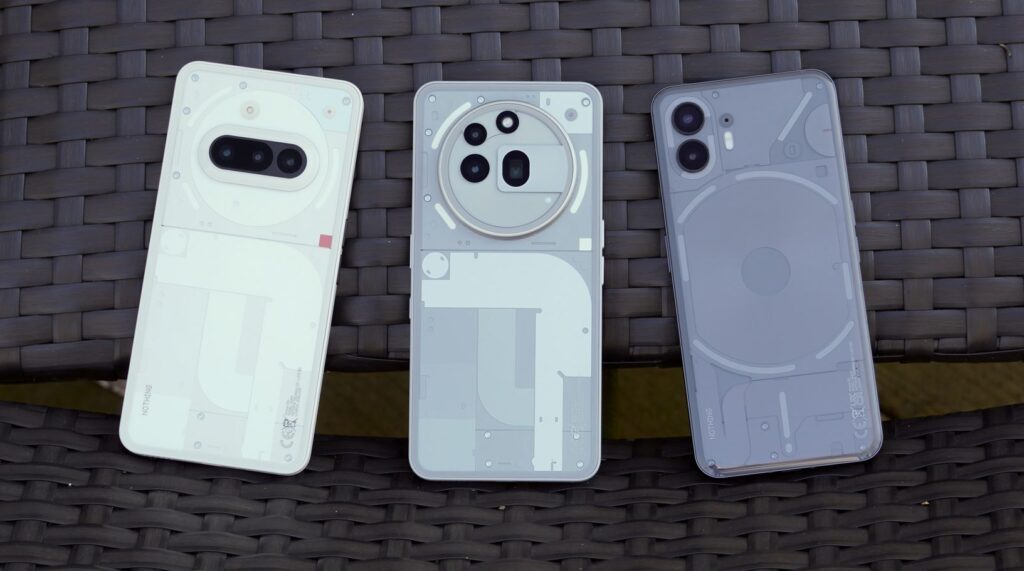
The company pays special attention to design. Taking a generic template or making yet another faceless phone — that’s not their style
But let’s be honest: it’s not perfect, and in some places it’s even garish. We’ve all gotten so used to bland, smooth slabs in the style of iPhone or Samsung — deliberately made inconspicuous so they don’t stand out — that a phone with character initially causes slight discomfort. You pull it out on the subway and feel like the odd one out that everyone’s staring at. You need to be ready for that, because Nothing doesn’t hide — it makes a statement.
Take the Nothing Phone (4a) Pro. Its camera module does somewhat resemble the iPhone’s, but the round external mini-screen at the bottom put off a lot of people. Or the flagship Phone 3 with its “crooked” camera block. Only a few saw in it a nod to Apple, while the majority responded with an honest “horrible.” And although I’ve personally become convinced of the usefulness of the Glyph Matrix display, most people don’t like it — it repels them, as if it were some cheap Chinese gadget. In reality, it’s a well-thought-out and functional element that just looks strange against the backdrop of identical-looking phones.
And here lies Nothing’s main paradox. On the outside, the device is memorable, but on the inside, honestly, it’s underwhelming. The (4a) Pro has a Snapdragon 7 Gen 4 processor — a solid mid-ranger, but by no means a flagship — and UFS 3.1 storage that looks modest by modern standards. Essentially, you’re paying largely for the appearance and character, not for top-tier hardware. And here’s what’s surprising: despite the modest internals, the phone still feels cohesive and fast. What saves it is what I’ll talk about next.
Nothing OS — Is It Really the Best Android?
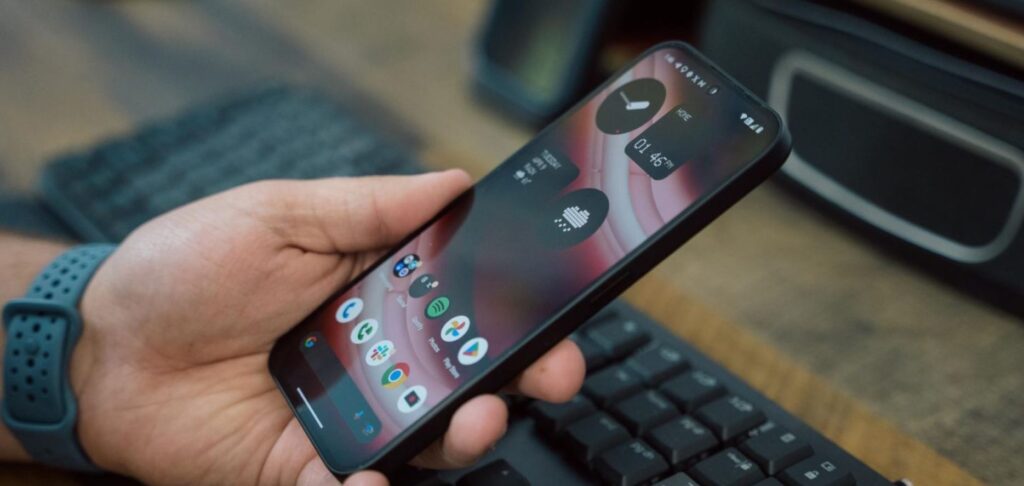
This is what I’m willing to put up with everything listed above for. Nothing OS is clean Android without ads and pre-installed bloatware. No banners in the weather app, no promos in the gallery, no partner apps that you can’t uninstall.
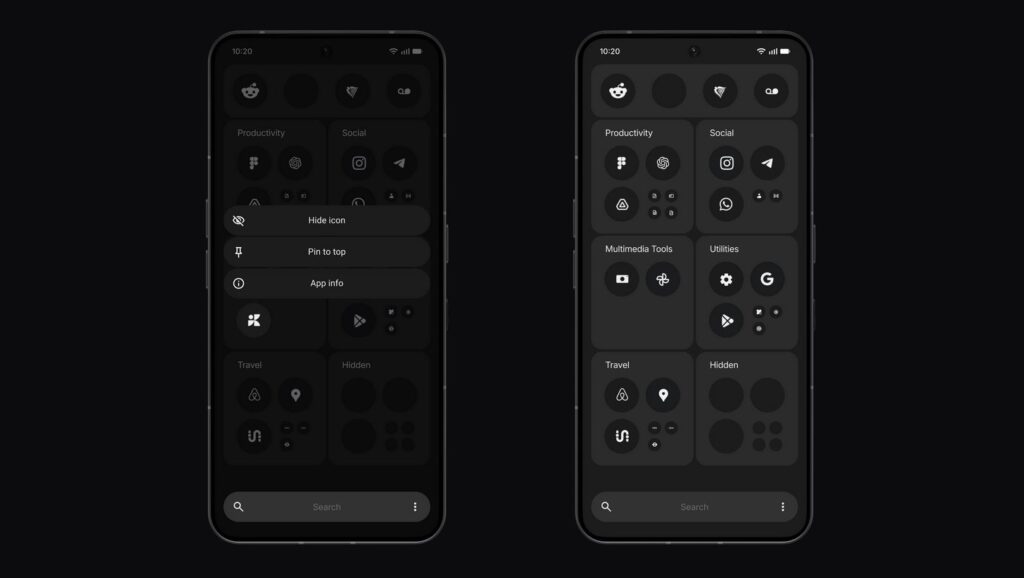
The operating system — my respect. But it’s still far from ideal
If you’re tired of searching for what to buy instead of Xiaomi with its ads literally in system apps, Nothing will be a breath of fresh air. In terms of cleanliness, the system is closer to Pixel but offers more customization. However, there are drawbacks: for example, there’s no basic volume slider in the control center, no performance modes, and many other things that have long existed in something like HyperOS. As far as I know, the company consciously refuses to include such features.
The same applies to those looking for a smartphone instead of Samsung with its heavy shell: here everything is minimalist and runs snappily precisely because the system isn’t overloaded.
Why Nothing Smartphones Lose Value Quickly
The brand has a characteristic that’s a negative for its image but a gift for buyers. Nothing smartphones depreciate quite quickly after launch. The same Phone (4a), which initially cost around 40,000 rubles, can now be found for as low as 23,000 rubles.
For me, this is an argument in its favor. You get a stylish and distinctive smartphone for a reasonable price without overpaying for release-day freshness. If you don’t chase the first day of sales and top-tier hardware, and simply see the boundaries of what’s reasonable, it turns out to be a smart purchase. And there’s one more plus below.
Why People Love the Nothing Phone
And this is the part that’s hard to explain to those who haven’t been part of it. A small but surprisingly healthy community has gathered around Nothing. There’s no typical division into camps of “I adore it” and “I’d never buy it.” People are simply interested in digging into features, figuring out functions, and helping each other. You come in with a question and get a straight answer, not “it’s your own fault, get a different phone.”