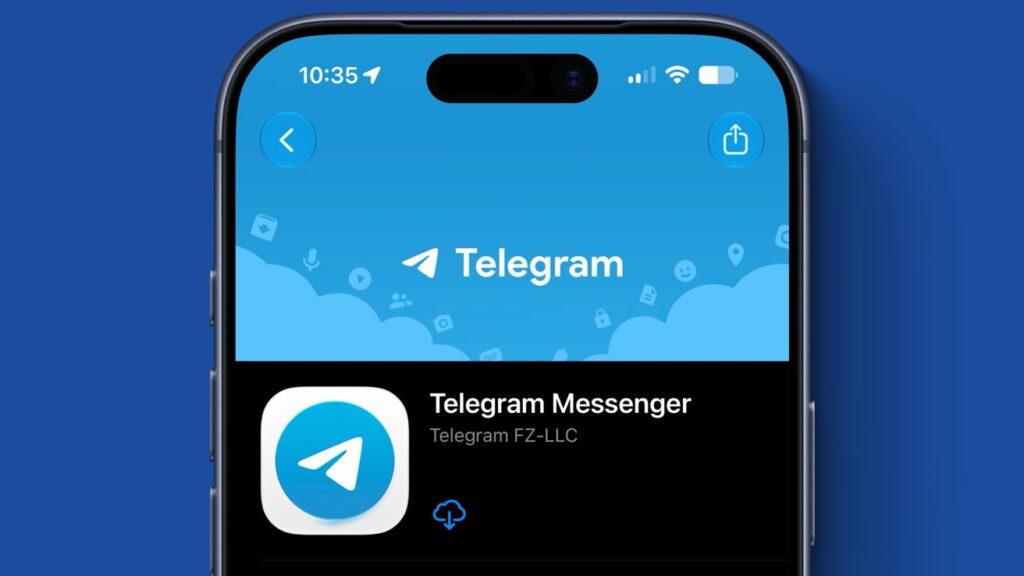
Telegram disappeared from the App Store for several hours on the night of August 4, and Pavel Durov has offered a detailed explanation of what happened. According to Durov, a bad actor edited an old message in a public group chat, inserting AI-generated illegal pornographic content into it. Apple responded by pulling the entire app from its store — without warning or prior contact with Telegram’s team. The app was restored within hours, but the incident raises questions about how Apple handles content complaints and how vulnerable major apps are to deliberate sabotage.
What you need to know
- Telegram was removed from the App Store for several hours on August 4 after illegal content was found in a public group chat.
- According to Durov, the attacker edited an old message rather than posting a new one, hiding the material deep in the chat history where users were unlikely to see or report it.
- Durov claims the attacker is an extortionist who targets group owners, demanding payment in exchange for not planting prohibited content and reporting it to Apple.
- Apple has not publicly commented on the reason for the removal; the account of events comes solely from Durov.
Telegram unexpectedly disappeared from the App Store for several hours
What caused the removal
According to Durov, a user posted illegal pornographic material in a public group chat, prompting Apple to remove the entire messenger from the App Store. The app was reinstated within a few hours. Durov insists this was not a random policy violation but a deliberate, planned attack by an extortionist who specifically targeted the community.
Telegram uses multiple layers of moderation to remove prohibited material from public groups, including user reports, AI-based filters, and digital file fingerprinting. These systems are designed to minimize the lifespan of illegal content in chats.
How the attacker exploited message editing
The technical detail at the heart of Durov’s account is notable. Rather than posting a new message — which would appear at the top of the chat feed and be visible to members who could report it — the attacker edited an existing old message in an active chat, replacing its content with AI-generated illegal material.
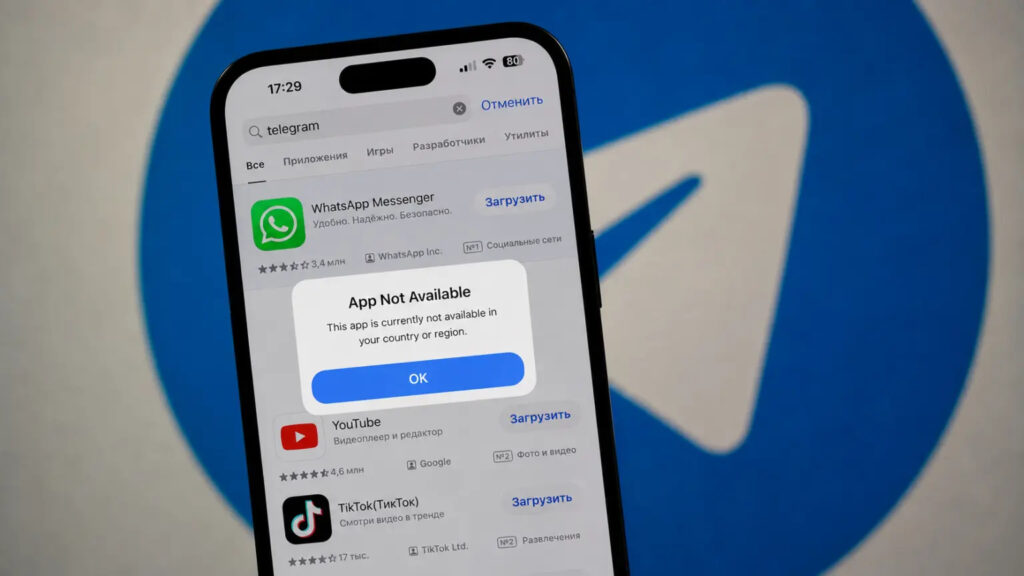
For several hours Telegram could not be downloaded from the store, and users did not receive notifications
The edited message stayed buried deep in the chat history, where group members were physically unlikely to scroll to it and file a complaint. Durov also highlighted the use of AI to generate the prohibited content, noting that AI-generated material is harder to catch with traditional digital fingerprinting. He argued that the very complexity of the scheme demonstrates the effectiveness of Telegram’s existing moderation — if it were easy to sneak prohibited content through, no one would need to resort to editing old messages.
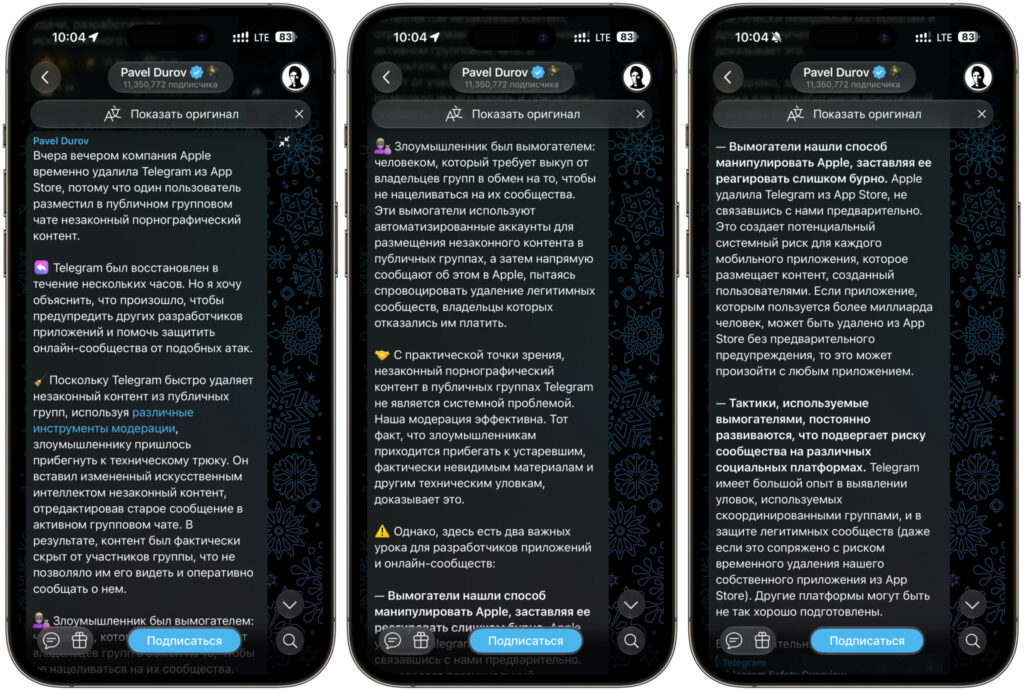
Durov described in detail how the attack worked
An extortion scheme targeting app store listings
Durov directly called the perpetrator an extortionist who profits from triggering app removals. According to his account, the scheme works as follows: attackers find owners of large public groups and demand payment, threatening to plant prohibited material and report it directly to Apple if the group administrator refuses to pay.
When payment is refused, automated accounts post illegal content in the group and then file complaints about it with Apple. The goal is to get the targeted community — or even the entire app — removed from the App Store. Durov described this as a form of digital racketeering.
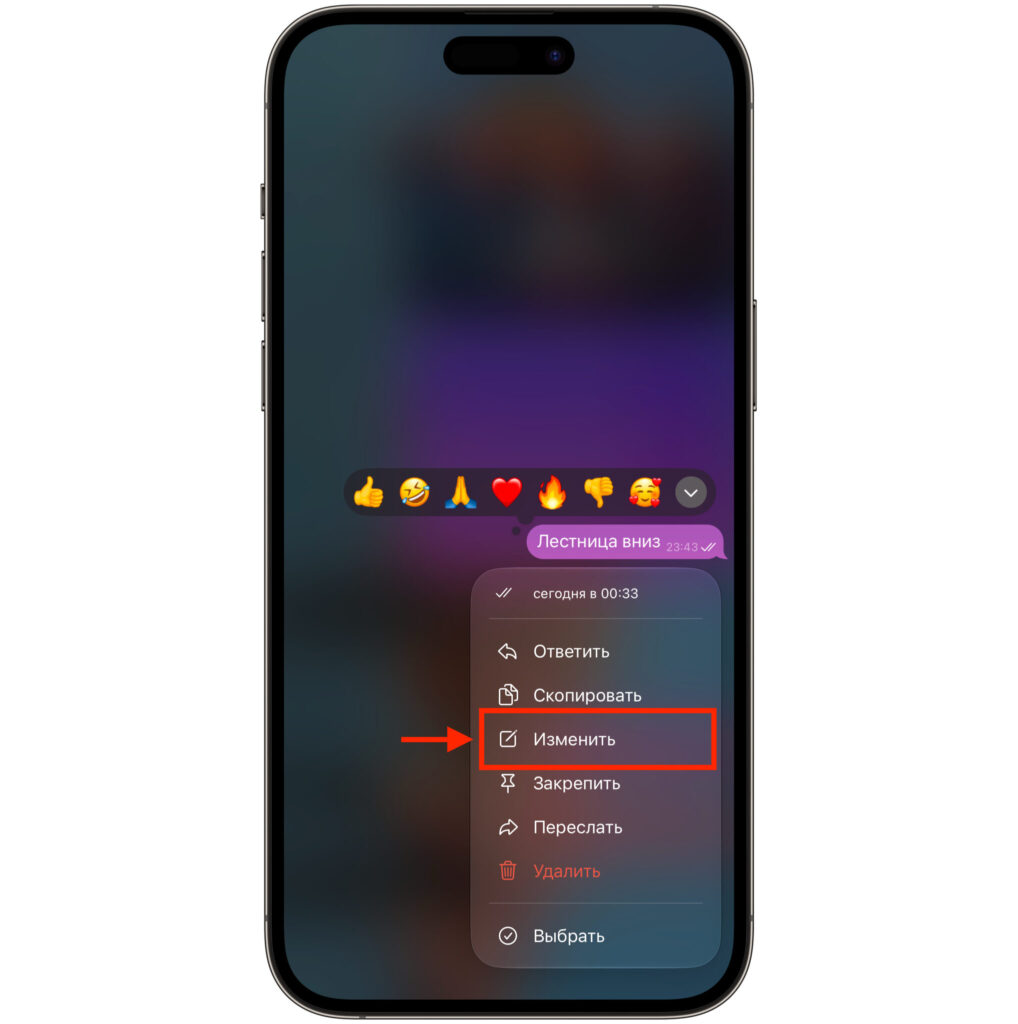
Simple message editing can cause major problems
Durov emphasized that illegal content is not a systemic problem in Telegram’s public groups, and that the elaborate workaround required in this case — editing old messages with AI-generated material — only confirms that conventional methods of smuggling prohibited content do not work.
Broader implications: Apple’s complaint-driven enforcement
Durov highlighted two problems that extend beyond this single incident. First, Apple removed Telegram before contacting the messenger’s team. An app used by over a billion people was pulled without any prior warning or communication.
It remains to be seen how widespread such attacks will become
Second, and potentially more significant, the extortion tactic could be used against any platform that hosts user-generated content. If bad actors have learned to manipulate Apple’s enforcement mechanisms into taking drastic action, any social app is potentially vulnerable to the same kind of attack.
According to Durov, Telegram has extensive experience dealing with organized groups that flood the platform with mass complaints and prohibited content. Other services, he warned, may be far less prepared for such tactics.
Important caveat: Apple has not publicly stated its reasons for removing Telegram from the App Store. The entire account of events — including the extortion claim, the message-editing technique, and the AI-generated content — comes from Durov alone. Until Apple comments or independent confirmation emerges, this remains one side of the story.