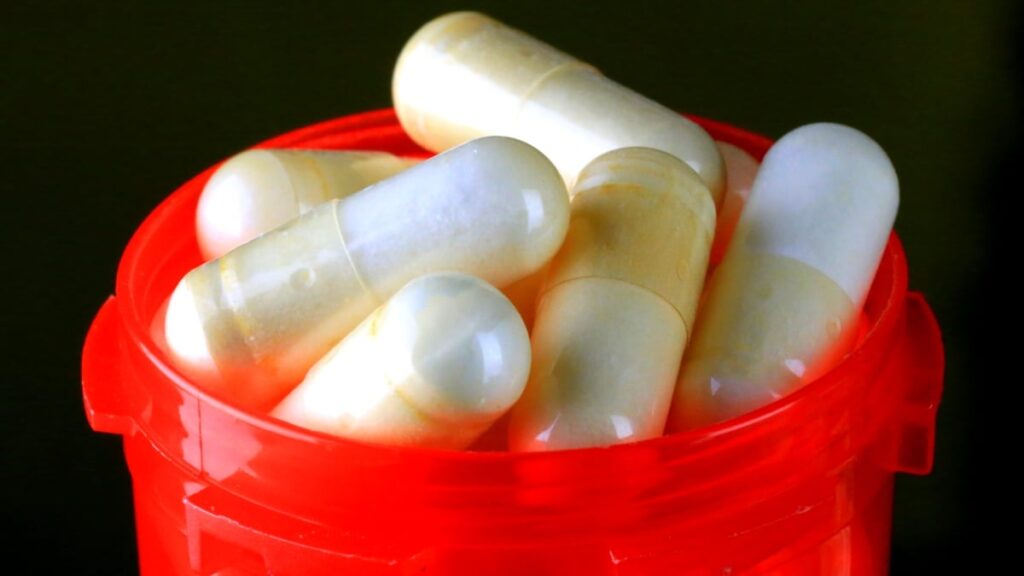
What are you actually swallowing when you take probiotics? An honest answer
The probiotics market is worth $112 billion. Glossy boxes promise “gut health” and claim to introduce “friendly bacteria” into our bodies, even though gut bacteria already live by quite complex rules. The only question is: what’s actually inside those capsules, and is even a single promise backed by evidence? A general practitioner asked herself this question and decided to find out.
What Do the Billions of Bacteria on Probiotic Packaging Actually Mean
It all started in an ordinary pharmacy. Berenice Langdon — a practicing GP, author of a book on the microbiome, and lecturer at St George’s, University of London — came in for antibiotics for tonsillitis. At the checkout there was a display of probiotics. The boxes listed anywhere from 2 to 25 billion “live cultures” per capsule. An impressive range, but not a single package explained why those particular numbers.
The bacteria themselves were described in advertising language: “tested,” “friendly,” “powerful.” But the actual promises were surprisingly vague — “complements your natural gut flora,” “complements your everyday life.” Not a single word about treatment, prevention, or any specific outcome.
At the same time, every brand referenced “extensive research” into their strains. The research does exist. But the fact that a strain has been studied and the fact that it works are far from the same thing.
What Bacteria Are Found in Probiotics
After reading the fine print, Langdon noticed a curious detail: behind different brands and price tags lay almost identical compositions. Everywhere — combinations of the same bacteria: different strains of lactobacilli and bifidobacteria. Some products listed up to 15 varieties, but these two genera were always present.
Lactobacillus acidophilus is a bacterium used to make yogurt (by the way, which is healthier — yogurt or kefir?). Bifidobacteria are also widely used in the food industry. Both genera are typical inhabitants of our gut, accounting for about 12% of normal microflora.
Why, out of millions of bacterial species, do all brands use the same ones? It’s not about science — it’s about regulation.
Why Probiotics All Contain the Same Bacteria
In the US (and it’s the American system that sets the standard for the global market), there is a status called GRAS — Generally Recognized As Safe. If a microorganism has received this status or was used in the food industry before 1958, the manufacturer doesn’t need to conduct additional safety studies.

Bacterial cultures in a laboratory — from Petri dish to pharmacy shelf
And if a company limits itself to so-called “qualified health claims” — general phrases like “supports digestion” — it doesn’t even need to prove that the product works. That’s why packages never say “treats,” “prevents,” or “helps with a specific disease.” Such wording would turn a probiotic into a medicine — and medicines require clinical trials, regulatory approval, and an entirely different level of investment.
It creates a closed loop: manufacturers use well-studied and safe bacteria but aren’t required to prove their benefits. Meanwhile, consumers interpret the words “researched strains” as a guarantee of effectiveness.
25 Billion Bacteria in a Capsule: What Does It Mean and Can It Be Harmful
To understand the scale, it’s worth remembering how many bacteria we get from regular food. Even with thorough washing and cooking, we swallow about 1.3 billion bacteria daily along with our food. This is a normal load that our body has evolutionarily learned to handle.
A capsule with 25 billion bacteria is 20 times more than the body is accustomed to receiving in an entire day. Stomach acid destroys or damages the vast majority of ingested microorganisms. Only a fraction make it to the large intestine, and even those that survive typically remain there for only a few days.
Most healthy people tolerate this load without problems — the gut’s defense systems cope. But for people with weakened immune systems, the situation is different. Even “friendly” bacteria from probiotics can cause serious infection if they enter, for example, the bloodstream, and sometimes beneficial bacteria behave less predictably than we’d like. This is precisely why probiotics are not recommended for immunocompromised individuals.
Do Probiotics Work: What the Research Says
Do probiotics in capsules work? Langdon admits she’s learned to answer this question evasively. People who ask are usually already taking probiotics — enthusiastically and with a smile. They’ve invested in the idea, and a direct answer might disappoint them.
Her go-to response: “Well, they most likely didn’t harm you.” There’s also a financial aspect: a pack of 30 low-dose capsules can cost almost twice as much as a prescription antibiotic for an actual infection.
It’s important to understand that this isn’t about the complete uselessness of all probiotics in every situation. There are individual clinical studies of specific strains for specific conditions — for example, antibiotic-associated diarrhea or ulcerative colitis.

The microbes in each person’s gut make up their individual microbiome.
But mass-market probiotics from pharmacy shelves are not the same strains in the same dosages that were studied under clinical conditions. Between “researched strain” and “helps specifically you” lies a distance that marketing successfully disguises.
The problem is also that each person’s microbiome is unique: it’s influenced by diet, lifestyle, and even how quickly food is digested. The same bacterium can behave differently in different guts — and what showed an effect in a study on one group won’t necessarily work for you.
What to Look for in Probiotic Ingredients Before Buying
The probiotic story is a good example of how marketing works in a zone of uncertainty. The product contains real bacteria that genuinely live in our gut. They are indeed studied and safe for most people. But it doesn’t follow that an extra dose of the same bacteria from a capsule will deliver measurable benefits.
Here’s what everyone should know:
- Nearly 5% of adults take probiotics, and most often these are people with high incomes and good diets — that is, those whose microbiome is already in good shape.
- Probiotics are not medicines and do not undergo efficacy testing before sale.
- Bacteria from capsules rarely remain in the gut for long.
- For people with weakened immune systems, probiotics can be dangerous.
- You get the very same lactobacilli and bifidobacteria from regular yogurt, fermented dairy products, and fermented foods.
The microbiome is indeed an important and rapidly developing field of science. But while science cautiously formulates hypotheses and tests individual strains, the industry is already selling universal solutions. The gap between what we know about gut bacteria and what packaging promises remains the main problem of the probiotics market. And the most useful thing you can do before buying is to read not the front of the package, but the fine print.