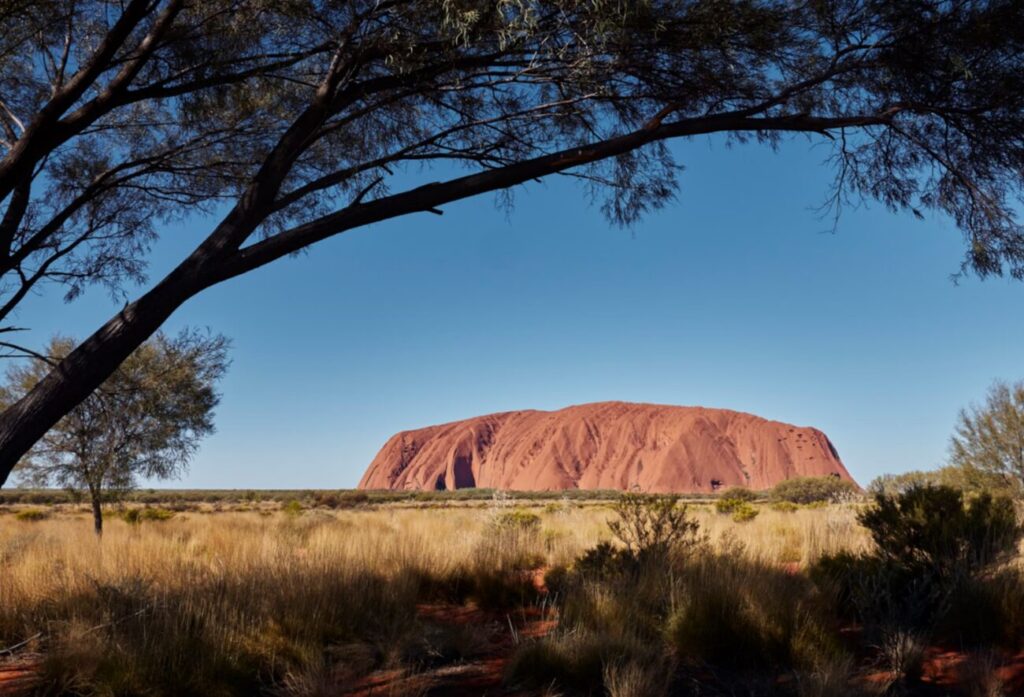
Uluru, Australia. Since 2019, climbing the sacred rock has been banned.
If you’ve ever looked at a mountain and wondered — what’s up there? — these six peaks won’t give you an answer. You simply can’t go there. It seemed like there were no places left on Earth that a person with a backpack and a carabiner couldn’t reach. But no. And the climb is forbidden not by nature, but by people — by laws, the military, or cultural traditions. And this is just part of a much larger list of places closed to visitors. Some of these summits have never been conquered, and some were once open but are now closed forever.
The Highest Unclimbed Mountain — Gangkhar Puensum, Bhutan
Gangkhar Puensum rises to 7,570 meters — and it is the highest mountain on the planet that no one has ever climbed. For a mountaineer, being the first on a summit is a lifelong dream, but in the case of Gangkhar Puensum, it will most likely remain just that — a dream.
In 1994, the government of Bhutan banned climbing on all mountains above 6,000 meters. The reason is respect for the country’s spiritual traditions: the Bhutanese believe that gods live on mountain peaks, and these places are considered sacred. In 1998, a Japanese team attempted to climb Gangkhar Puensum from the Tibetan side, but the permit was revoked before the ascent even began — after objections from the Bhutanese government.
To this day, no human has ever stood on the summit of this mountain. And as long as the law remains in effect, it probably won’t happen.
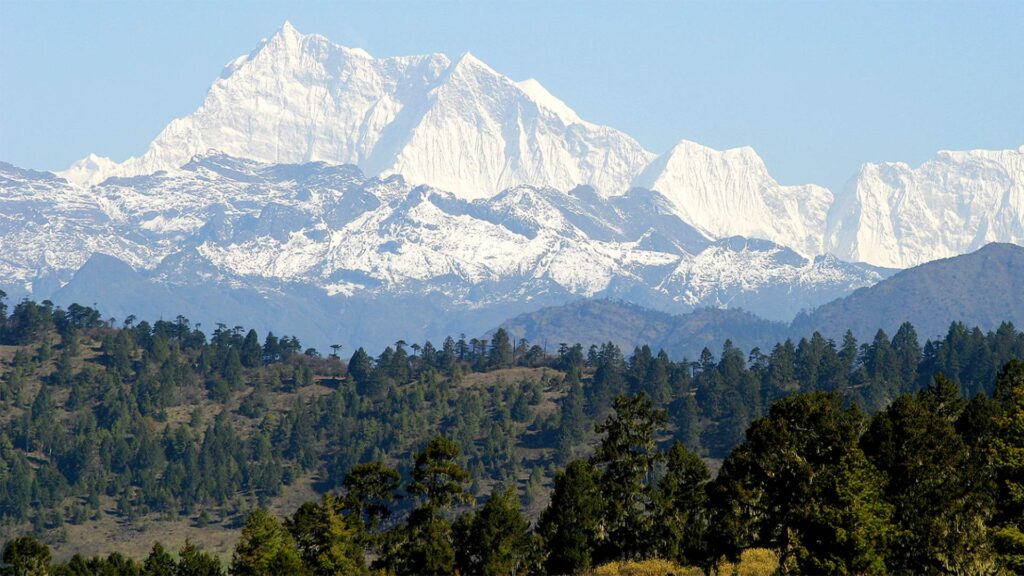
Gangkhar Puensum at 7,500 meters — the world’s highest unclimbed peak.
Groom Range Above Area 51: Why You Can’t Get There
Nevada has hundreds of mountain ranges and canyons open to hikers, but the Groom Range is an exception. Its six peaks (the highest being Bald Mountain at 2,847 meters) rise directly above the territory of the U.S. Air Force test range, which has been operating since 1955. Experimental weapons, including nuclear bombs, were tested here, and this is also where the famous Area 51 is located — a secret military facility whose existence the U.S. government officially acknowledged only in 2013.
The territory is heavily guarded, and any attempt to climb the Groom Range is intercepted. The nearest mountain from which you can at least try to spot Area 51 is Tikaboo Peak. But even from there, the facility is about 42 kilometers away, and you won’t see anything without binoculars.
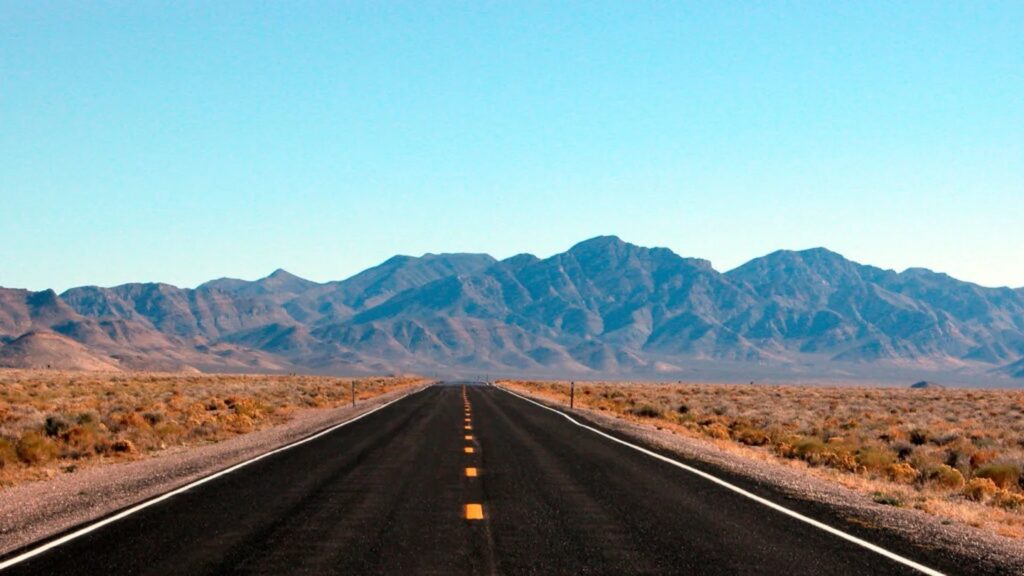
Groom Range in the Nevada desert — a restricted area near Area 51.
Shiprock in New Mexico: Why the Navajo Banned Climbing
Shiprock is a volcanic remnant rock formation 482 meters tall that rises sharply from the New Mexico desert. Its jagged ridges once attracted rock climbers seeking a serious challenge. But for the Navajo people, this mountain is a sacred place. In the Navajo language, it is called Tsé Bit’a’í, which translates as “winged rock,” and climbing it is considered an act of cultural disrespect.
After a serious accident in 1970, when three climbers were severely injured, climbing on Shiprock and all monoliths on Navajo Nation territory was banned. But not everyone obeyed the ban — in the early 1970s, one person died during an illegal ascent. As Navajo climber Len Necefer explains, deaths at sacred sites “contaminate” the space in the Navajo worldview.
Illegal climbs remained such a serious problem that in 2006, the Navajo Nation Parks and Recreation Department issued a special statement: “The religious damage that illegal climbing inflicts on the Navajo people is far more serious than any physical danger to the climbers themselves.”
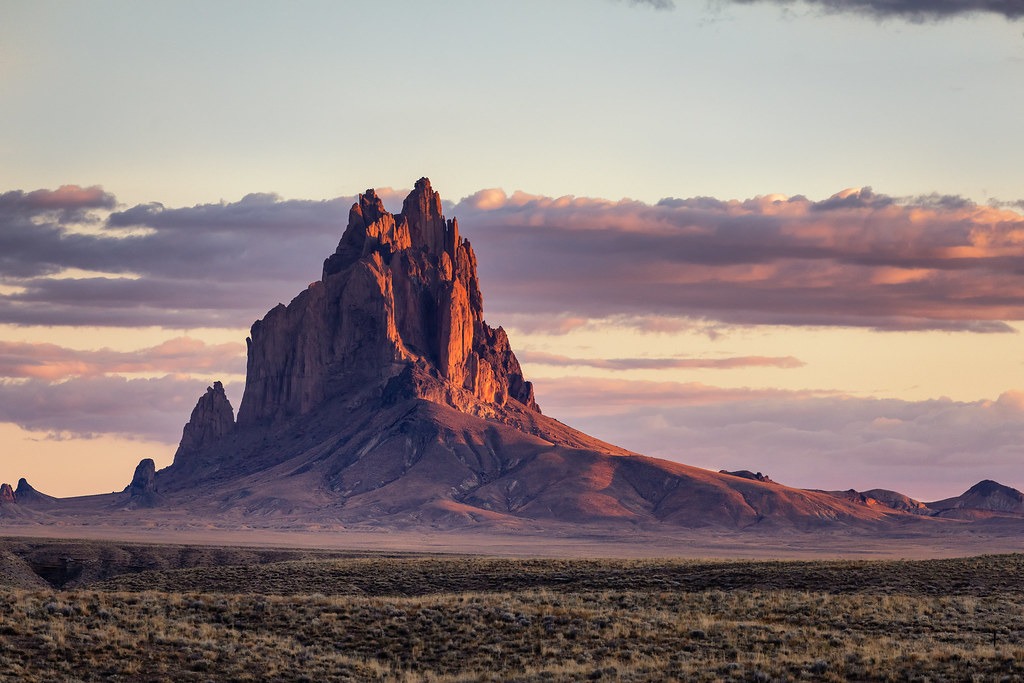
Shiprock — a volcanic rock formation sacred to the Navajo people.
Puig Major in Mallorca: A Mountain with a Closed Military Base
The highest point of the Spanish island of Mallorca is Mount Puig Major (1,445 meters). You’d think it would be accessible on a popular tourist island, but no one has been allowed to the summit for decades. In 1957, the U.S. Air Force established a military base with a radar station on the peak, topped with a distinctive golden dome.
The American military left the base in 1993, but the summit was immediately taken over by the Spanish army — and access remained closed.
However, there was one legal way to visit the summit: the Kill the Hill cycling race. In 2024 and 2025, several hundred cyclists were granted permission to ride all the way to the peak. But in 2026, the event was canceled, and its future is uncertain. So the summit of Puig Major is once again completely closed to visitors.
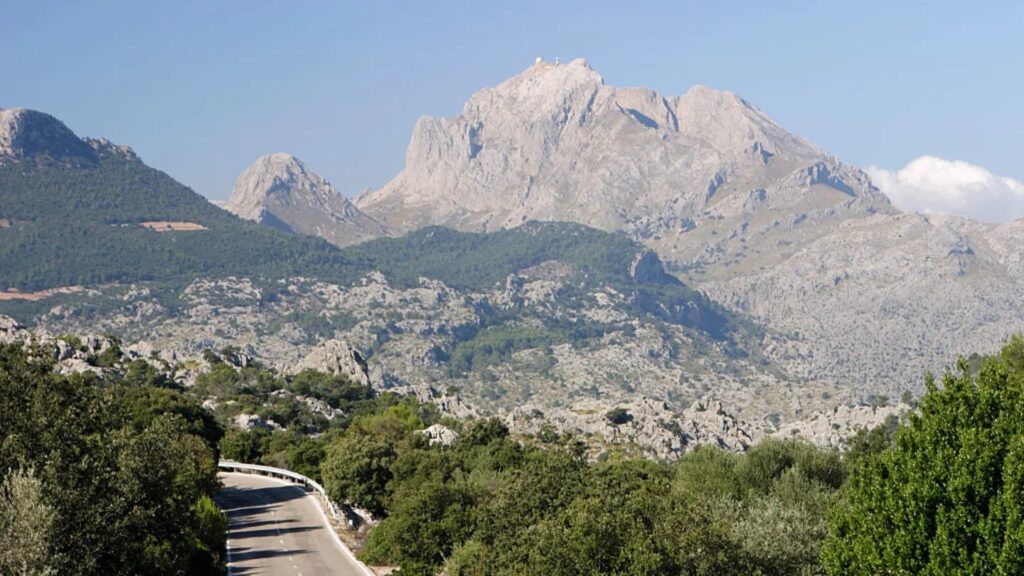
Puig Major — the highest mountain in Mallorca.
Mount Yamantau in Russia: A Restricted Zone and Military Secrets
Mount Yamantau (Bolshoy Yamantau) is one of the most mysterious peaks in Russia. It is located in Bashkortostan and is formally neither the highest in the country nor the most inaccessible. Although it is fair to note that it is the highest point of the Southern Urals. But climbing it is impossible: the territory around the mountain belongs to the closed administrative district of Mezhgorye and is under military control.
Since the late 20th century, Yamantau has been surrounded by rumors. According to one version, a massive underground complex is located inside the mountain — either a backup command center or a shelter in case of a global catastrophe. There are even claims that a railway runs directly into the mountain, but this cannot be seen from the nearest permitted peaks. In the 1990s, American intelligence even detected active construction in the area, which only intensified interest in the site.
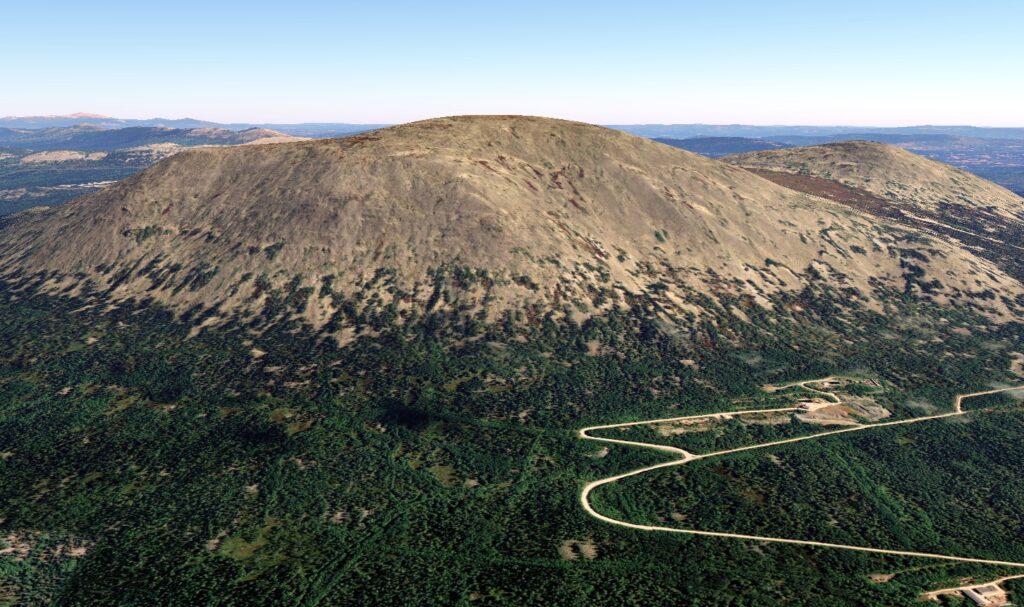
Bolshoy Yamantau — the highest peak of the Southern Urals, located in the Republic of Bashkortostan. Image source: russian7.ru
There is still no official information about what exactly is inside the mountain. Any attempts to approach Yamantau are intercepted, and the territory remains closed. Although there are some daring tourists who sneak in, but let’s keep that between us…
Uluru in Australia: Why Climbing Was Banned
Uluru (formerly known as Ayers Rock) is a massive sandstone monolith 348 meters tall in the middle of the Australian outback.