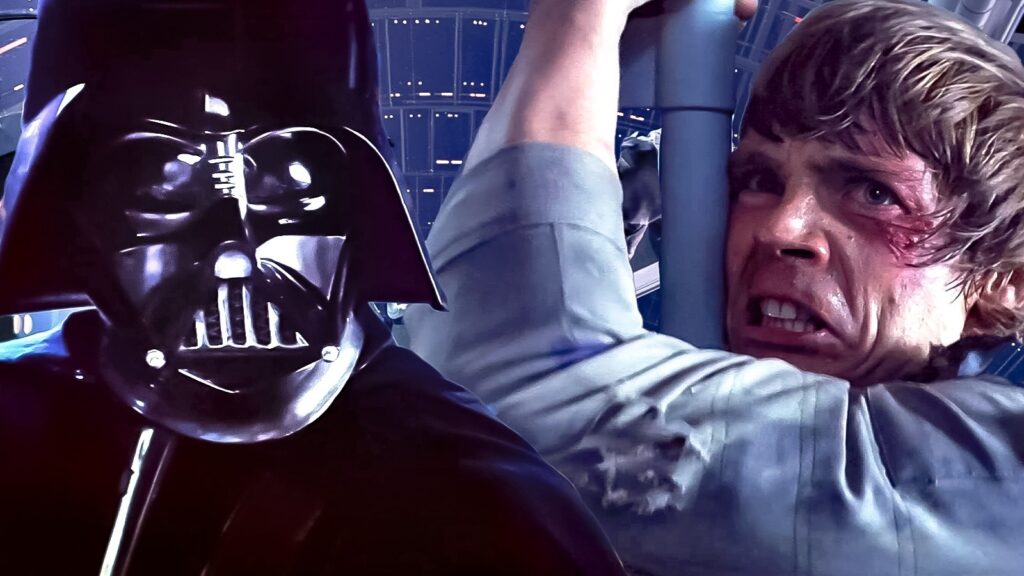
Darth Vader never said “Luke, I am your father” — here’s what he actually said
“Luke, I am your father” — probably the most widely quoted line from Star Wars. It’s been repeated in parodies, memes, and casual jokes for over forty years. The only problem is that Darth Vader never actually said it. In the film, the line sounds completely different — and this is perhaps one of the most striking cases where false memories and collective memory rewrote reality on their own terms.
What Darth Vader Actually Said to Luke in the Original ‘The Empire Strikes Back’
The scene in question takes place near the end of Episode V, which was released in 1980. Luke Skywalker is fighting Darth Vader, and the villain is trying to lure him to the dark side of the Force. Here’s how the dialogue actually goes:
“If you only knew the power of the dark side. Obi-Wan never told you what happened to your father,” Vader says.
“He told me enough! He told me you killed him!” Luke responds.
And then Vader delivers the line: “No. I am your father.”
There is no “Luke” at the beginning of the phrase. Vader starts with a short “no” — he is refuting Luke’s claim about the murder of his father, and then reveals the truth. The context of the dialogue makes the name unnecessary: both of them know who the line is directed at. Still don’t believe it? Watch the video.
By the way, this isn’t the only family surprise for Luke in the original trilogy. He later learns that Princess Leia, whom he had kissed, is his biological sister and also Vader’s daughter.
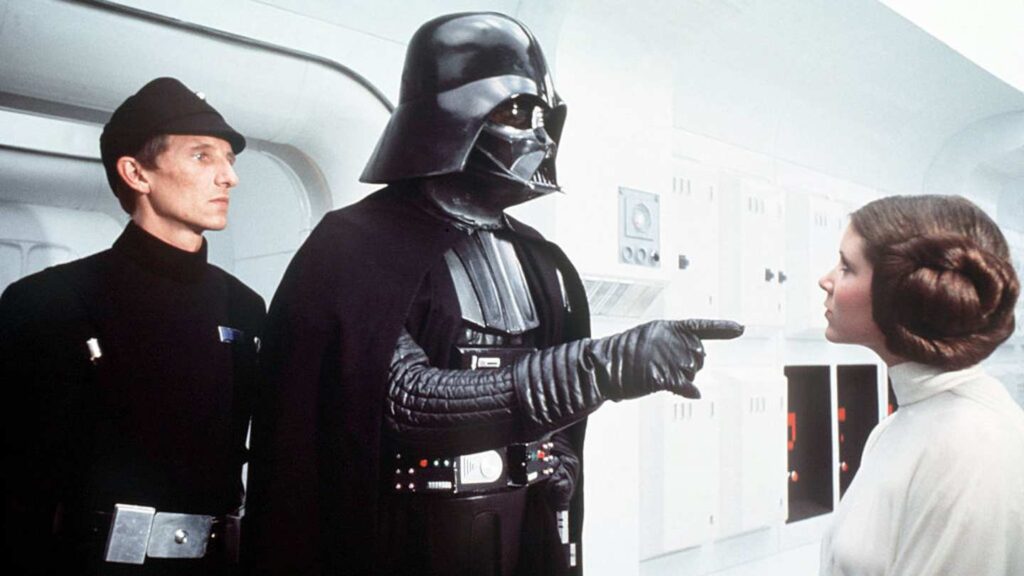
Darth Vader and Princess Leia in the film “Star Wars: A New Hope”
Why Everyone Remembers ‘Luke, I Am Your Father’: The Mandela Effect and False Memories
The distorted version of the quote is a classic example of the so-called Mandela Effect. This is a phenomenon in which a large group of people confidently “remembers” something that never actually happened. The name comes from the fact that many people were convinced that Nelson Mandela died in prison in the 1980s, when in reality he lived until 2013.
The same thing happened with Vader’s quote — the false version displaced the original and became so firmly embedded in popular culture that most people don’t even realize the mistake.
There are several reasons for this. First, because of Vader’s mask-distorted voice, the short “No” can sound similar to “Luke” to the ear. Second — and this is most likely the main reason — replacing “no” with “Luke” makes the quote self-contained. Without context, the phrase “No, I am your father” sounds confusing: no — in response to what? But “Luke, I am your father” instantly references Star Wars and requires no explanation. Convenience of retelling triumphed over accuracy.
Our memory sometimes “edits” recollections, making them more convenient to retell
Some fans have become so accustomed to the “incorrect” version of the line that they post re-edited clips where Vader seemingly does say “Luke.” Fact-checkers at Snopes even specifically investigated this question and confirmed: in the original film, the line begins with the word “no,” not with the name.
Why False Quotes Become More Popular Than Originals
The story of Vader’s line clearly demonstrates how human memory works. We don’t remember exact words — we remember meaning and emotion. And when we retell something, we unconsciously simplify and adapt it so the listener immediately understands the context. Each retelling moves the quote a little further from the original, and after several million repetitions, the “convenient” version completely replaces the real one.
This applies to more than just Star Wars. Sherlock Holmes never said “Elementary, my dear Watson” in Arthur Conan Doyle’s original stories. And the line “Mirror, mirror, on the wall” from Disney’s Snow White actually goes “Magic mirror on the wall.” The pattern is the same: popular culture creates its own version, and that version wins.
So, are you already on your way to rewatch it?