Geneticists have identified several stretches of DNA in chihuahuas that match the genome of wild coyotes, according to a newly published study. The finding sets the world’s smallest dog breed apart from the vast majority of modern breeds, which trace their ancestry to European dogs. Chihuahuas and another Mexican breed, the hairless Xoloitzcuintli (Xolo), were already suspected of carrying traces of dogs that lived in the Americas before Columbus. The coyote link adds a new and unexpected detail to that picture, although researchers still cannot say when or how the mixing happened.
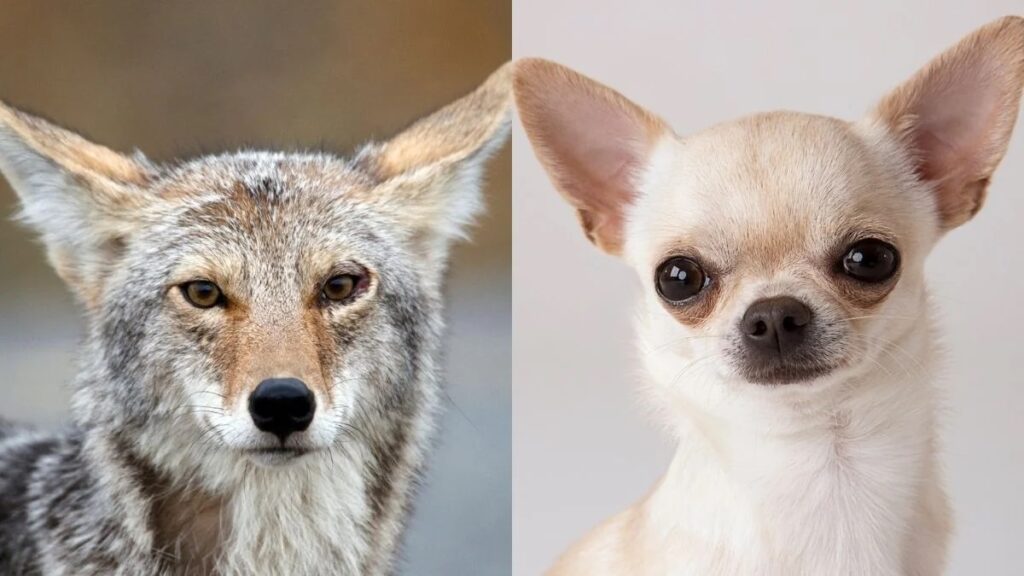
Coyote genes were found in chihuahua DNA: how did they get there?
What you need to know
- Several segments of the chihuahua genome match coyote DNA, a result that emerged while US scientists were testing new software that traces the origin of each fragment of an animal’s genome.
- The same analysis confirmed the North American roots of both chihuahuas and Xolos; more than 4 percent of the Xolo genome comes from Arctic dogs that arrived with the first people on the continent.
- Researchers do not yet know when the coyote admixture occurred, whether it was accidental or deliberate, or which traits (if any) the shared DNA affects.
- The chihuahua’s tiny size is attributed to human selective breeding, not to coyote ancestry, since even a coyote weighs many times more than the largest chihuahua.
A chance discovery during a software test
Nobody set out to find a wild animal in the chihuahua. Scientists in the United States were trialing a new computer program that compares the genomes of many animals at once and determines the source of each specific piece of DNA. In simple terms, it splits the genetic code into fragments and labels each one by origin: European dogs, Arctic dogs, wolves, or something else.
DNA is well suited to this kind of work. Each generation passes it on almost unchanged, so traces of ancient crossbreeding persist in the genome for thousands of years. Reading that record by hand is impossible because of its sheer length, but modern algorithms can handle it. It was during a test run that the program produced its surprising result: several segments of the chihuahua genome matched coyote DNA.
The coyote is a wild relative of the wolf, though noticeably smaller. It lives across North and Central America, adapts well to living alongside people, and is known for its drawn-out howl. Mexico, the chihuahua’s homeland, lies within its range, so an encounter between dog and coyote is geographically plausible.
Two Mexican breeds preserve traces of pre-Columbian America
The coyote finding fits with what was already suspected about the chihuahua. When Europeans brought their dogs to the Americas, local dog populations were almost entirely absorbed by them. It was long thought that virtually nothing remained of the ancient Indigenous dogs in modern genomes.
Chihuahuas and Xolos turned out to be two rare exceptions. The new program confirmed their North American origins and refined the details: the chihuahua’s lineage includes a coyote, while more than 4 percent of the Xolo genome comes from Arctic dogs, the ones that once crossed into the continent with the first humans. In effect, both breeds act as a time capsule, preserving fragments of DNA from dogs that lived in the Americas before Europeans arrived.
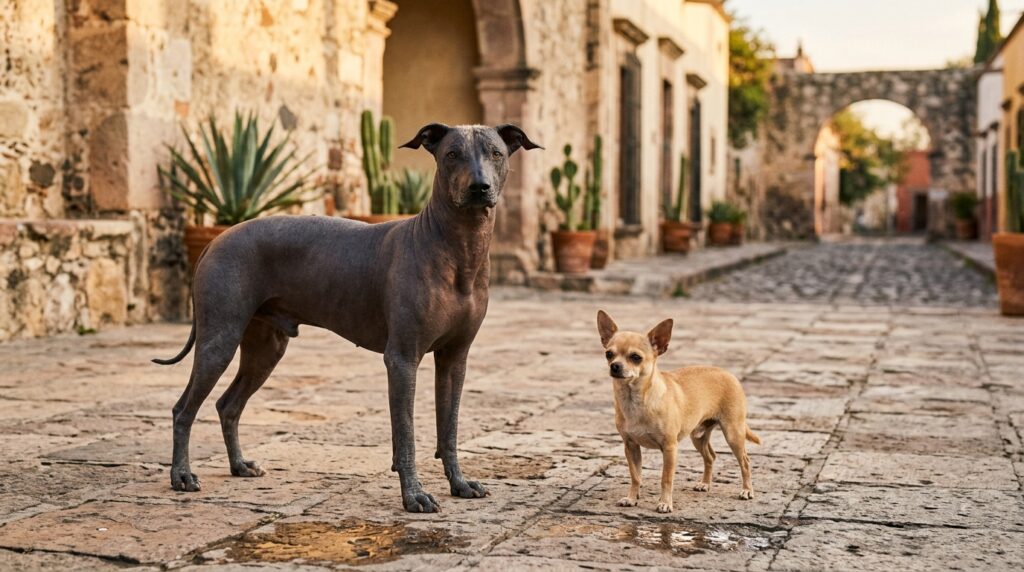
A chihuahua and a Xolo
When the coyote entered the picture remains unknown
The most intriguing question is one the scientists cannot yet answer: when exactly the coyote left its mark on the chihuahua genome. Earlier work hints that it happened before Columbus arrived, but there is no precise date. It is also unclear whether the encounter was accidental or whether people deliberately bred a dog with the wild animal.
In nature, such crosses happen without human involvement. Coyotes and wolves occasionally interbreed on their own, especially where offspring benefit from inheriting wolf-like behavior. So it is entirely possible that someone’s dog simply ran off into the night in response to a call from the brush, and its puppies later spread through nearby settlements. But this is only one hypothesis, and there is no evidence for it yet.
The tiny size came from people, not from the predator
The chihuahua’s famously small stature clearly did not come from the coyote. Although smaller than a wolf, a coyote still weighs many times more than the largest chihuahua. Shrinking a dog to the size of a cat could only have been achieved by humans selecting the smallest puppies generation after generation.
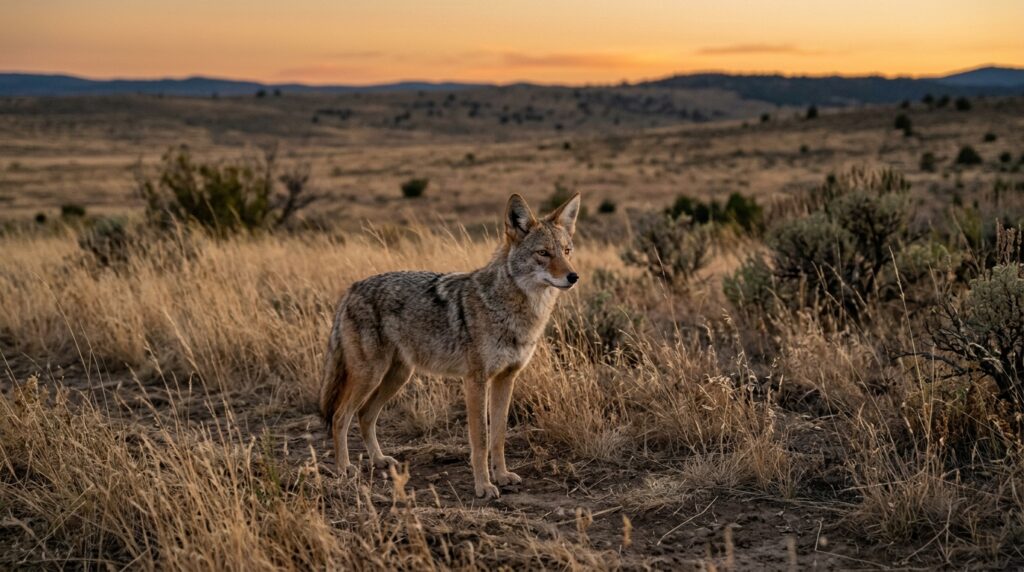
A coyote standing in grassland at sunset
There is evidence that small dogs lived among the peoples of Mexico before the Spanish arrived. Whether those dogs are directly related to modern chihuahuas, however, is unknown: their genetic traces have not yet been compared with the breed. Artificial selection is considered the most likely explanation for the chihuahua’s size, but the details remain to be worked out.
What chihuahuas might have inherited from a wild ancestor
Owners may already be wondering whether the coyote explains their pet’s temperament. Chihuahuas are indeed unlike typical toy breeds: they are independent, self-assured, and pay no attention to their size when defending their owner from a much larger dog. Their large ears and expressive howl also bear a suspicious resemblance to the coyote.
It is important not to overreach, though. Scientists have not yet determined which chihuahua traits, if any, came from wild relatives, or whether the shared DNA segments are responsible for anything visible at all. Attributing the breed’s feisty character to the coyote is tempting, but for now it is an appealing guess rather than an established fact.
The next step for geneticists is to work out what the identified segments do and when they entered the genome. If that encounter can be dated, the chihuahua could become one of the few living witnesses to what the dogs of the Americas were like before Europeans arrived.