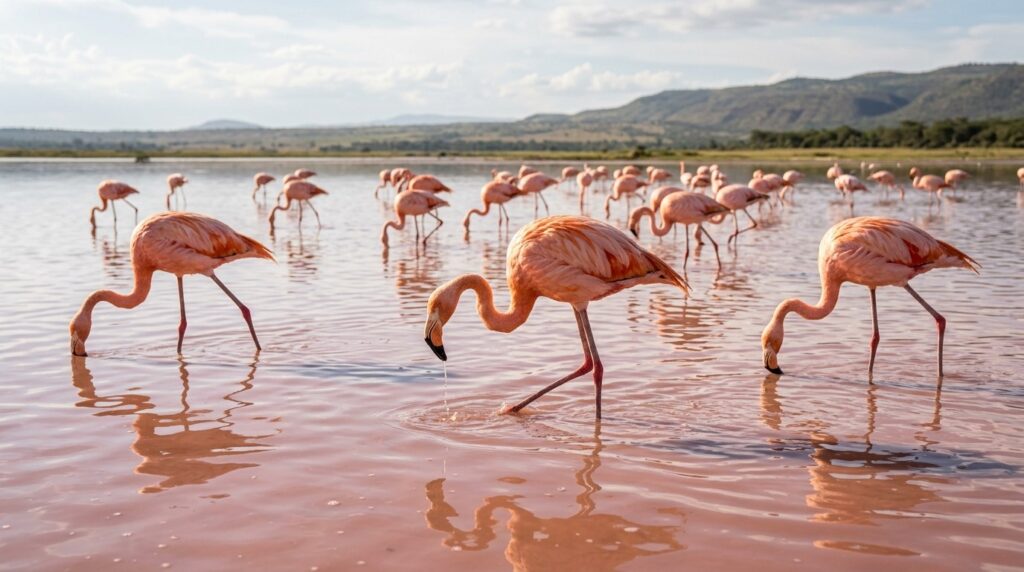
Flamingos turn pink because of their food — they aren’t naturally that bright
You’re looking at a flock of flamingos. They’re pink. So pink that it seems like it’s their natural color, like a bullfinch’s red breast. But no. Flamingo chicks are grayish-white, like dirty little chickens. It’s only by eating shrimp and algae that they turn a delicate shade of pink. Once you learn this, the natural follow-up question is: if you fed them blue food, would they turn blue? Let’s find out what science has to say about this.
Why Flamingos Are Pink
All six species of flamingo live in wetlands across the Americas, Europe, Asia, and Africa. Chicks hatch covered in grayish-white down and stay that way for quite a long time. The pink color only develops after a couple of years, following several molts when old feathers are replaced by new ones. This is described by the authors at Science Focus.
Flamingos are filter feeders, meaning they strain water through their beaks, extracting algae, brine shrimp, and small crustaceans. Algae contain carotenoid pigments. These are the same substances that make carrots orange and tomatoes red. The shrimp eat the algae and accumulate carotenoids, and then flamingos eat the shrimp and get a double dose of pigment.
When a flamingo pair is raising a chick, the adult birds noticeably pale. This is because they transfer a significant portion of their pigments to their offspring through food, and their own feathers fade.
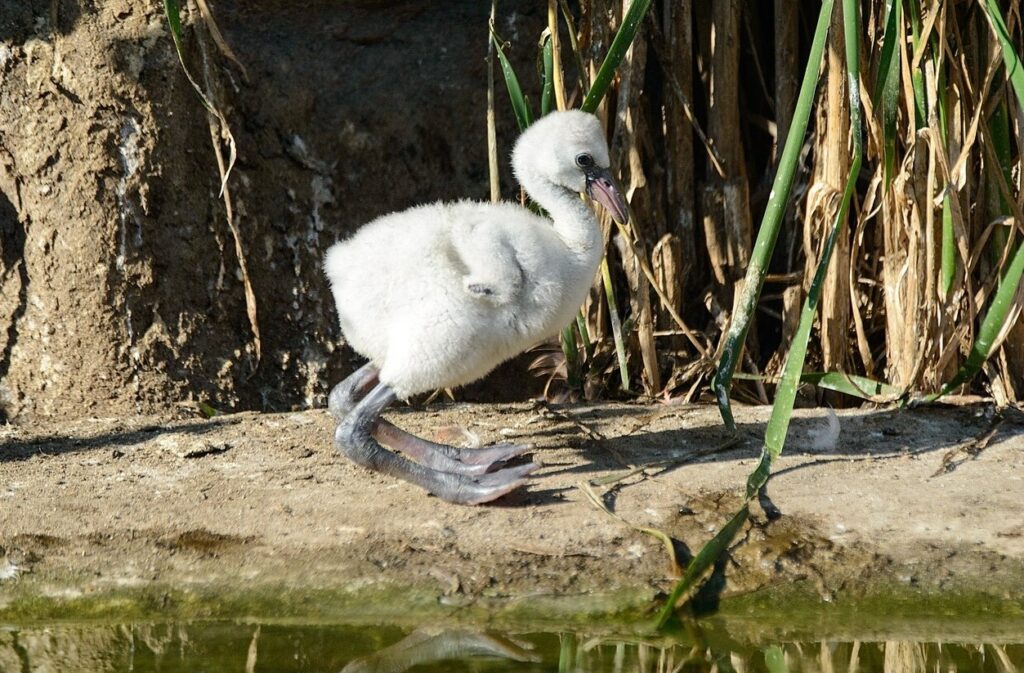
Flamingo chick. Image source: wikipedia.org
How Flamingo Feathers Turn Pink
The pigment’s journey from shrimp to pink feather is a complex biochemical pathway. After food is digested, carotenoids are absorbed through the intestinal wall and enter the bloodstream. The flamingo’s liver breaks down the food into its components, and carotenoids are prioritized. Canthaxanthin and beta-carotene are not destroyed but are deposited in growing feathers, gradually coloring them in shades from pale pink to deep crimson.
Moreover, flamingos use a kind of cosmetics. They apply a preen gland secretion to their feathers, which is also saturated with carotenoids. This intensifies the color and helps attract mates during the breeding season. The brighter the bird, the healthier and more successful it is at finding food — and therefore more attractive to the opposite sex.
In zoos, flamingos cannot obtain carotenoids from wild food, so they are given special pellets with canthaxanthin. Without this supplement, captive birds would simply lose their famous color.
Why Blue Birds Aren’t Actually Blue
Carotenoids only produce a warm palette, which includes red, orange, yellow, and their shades. Blue color in the animal world works on an entirely different principle. It is, in fact, the rarest color in nature.
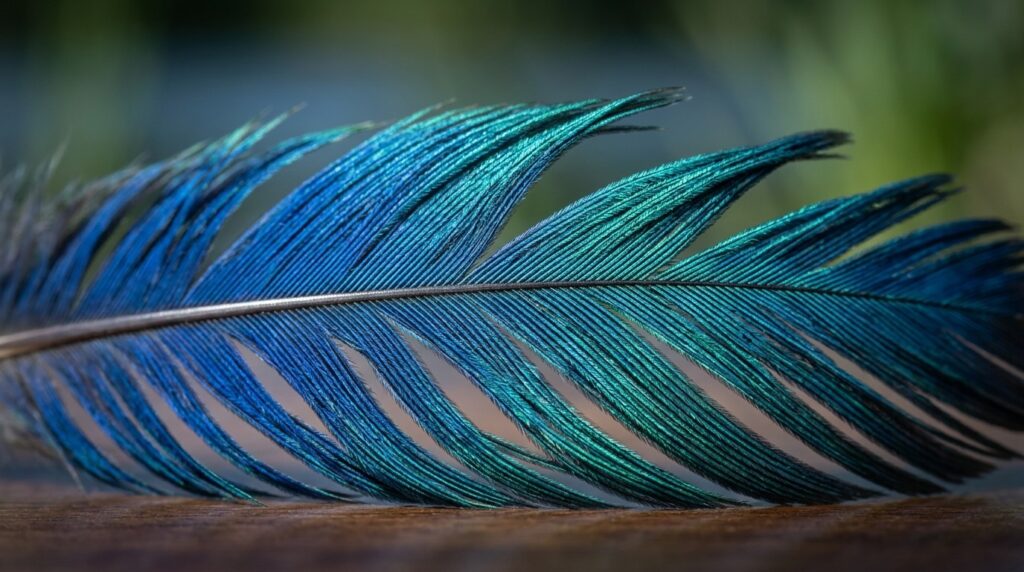
A kingfisher’s blue feather is the result of light refraction, not pigmentation
Blue pigments in birds and mammals virtually don’t exist. The blue feathers of jays, kingfishers, and indigo buntings are not dye — they’re an optical illusion. Inside the feather there are nanostructures made of keratin with air pockets. When light hits such a structure, short blue wavelengths are reflected while long wavelengths (red, yellow) are absorbed by a layer of melanin. We see blue, but if you crush such a feather, all that remains is brown dust.
This is what’s known as structural coloration — essentially the same physical effect that makes the sky appear blue.
Can You Turn a Flamingo Blue
If pink color comes from food, it’s logical to assume that giving a flamingo blue pigment would turn its feathers blue. But biology doesn’t work that way, and a definitive answer is given on the Discover Wild Life website.
Any substance that is not a carotenoid is simply broken down in the stomach and excreted from the body. Blue or green food coloring won’t make it into the feathers — it will be digested and eliminated without leaving a trace.
The thing is, flamingos have a specific biochemical mechanism that selectively captures carotenoids from food and channels them into feathers. The liver, the bloodstream, the growing feather cells — this entire chain is fine-tuned for a specific group of fat-soluble pigments, and evolution has been refining it for millions of years. For any other dyes, the conveyor is simply closed.
And as mentioned above, blue color in nature is not chemistry but physics. It arises from the microstructure of the feather. So feeding a flamingo something blue to get a blue bird simply won’t work — you would have to redesign the structure of every feather at the molecular level.
Why There Are No Blue Mammals in Nature
Interestingly, there is not a single truly blue mammal in nature — no blue fur or skin colored by blue pigment. The blue hues on mandrill faces or the skin of certain monkeys are also structural coloration, arising from light scattering in collagen fibers of the skin.
But there was indeed a blue-tinted animal in the world — the bluebuck (Hippotragus leucophaeus). This antelope with silvery-bluish hide lived in South Africa and went extinct around 1800 due to hunting by colonists. Very recently, in April 2026, Colossal Biosciences announced plans to resurrect the bluebuck using genome editing. It is the sixth species in their program to revive extinct animals, alongside the woolly mammoth.
However, even the bluebuck’s fur was not truly blue in the pigment sense. The bluish appearance arose from the optical properties of the hair fibers, not from a blue dye.
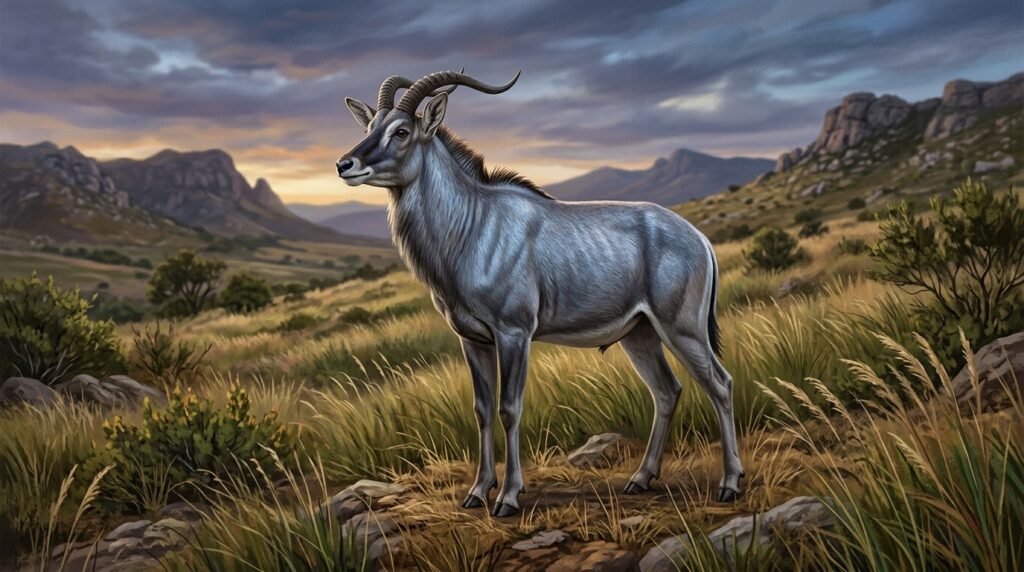
Artistic reconstruction of an extinct antelope with an unusual silvery-blue coat
What Flamingo Color Tells Us About Animal Coloration
The flamingo story nicely illustrates how differently nature creates colors. Warm shades like red, orange, pink, and yellow are usually produced by pigments: carotenoids, melanins, porphyrins. Cool shades like blue and green are almost always the result of structural coloration — physics, not chemistry.
This is precisely why you can only repaint a flamingo through diet within the carotenoid palette — from pale pink to deep red. Beyond that boundary lies biochemistry that the bird simply doesn’t possess.
And this, by the way, is a good reason to think about how deceptive our perception of color can be. We see a blue jay and are certain that the feather is dyed blue. But hold it up to the light, and you’ll find plain brown. Color in nature is not just about molecules. Far more often it’s light, geometry, and evolutionary engineering honed over millions of years.