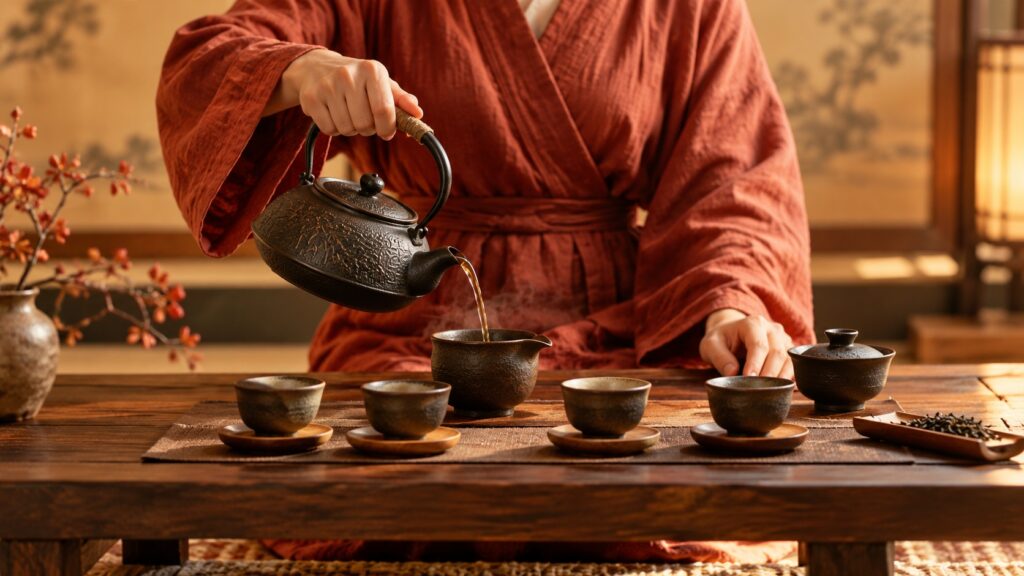
Close-up of a tea ceremony
Strong tea can noticeably change how you feel, but there is no evidence of a special “tea high.” The sensations people describe as “tea drunkenness” can be explained by caffeine, L-theanine, strong brewing, a relaxed setting and expectations. Unpleasant symptoms such as dizziness, trembling or nausea are more likely a sign of too much caffeine than of a “strong” or “high-quality” tea.
The author of the original article reports frequently coming across videos in which people say tea makes them feel intoxicated. These videos describe relaxation and mild dizziness and present Chinese teas as a substitute for beer and other alcoholic drinks. The author had tried various pu-erhs and oolongs without noticing anything similar. The article examines whether the effect is real, self-suggestion or something in between.
What you need to know
- “Cha zui” (tea drunkenness) is an everyday Chinese expression, not a recognized scientific category of intoxication.
- A 2025 systematic review in Nutrition Reviews examined 50 randomized trials. It found that caffeine combined with theanine may improve some measures of attention, most clearly within the first two hours. Effects on mood were uncertain.
- Many of those trials used isolated compounds rather than brewed tea, so the results cannot be directly applied to a cup of a particular pu-erh.
- The FDA cites about 400 mg of caffeine a day as a guideline for most healthy adults, though some people feel unwell on far less.
“Cha zui”: what the term means in Chinese tea culture
Chinese tea culture has the expression “cha zui,” meaning “tea drunkenness.” It describes an unusual state that sometimes follows strong tea, especially when a lot of it is consumed. The stories are most often linked to pu-erh. After several cups, people say they feel light, their head clears and their mood lifts. Some compare it to being slightly tipsy, but without losing control.
Descriptions vary widely. Some people say they calm down, while others feel a surge of energy and mental clarity. Some notice mild dizziness, warmth in the body or a sense that the world around them has shifted slightly.
Science does not treat tea drunkenness as a distinct type of intoxication. It is a colloquial label for a cluster of sensations. Those sensations may still be real, however, because tea contains substances that act on the nervous system.
Caffeine stimulates, while theanine may calm
Two substances matter most. The first is caffeine, which is found not only in coffee but also in green and black tea, oolong and pu-erh. It is sometimes called theine, but it is the same substance. Caffeine interferes with adenosine, a compound that makes us feel sleepy. For a while, the brain registers fatigue less readily, so people feel more alert and find it easier to concentrate.
Caffeine has a downside, too. In excess, it can cause anxiety, trembling and a pounding heartbeat.
The second substance is L-theanine, an amino acid found in tea leaves. Unlike caffeine, it is not a stimulant. According to some studies, theanine may help people stay calm and hold their attention slightly better. Together, they produce what tea enthusiasts call “relaxed alertness.” Caffeine wakes you up, while theanine may soften that stimulation. But theanine should not be expected to reliably cancel out caffeine’s unpleasant effects, since much depends on the dose and the individual.
A review of 50 studies supports effects on attention, not a “high”
In 2025, the journal Nutrition Reviews published a systematic review that gathered and compared the results of many studies on how tea and its components affect the brain. The authors examined 50 randomized trials, meaning experiments in which participants are assigned to groups at random. Data from 15 of them were pooled into a combined statistical analysis.
The review found that caffeine together with theanine may indeed improve certain measures of attention and performance on mental tasks. The effect was most noticeable during the first two hours. The picture for mood was less clear: some results pointed to improvement, but the margin of error was too large.
There is an important caveat. Many of the experiments gave participants isolated compounds rather than ordinary brewed tea. That means the data do not show that a cup of a specific pu-erh would have the same effect. Science supports the idea that tea’s components affect alertness and attention. There is so far no evidence of a special “tea high” distinct from the known effects of these substances.
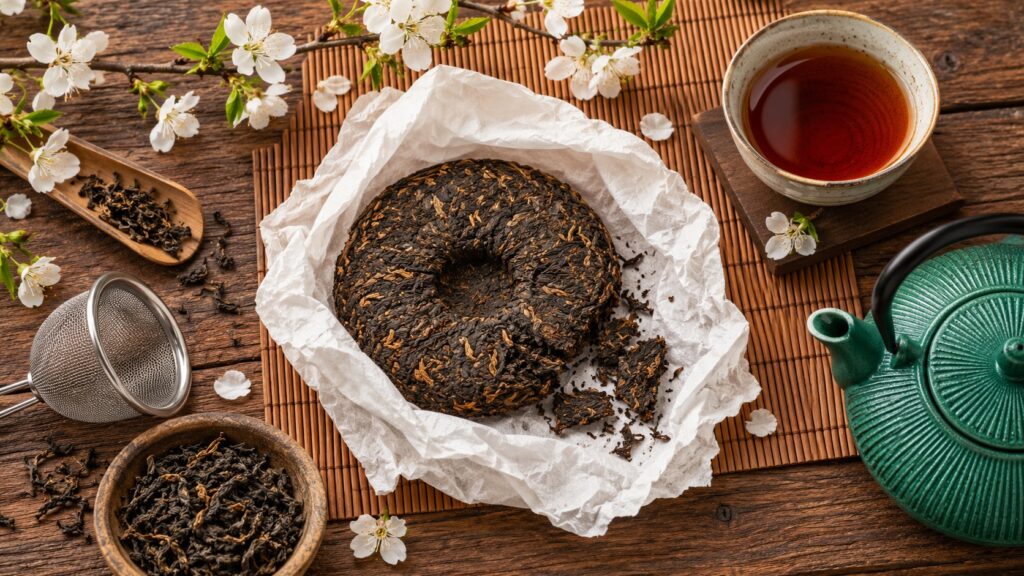
Pressed tea on a table
Strong brews, repeated infusions and expectations
Pu-erh is a Chinese tea that undergoes special processing and can be stored for years. It is most often pressed into dense cakes.
Sellers sometimes claim that good pu-erh produces euphoria, but there is no scientific evidence for this. There are simpler explanations:
- pu-erh is often brewed very strong, so the drink can contain a fair amount of caffeine;
- Chinese tea is often prepared in repeated infusions, with the same leaves steeped in hot water many times, so small cups over a long session can add up to a noticeable dose of caffeine;
- the setting is relaxing: a quiet room, no one in a hurry, a pleasant aroma.
Expectations also play a role. A person who anticipates an unusual effect is more likely to notice one. So the answer to “is it self-suggestion or not?” is both: the chemistry of the drink, rest, atmosphere and mindset all combine. At the same time, there is no strong reason to believe that any pu-erh affects the brain more powerfully than ordinary black or green tea.
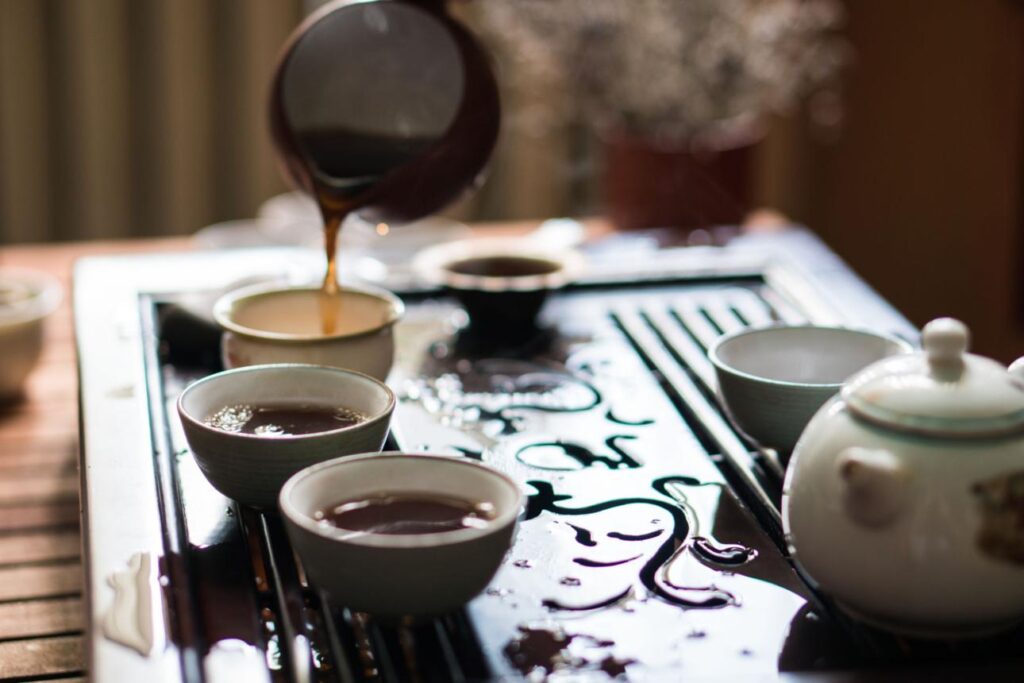
Tea ceremony: tea being poured from a teapot into bowls on a tray
Dizziness and nausea point to too much caffeine
Sometimes “tea drunkenness” refers not to a pleasant state at all, but to dizziness, weakness, shaky hands or nausea after strong tea. This is especially common when drinking tea for a long time on an empty stomach. It is a sign not of a “strong” or “high-quality” tea, but of an excessive dose of caffeine.

A person in a robe pouring tea from a gaiwan into cups
According to the FDA, the US agency responsible for food and drug safety, too much caffeine can cause:
- a rapid heartbeat and a sensation of irregular heartbeats;
- anxiety, nervousness and jitters;
- nausea and stomach discomfort;
- headache;
- sleep problems.
For most healthy adults, the FDA cites a guideline of about 400 mg of caffeine per day, though some people feel unwell on much smaller amounts. On average, 355 ml of green tea contains about 37 mg of caffeine and black tea about 71 mg, but actual brews can vary considerably. The original article advises that if trembling, palpitations or nausea start after drinking tea, it is better to stop, rest and avoid further caffeine that day. Chest pain, fainting or a sudden worsening of symptoms require urgent medical help.
The same tea affects people differently
The author of the original article concludes that this explains why they personally noticed nothing unusual. Someone who regularly drinks a lot of coffee may barely feel tea, while a person who rarely consumes caffeine will feel it much more strongly. Sleep, fatigue, the amount consumed and the setting of the tea session all play a role.
Overall, tea can genuinely change how people feel and how well they focus. No special “tea energy” is needed to explain it: caffeine, theanine and a calm environment are enough. A pleasant sense of alertness after a couple of cups is achievable, but deliberately chasing “intoxication” with liters of strong brew is not advisable. Stories about pu-erh that “disconnects you from reality” are best treated with skepticism.