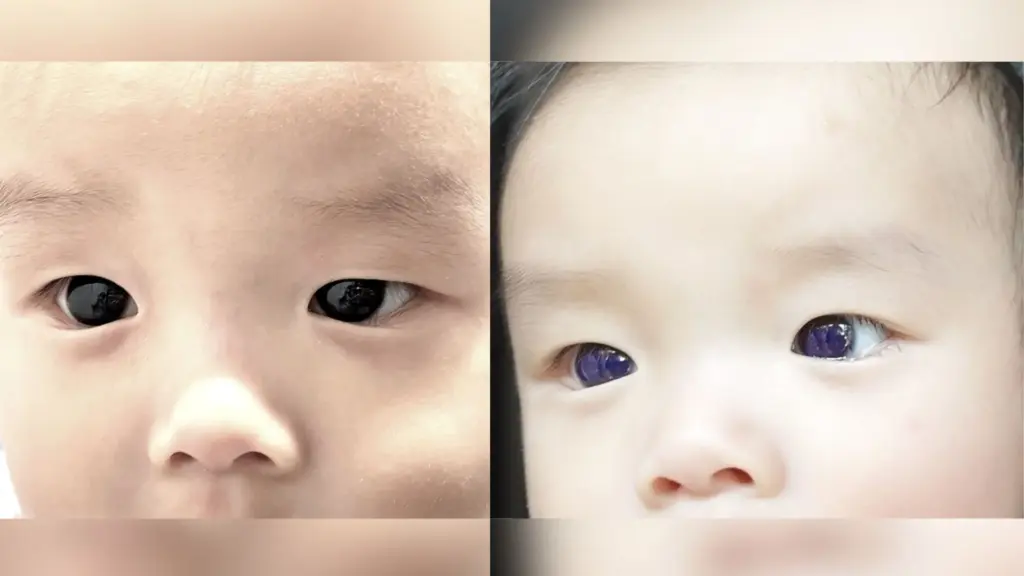
Shocking medical case: baby’s eyes turned blue after COVID treatment
The brown eyes of a six-month-old boy from Thailand turned bright blue after he was prescribed an antiviral drug with the active ingredient favipiravir. Normally, eye color depends on melanin, but here doctors encountered an entirely different mechanism. This is the first documented case of such a side effect occurring in a child, and it has made doctors reconsider the safety of the medication for young patients.
Why the Baby’s Eyes Turned Blue After Medication
The infant was brought to the hospital with a fever and cough that had lasted about a day. Doctors performed a COVID-19 test, and the result came back positive. The child was prescribed a broad-spectrum antiviral drug used to treat influenza, Ebola fever, and a number of other viral infections, with the active ingredient favipiravir. According to the treatment plan, on the first day of hospitalization, the child was to receive favipiravir in tablet form, followed by four more days in liquid form.
But just 18 hours after the start of treatment, the mother noticed something alarming. The boy’s eyes, normally dark brown, had taken on a bluish-violet hue. The corneas — the transparent dome-shaped membranes covering the front of the eyes — appeared blue in sunlight. In short, the cornea is needed for refracting light, so any change in its transparency immediately looks alarming. Notably, no discoloration of the skin, nails, or hair was observed.
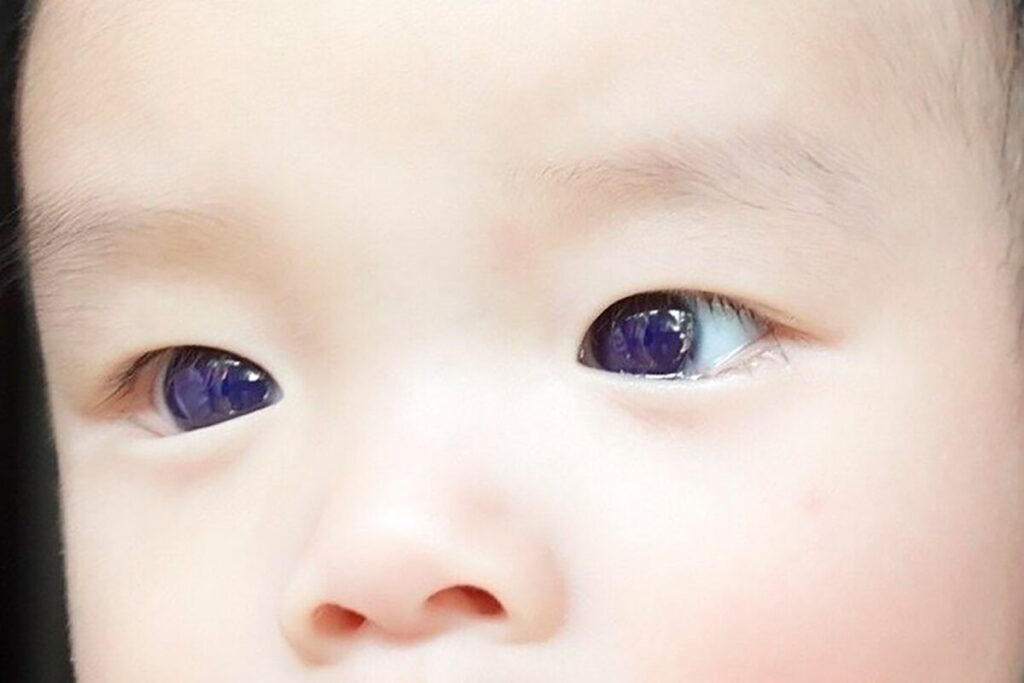
The baby’s eye color changed after being prescribed an antiviral drug.
What Is Favipiravir and How Does It Work
Favipiravir is a nucleotide analog that blocks the enzyme RNA-dependent RNA polymerase of viruses. In simpler terms, it “tricks” the virus: it integrates into its genetic material and prevents it from replicating. Other COVID-19 pills work with similar logic, interfering with the virus’s ability to make copies of itself. The drug was approved in Japan in 2014 for the treatment of pandemic influenza and was later applied to other viral infections. In 2020, favipiravir was first used against SARS-CoV-2 in Wuhan, the epicenter of the COVID-19 pandemic, and several countries subsequently granted it emergency use authorization.
In Thailand, according to the Ministry of Health’s 2022 national guidelines, favipiravir is the primary antiviral agent for treating COVID-19 in children with mild to moderate disease. Side effects do occur, but are usually not too serious: the most common ones are elevated uric acid levels, diarrhea, and decreased neutrophil count (a type of white blood cell), which together account for about 20% of all adverse reactions.
However, corneal discoloration is an entirely different story. This is not the first time unexpected vision-related side effects have been found with popular medications. The first case of this unusual favipiravir side effect was described in 2021 by Indian doctors from Goa. That case involved a 20-year-old man, but it had never before been documented in a child.
Why Favipiravir Turns Eyes Blue
The unusual eye color change may be related to how the body breaks down the antiviral drug, releasing fluorescent chemical compounds that accumulate in the cornea. To understand the mechanism, it’s worth remembering that intraocular fluid (aqueous humor) is essentially an ultrafiltrate of blood plasma. The active phosphorylated metabolite of favipiravir, reaching high concentrations in plasma, can penetrate into the intraocular fluid and be reflected in the cornea, giving it a characteristic bluish tint and fluorescence.
This hypothesis is supported by other observations. In addition to corneal discoloration, favipiravir causes fluorescence of human hair and nails under ultraviolet light. Studies have shown a linear relationship between the concentration of favipiravir’s active metabolite in blood plasma and the intensity of the glow — the more drug in the blood, the brighter the effect.
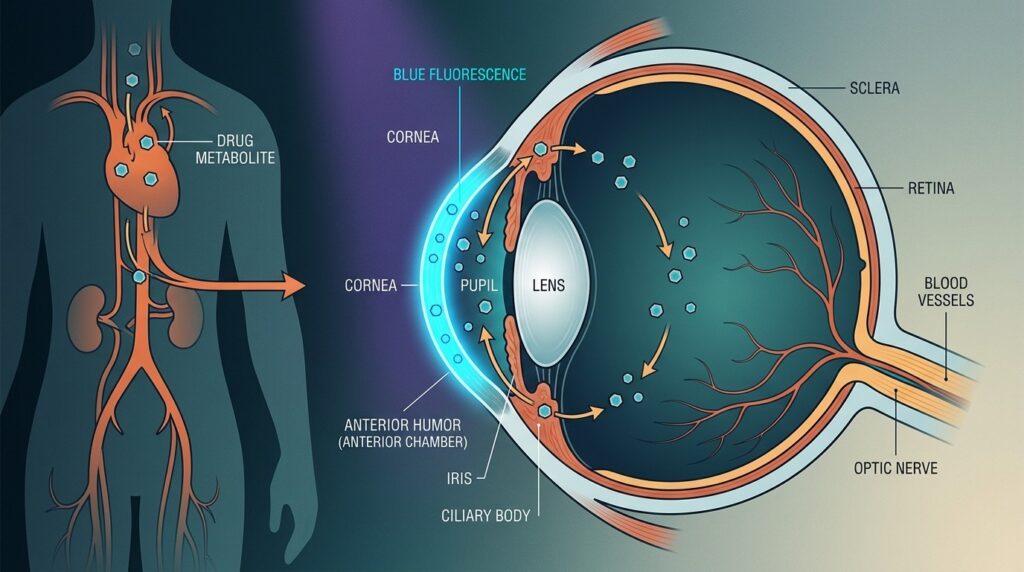
Drug metabolites penetrate intraocular fluid and give the cornea a blue tint
It’s important to note: the exact mechanism of this phenomenon has not yet been definitively established and requires further research, including analysis of intraocular fluid composition.
Why the Favipiravir Effect Lasts Longer in Children
After three days of favipiravir therapy, the child’s COVID-19 symptoms improved, and on the fifth day, the pediatrician recommended discontinuing the drug. The boy’s corneas returned to their normal color five days after stopping the medication.
For comparison: the 20-year-old man from India saw his corneas return to their previous color the very next day after stopping favipiravir. The difference in recovery time was notable, and doctors proposed several possible explanations.
The doctors did not know the exact reason for the delay but suggested that the patient’s age and the drug dosage could have been factors. Additionally, it’s possible that the infant was urinating less frequently than usual — a potential side effect of favipiravir, which raises uric acid levels in the body — and therefore the compounds affecting eye color remained in the tissues longer. In young patients on favipiravir, elevated uric acid levels are more commonly observed, which may be associated with reduced urine output.
Two weeks later, an ophthalmologist examined the child’s eyes and confirmed they looked completely normal: the cornea was transparent with no bluish tint. No fluorescence in the cornea was detected either.

Doctor examining baby’s eyes at the hospital
First Case of Eye Color Change in a Child
Although this child’s case is not the first example of favipiravir causing corneal discoloration in humans, it is the first documented case of such an effect developing in a pediatric patient.
While favipiravir remains the primary oral antiviral for children with COVID-19, doctors still don’t know how frequently such a reaction may occur, whether it could somehow affect the cornea in the future, and what other possible long-term consequences there might be. New observations are needed for answers. The takeaway here is: even widely used medications can produce surprises, especially when prescribed to children.