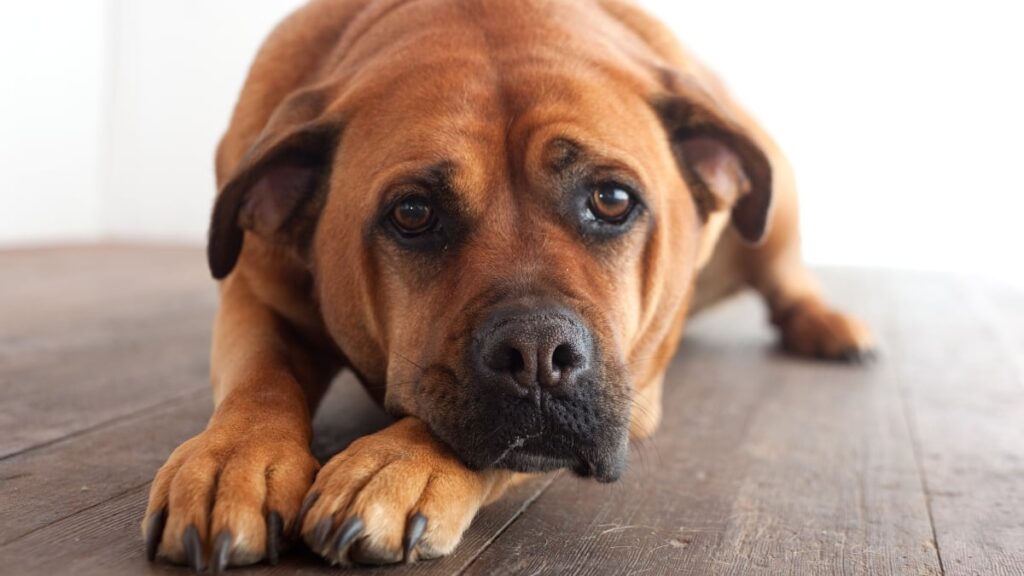
How to tell if your dog is in pain: signs we often miss
We like to think we know our dogs inside and out and can easily read their emotions. If the dog looks sad, whines, or limps — something must be wrong. But a new study reveals something unexpected: even experienced dog owners miss subtle pain signals in their own pets. There are 17 of them, and not all are obvious.
How Owners Recognize Pain in Dogs: Research Findings
Scientists from Utrecht University conducted an online survey involving 530 dog owners and 117 people who don’t own dogs. Participants were given a list of 17 types of behavior and asked to rate how much each one might indicate pain. An important detail: all 17 items on the list are indeed associated with pain.
Obvious signs — limping, paw guarding, reluctance to play — were correctly identified by most participants. But when it came to less noticeable signals, things were worse. Yawning, lip and nose licking, increased blinking, and gaze aversion were not associated with pain by anyone — neither owners nor non-owners.
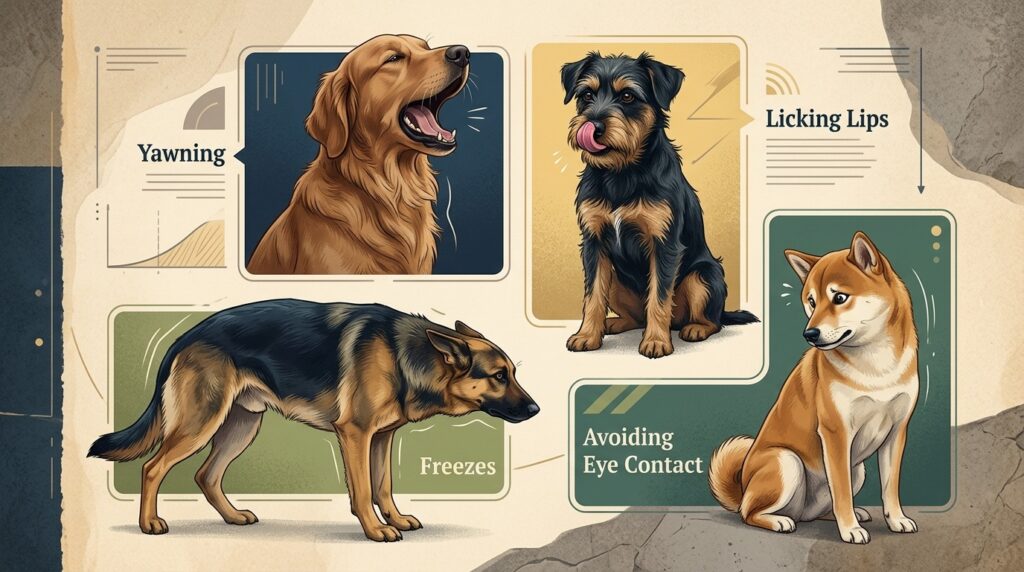
Many pain signals look like normal dog behavior
Interestingly, participants without dogs were actually slightly better at recognizing certain signs — for example, freezing in place and turning the head away. The researchers suggest that dog owners gradually get used to their pet’s behavior and begin to perceive these signals as normal.
Why Dogs Hide Pain and Don’t Show Obvious Signals
It’s important to understand one thing here: dogs won’t complain about pain. It’s an evolutionary mechanism. In the wild, an animal that openly displays weakness becomes an easy target for predators. That’s why dogs, like many other species, instinctively mask discomfort.
If the injury is acute — such as a cut paw or a fracture — the dog will most likely whine or cry. But with chronic pain (arthritis, dental problems, internal inflammation), signals often come down to barely noticeable behavioral changes. These are exactly the ones we most often miss because they look like ordinary dog habits.
People are generally decent at reading basic animal emotions — fear, joy, anger. But when it comes to pain, anxiety, or frustration, our intuition works much worse.
Signs of Pain in Dogs: 17 Signals That Are Easy to Miss
The study lists 17 behavioral signals, each of which may indicate that a dog is in pain. Here they are:
- Change in character or mood
- Careful guarding or lifting of a paw
- Mood swings
- Decreased interest in play
- Turning the head or body away
- Freezing in place
- Licking surfaces
- Lip and nose licking
- Frequent yawning
- Sniffing the air
- Increased blinking
- Excessive grooming (licking fur)
- Frequent scratching
- Changes in coat (texture, how it lies on the body)
- Changed gaze or facial expression
- Decreased activity
- Withdrawal, reluctance to interact
Note: most of these don’t look alarming. The dog yawned — so what? Licked its nose — it happens. But if such actions become more frequent or appear without an obvious reason, it’s worth paying closer attention: sometimes even behind seemingly strange behavior there may be hidden health problems.
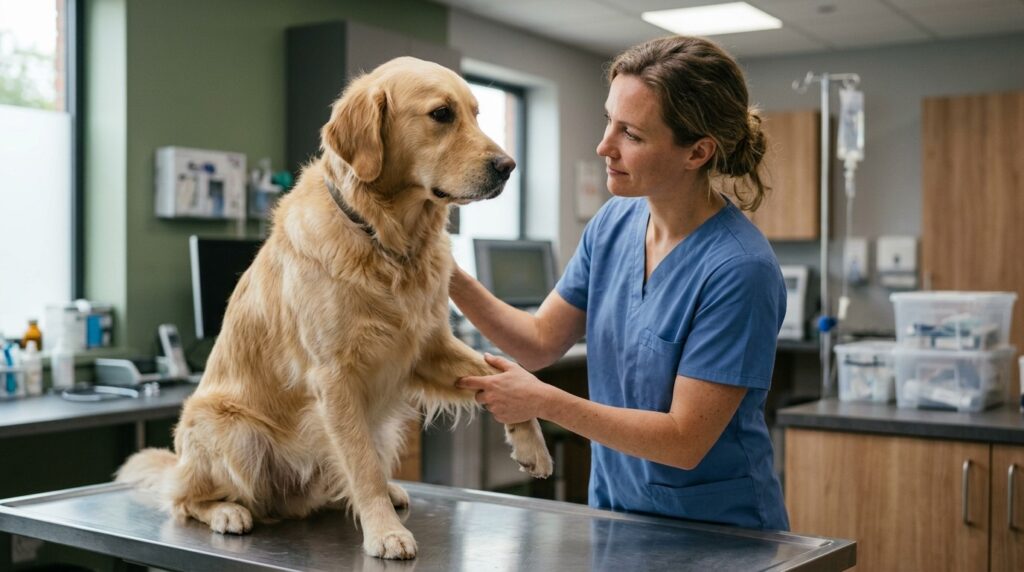
If you suspect your dog is in pain, consult a veterinarian
Does Owner Experience Help Recognize Pain in Dogs?
The study included another phase: participants were described three cases involving dogs and asked to determine whether the animal was in pain. In two cases, the dogs were indeed suffering from painful conditions (one with obvious symptoms, the other with subtle ones), while the third had no pain component.
When the signs were obvious — the dog was limping and guarding its paw — owners performed noticeably better than people without dogs. But in the case where symptoms were mild — nighttime restlessness, following the owner around, shorter walks — there was no difference between owners and non-owners. About half the participants in both groups didn’t associate these signs with pain at all.
However, those who had previously owned a dog with a painful condition showed better results. Personal experience dealing with a pet’s pain truly helps one be more attentive in the future.
What to Do If Your Dog Is in Pain
The main rule is: don’t wait until your dog starts whining or refuses food. If you notice any unexplained changes in behavior, it’s a reason to visit the vet. And you definitely shouldn’t rely solely on popular myths like the idea that a dry nose always indicates illness.
What to watch for in everyday life:
- Sleep disturbances, nighttime restlessness
- Obsessive following of the owner
- Reluctance to have certain body parts touched
- Unusual licking or nibbling at themselves
- Lethargy, reluctance to walk or play
- Changes in ear position, coat quality
- Sharp reactions to loud or sudden sounds
The last point deserves special attention. Research shows that pain can increase a dog’s reactivity to noise — the animal flinches or barks in response to sounds that previously didn’t bother it. This is one of the indirect markers of chronic discomfort. From the outside, it sometimes looks as if the dog is simply barking for no reason.
Another important point: unrecognized pain can lead to aggression. A dog experiencing chronic discomfort is more likely to bite — not out of malice, but because it’s defending itself. In such moments, it’s important not to write everything off as bad behavior or mental disorders.
The study was conducted by scientists at Utrecht University and published in the journal PLOS ONE in April 2026. Its results are a good reminder that closeness to a pet doesn’t replace attentiveness. We can love our dog with all our heart and still fail to notice for years that it’s in pain. Not because we’re bad owners, but because dogs are too good at enduring pain and can’t tell us that something hurts, such as from a sunburn.