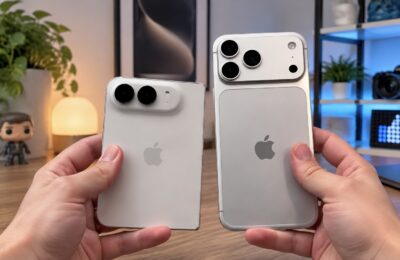
Apple is reportedly testing Face ID for the second-generation iPhone Duo, with the sensors placed directly beneath the outer display, according to Bloomberg’s Mark Gurman. The report comes as the first foldable iPhone went on sale on October 23 in the US and more than 70 other countries. Gurman stresses that Apple has not decided whether Face ID will reach the production model, which is expected next fall. The change would address what early reviews describe as one of the Duo’s biggest drawbacks: its fingerprint-based unlocking.
What you need to know
- Gurman said on his Power On podcast that Apple is testing Face ID sensors under the outer screen of iPhone Duo prototypes. No decision has been made on including the feature in the final product.
- In September, Gurman predicted Face ID would likely not arrive until the third-generation Duo, which pointed to around fall 2028.
- The first Duo, priced at $1,999, uses Touch ID built into the side button. It is the first new iPhone with Touch ID since the third-generation iPhone SE in March 2022.
- The new report does not mention a dedicated telephoto camera. Gurman also said Apple is considering adding an Action button to a future Duo.
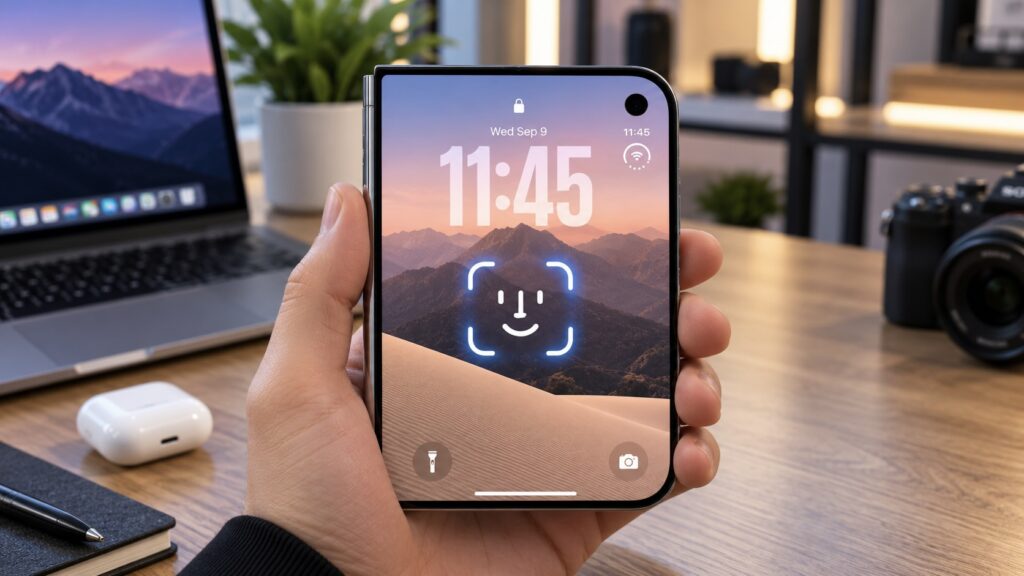
A folded iPhone Duo 2 in hand, with the Face ID icon on the lock screen
Face ID under the outer display
According to Gurman, Apple is already working on Face ID for the second-generation iPhone Duo. In the test units, the sensors sit beneath the outer screen. The hardware is being evaluated for the successor expected next fall. Gurman cautions that Apple has not yet decided whether Face ID will ship in the production model. The report signals what Apple is exploring, not a commitment.
The timing is notable. The first Duo only went on sale on October 23, so the report concerns replacing one of its defining components on launch day.
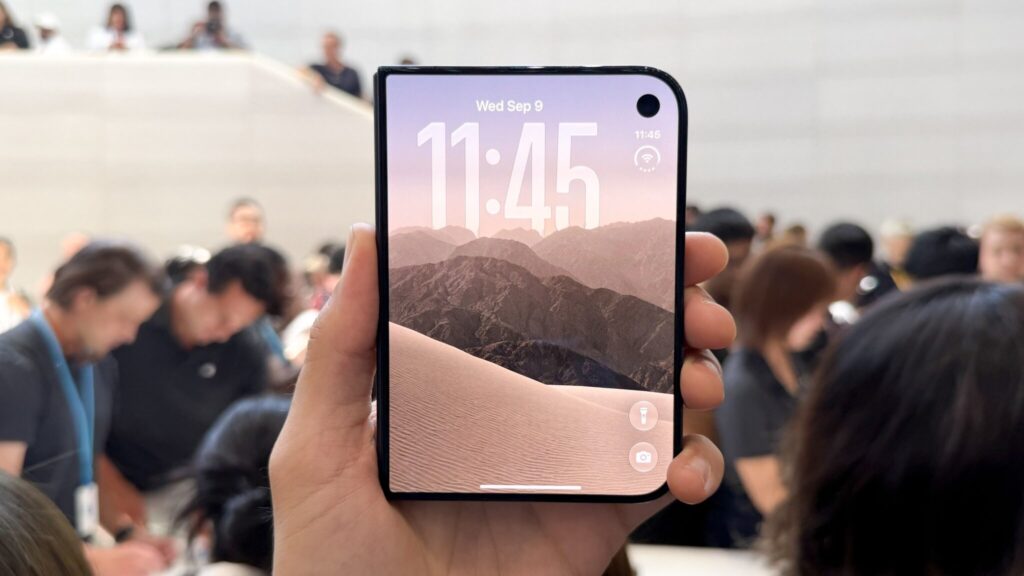
A folded iPhone Duo in hand: the outer screen shows the clock, with the front camera cutout in the top-right corner
Earlier than Gurman previously predicted
The report runs ahead of Gurman’s own forecast from a month earlier. In September, he wrote that Face ID and a separate telephoto lens would most likely arrive only with the third-generation Duo. That would require smaller components and further progress in Apple’s AI work. His earlier forecast put face unlock on the foldable iPhone around fall 2028.
The new report suggests Apple is trying to move faster, at least on unlocking. It says nothing about a telephoto camera. The first Duo has two 48-megapixel cameras, a main and an ultra-wide, and its 2x zoom is a crop from the main sensor. The source suggests that true optical zoom may remain a third-generation goal.
Why the first Duo uses Touch ID
The first Duo builds its fingerprint scanner into the side button, as on the iPad Air and iPad mini. The source describes the reason as an engineering one. Each half of the body is too thin to fit the depth camera and dot projector that Face ID requires.
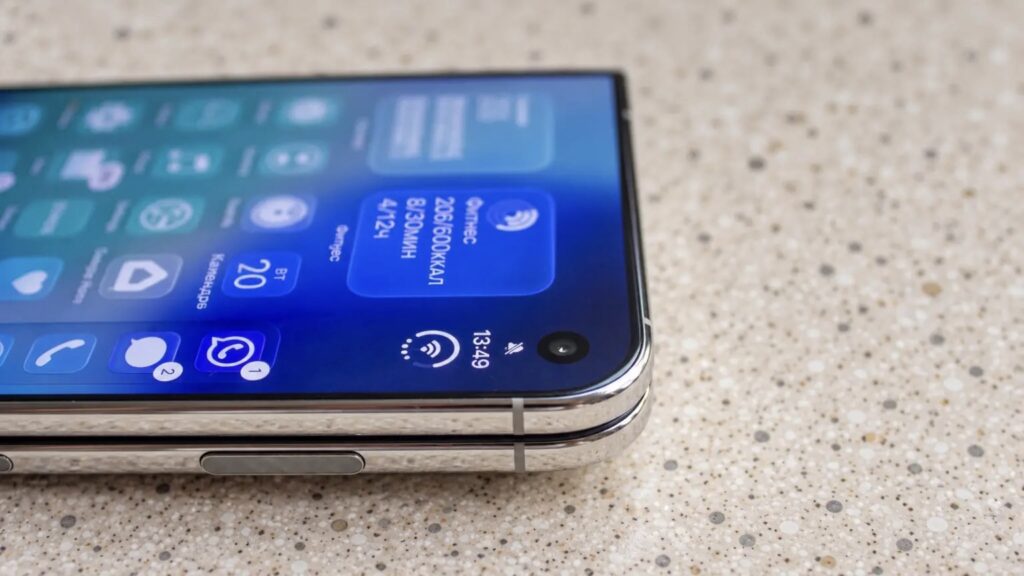
The iPhone Duo side button with a built-in Touch ID sensor
On paper, the setup is tidy. The scanner works whether the phone is folded or open, and the phone can also be unlocked with an Apple Watch. However, early reviews named Touch ID as one of the Duo’s main drawbacks and called it a step backward. At $1,999, buyers get an unlock method that Apple’s flagship iPhones dropped in 2017 with the iPhone X. T3’s reviewers listed the fingerprint sensor among the phone’s compromises. The reviewer at the source publication said they missed Face ID more than proper zoom.
The source also points to a daily annoyance. Apple added a pause after the sensor is touched. The phone stays on the lock screen and opens only if the finger is held on the button, and this delay cannot be turned off in Settings. The source reports a workaround: wake the screen with a swipe first, then touch the sensor.
A moving button when the phone is unfolded
The source describes a second issue that only shows up in the hand. Folded, the Duo behaves much like a regular iPhone with a button on the right. Unfolded, it gets rotated often: for video, for reading, or to show someone a photo. After a few turns, the lock button can be on the top, left, or bottom, while the user’s finger keeps reaching for it in the usual spot.
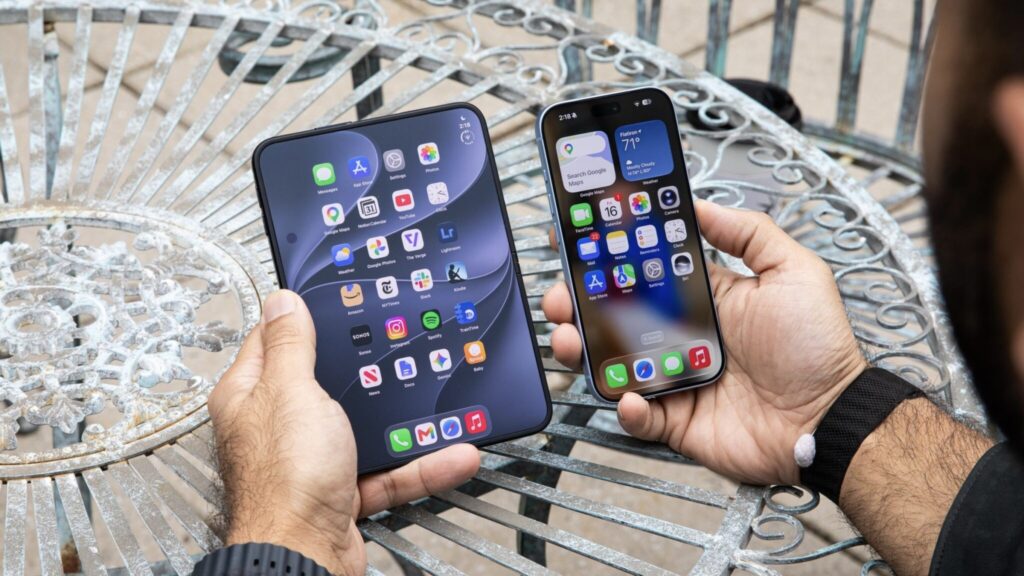
A person holding an unfolded iPhone Duo and a regular iPhone
With Face ID, users could simply raise the phone to unlock it. The source author, however, raises a question about the leak itself. If the sensors sit under the outer display, they would face backward, away from the user, when the phone is unfolded. Gurman does not say how Apple plans to handle unlocking on the large inner screen. The source author speculates that Touch ID in the button could remain in the second generation as a backup.
For current owners, the source suggests two mitigations. Registering fingers from both hands can make the button easier to find in any grip. Users who wear an Apple Watch can enable unlocking with the watch so they do not need to find the button at all.
An Action button, and whether to wait
In the same episode, Gurman said Apple is considering an Action button for a future Duo. The first generation lacks one and has only a Camera Control button.
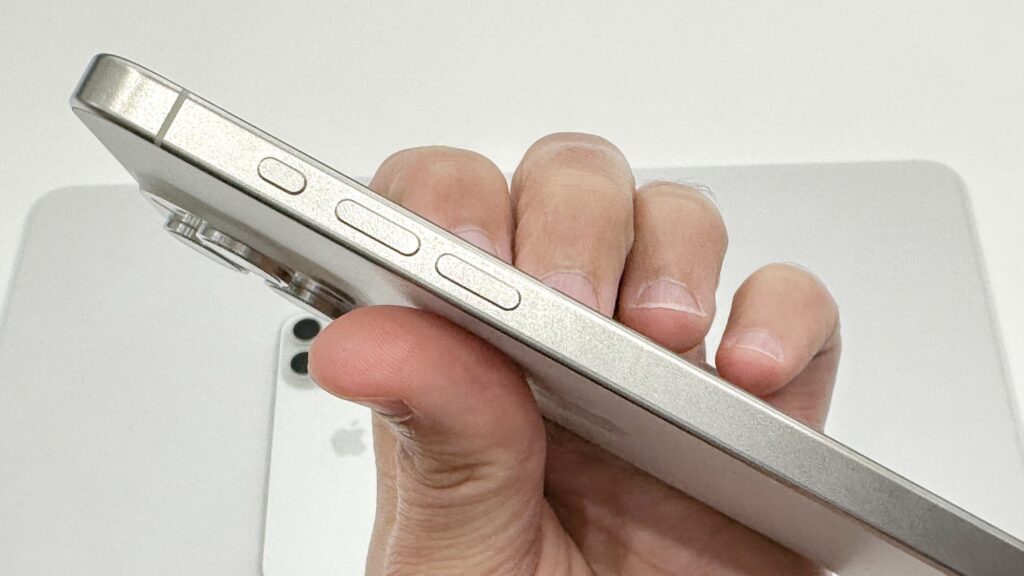
The Action button and volume keys on the side of an iPhone
The source author’s view on waiting depends on priorities. Buyers who want a large screen in their pocket now, and who are used to fingerprint unlocking from older iPhones or iPads, have little reason to wait. The source says people adapt quickly to the button sensor, and extra fingerprints and an Apple Watch can ease the shifting-button problem. Buyers for whom face unlock is essential may prefer to wait until fall 2027.
That choice carries risk. Face ID in the second generation is not guaranteed, and a year from now the next Duo could still ship with the same button-based scanner.