July 15 became a date in Russia that Apple would surely prefer to erase from the calendar. Today marks the expiration of the Federal Antimonopoly Service’s (FAS) compliance deadline. The agency demanded the removal of conditions it considers discriminatory against Russian users, and until the very last moment, there were no signs that Apple intended to change anything. This story is now transitioning from the realm of speculation to reality.
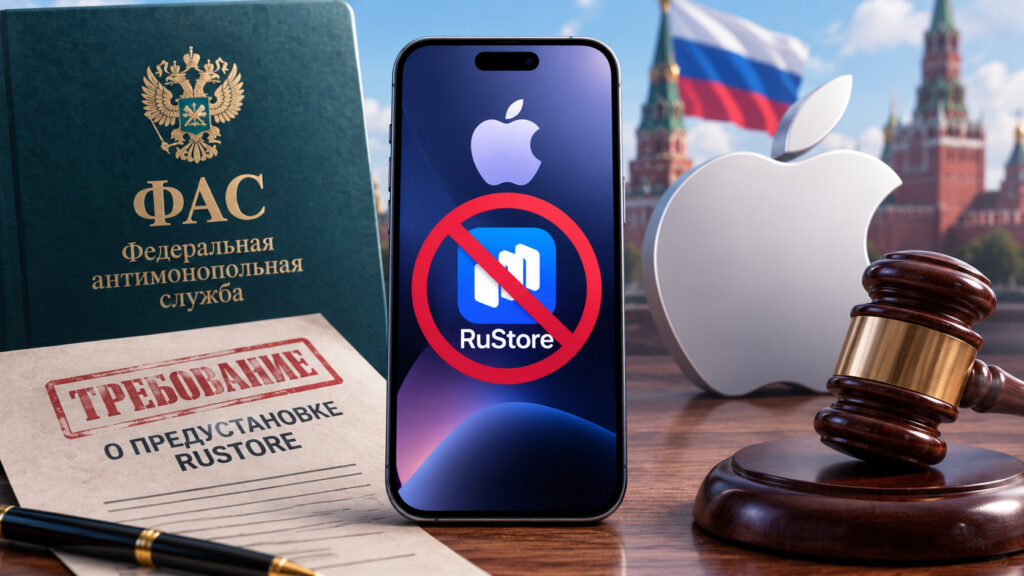
July 15 has arrived, and RuStore still hasn’t appeared on iPhone
What Requirements Did FAS Impose on Apple
The warning consists of two parts, both quite unpleasant for Cupertino. The first complaint concerns the default search engine in iOS. iPhones come out of the box with a foreign search engine, and to switch to a Russian one, users have to go into Safari settings themselves. FAS considers this arrangement to create discriminatory conditions for Russian developers while also infringing on consumer rights.
The agency’s logic is clear. The vast majority of people never change default settings, which means the search engine built into the system at the factory gets traffic simply by virtue of its position. We’ve seen this in Europe, where Apple was forced by regulators to show a browser selection screen. In Russia, things haven’t gone as far as such a screen yet, but the requirement looks almost identical to the European one.
While the search issue can be resolved quickly, the RuStore story remains open
The second part of the warning is tougher. It concerns non-compliance with the law on preinstalling Russian software. Under Russian law, smartphone manufacturers are required to install domestic apps from an approved list on their devices. Apple had long circumvented these requirements with a showcase of apps offered to users during initial setup, but this format didn’t satisfy the regulator. The warning specifically mentions a national messenger and a domestic app store, namely MAKS and RuStore.
This is where it gets most interesting with the app store. Preinstalling a messenger is technically simple — it’s a regular App Store app, though it’s currently not available there. But an alternative app store on iOS requires Apple to open an entire third-party distribution mechanism in the system. The company knows how to build such a mechanism but only enables it where it has been forced to by law.
What Fine Does Apple Face for Refusing RuStore
FAS warned that it would open a case in the event of non-compliance. As a result of such a case, the fine could reach 4 billion rubles. This isn’t a made-up figure but a calculation based on a turnover-based methodology, where the fine is calculated as a percentage of the company’s revenue in the market where the violation occurred.
For Apple, with its quarterly earnings, 4 billion rubles is honestly pocket change. The company earns that kind of money in a matter of hours. But the issue here isn’t the amount but the precedent. A turnover-based fine isn’t a one-time thing: if the violation continues, the agency can return to the matter again and again. And each time the amount will increase.
Experience from recent years shows that Apple does pay Russian fines, but money isn’t infinite. The company has faced claims in both antitrust cases and regarding App Store subscription payment rules. No changes for users followed those cases. Since 2022, the company has wound down official operations in the country, meaning the agency has few leverage points.
Will Apple Comply with FAS Requirements
Looking at this soberly, the chances of compliance with the warning are slim. Apple has never opened third-party app stores voluntarily. In the EU, it happened because of the DMA; in Japan and Brazil, because of local laws — and every time the company resisted until the very end, then implemented the minimum possible version of what was required.

Third-party stores on iPhone only appear under pressure
There’s another point worth remembering. The alternative distribution mechanism is tied to the user’s physical location. Even if Apple wanted to enable RuStore, it would have to create a separate legal and technical framework for Russia. A company that has left the market is unlikely to bother with this over a fine that’s comparable to its office coffee expenses.
The more likely scenario: FAS opens a case, issues a fine, and Apple doesn’t pay it. The matter then moves into the realm of enforcement proceedings, and collecting money from a company with no assets in the country is virtually impossible. This has already happened with other Western corporations.
Although a compromise can’t be entirely ruled out. Sometimes Apple makes targeted concessions to relieve pressure. For example, the company could add a search engine selection screen during initial iPhone setup. This is relatively cheap, doesn’t break the iOS architecture, and formally addresses half of FAS’s complaints. But the other half — the app store issue — can’t be resolved so easily.
Could iPhone and App Store Be Blocked in Russia
Right now, nothing will change. Your iPhone will continue to work as before, the App Store isn’t going anywhere, and apps are installed in the same way. There won’t be any blocks because of this situation, since the fine is a claim against the company, not against devices.
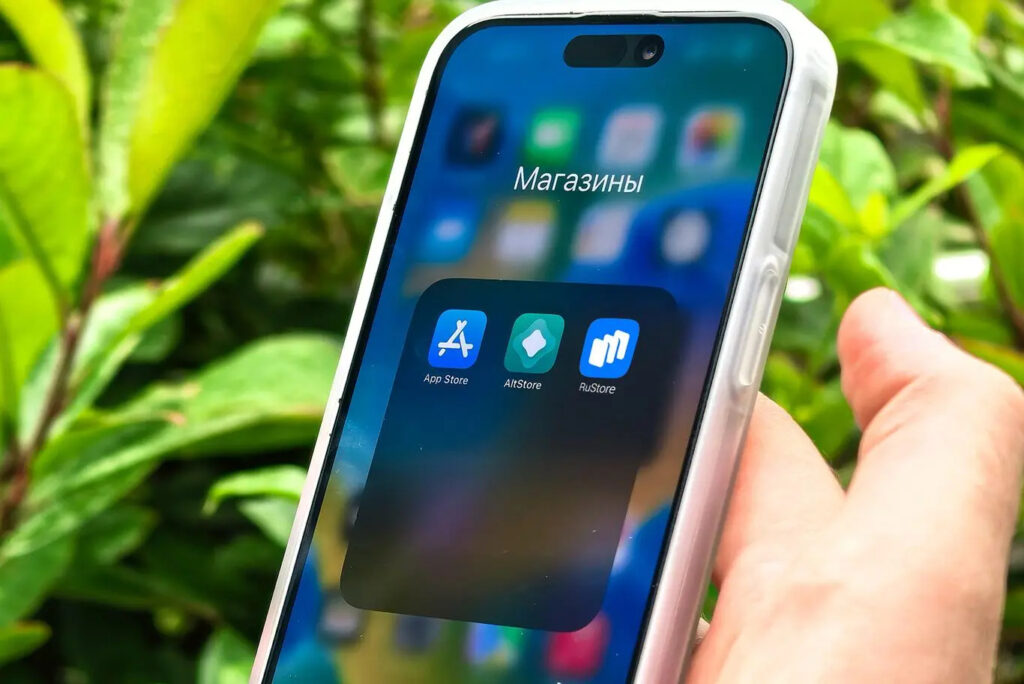
Don’t expect RuStore on iPhone anytime soon
Long-term consequences are harder to predict. Constant regulatory pressure on Apple could theoretically lead to discussions about restricting the company’s services in the country. But such measures would primarily impact millions of users, so the likelihood of such a scenario is low.
The practical takeaway is simple: don’t expect RuStore on iPhone. If you need Russian apps that aren’t in the App Store, workarounds exist through changing your account region or using web versions of services. The situation with banking apps over recent years has taught Russians to live without the official store, and nothing will fundamentally change here.