A detailed review of Android 17 has already been published on our site, where we broke down all the new features in detail. But a month has passed since the release, people have installed the update and shared their opinions. The picture is mixed. I’ve collected five specific complaints about the Android 17 operating system that are heard most often — all of them are fair and honest, without fanaticism.

Breaking down specific problems with Android 17
What’s New in Android 17
I’ll start with the main disappointment that unites most critics. The new Android 17, upon first launch after the update, doesn’t feel like a new version of the system. You unlock your phone — and can’t tell that anything has changed. This is a problem.
Expectations after Android 12 with its Material You were high: once every few years, Google makes a noticeable visual leap. Android 17 features are mostly hidden under the hood — fonts, icons, the notification shade look practically identical to Android 16. What actually changed visually:
- animations became slightly smoother during unlocking and switching between apps;
- the appearance of some system dialogs was updated;
- widgets received minor changes in corner rounding.
This is not enough for a version with a new number. Users expected Material 4 or at least a noticeable redesign of the notification shade — they got neither.
Which Smartphones Will Get New Android 17 Features
The Android 17 update is formally available for many devices, but receiving it and receiving all its capabilities are two different things. The Android fragmentation problem hasn’t gone anywhere. Pixel got the full set right away: all features, all AI capabilities, all Gemini integrations. Smartphones with Android 17 from other manufacturers receive the system update, but features arrive partially. Samsung adapts Android 17 for One UI 9 — some capabilities are either reworked or will appear later. Xiaomi integrates features into HyperOS on its own schedule.
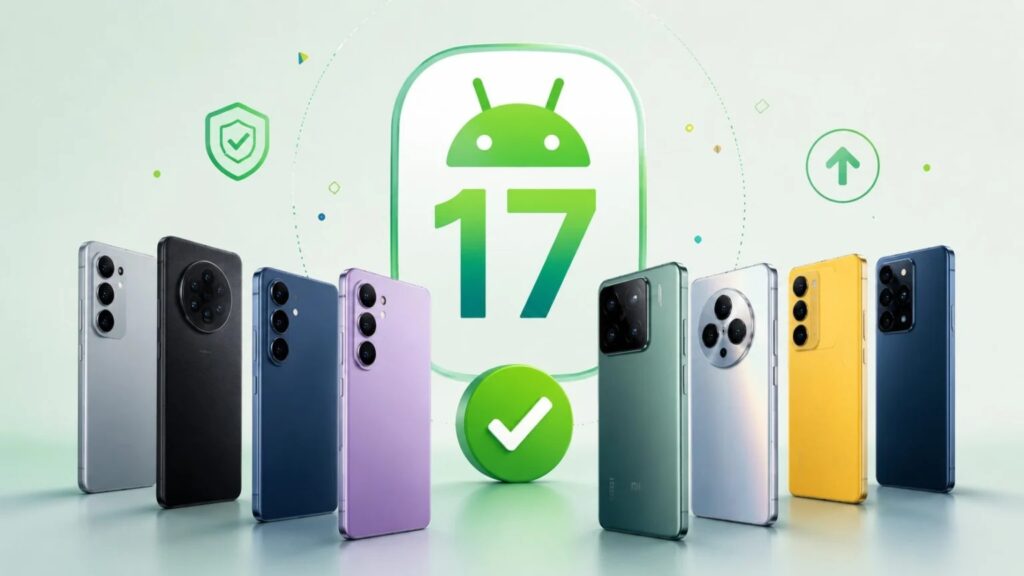
The main features will be available on Google smartphones
Specific examples of hardware dependency:
- Gemini on-device AI features only work on chips with NPU from a specific generation;
- the new shooting mode through Pixel Camera is unavailable on third-party devices;
- some privacy features require a Google Tensor chip.
Installing Android 17 on a smartphone isn’t difficult. Making sure you’ve received all the announced functionality is harder.
AI in Android 17 — What’s the Point
Google made AI the central idea of the Android 17 update. Gemini is everywhere: in the notification shade, in the browser, in the camera, in settings. This is the company’s strategic direction, and this is where a conflict with real user expectations arises.
Surveys show that people expected something entirely different from Android 17:
- a noticeable improvement in battery life not through AI optimization, but through fundamental changes in power management;
- proper notification behavior: they still get lost, delayed, and grouped inconveniently;
- new fine-tuning system settings;
- an improved interface — the very one that didn’t happen.
AI features are great for those who use them. But they don’t replace basic system improvements. Asking Gemini “remind me about this tomorrow” is convenient, but if your phone drains quickly after the update, priorities are set incorrectly.
Smartphone Battery Life After Installing Android 17
Updating your phone to Android 17 gave some users an unexpected result: the battery started draining faster. This isn’t a bug — it’s a predictable consequence of new background processes. Google made changes to power management: new AI services run in the background, Gemini periodically launches for context analysis, and the updated Play Protect scans more actively. All of this requires resources.
Smartphones still haven’t learned to last until sunset
What Google did to save power:
- improved the adaptive battery algorithm (the system better predicts when resources are needed);
- optimized background processes for Google Tensor chips.
But there’s a problem: smartphones drain quickly after the update because the real improvement in battery life depends on the manufacturer and the chip. On Pixel, there is an improvement. On smartphones from other brands, after downloading Android 17, users are seeing neutral results or even a regression during the first weeks until the system optimizes to the new environment.
New Restrictions in Android 17
Android security in version 17 has been strengthened, and that’s good for most users. But for those accustomed to Android’s flexibility, there are unpleasant changes. Android 17 restrictions that affected experienced users:
- installing APKs from unknown sources now requires additional confirmation with a risk explanation (an unnecessary step for those who understand what they’re doing);
- file system access for third-party apps is more restricted (some tools for advanced users stopped working correctly);
- apps without updates for more than two years now display a warning upon launch;
- some permissions for background app activity are automatically revoked if the app hasn’t been used for a long time.
The last point is especially painful for niche apps that run in the background: trackers, automation, monitoring. Updating Android for security reasons is justified, but the balance between protection and freedom has shifted not in favor of advanced users. Android 17 features in the security department are genuinely useful for most people, but Android has always been valued precisely for its customization freedom. Every restriction narrows this space a little.