We are accustomed to evaluating IT infrastructure efficiency by Apple Silicon processor power, software speed, and depth of process automation. But statistics are relentless: with the avalanche-like growth in the number of smart devices, real labor productivity at enterprises often drops, and teams burn out.

New technologies are changing labor productivity
Why doesn’t automation solve the efficiency problem, and why has the IT sphere reached an impasse? We discussed this with a person who views technology through the lens of fundamental values and meanings. Our interlocutor is Alexander Grif, Chairman of the Committee on Digital and Technological Sovereignty of the CIS, Head of the Scientific Laboratory on Ontology of Cognitive, Digital, and Technological Sovereignty at MNIIPU, and an international expert.
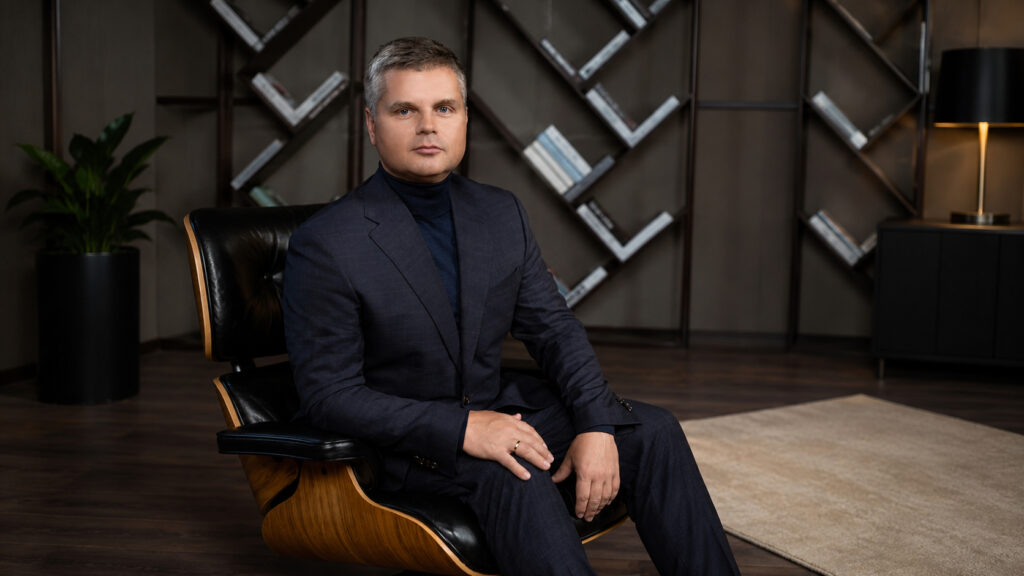
Alexander Grif, Chairman of the Committee on Digital and Technological Sovereignty of the CIS Business Center
The Efficiency Crisis in “Digital Paradise”
AppleInsider.ru: Alexander, our readers love technology for simplifying life and speeding up work processes. However, you claim that the abundance of devices and total automation paradoxically reduce labor productivity. How did business end up in this trap?
Alexander Grif: The trap lies in a substitution of concepts. We confuse technical equipment with thinking efficiency. The Apple ecosystem, like any modern IT platform, is perfect from a UX/UI standpoint. But its basic commercial goal is to retain user attention. When a company buys its employees top-tier Macs and iPhones, it hopes for a productivity boost. In practice, however, the employee receives a powerful channel for delivering information noise.
Classic time management is dead because time is no longer the main scarcity. The main scarcity today is attention focus. Without proper control, software turns a specialist from a creator into a dopamine slave of notifications, corporate chats, and endless task managers. A person is constantly busy but creates nothing. Consciousness fragmentation occurs, the ability to “choose” is destroyed, clip thinking defeats systemic thinking, and labor productivity drops, personal efficiency decreases — despite millions spent on automation.
AppleInsider.ru: So the entry point to real business efficiency lies not in the realm of software but in the area of cognitive technologies? How does this work in practice?
Alexander Grif: Exactly. The entry point is cognitive technologies for working with information and one’s own consciousness. It is impossible to increase labor productivity efficiency at an enterprise if employees are in a state of permanent cognitive overload.
Before implementing a new IT system or automating anything, a manager must implement attention protection protocols. These are practical mechanisms for filtering information flow, allocating “quiet time” for deep analytical work, and algorithms for clearing a person’s working memory of mental clutter. We must automate not chaos but organized cognitive activity.
Cognitive Sovereignty as the Key Management Skill of the 21st Century
AppleInsider.ru: You head a scientific laboratory at MNIIPU and promote a strict formula: technological and digital sovereignty are impossible without cognitive sovereignty. Explain this thesis in simple terms for entrepreneurs and developers.
Alexander Grif: Cognitive sovereignty is the ability of a person, company, or state to maintain full autonomy of their thinking. It is the skill of protecting one’s mental field from external algorithmic pressure and manipulation, and independently forming one’s goals from personal values and meanings that are synchronized with family, colleagues, the state, and the World as a whole.
Look at the IT market. If you use foreign neural networks, cloud services, and platforms without understanding their internal ontology, you imperceptibly adopt the foreign values, meanings, and behavioral patterns embedded in them. Those who lack cognitive sovereignty inevitably become objects of control for foreign AI systems and media platforms. For business, the loss of cognitive sovereignty means that its strategic decisions begin to be dictated by external trends rather than the company’s real interests.
AppleInsider.ru: What are the symptoms that a manager or IT director has lost this sovereignty and fallen into “algorithmic slavery”?
Alexander Grif: The first symptom is reactive management. The manager doesn’t create the agenda but merely reacts to incoming triggers: notifications, news, crises, competitors’ actions. The second symptom is blind faith in technological hype. When a company implements AI or blockchain simply because it’s being written about in industry media, without understanding what fundamental problem it solves.
To maintain sovereignty, a leader must remain in a neutral-positive state. This is a proprietary protocol we are developing: the ability of the mind to remain uninvolved in the emotional swings of the information field while maintaining a cold focus on strategic goals and forming one’s own agenda or trends.
Value-Meaning Self-Governance: When Software Is Powerless
AppleInsider.ru: You are a co-author and implementer of the VSCSG (Value-Semantic Cognitive Self-Governance) technology. How can synchronizing values and meanings within a team replace traditional rigid management and KPIs?
Alexander Grif: Any IT system, CRM, or regulation is simply dead code and text if the people working with them have desynchronized basic personal values. Traditional management tries to control employee actions through KPIs and oversight. VSCSG technology proposes managing not actions but values and meanings.
Value synchronization means that each team member sees that colleagues have similar values that, when realized, give that team member the fullest sense of personal happiness.
Meaning synchronization means that each team member equally understands the significance of shared team and simultaneously personal values, which allows them to build and understand the deep purpose of the project, accepts the company’s common philosophy, and recognizes their role. When you’ve created a unified mental field, rigid control becomes unnecessary. Discipline is formed and maintained by the digital system. The employee activates internal self-governance: they independently make the right decisions within the common value framework because their personal meanings are synchronized with the business’s meanings and goals within the mental field of the company’s common philosophy. This produces a colossal leap in labor productivity efficiency that no standard automation can deliver.
AppleInsider.ru: If we take a specific IT project or enterprise, what does this synchronization process look like in practice? Where do you start?
Alexander Grif: You need to start with designing the value-meaning architecture, not the technical one. The architecture of any system is created in four steps: Value — Meaning — Process — Tool.
Business usually does the opposite: it buys a tool (for example, the Apple ecosystem or a heavy ERP), adjusts processes to fit it, and only then thinks about why it was needed. The right path is to first establish basic values, define their meanings, then set goals on that basis, then build the logic of human interaction (processes) around them, and only at the very end select software and hardware (tools) for these processes. In practice, this is implemented through strategic value-mapping sessions where the team cleanses goals of false entities and synchronizes mental maps using a digital system.
From Personal Efficiency to Global Digital Sovereignty
AppleInsider.ru: Your ideas scale far beyond individual companies. How are the principles of cognitive and digital sovereignty applied at the level of the CIS, BRICS, SCO, UN and your interactions with Persian Gulf countries, particularly the Sultanate of Oman?
Alexander Grif: At the interstate level, absolutely the same laws apply. Protecting digital and mental space is a matter of national security. Within the CIS Business Center and through the concepts of the International Organization of Digital Sovereignty (IODS) and the International Organization for International Sustainable Development (OISD), we are building an architecture that allows countries to develop technologies without losing their identity.
When we engage in dialogue with BRICS countries or the Sultanate of Oman, we see that the classic pragmatic Western approach based solely on financial metrics and rigid KPIs is giving way to value-based dialogue. In the Middle East, respect for cultural code and synchronization of basic meanings matter more than dry contract figures. If you synchronize at the value level, economic and technological integration happens exponentially faster and more reliably.