Xiaomi has released the POCO C81 Pro — an affordable smartphone with a 6000 mAh battery and a 120 Hz screen that costs around 8000 rubles. It’s a global version of the Redmi A7 Pro with an expanded set of memory configurations. The Chinese smartphone runs on HyperOS 3 and is aimed at those who need a basic daily workhorse without overspending. Or if you’re looking for a reliable smartphone for your parents. Let’s see what it’s capable of and what it has to offer besides the low price.
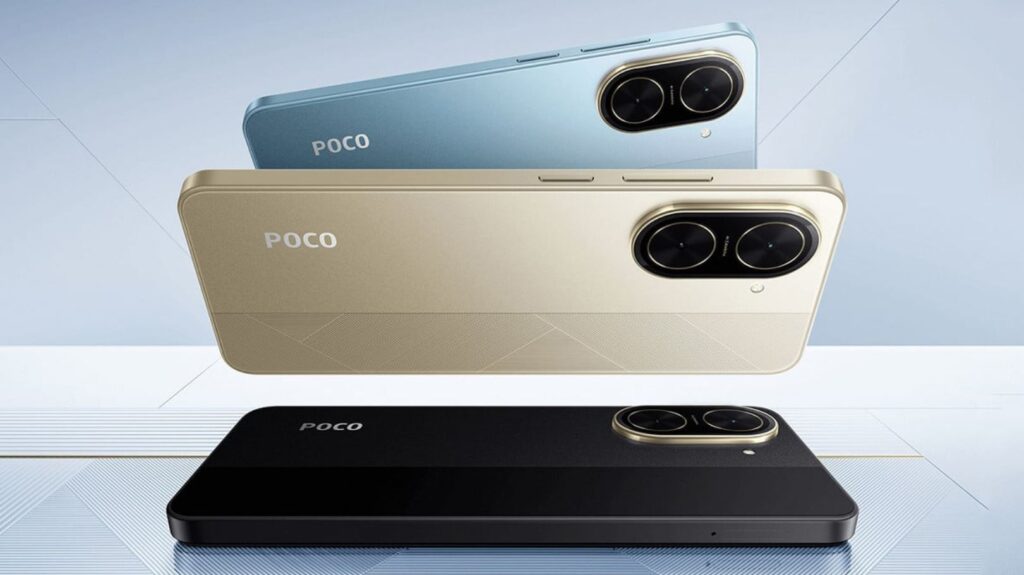
The new POCO C81 Pro is out. What is this smartphone capable of?
POCO C81 Pro Specs: Processor, Camera, Memory
POCO C81 Pro runs on the Unisoc T7250 processor — an octa-core chip with two high-performance Cortex-A75 cores (up to 1.8 GHz) and six energy-efficient Cortex-A55 cores (up to 1.6 GHz). All versions come with 4 GB of LPDDR4X RAM and fast UFS 2.2 storage. There’s support for virtual RAM expansion up to 8 GB using free storage space.
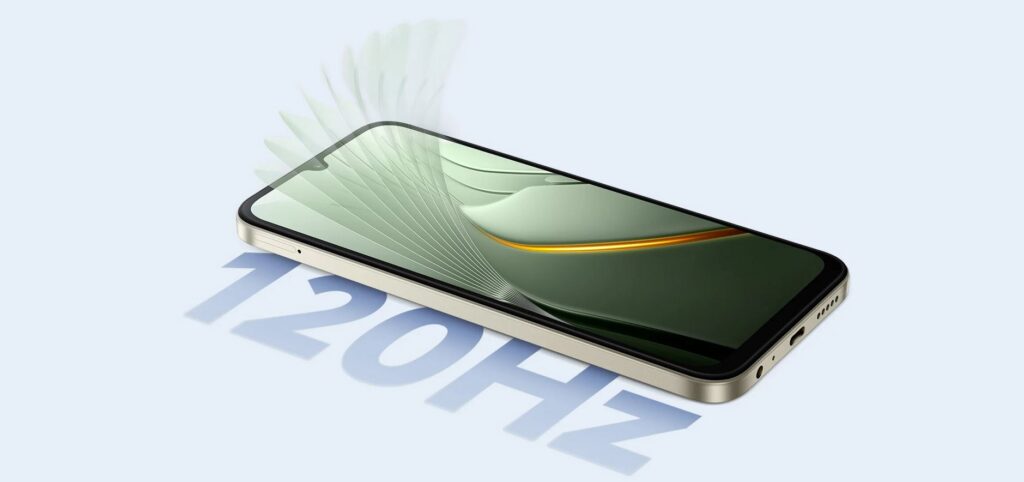
The 120 Hz screen pleasantly surprises with smooth scrolling
The POCO C81 Pro screen impresses with its specs: 6.9 inches, IPS LCD with 1600 x 720 resolution, up to 120 Hz refresh rate, and 650 nits brightness. Cameras: a 13 MP main camera on the back and an 8 MP front camera in a waterdrop notch. Connectivity includes Bluetooth 5.2, dual-band Wi-Fi, NFC, a memory card slot, and a 3.5 mm headphone jack. Charging is wired only, at 15 W. Overall, fully loaded for a small price.
By the way, the smartphone comes preinstalled with HyperOS 3 based on Android 15 with new features. However, some other publications list Android 16 as the base for HyperOS 3 on C81 series devices.
6000 mAh Battery in POCO C81 Pro: How Long Does the Charge Last
The POCO C81 Pro battery capacity is 6000 mAh. For a budget smartphone with an HD screen and an energy-efficient processor, that’s a serious reserve. According to Xiaomi, the smartphone can work for over 2 days in everyday use mode, provide more than 19 hours of video playback, and over 46 hours of calls.
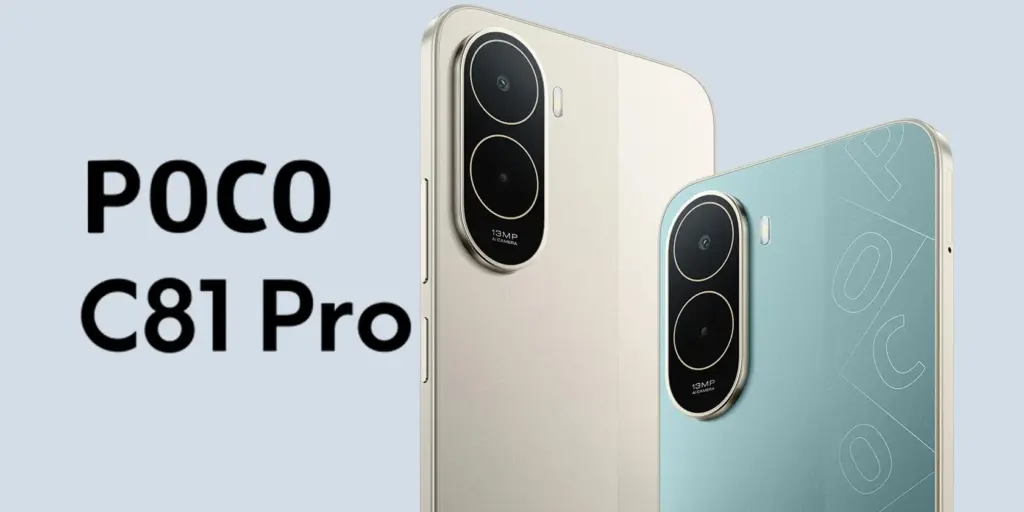
With a 6000 mAh battery and HD screen, POCO C81 Pro is designed for a couple of days without charging
In practice, this means that with light usage — messengers, calls, browser, YouTube — you can charge the phone every other day. The 15 W charging isn’t the fastest: from zero to one hundred percent will take about two-plus hours. However, the battery retains more than 80% of its capacity even after 1000 charging cycles, which confirms the long-term durability of the battery.
Is a 120 Hz Screen Necessary in the Budget POCO C81 Pro
120 Hz on a budget smartphone primarily means smooth scrolling through social media feeds and messengers. The interface looks livelier and more responsive than on screens with the standard 60 Hz. But there’s a catch: the screen resolution is HD+ (720p), not Full HD. On a 6.9-inch diagonal, this is noticeable when reading fine text or viewing detailed photographs.
The Unisoc T7250 processor is capable of outputting a 720p picture at 120 Hz, and its power is sufficient for exactly this type of screen. In heavy apps and games, the frame rate won’t consistently hold 120 frames, but for everyday tasks, scrolling, and video, the difference from 60 Hz is noticeable. The 650-nit brightness allows comfortable outdoor use.
Prices and Memory Options for POCO C81 Pro

Three memory options for POCO C81 Pro — from 64 to 256 GB
The affordable POCO C81 Pro launched in three storage configurations, all with 4 GB of RAM. Again, not much, but look at the prices:
- 4 GB + 64 GB — $99 (approximately 7500 ₽)
- 4 GB + 128 GB — $109 (approximately 8200 ₽)
- 4 GB + 256 GB — $129 (approximately 9700 ₽)
These are global prices for the earliest buyers. Some mentioned a starting price of $64 (approximately 4800 rubles), but the official global price starts at $99 (about 7500 rubles). With parallel imports to Russia, the cost may vary. All versions have a microSD memory card slot, so the lack of built-in storage can be compensated.
POCO C81 Pro or Redmi A7 Pro — What’s the Difference
POCO C81 Pro is positioned as a global version of the Redmi A7 Pro. The processor, screen, cameras, battery, and charging are identical. Both run on the Unisoc T7250 with 4 GB of RAM, both feature a 6.9-inch screen with 120 Hz and a 6000 mAh battery with 15 W charging.
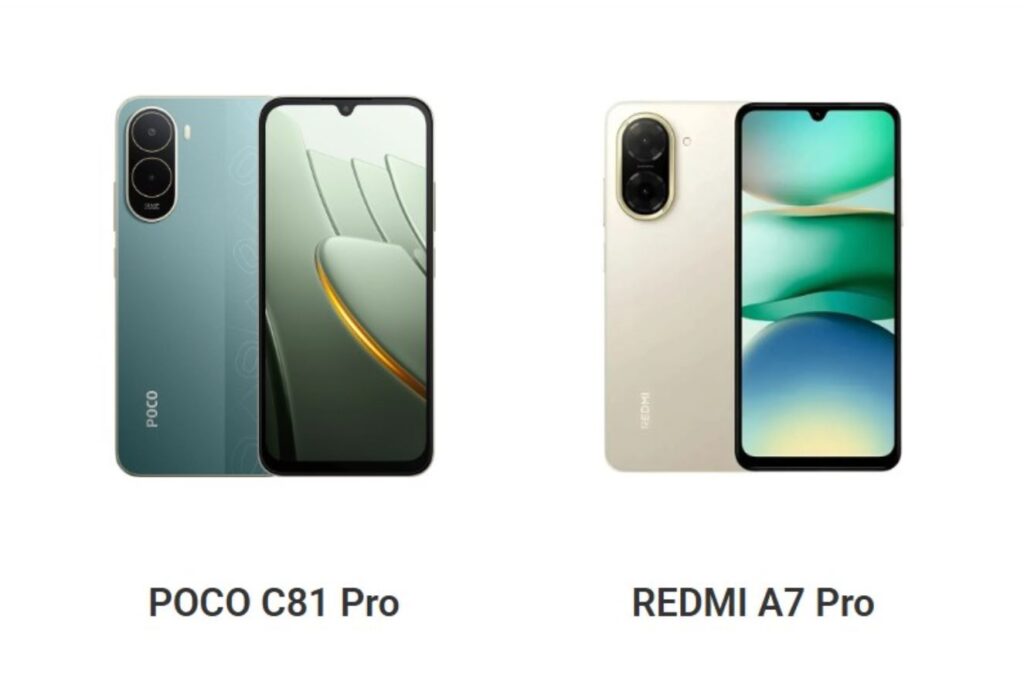
There’s practically no difference between the smartphones
The main difference is in the storage lineup. The Redmi A7 Pro maxes out at 128 GB, while the POCO C81 Pro also offers a 256 GB variant. Additionally, the Redmi A7 Pro is already available in Russia, while the POCO C81 Pro is not yet. The operating system is the same everywhere — HyperOS 3. If you see both smartphones for sale in the same region, the difference comes down to choosing the maximum built-in storage capacity and the brand on the body.
Is It Worth Buying a Budget Xiaomi Smartphone in 2026
POCO C81 Pro is one of the worthy Xiaomi smartphones under 10,000 rubles. It can handle calls, messengers, social media, video, navigation, and basic photography. The chipset is not suitable for heavy games and demanding applications — the Unisoc T7250 processor scores around 210,000–230,000 points in AnTuTu, which is on par with budget chips like the MediaTek Helio G92. For Call of Duty Mobile or PUBG, it will only manage medium settings, and resource-intensive games like Fortnite and Warzone Mobile — no.
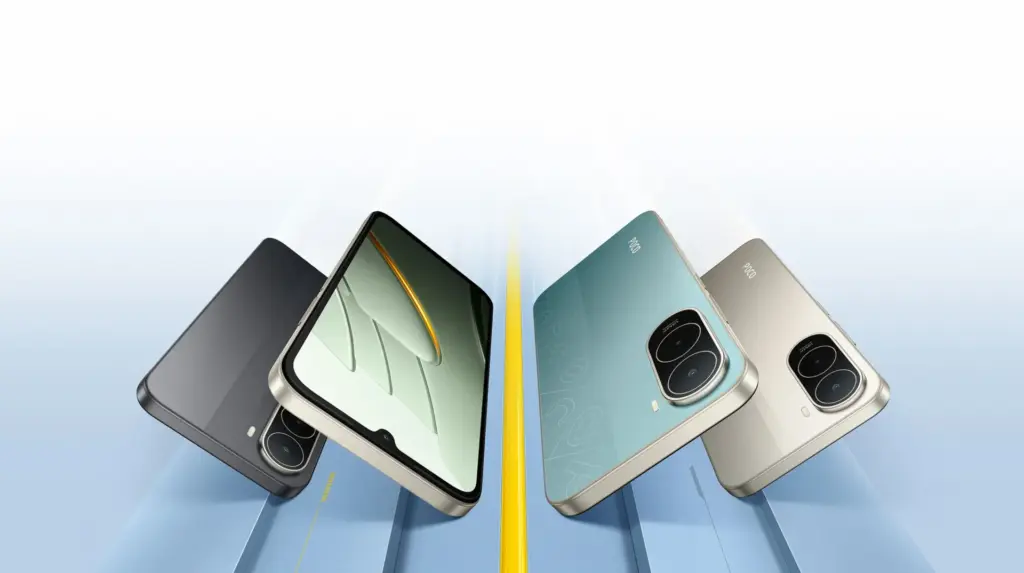
POCO C81 Pro is designed for basic daily tasks and long battery life
However, for those who need a reliable phone with a large screen and a powerful battery, POCO C81 Pro is one of the best offers in its price range. NFC enables contactless payments, and the 3.5 mm jack lets you connect regular headphones, which is now a rarity. For the global Pro version, Xiaomi’s official page states 48 months of update support, but without further clarification.