There are six tiny countries you can cross on foot in a day. Shall we go?
When we think about traveling across a country, long flights, trains, and endless miles of road come to mind. That’s usually what big routes look like: you choose destinations in advance, check tickets, documents, and entry requirements. But there are countries in the world that you can cross on foot — and still have time for lunch. Some of them are no larger than a small village in area, yet they have their own history, culture, and even armies. Here are six countries where you can arrive in the morning and leave in the evening — literally on your own two feet.
Liechtenstein: An Alpine Principality the Size of a District
Liechtenstein is the largest country on this list, but even it covers only about 160 square kilometers. It is the fourth-smallest microstate in Europe, squeezed between Switzerland and Austria. About 40,000 German-speaking people live here, and part of the territory is occupied by the Alps — the Rätikon mountains, which make Liechtenstein an excellent destination for hiking and skiing.
Despite its modest size, you won’t be able to see everything in a single day. The castles and cathedrals of Liechtenstein look like fairy-tale sets — and Vaduz Castle still serves as the residence of the reigning prince. Walking across the country is realistic, but you’ll want to come back more than once.
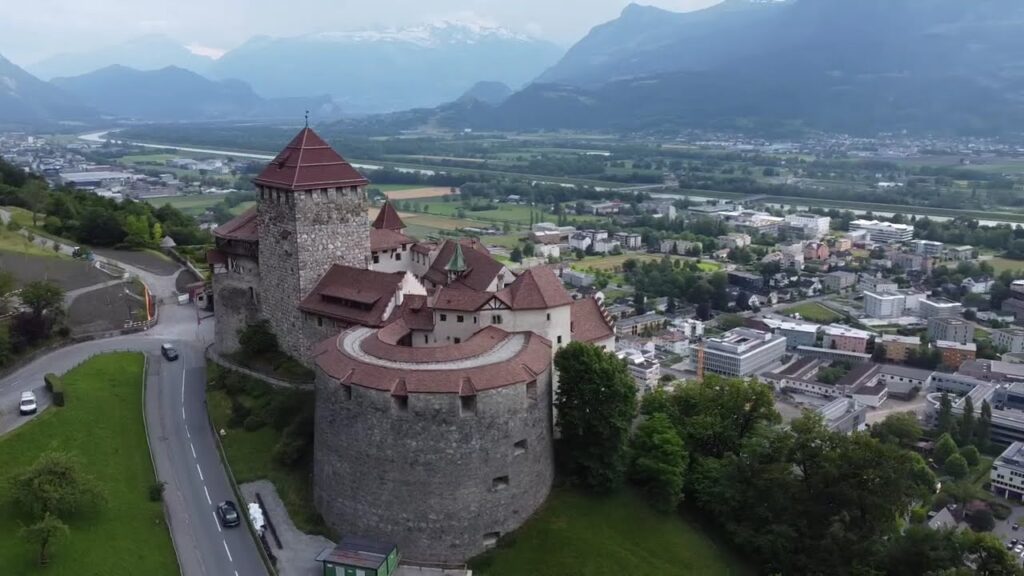
Liechtenstein and Vaduz Castle on the hill.
San Marino: Europe’s Oldest Republic Inside Italy
San Marino is a tiny state with an area of 61 square kilometers, completely surrounded by Italy. About 33,000 people live here, and the history of this republic’s independence spans 17 centuries. San Marino fought for its freedom from Italy starting in the 4th century, although Rome officially recognized its independence only in 1862. Notably, even Napoleon respected the sovereignty of this small state.
For a one-day trip, you’ll have to choose: either the medieval towers and fortresses on Mount Titano, or the largest adventure park in the Italian region. San Marino is considered the oldest republic in the world, and those 17 centuries are felt literally at every step — in the stones of the walls and the narrow streets.
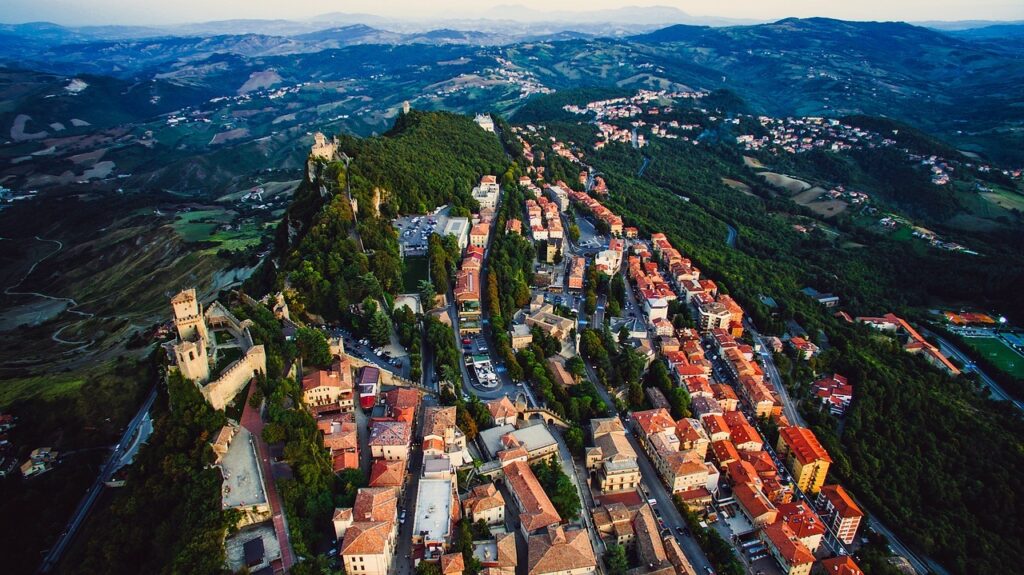
The medieval towers of San Marino are located atop Mount Titano. Image source: blog.ostrovok.ru
Tuvalu: A Country in the Pacific Ocean That May Disappear
Tuvalu is a chain of nine islands in the Pacific Ocean north of Fiji. The total area is about 26 square kilometers, and the capital atoll Funafuti covers just 2.4 square kilometers. About 11,400 people live here, and living conditions are far from resort-like: the soil on coral atolls is poor, there is no fresh water — residents depend on imports and rainwater collection systems.
But Tuvalu’s main problem is not practical — it’s existential. Due to rising sea levels, its territory is shrinking every year. Residents have already begun emigrating, and according to forecasts, by the end of the 21st century the islands may be completely submerged. This is one of those countries worth seeing while it still exists on the map.
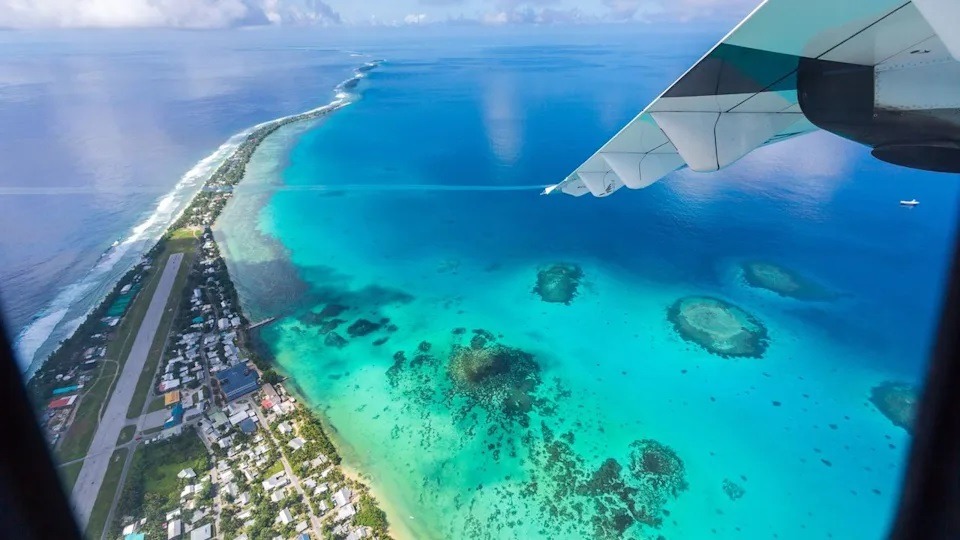
The coral atoll of Tuvalu — one of the most vulnerable countries to climate change. Image source: yahoo.com
Nauru: The Smallest Island Nation Without a Capital
Nauru is an island nation with an area of about 22 square kilometers, located northwest of Tuvalu, just 40 kilometers south of the equator. It is the third smallest country in the world and the smallest island nation. Nauru is so compact that it doesn’t even have an official capital.
Nauru gained independence from Australia in 1968 and remains one of the most Westernized countries in the South Pacific. English and Nauruan are spoken here, and about 90% of food and goods are imported from Australia. Nauru, like Tuvalu, is under threat of flooding due to climate change — without serious intervention, the island’s tropical landscape could end up underwater.
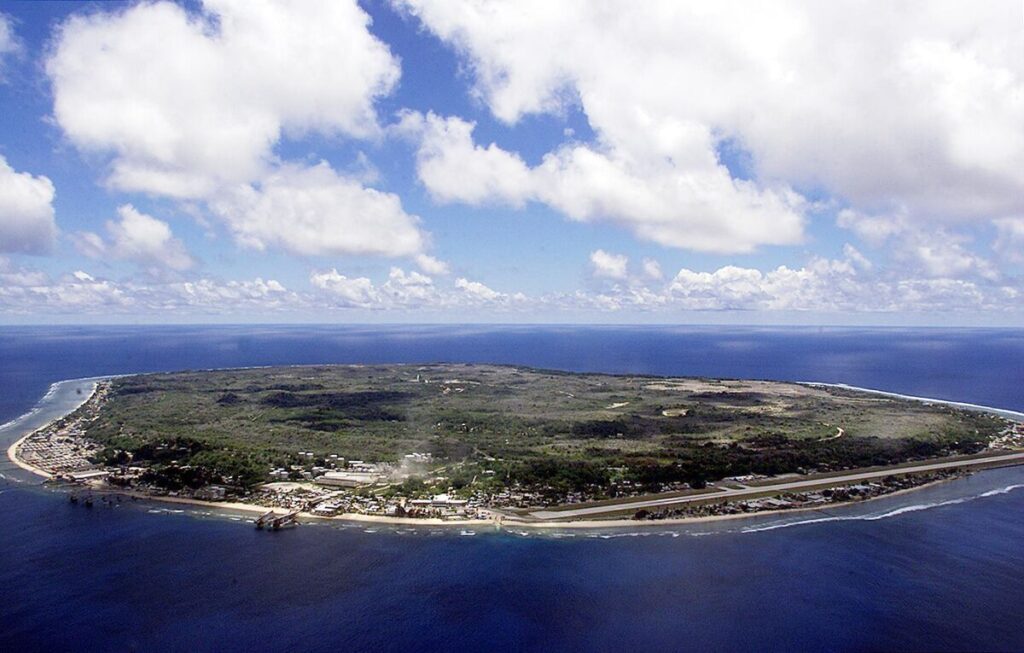
Aerial view of Nauru.
Monaco: A Tiny Country with the Highest Population Density
If the previous countries attract visitors with nature or history, Monaco is concentrated luxury. This sovereign principality on the French Riviera covers just 2 square kilometers and borders France on three sides, with the Mediterranean Sea on the fourth. At the same time, Monaco has no rivers and receives its water from France. About 31,800 people live here — Monaco’s population density is one of the highest in the world.
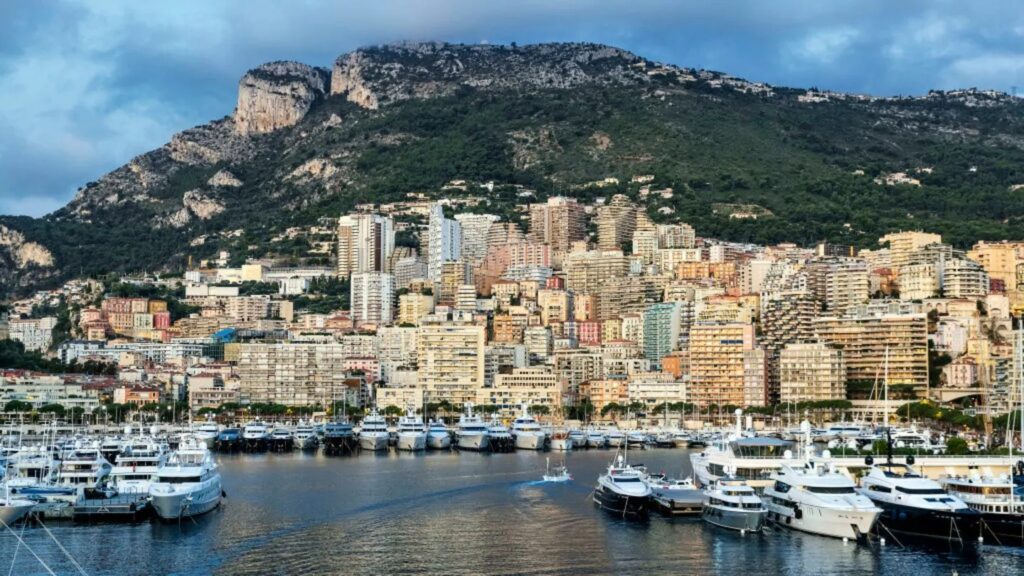
Monaco, yachts in Port Hercule.
In one day you can visit the famous Monte Carlo Casino, look at the yachts in Port Hercule, and walk along the Formula 1 track — the racing circuit runs right through the city streets. However, this trip can hardly be called budget-friendly: Monaco is famous for prices that match its reputation.
Vatican City: The World’s Smallest Country in the Center of Rome
The smallest country in the world is Vatican City. Its area is just 0.44 square kilometers, and its permanent population ranges from 500 to 1,000 people. Like San Marino, the Vatican is a state within Italy, but it goes even further: it is located right within the city limits of Rome. Italy recognized the Vatican’s sovereignty only in 1929, ending a centuries-long conflict between the Italian government and the Papal States.
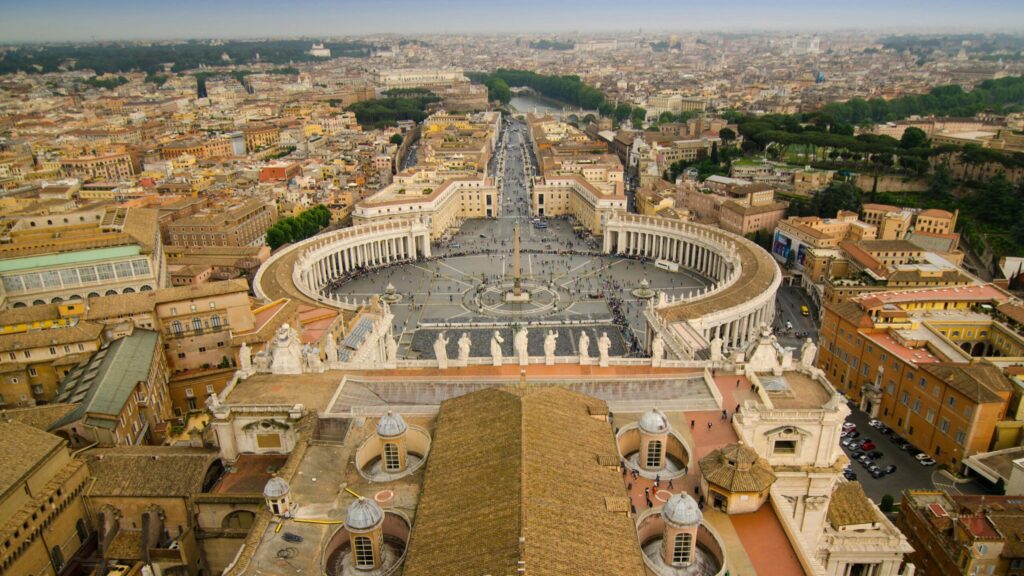
St. Peter’s Basilica and Square — the heart of the Vatican. Image source: travel.yandex.ru
The Vatican is the center of the Catholic Church and the residence of the Pope. The Sistine Chapel and St. Peter’s Basilica are the main attractions that can be seen in just a few hours. But even within these tiny 44 hectares, there is so much world art and architecture concentrated that the impressions will last a long time.