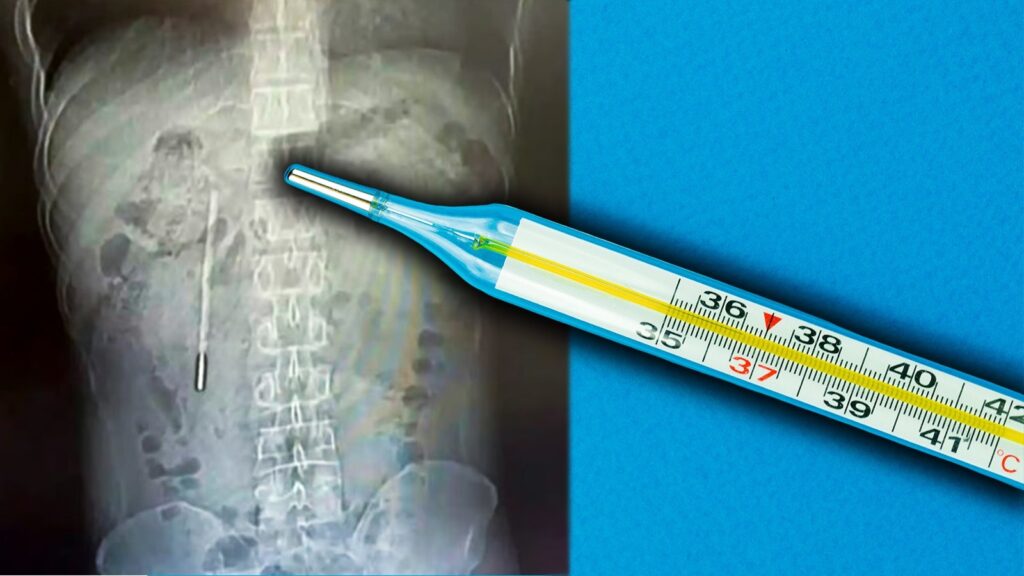
The Chinese resident had no idea there was a thermometer inside him. Image source: dexerto.com
A 32-year-old resident of the Chinese city of Wenzhou came to doctors with an ordinary complaint about stomach pain and left with a story that the entire Chinese internet is now discussing. On the X-ray, doctors spotted a mercury thermometer that the man had swallowed as a child. The object had spent 20 years inside his body, remaining intact the entire time. It’s terrifying to think what would have happened if the thermometer had broken and toxic mercury had spread throughout his body.
How a Mercury Thermometer Ended Up Inside a Chinese Man’s Body
The patient, surnamed Wang, told doctors he had swallowed the mercury thermometer when he was 12 years old. The boy was too afraid to confess to his parents and didn’t want to distract them from work. Remarkably, he experienced no symptoms afterward and lived a normal life until the spring of 2026. This story was reported by Dexerto.
How Objects Can Get Stuck in the Intestines
In the spring of 2026, Wang began experiencing abdominal pain and went to the hospital. Doctors performed a scan and discovered that very mercury thermometer — it was lodged in the duodenum. More precisely, it was located in the initial section of the small intestine, where food goes immediately after the stomach.
The tip of the thermometer was pressing directly against the intestinal wall, creating a high risk of perforation and severe internal bleeding. The bile ducts were located nearby, and any careless movement during extraction could damage the mucous membrane. For the surgeons, this was no simple task.
Why did the thermometer get stuck there specifically? Objects longer than 5 centimeters typically get lodged in the curve of the duodenum because it is one of the narrowest points in the upper digestive tract. The angle between the second and third sections is so tight, and the intestinal walls have such limited elasticity, that large objects simply cannot physically pass through.
How Doctors Extracted the Thermometer From the Intestines
The surgeons managed to extract the foreign object in just 20 minutes. The operation was extremely delicate: the thermometer had been inside the body for too long and was positioned near the bile ducts, creating a serious risk of damaging the intestinal wall.
The extracted thermometer turned out to be intact, but the temperature scale markings had completely faded after 20 years inside the human body. The glass casing held up, and that is perhaps the most astonishing part of the entire story. Chinese social media users noted that Wang was incredibly lucky: if the thermometer had broken and the mercury had leaked, the consequences could have been far more serious.
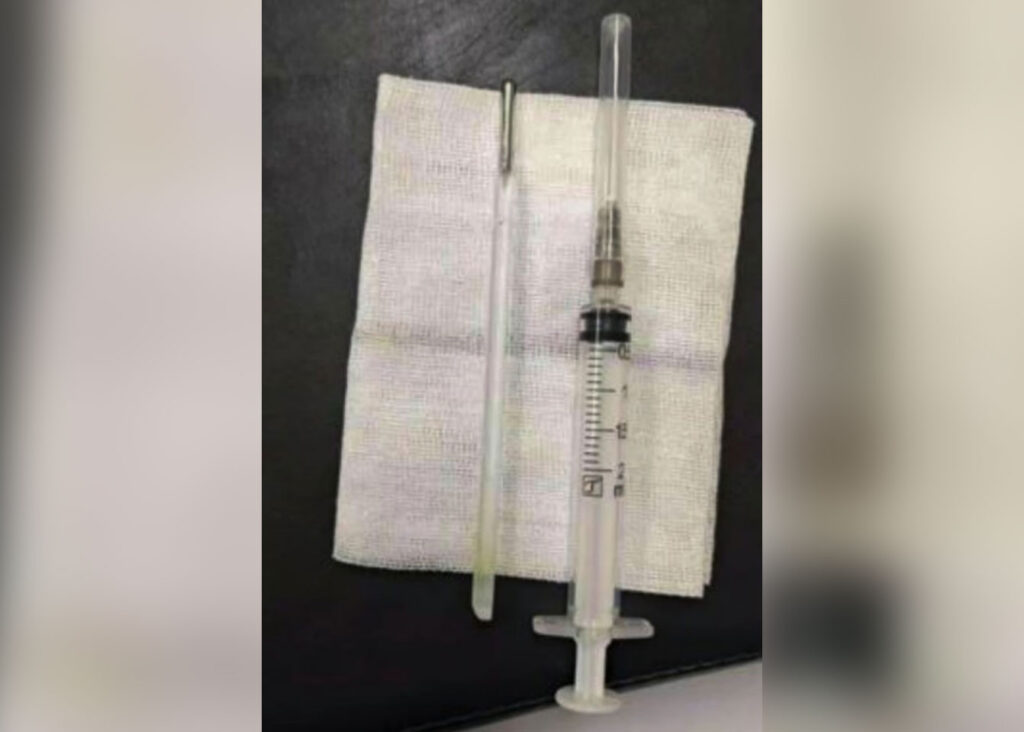
The thermometer extracted from the man. Image source: dexerto.com
What Happens If You Swallow Mercury
Mercury is one of those substances that frightens people more than it deserves in this particular case. There are three main forms of mercury: elemental (the liquid metal from thermometers), inorganic, and organic. And they behave completely differently in the body.
Swallowed elemental mercury is very poorly absorbed through the gastrointestinal tract and therefore, when accidentally ingested, rarely causes systemic poisoning. Less than 0.1% of elemental mercury is absorbed through the digestive system, and the rest exits naturally.
The amount of elemental mercury in a standard thermometer — about 0.1 ml (approximately 1 gram) — is considered below the toxic threshold. Mercury is truly dangerous in a different scenario: if its vapors enter the lungs through inhalation, it can lead to serious poisoning.
However, one shouldn’t be complacent. The risk does exist if mercury remains in the intestines for a prolonged period or if there is damage to the intestinal wall that allows mercury to enter the bloodstream or abdominal cavity. Additionally, elemental mercury can accumulate in the appendix and, under the action of bacteria, transform into organic compounds like methylmercury — which is a genuinely toxic substance. So Wang’s story ended well, but repeating this “experiment” is definitely not advisable.
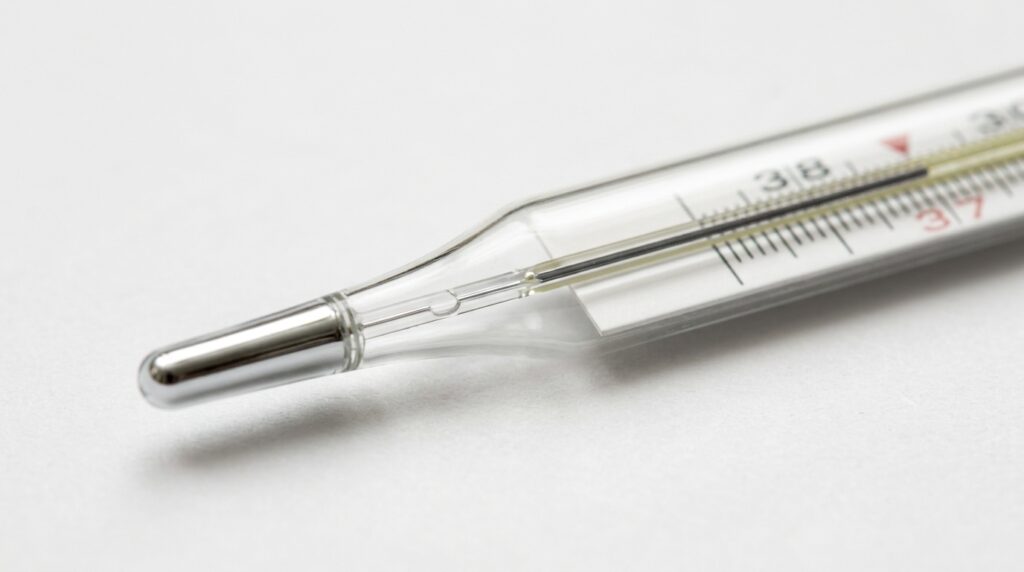
A mercury thermometer — a common but unsafe household item
What to Do If You Swallow an Object
Wang’s story is far from an isolated case. According to statistics, over a million people in China seek medical help annually after accidentally swallowing foreign objects. Children account for over 60% of such cases, with a significant proportion also involving elderly individuals. Typical swallowed objects include fish and chicken bones, batteries, magnets, and dental prostheses.
In June 2025, a similar story occurred in Anhui Province: a 64-year-old man surnamed Yan visited doctors with chest discomfort, and they discovered a toothbrush he had swallowed 52 years earlier, also at the age of 12. Like Wang, he had been too afraid to tell his parents.
Medical statistics confirm that up to 80% of swallowed foreign bodies pass through the body on their own. However, in the United States, by some estimates, approximately 1,500 people die annually from complications related to swallowed objects.
Specialists at the hospital’s endoscopy center remind people that if someone swallows a foreign object, they should immediately stop eating and drinking, minimize swallowing movements and speech, and seek emergency medical attention as soon as possible.